


What really are the best vegan meat substitutes? That all depends on what you're cooking, but the "big three"—tofu, tempeh, and seitan—are superstars for a reason. They offer incredible versatility for just about any dish you can imagine. Whether you’re craving a hearty burger or a savory snack, the right plant-based option delivers the texture and satisfaction you’re looking for, making compassionate eating both easy and delicious.
Why Choose Plant-Based Meats?
Exploring the world of plant-based meats is exciting, and it's easier than ever. The grocery store shelves are packed with more options than ever before, which shows this is way more than just a trend. It's a fundamental shift in how people think about food, health, the planet, and animal welfare.
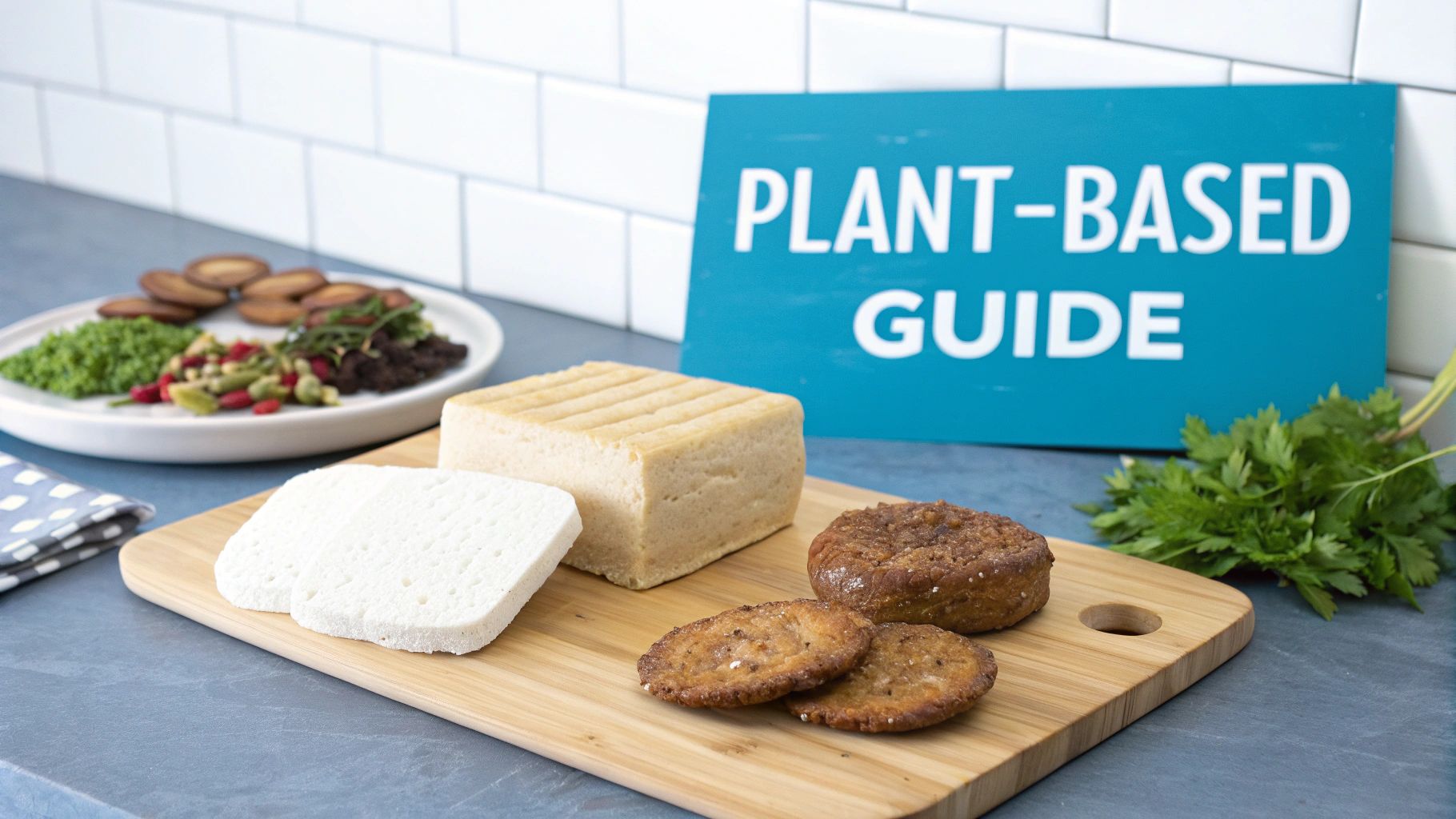
The numbers don't lie. The global market for meat substitutes is exploding, valued at USD 66.0 billion in 2025 and projected to hit a staggering USD 617.4 billion by 2035. This massive growth is being driven by compassionate consumers hungry for sustainable, protein-packed foods. You can learn more about the biggest players in the game right here: https://www.lvjco.com/blogs/jerky-news/plant-based-meat-brands.
Going plant-based isn’t just about what you cut out; it’s about what you add. For vegans, it’s a cruelty-free choice rooted in the desire for delicious food that doesn't harm animals. It's also about the environment, since plant proteins typically have a much smaller footprint. And you can't ignore the health perks—lots of substitutes are high in protein and fiber, all without the cholesterol found in animal products.
Understanding the Core Categories
To make sense of it all, it helps to break down the main types of vegan meats. Each one brings something different to the table in terms of flavor, texture, and how you’d use it in the kitchen. Innovation in the plant-based space is incredible, extending far beyond just meat alternatives—just look at products like Nomou Dairy Alternative Vegan Milk Powder for proof.
This guide is here to cut through the confusion. We'll give you a clear roadmap, whether you're a long-time vegan or just plant-curious. By getting to know the top contenders, you can walk into any store and pick the perfect plant-based protein for your next meal with total confidence.
| Category | Primary Ingredient | Common Uses | Key Characteristic |
|---|---|---|---|
| Soy-Based | Soybeans | Tofu scrambles, tempeh bacon, TVP tacos | Highly versatile and great at absorbing flavors. |
| Wheat-Based | Wheat Gluten | Seitan steaks, deli slices, roasts | Exceptionally chewy and meat-like texture. |
| Legume-Based | Peas, Lentils, Beans | Burgers, sausages, ground "meat" | Often high in protein and mimics ground meat well. |
| Whole-Food | Mushrooms, Jackfruit | Pulled "pork," shredded "chicken" | Natural textures that work well as whole-cut substitutes. |
Comparing the Top Vegan Meat Alternatives
Walking down the plant-based aisle can be an exciting experience. Tofu, tempeh, seitan, pea protein burgers... where do you even start? Getting a handle on the main players is the key to making seriously good vegan food, and it really comes down to understanding texture, flavor, and what you’re trying to cook.
Let's break down the big four: classic tofu, hearty tempeh, super-chewy seitan, and the newer generation of legume-based meats. Each one has a totally different personality in the kitchen, and knowing which one to grab will make all the difference.
Tofu: The Versatile Foundation
Tofu is a staple everyone knows. It's simply condensed soy milk pressed into a block, and its biggest strength is its incredible versatility. You'll find it in a range of textures, from silky-smooth to extra-firm, and each one has its place.
The magic of tofu is all in the prep. An extra-firm block, when pressed to squeeze out the water, gets a dense, satisfying chew that's fantastic for frying or baking. Want to take it a step further? Freeze it first. After thawing, the texture becomes way more porous and sponge-like, ready to soak up any marinade you throw at it.
Key Insight: Tofu's greatest asset is its chameleon-like ability to absorb flavor. Its neutral taste profile means it won't compete with your seasonings, making it a perfect canvas for bold marinades, savory sauces, and aromatic spice rubs.
From a nutrition standpoint, tofu is a great source of complete protein, meaning it has all nine essential amino acids. It’s also low in fat and calories. The only real catch is that it's a soy product, so it's a no-go for anyone with a soy allergy.
Tempeh: The Fermented Powerhouse
While it often gets lumped in with tofu, tempeh is a completely different experience. It's a traditional Indonesian food made from whole soybeans that are cooked, fermented, and packed into a firm, dense cake. That fermentation step is what gives tempeh its unique character.
Forget the smooth texture of tofu; tempeh is firm, nutty, and has a real bite to it, thanks to the whole beans. This structure holds up beautifully on the grill or in a pan, and it won't crumble apart on you.
It also brings its own flavor to the party—a distinct, earthy nuttiness that gets even better with cooking. Some people notice a slightly bitter edge, but that's easy to fix. Just steam or simmer the block for about 10 minutes before marinating. This little trick not only mellows the flavor but also opens it up to absorb marinades better.
Tempeh is a nutritional giant. It's packed with protein and fiber, and the fermentation process means it’s also a source of prebiotics for a healthy gut. Just like tofu, it’s a complete protein but also a soy product to be avoided if you have allergies.
Seitan: The Unbeatable Chew
If you're looking for a texture that truly mimics meat, seitan is your best bet. Made from hydrated wheat gluten (the main protein in wheat), seitan has a dense, fibrous chew that’s really in a class of its own. It's been a staple in Asian vegetarian cooking for centuries for a reason.
This "wheat meat" is amazing at replicating the satisfying pull-apart texture of some animal products. You can slice it thin for deli-style sandwiches, cube it for stir-fries, or even shape it into a full-on roast. Because it’s so sturdy, it can handle braising, stewing, and grilling without losing its integrity.
Seitan’s flavor is savory and mild, often compared to a light chicken broth, making it an excellent base for more powerful seasonings. It readily takes on the character of whatever sauce or marinade it's cooked in.
Seitan is an absolute protein bomb, often clocking in at 20-25 grams of protein per 3.5-ounce serving. The obvious downside is its main ingredient: wheat gluten. This makes it completely off-limits for anyone with celiac disease, gluten intolerance, or a wheat allergy.
Modern Legume-Based Options
The newest additions to the vegan aisle are the modern meat substitutes you see in the refrigerated section, usually made from isolated pea, fava bean, or lentil protein. These products are specifically engineered to look, cook, and taste like ground meat, sausages, and burgers—and they do an amazing job.
Their texture is the main draw. Food science has allowed manufacturers to combine these plant proteins with fats like coconut oil and various binders to create something that sizzles and browns beautifully. It’s a juicy, satisfying experience that is perfect for sharing with flexitarian and plant-curious friends.
Flavor-wise, they come pre-seasoned with a savory, umami-rich profile designed to taste delicious right out of the package. They're incredibly convenient and a simple one-to-one swap in most recipes calling for ground meat.
While they are high in protein and often fortified with extras like vitamin B12 and iron, they are also more processed. Keep an eye on the labels, as they can be higher in sodium and saturated fat than their more traditional counterparts.
Vegan Meat Substitutes At a Glance
Feeling a bit of decision paralysis? Sometimes seeing it all laid out helps. Here’s a quick-and-dirty guide to help you pick the right protein for what you’re cooking tonight.
| Substitute | Primary Ingredient | Texture Profile | Flavor Profile | Best For | Common Allergens |
|---|---|---|---|---|---|
| Tofu | Soybeans | Soft and smooth to firm and chewy depending on preparation. | Neutral, absorbs flavors from marinades and sauces. | Scrambles, stir-fries, baked "cutlets," creamy sauces. | Soy |
| Tempeh | Fermented Soybeans | Firm, dense, and nutty with a noticeable texture from whole beans. | Earthy and savory with a slightly nutty taste. | "Bacon" strips, sandwiches, hearty grain bowls, grilling. | Soy |
| Seitan | Wheat Gluten | Dense, fibrous, and exceptionally chewy, closely mimics meat. | Mildly savory, like a light broth; excellent at soaking up flavor. | Steaks, roasts, deli slices, shredded "chicken." | Wheat, Gluten |
| Legume-Based | Pea, Fava, Lentil | Juicy, crumbly, and often engineered to mimic ground meat. | Pre-seasoned to be savory and meat-like. | Burgers, sausages, tacos, pasta sauces. | Varies (check label) |
Each of these options has a place in a well-stocked plant-based kitchen. Once you get a feel for their unique strengths, you’ll know exactly which one to reach for to make your next meal a success.
Choosing the Right Substitute for Any Dish
Knowing the difference between various plant-based meats is one thing, but the real skill is in pairing the right one with the right dish. It’s a game-changer. The texture and flavor of your chosen protein can take a simple meal from good to truly memorable. Let's walk through how to pick the best option for whatever you're cooking.
This visual guide gives a quick rundown of the foundational players in the vegan meat world.
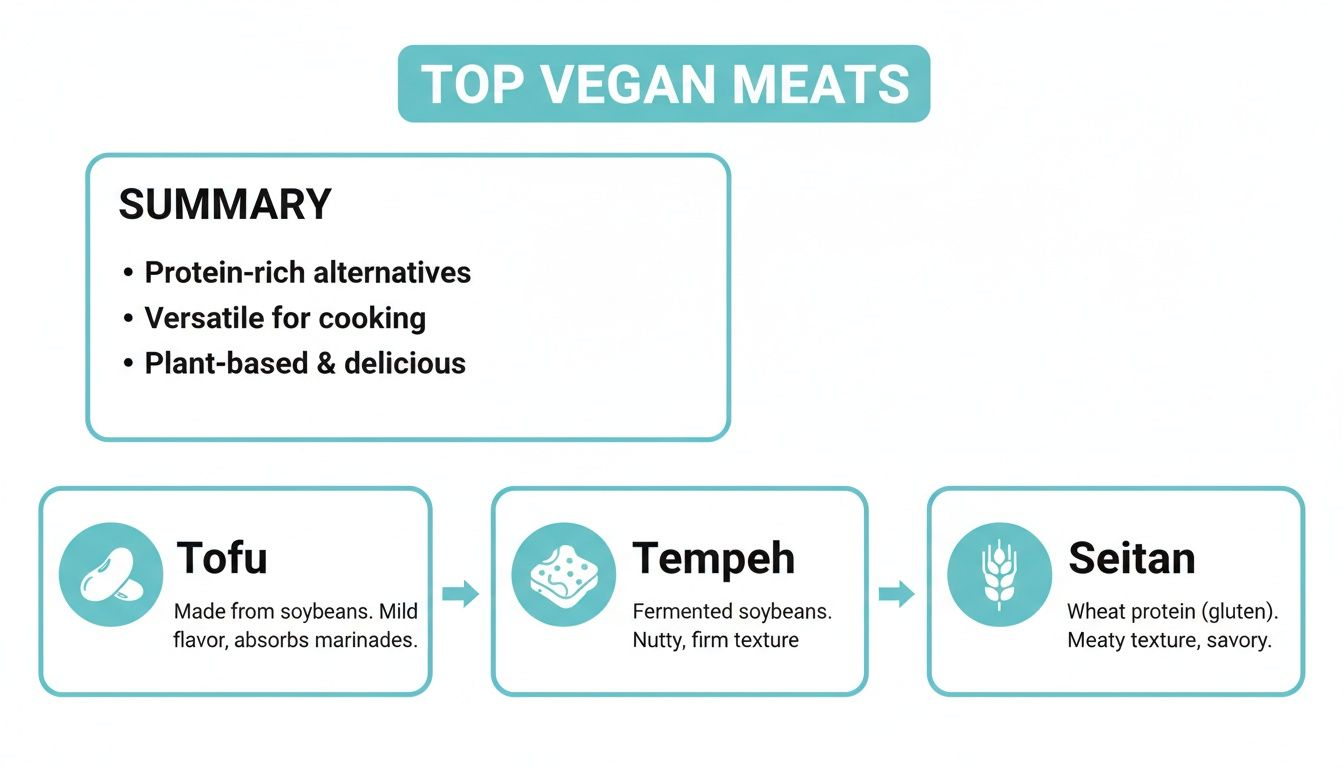
As you can see, each of these soy and wheat-based proteins brings something different to the table, making them perfect for specific jobs in the kitchen.
For Grilling and Roasting
When you're dealing with high, dry heat from a grill or oven, you need a substitute that can handle the heat without falling apart. You’re looking for a satisfyingly firm exterior with a juicy, tender middle.
- Seitan is the heavy hitter in this category. Its dense, fibrous structure is incredibly sturdy, so it develops a fantastic crust while staying moist inside. It's the go-to for making vegan steaks, roasts, or kebabs that won't disintegrate on the grill.
- Tempeh is another solid option. Slice it into thick slabs or cubes, and it holds its shape beautifully, developing wonderfully crispy edges. It’s got a firm bite that makes any grilled meal feel substantial.
For Stir-Fries and Sautéing
Quick, high-heat cooking requires a protein that cooks fast, soaks up flavor, and adds a nice textural contrast to all those crisp veggies. You want something you can cut into bite-sized pieces that won’t get lost or turn to mush in the wok.
The secret to a great stir-fry is texture. You need a protein that stays firm and distinct, offering a satisfying chew in every single bite.
Extra-firm tofu is a classic for a reason. Once you press out the excess water, it fries up perfectly, getting golden-brown on the outside while staying soft within. It’s basically a sponge for delicious sauces, soaking up things like tamari and ginger. If soy is off the table for you, don’t worry—our guide on vegan gluten-free meat substitutes has plenty of other ideas.
For Soups and Stews
For dishes that simmer away on the stove, you need a substitute that can absorb all that broth and seasoning over time without completely dissolving. It should add some real heartiness and turn a simple soup into a proper meal.
- Lentils and Beans: These are the unsung heroes of stews. Brown or green lentils hold their shape well and bring an earthy depth, while beans like chickpeas or kidney beans add creaminess and bulk.
- Seitan: Thanks to its sturdy texture, seitan is a great choice for long-simmered recipes. It will soften up a bit but keeps its satisfying chew, all while soaking up the rich flavors of the stew.
The incredible growth in plant-based eating shows just how many people are getting on board. The global market for meat substitutes, driven by both vegans and flexitarians, hit USD 18.78 billion in 2023 and is on a steep climb. Here in the U.S., the retail plant-based market reached $8.1 billion in 2024, with Gen Z and millennials leading the way. You can discover more about this market growth on Grand View Research.
For Pasta Sauces and Tacos
For any recipe that calls for ground meat, you need a substitute that delivers that classic crumbly, savory texture to blend right into your sauce or filling.
- Textured Vegetable Protein (TVP): Made from dehydrated soy flour, TVP was practically invented for this. Once you rehydrate it, it has a wonderfully chewy, ground-meat texture that’s perfect for bolognese, chili, or taco night.
- Crumbled Tempeh: If you sauté crumbled tempeh until it's brown and crispy, it creates a fantastic, nutty base for pasta sauces. It brings a more complex flavor and a heartier texture than many alternatives.
- Legume-Based Crumbles: Many newer brands sell pre-made crumbles made from pea protein. They're an easy one-to-one swap for ground meat and deliver a juicy, familiar texture right out of the package.
When you match your vegan protein to your cooking method, you can confidently create dishes that are not just better for the planet, but also delicious and satisfying every time.
Finding Your Perfect Plant-Based Snack
A great vegan lifestyle isn't just about what you eat for dinner. It's also about having fantastic, easy options for all those moments in between. Let's be honest, finding a good plant-based snack can be tough, especially when you need something portable, full of protein, and actually delicious—all without compromising your cruelty-free values. This is where the hunt for the best vegan meat substitutes shifts from the dinner plate to the backpack.
The best on-the-go snacks need to be shelf-stable, mess-free, and pack enough of a punch to actually stop your stomach from rumbling. Luckily, plenty of plant-based options nail this, giving you a great answer to "what can I snack on?" while sticking to a non-GMO, compassionate lifestyle.
The Rise of High-Protein Vegan Snacking
Lately, the demand for convenient, high-protein vegan snacks has absolutely exploded. More and more people are looking for fuel that keeps up with their busy lives. Whether you're an athlete needing a post-workout refuel, a traveler staring down bleak airport food courts, or just trying to beat that 3 p.m. slump at your desk, a reliable snack is a game-changer.
This is where plant-based jerky has really found its moment. It perfectly bridges the gap between a light bite and a serious protein boost, delivering a satisfyingly tough chew.
Plant-based snacks like vegan jerky aren't just for vegans anymore. They’re for anyone who wants convenience, great taste, and quality ingredients. It’s never been easier to make a compassionate choice without feeling like you’re missing out.
Why Vegan Jerky Is Such a Great Snack
When it comes to snacking, vegan jerky stands out as one of the best vegan meat substitutes for a few key reasons. It nails that tough, satisfying chew of traditional jerky but does it all with plants. That killer texture, combined with bold and interesting flavors, makes it an awesome choice for just about anyone.
Here’s a look at how it fits into different lifestyles:
- For Athletes: After you’ve pushed your body, you need protein to recover. Vegan jerky is a quick, tasty, and easy-to-digest source of protein you can just throw in your gym bag.
- For Travelers: Finding good vegan food while traveling can be a headache. A bag of shelf-stable jerky is the perfect companion for long flights or road trips, so you always have a dependable, cruelty-free snack.
- For Busy Professionals: Stuck in back-to-back meetings? A handful of vegan jerky is the perfect way to tide you over. It’s not messy, you can eat it quietly, and it gives you the energy to stay sharp.
- For Outdoor Adventurers: When you're hitting the trail, you need fuel that’s lightweight and packed with nutrients. Vegan jerky is an amazing hiking snack—it’s easy to carry, won't go bad, and gives you that much-needed protein and salt.
Flavor and Texture: The Ultimate Combo
What really makes a snack go from "fine" to "amazing" is the whole experience of eating it. Louisville Jerky, for example, is made to deliver that classic, hearty jerky chew people know and love. The texture is substantial, making every bite feel like a real treat.
But that's only half the story. The flavor is where vegan jerky really shines. By using high-quality, non-GMO ingredients and making it in small batches, brands can create some seriously exciting tastes.
Just think about the options:
- Smoky Carolina BBQ: A tangy, classic flavor that just works.
- Maple Bacon: That perfect sweet-and-savory combo that hits a nostalgic spot.
- Buffalo Hot Wing: A spicy kick for anyone who likes a little fire in their snack.
- General Tso's: A unique, sweet-and-savory flavor inspired by the takeout classic.
This focus on both texture and big flavor completely solves the "what should I snack on?" problem. It's proof that plant-based snacking can be convenient, protein-packed, and incredibly tasty, all while staying true to a compassionate, vegan lifestyle.
Mastering Plant-Based Meat Preparation
Picking the right vegan meat substitute is just the start—knowing how to cook it is where the real magic happens. With a few simple techniques, you can transform these ingredients from good to great, unlocking incredible textures and deep, savory flavors that will make them the star of any dish.

This isn't just a niche skill anymore. North America is a major player in the meat substitutes market, holding a 32.45% global revenue share in 2023. About 20% of consumers in the US and Canada are eating these alternatives, and over 25% of them are eating even more than they did last year. Learning your way around a block of tofu or a package of seitan is a delicious and timely skill.
Smart Shopping for Plant-Based Success
A fantastic plant-based meal really begins in the grocery aisle. Knowing what to look for on the label is the first step to making sure what you buy lines up with what you want.
- Look for Certifications: Keep an eye out for trusted seals like Non-GMO Project Verified and cruelty-free labels such as Leaping Bunny or Certified Vegan. These are quick ways to verify the product meets certain ethical and quality standards.
- Scan the Ingredients: Generally, a shorter ingredient list with names you recognize is a good sign. You want to see whole-food ingredients you know.
- Check the "Best By" Date: Freshness is everything, especially with tofu and tempeh. A product that’s well within its date will always have a better texture and taste.
A Masterclass in Plant-Based Cooking
Once you've got your ingredients home, it's time for the fun part. These are the core techniques you'll want to master to get the absolute best results from the most popular meat substitutes.
1. Pressing Tofu for a Firmer Bite
That block of extra-firm tofu is packed in water, and you need to get it out. Pressing it for at least 30 minutes squeezes out the excess liquid, giving you a much meatier, chewier texture. This one step makes all the difference, allowing it to brown properly and soak up marinades like a sponge.
2. Marinating Tempeh for Deep Flavor
Tempeh has a great nutty flavor, but it can sometimes carry a hint of bitterness. A quick 10-minute steam or simmer before marinating is the secret. It opens up its pores and mellows the taste, letting it absorb savory flavors for a much richer, more complex final dish.
3. Cooking Seitan to Perfection
Because seitan is so dense and chewy, it can get tough if you're not careful. The trick is to cook it in liquid. Simmering it in a flavorful broth or sauce keeps it wonderfully tender and juicy, all while it soaks up those delicious seasonings.
A Chef’s Tip: "Never overcrowd the pan. Whether you're searing tofu, tempeh, or seitan, giving each piece enough space is critical for developing that perfect golden-brown crust. That crust isn't just for looks; it’s where a huge amount of flavor comes from."
For something like Textured Vegetable Protein (TVP), it all comes down to proper rehydration to get that satisfying, ground-meat texture. Nail that simple step, and you’ve got a perfect base for tacos, chili, or bolognese. For more, check out our detailed guide on how to cook textured vegetable protein.
Your Questions About Vegan Meats, Answered
Jumping into the world of plant-based meats can spark a lot of curiosity. You might be wondering about health, taste, or how they stack up nutritionally. Let's clear up some of the most common questions so you can feel great about what you're eating.
Are Vegan Meat Substitutes Actually Healthier Than Animal Meat?
That’s the big question, isn't it? The answer really depends on the specific product. On the plus side, many plant-based meats come with zero cholesterol and way less saturated fat than their animal-based counterparts, which is a huge win for heart health.
But it’s not a free pass. Some of the more processed options can be pretty high in sodium. A good rule of thumb is to check the label and lean towards products made with ingredients you can recognize. It’s all about finding that healthy balance that works for you.
How Can I Make Plant-Based Meats Taste Amazing?
This is where the fun begins. You don't need a culinary degree to make vegan meats taste incredible—just a few simple tricks. It's all in the prep.
- Marinating: Tofu and tempeh are like sponges for flavor. Letting them soak in a good marinade is non-negotiable for a delicious outcome.
- Spice Rubs: Want a crispy, flavorful crust on your seitan or tofu? A generous dry rub before searing or grilling is the secret.
- Umami Boosters: To get that deep, savory "meaty" flavor, bring in the heavy hitters: tamari, nutritional yeast, and mushroom powder. They build a foundation that truly satisfies.
- The Right Heat: Don't be afraid to sear, grill, or bake at a high temperature. That caramelization is what creates the texture and taste we all crave.
These little steps make the difference between a bland meal and one you can't wait to make again.
What Are the Best Soy-Free Meat Alternatives Out There?
If you're avoiding soy, you're in luck. The options today are better and more plentiful than ever before, so you're definitely not missing out.
Seitan, made from wheat gluten, has an incredible chew and density, making it perfect for things like vegan steaks or deli slices. You’ve also probably seen pea protein everywhere lately—it’s become a go-to for creating surprisingly realistic burgers and grounds.
Don’t forget about whole foods! Hearty lentils and savory mushrooms are fantastic, naturally soy-free bases for everything from burgers and meatloaf to rich, satisfying pasta sauces.
Is It Possible to Get Enough Protein from Vegan Meats?
Yes, absolutely. This is one of the most common myths, but many plant-based substitutes are absolute protein powerhouses.
In fact, a serving of seitan or tempeh often packs as much protein as beef—sometimes even more. By eating a good mix of high-quality vegan options, you’ll have no problem fueling an active lifestyle, building muscle, and hitting your protein goals, all without animal products.
Ready to find a snack you’ll actually crave? Louisville Jerky Co. makes small-batch, non-GMO vegan jerky that delivers a seriously satisfying chew and bold flavors you won't forget. From Smoky Carolina BBQ to Maple Bacon, you can find the perfect protein-packed, cruelty-free snack for your next adventure at the Louisville Jerky Co. website.