


When you're packing for a hike, it's easy to grab things that are lightweight and promise quick energy. But the best high-protein hiking snacks go a step further—they’re shelf-stable, easy to pack, and deliver the kind of sustained power that prevents muscle fatigue and keeps you from feeling sore the next day. Think plant-based powerhouses like nuts, seeds, roasted chickpeas, and of course, vegan jerky. These are the snacks that’ll help you conquer the trail without the dreaded sugar crash.
Why Protein Is Your Trailside Repair Crew
Most people think of carbs when they think of trail fuel—dried fruit, granola bars, that sort of thing. And they’re not wrong! Carbs are great for a quick boost. But protein is the unsung hero working behind the scenes, keeping you strong from the first step to the summit.
Imagine protein as your personal, on-the-go muscle repair crew, tucked right into your backpack.
As you scramble over rocks and push up steep inclines, you’re creating tiny micro-tears in your muscles. Protein delivers the essential amino acids needed to patch up that damage on the fly. This not only keeps you going strong but also helps reduce that all-too-familiar next-day soreness.
Sustained Energy Without The Crash
Here’s the other thing about protein: unlike sugary snacks that give you a wild energy spike followed by an epic crash, protein is a slow-burn fuel source. It digests more gradually, which keeps your blood sugar levels stable and provides a steady stream of energy that lasts for hours.
This is why the ultimate trail fuel is a team effort. Pair a protein source with a healthy carbohydrate, and you get the best of both worlds. The carbs provide immediate energy, while the protein ensures that energy is released slowly and steadily, keeping you focused and preventing fatigue.
For anyone new to plant-based eating, learning how to nail these fuel combos can be a total game-changer. If you want to dive deeper, we have a whole guide on how to get more protein as a vegan.
How Much Protein Do You Actually Need?
You don't need a degree in nutrition to figure this out. A really solid rule of thumb for hiking is to aim for snacks that pack 10-20 grams of protein every couple of hours. The exact amount depends on how tough and long your hike is.
For a strenuous, all-day trek, your body is in constant repair mode. Consistently fueling with high-protein hiking snacks not only maintains your energy but actively aids in muscle recovery while you're still on the move.
The key is to pack smart. Choose snacks that hit that protein target without weighing you down or taking up too much space. Get this right, and you'll have all the fuel you need to feel powerful, push through the tough spots, and actually enjoy your time out there.
Picking the Right Plant-Based Protein for the Trail
Staring at the snack aisle can feel like a mission in itself. When you're packing for a hike, the goal is simple: find fuel that's lightweight, shelf-stable, and actually powers your body. The best high-protein hiking snacks are the ones that give you the essential building blocks you need without weighing you down.
Thinking about your snacks in categories helps cut through the noise. Each type of plant-based protein brings something different to the table, and mixing it up is the secret to feeling your best out there. You get the slow-burn energy from the healthy fats in nuts, the satisfying chew of vegan jerky, and a whole lot more.
Nuts and Seeds
There's a reason nuts and seeds are the classic trail snack. They're incredibly calorie-dense, which is just a fancy way of saying you get a huge energy payoff from a small handful. That means less weight in your pack. Almonds, walnuts, and pumpkin seeds are absolute all-stars.
- Almonds: Just one ounce gives you about 6 grams of protein, plus a healthy dose of vitamin E and good fats.
- Walnuts: Famous for their brain-boosting omega-3s, walnuts also pack around 4 grams of protein per ounce.
- Pumpkin Seeds (Shell-On or Pepitas): Don't sleep on these! They're a true protein powerhouse, boasting an impressive 9 grams of protein in a single ounce. Try these.
What makes them so great for hiking is the combination of protein, fiber, and healthy fats. It’s the perfect formula for a slow, steady stream of energy that prevents you from crashing halfway up a tough climb.
Legumes and Pulses
Roasted legumes are the unsung heroes of the hiking snack world. They're a fantastic way to get a satisfying crunch and a serious protein hit, often with less fat than nuts. Think beyond your standard trail mix.
Roasted chickpeas and crunchy edamame are two of my top picks. A half-cup of roasted chickpeas delivers around 7 grams of protein. Dry-roasted edamame is even more of a beast, packing a massive 18-20 grams of protein in the same amount. Their savory kick is also a welcome change of pace from all the sweet bars and fruits you might be carrying.
Plant-Based Jerky
When you need something savory, chewy, and packed with protein, nothing beats a good plant-based jerky. It delivers a satisfying, substantial chew, but completely cruelty-free. It's no secret that protein snacks are a must-have for any outdoor adventure. You can find more great info about high-protein snack options on Healthline.com.
Louisville Jerky is basically the perfect hiking partner. The flavors alone—like Smoky Carolina BBQ and Maple Bacon—are enough to get you up the next hill. But it’s the powerful savory punch that truly satisfies cravings and fuels your muscles when you need it most.
It’s got the high protein content, the amazing taste, and comes in lightweight, resealable bags that are perfect for stuffing into a pack. Unlike a handful of nuts, it feels more like a mini-meal, giving you that substantial boost needed to tackle the toughest miles. Tossing a bag of Louisville Jerky Co. in your pack means you've got a delicious, no-mess power source ready to go at a moment's notice.
Let's see how these options stack up side-by-side.
Top Vegan High-Protein Hiking Snack Showdown
Here's a quick-glance comparison of some of the most popular plant-based hiking snacks, breaking down their protein content and what makes them great for the trail.
| Snack Type | Protein Per Serving (Approx.) | Key Hiking Benefit |
|---|---|---|
| Plant-Based Jerky | 15-21 g per 3 oz bag | Savory, satisfying, and incredibly protein-dense for its weight. |
| Dry-Roasted Edamame | 18-20 g per ½ cup | A crunchy, high-protein powerhouse that's lower in fat. |
| Pumpkin Seeds | 9 g per ounce | Excellent source of protein, magnesium, and healthy fats. |
| Roasted Chickpeas | 7 g per ½ cup | Great crunch and a good balance of protein and fiber. |
| Almonds | 6 g per ounce | Calorie-dense for sustained energy with a solid protein boost. |
Choosing the right snack often comes down to what your body is craving and what the trail demands. A mix of these options ensures you're covered for both quick energy and long-term endurance.
How To Build The Ultimate Vegan Trail Mix
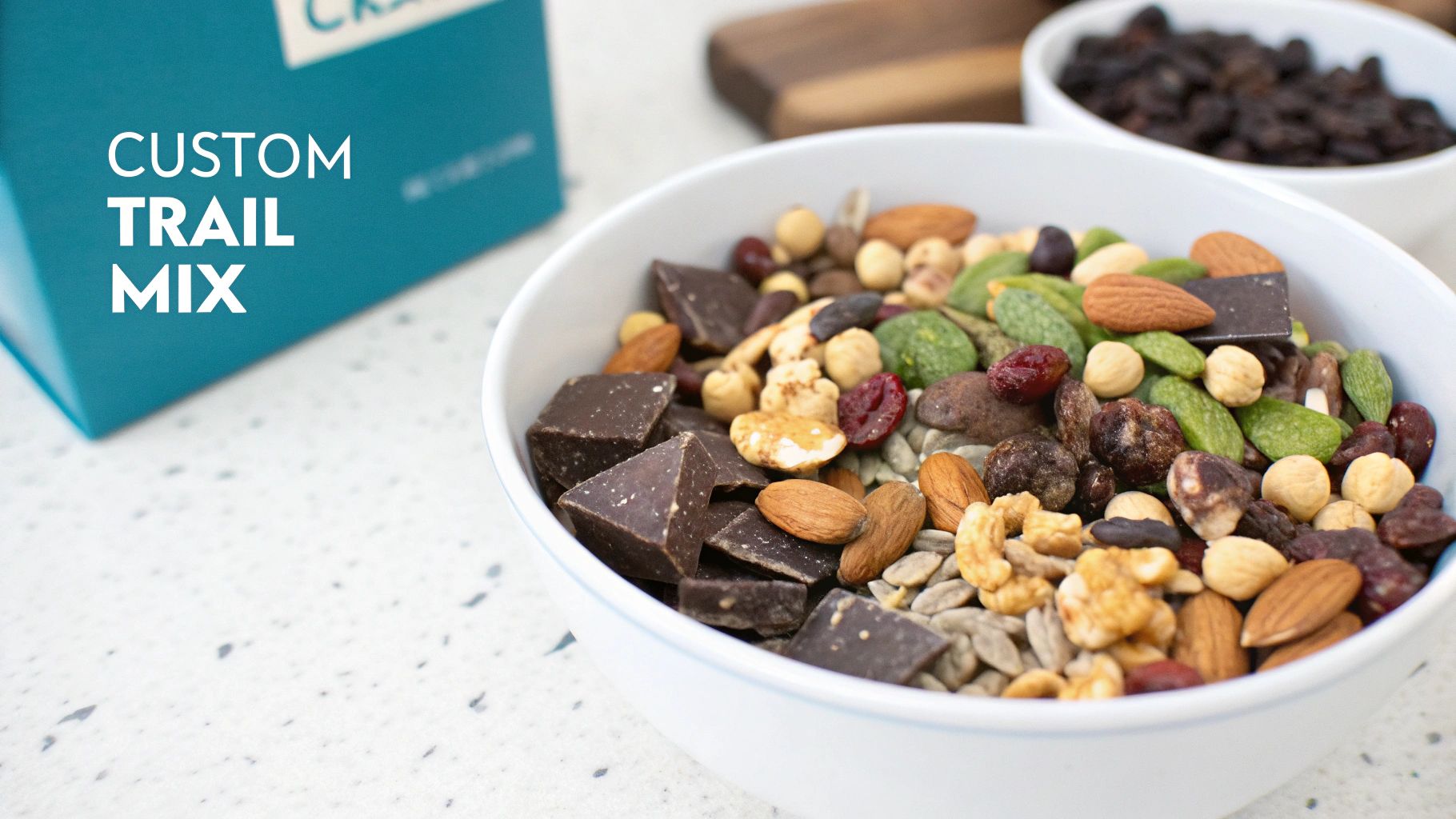
Let's be honest, most trail mixes you grab off the shelf are a letdown. They're usually packed with cheap fillers, sugary candies, and a sad sprinkle of nuts. When you build your own, you're in the driver's seat. You get to create a custom fuel blend that actually matches your energy needs and tastes fantastic.
The key to a truly great vegan trail mix isn't some complex, secret recipe—it's a simple, balanced formula. Nail this, and you'll have a mix that provides both immediate energy for the climb and sustained power for the long haul.
The Four Pillars Of A Perfect Mix
Think of building the perfect trail mix like assembling a team. Each component has a specific job to do, and getting the ratios right means every handful is a powerhouse of trail-ready nutrition.
- The Base (50%): This is your foundation. Start with a generous portion of raw nuts and seeds. We're talking almonds, walnuts, cashews, or pumpkin seeds. They deliver those essential healthy fats and a solid layer of protein for slow-burning, sustained energy.
- The Protein Booster (25%): Now it’s time to really crank up the protein. This is where you can add some serious staying power with things like crunchy roasted chickpeas, dry-roasted edamame, or—our favorite—chopped-up pieces of vegan jerky for a savory, satisfying chew.
- The Quick Energy (15%): Sometimes you need a quick boost, especially on a steep incline. A small amount of unsulfured dried fruit like mango, apricots, or raisins provides a fast-acting source of carbs from natural sugars for that immediate lift.
- The Flavor Kick (10%): Let's not forget morale! A little something extra can make your snack feel like a real treat. Think vegan dark chocolate chips, toasted coconut flakes, or even a sprinkle of nutritional yeast for a cheesy, savory twist.
Trail-Tested Vegan Mix Recipes
Feeling inspired? Use these tried-and-true recipes as a starting point. Don't be afraid to experiment and swap ingredients based on what you love—there really are no rules! For even more inspiration, check out our other favorite high-protein vegetarian snacks built for any adventure.
The Savory Summit Mix
This one's for the hikers who prefer savory over sweet. It’s a bold, umami-rich blend where the jerky makes it feel more like a mini-meal than just a snack.
- Base: Roasted, unsalted almonds and pumpkin seeds
- Booster: Chopped Louisville Jerky Co. Smoked Black Pepper jerky and roasted chickpeas
- Energy: A few goji berries for a tart kick
- Flavor: A light dusting of smoked paprika
The Sweet Ascent Blend
A classic sweet-and-salty combo, but with a serious protein upgrade. This blend gives you that familiar satisfaction while making sure you don't crash an hour later.
- Base: Walnuts and cashews
- Booster: Dry-roasted edamame
- Energy: Dried cherries and apricots
- Flavor: Vegan dark chocolate chips and coconut flakes
The Endurance Engine
Built for those long, tough days on the trail. This mix is all about calorie density and a major protein punch to help fight off muscle fatigue when you're hours from the trailhead.
- Base: Brazil nuts and pecans
- Booster: Chopped Louisville Jerky Co. Maple Bacon jerky and roasted fava beans
- Energy: Dried figs
- Flavor: Cacao nibs
Easy No-Bake High-Protein Snack Recipes
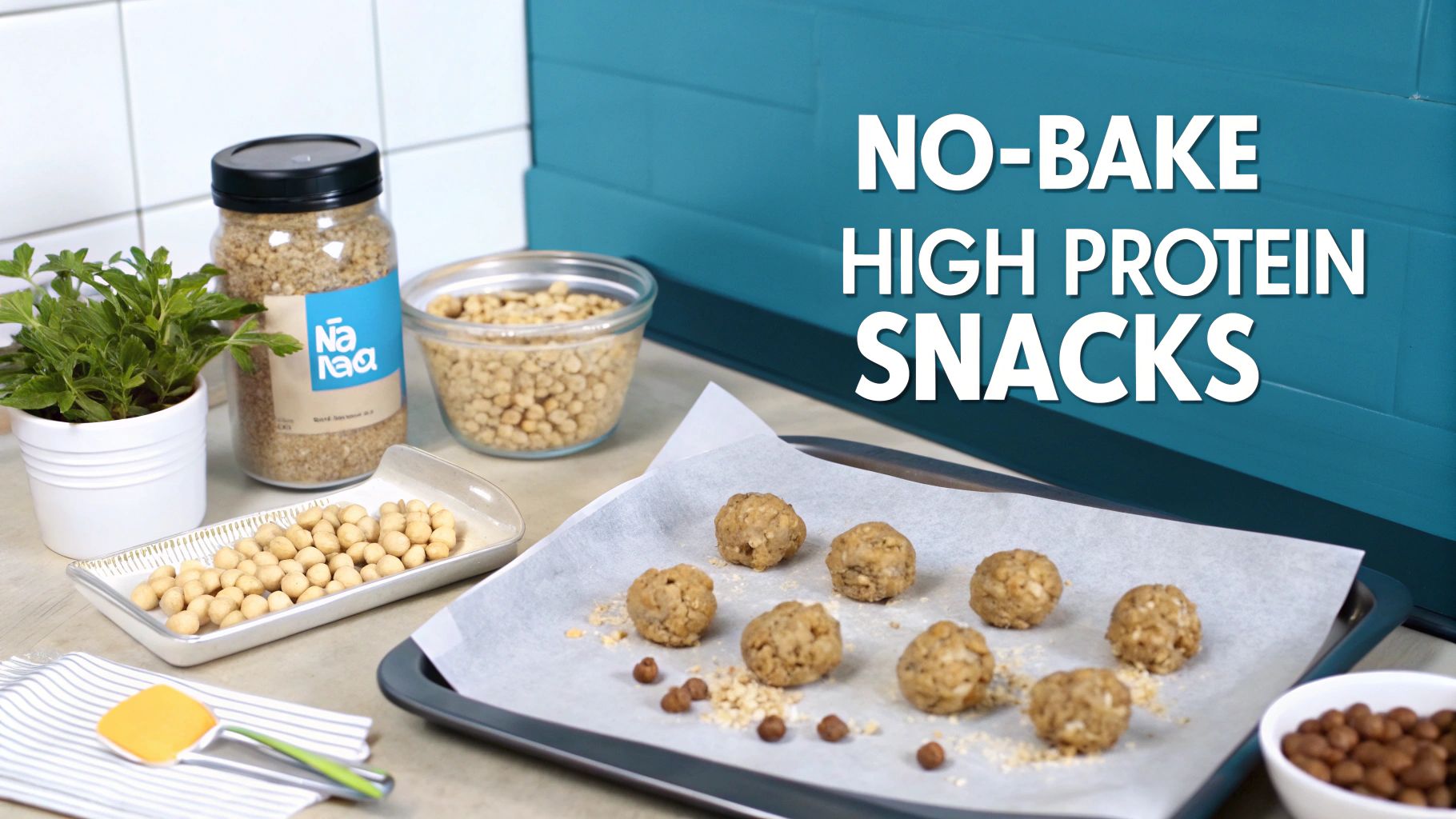
There's something incredibly satisfying about making your own trail snacks. You get to control every ingredient, save a bit of cash, and dial in the flavors exactly how you like them. The best part? You don't need to be a baker or have a ton of fancy equipment. These recipes are all about creating simple, energy-dense fuel that holds up on the trail.
This DIY approach is part of a bigger trend. The global demand for convenient, protein-packed snacks has exploded, with the market projected to hit around USD 4.92 billion in 2025. Hikers and other outdoor folks are leading the charge, always on the hunt for reliable, lightweight fuel. You can dive deeper into the market trends with this report from Future Market Insights.
High-Protein Energy Balls
Energy balls are the quintessential customizable trail snack. They're dead simple to make in big batches, require zero cooking, and are perfect for a quick, mess-free energy boost right when you need it.
Here’s a basic formula you can riff on endlessly:
- Wet Ingredients: Start by mixing 1 cup of a good nut butter (almond and peanut are classics) with 1/3 cup of a liquid sweetener like maple syrup in a bowl.
- Dry Ingredients: Next, stir in 1 ½ cups of rolled oats and 1/2 cup of your go-to vegan protein powder. This is also where you add fun extras like chia seeds or vegan dark chocolate chips.
- Roll and Chill: Once it’s all combined, roll the mixture into bite-sized balls. Pop them in the fridge for at least 30 minutes to let them firm up.
Depending on the protein powder you use, each one of these little powerhouses can deliver 5-8 grams of protein. Toss them in a small, hard-sided container to keep them from getting squished in your pack.
Crispy Roasted Chickpeas
If you find yourself craving something salty and crunchy on the trail, roasted chickpeas are a total game-changer. They deliver that satisfying crunch along with a solid hit of protein and fiber.
These are more than just a snack. I like to pack them in a separate baggie to sprinkle over rehydrated trail meals. They add an amazing crunch and a protein boost to otherwise boring couscous or instant soup.
To make them, just drain and rinse a can of chickpeas, then pat them completely dry—this is key for crispiness! Toss them with a bit of oil and your favorite spices (I love a mix of smoked paprika, garlic powder, and cumin) and roast at 400°F (200°C) until they're golden and crunchy. A half-cup serving gives you about 7 grams of protein. Make sure they cool completely before you pack them up, preferably in a bag that lets them breathe a little so they stay crisp.
Smart Packing Strategies to Protect Your Snacks
You’ve spent all this time picking out the perfect high-protein hiking snacks, but that’s only half the battle. Now you have to make sure they actually survive the trip. There’s nothing more demoralizing than reaching for an energy bar only to find a sad, pulverized mess of crumbs at the bottom of your pack.
Smart packing is a genuine skill, and it’s the key to making sure your fuel is ready to go when you need it most. A little forethought before you hit the trail makes all the difference.
A great place to start is with portion control. Ditch the bulky, air-filled original packaging. Instead, portion out your snacks for each day into smaller, reusable silicone bags or lightweight containers. This does more than just save space—it helps you see exactly what you have left and prevents you from stress-eating all your best stuff on day one.
Keeping Your Snacks Safe and Sound
We've all been there: the tragic discovery of a once-proud cracker now reduced to dust. Protecting your fragile snacks is a bit of an art form, but a few simple tricks will keep everything intact.
- Create a Crush-Proof Zone: Find a small, hard-sided container. It’s the perfect home for anything that breaks easily, like homemade energy balls or those fancy seed crackers.
- Strategic Layering: Think like a grocery bagger. Pack your sturdiest items—like bags of Louisville Jerky Co.—at the bottom of your food sack, with the more delicate stuff layered on top.
- Buffer with Soft Goods: Use your gear to your advantage. A rolled-up rain jacket or a pair of clean socks makes a surprisingly effective cushion around your food.
Don’t forget one of the most important rules of the trail: Pack it in, pack it out. By repackaging your snacks at home, you drastically reduce the amount of trash you have to carry out. It's an easy way to follow Leave No Trace principles and keep the wilderness wild. For more tips on this, check out our guide to the best vegan camping food.
Managing Temperature and Freshness
A hot day can turn a perfect chocolate-drizzled bar into a gooey, unappetizing mess. While you can't control the weather, you can be smart about where you pack things.
Keep snacks that are prone to melting (looking at you, chocolate) buried deep in the center of your pack. The gear around them will act as insulation, keeping them cooler for longer.
It's no surprise that hikers everywhere are leaning on these kinds of snacks. In fact, North America is expected to make up a whopping 43.6% of the entire global high-protein snack market by 2025. You can see more on protein snack market trends from Persistence Market Research if you're curious, but it just goes to show how many of us are relying on this stuff to power our adventures.
Common Questions About Hiking Nutrition
Figuring out what to eat on the trail can feel like a puzzle, but a few core ideas can really simplify things. Let’s tackle some of the most common questions about high-protein hiking snacks. Getting these answers right will give you the confidence to pack the perfect fuel for your next adventure, ensuring every bite you take is actually doing its job.
Honestly, getting your nutrition dialed in is what turns a good hike into a great one. It's the difference between feeling strong on that final push to the summit and bonking halfway up the first big hill.
How Much Protein Should I Actually Eat On A Hike?
While everyone’s body is a bit different, a solid rule of thumb is to aim for 10-20 grams of protein every hour or two. This steady drip-feed of protein helps keep your energy from crashing and gives your muscles a constant supply of what they need to repair and keep going.
Think of it more like a rhythm than a hard-and-fast rule. If you're on a mellow, mostly flat trail, you can probably stick to the lower end of that range. But for a grueling, all-day climb with a heavy pack? Pushing closer to that 20-gram mark consistently will make a huge difference in how you feel, both on the trail and the next day.
Are All Protein Bars Good For Hiking?
Definitely not. A walk down the snack aisle shows that many protein bars are basically candy bars in disguise, loaded with sugar, weird artificial ingredients, and cheap protein. A good hiking bar needs to be chosen with a bit more intention.
When you flip over the package, here’s what to look for:
- A Simple Ingredient List: You should recognize most of what’s in it. Fewer ingredients, especially whole foods, is almost always a better sign.
- Low Sugar Content: Try to find bars with less than 10 grams of sugar. Natural sugars from dates or other fruits are way better than a long list of syrups.
- A Solid Protein Source: The label should clearly state where the protein is coming from—think nuts, seeds, or pea protein.
How Can I Avoid Getting Bored With My Snacks?
Snack fatigue is real. After a few days on the trail, even your favorite almonds can start to feel like a chore to chew. The secret to keeping your taste buds happy is packing a variety of flavors and textures.
A mix of sweet, salty, savory, crunchy, and chewy options keeps things interesting. This isn't just about enjoyment—it’s a massive morale booster when you’re feeling tired and beat down.
Instead of one giant bag of the same trail mix, pack a few smaller, different blends. Alternate between a sweet, nutty energy ball and a few pieces of savory, chewy vegan jerky. This simple rotation makes snack time something you actually look forward to. Many of these concepts overlap with practical running nutrition tips, as both activities demand smart, sustained fueling.
What Foods Should I Leave At Home?
What you don’t pack is just as important as what you do. Leave behind anything heavy, perishable, or messy. That means fresh, watery fruits like watermelon and anything that needs to be refrigerated.
Your backpack is a rough place for food. You need snacks that are shelf-stable, durable, and give you the most nutritional bang for their buck. The goal is efficient, effective fuel that won't weigh you down or go bad in your pack.
Ready to stock up on the ultimate savory, high-protein hiking snack? Louisville Jerky Co. crafts delicious, plant-based jerky that’s lightweight, packed with protein, and perfect for any adventure. Find your new favorite trail fuel today.