


A complete high-protein vegan foods list is built on staples you probably already know and love: lentils, tofu, tempeh, seeds, and nuts. These plant-based powerhouses make it incredibly easy to hit your daily protein goals while enjoying a diet that's diverse, delicious, and cruelty-free.
Your Guide to High-Protein Vegan Foods
One of the first questions people have about plant-based eating is, "Can you really get enough protein?" The answer is a loud and clear yes. The secret isn't about hunting down exotic or expensive ingredients; it's about knowing which everyday plant foods are protein superstars. From the humble lentil to incredibly versatile tofu, the vegan world is bursting with options to fuel your body right.
Building a high-protein vegan plate is way easier than you might think. The goal is to mix and match different sources throughout the day, which ensures you're getting a full spectrum of nutrients and amino acids. Think of it like building a strong team—each player brings a unique and valuable skill to the game.
- Legumes: Lentils, chickpeas, and black beans are the reliable bedrock of many diets for good reason. They're affordable, easy to find, and packed with both protein and fiber.
- Soy Products: Tofu, tempeh, and edamame are true MVPs. They're complete proteins, which means they contain all nine essential amino acids your body can't make on its own.
- Nuts and Seeds: A sprinkle of almonds, hemp seeds, or chia seeds is the perfect way to effortlessly boost the protein in just about any meal or snack.
Top High-Protein Vegan Foods At A Glance
To give you a quick snapshot, here's a table of some of the most protein-dense foods you can add to your shopping list.
| Food Source | Serving Size | Protein (Grams) |
|---|---|---|
| Seitan | 3 oz (85g) | 20-25g |
| Lentils | 1 cup, cooked | ~18g |
| Tofu (firm) | 1/2 cup (125g) | ~22g |
| Tempeh | 1 cup (166g) | ~34g |
| Edamame | 1 cup, shelled | ~18g |
| Chickpeas | 1 cup, cooked | ~15g |
| Hemp Seeds | 3 Tbsp | ~10g |
| Quinoa | 1 cup, cooked | ~8g |
This list just scratches the surface, but it shows how quickly the protein can add up in a typical plant-based meal.
The Foundational Power Of Legumes And Lentils
When you're building a high-protein vegan kitchen, legumes and lentils are the undisputed workhorses. They are the bedrock—the reliable, go-to ingredients that form the base of countless satisfying meals. From chickpeas and black beans to a whole rainbow of lentil varieties, these pantry staples pack an incredible combination of protein, fiber, and essential micronutrients.
Their nutritional punch is what makes them so essential. A single cooked cup of lentils, for instance, delivers a whopping 18 grams of protein. That's a serious contribution to your daily needs! It's no wonder the global community of roughly 88 million vegans leans so heavily on them. In fact, lentils are often mentioned in the same breath as protein giants like seitan and tempeh. If you dig into plant-based food statistics, you’ll see just how critical these staples are.
Beyond Soups And Salads
Lentil soup and chickpea salad are classics for a reason, but that's just scratching the surface. The real fun begins when you start to see these ingredients for what they are: culinary chameleons ready to adapt to whatever you're craving.
- Hearty Main Courses: Try using brown or green lentils to create a rich shepherd's pie filling. Black beans can be mashed and seasoned to form incredible, spicy burgers that hold their own on the grill.
- Creative Snacks and Dips: Sure, there's hummus, but why not whip up a smoky black bean dip? Or blend chickpeas into a surprisingly delicious—and protein-rich—edible cookie dough.
- Textural Add-ins: Toss roasted chickpeas onto salads and grain bowls for a fantastic crunch. You can even stir cooked lentils into pasta sauce to quietly boost its protein content without changing the taste.
This flexibility makes it incredibly easy to weave a protein punch into any meal, from a savory breakfast scramble right through to dinner.
Maximizing Nutrient Absorption
To get the absolute most out of your legumes, a little prep work goes a long way. Dried beans and lentils naturally contain compounds called phytates, which can sometimes get in the way of your body absorbing minerals like iron and zinc.
Soaking dried beans overnight before cooking isn't just about cutting down on cook time. That simple step, along with a good rinse, helps break down those phytates, making all the good stuff inside more available for your body. It’s a small effort that unlocks the full nutritional potential of these plant-based powerhouses.
By embracing everything legumes and lentils have to offer, you can effortlessly build a varied, delicious, and high-protein vegan diet. They truly are the essential building blocks for anyone looking to thrive on a cruelty-free, non-GMO lifestyle.
How To Use Soy As A Versatile Protein Source
If you're building a high-protein vegan foods list, soy is one of the most powerful—and often misunderstood—players in the game. It's a true culinary workhorse, celebrated for its incredible versatility and a nutritional profile that's hard to beat. From firm tofu that fries up beautifully to nutty, fermented tempeh, soy gives you a solid foundation for countless satisfying, plant-based meals.
One of the biggest reasons to get friendly with soy is that it’s a complete protein. This simply means it contains all nine of the essential amino acids your body can't make on its own. For anyone on a vegan diet, this makes soy an incredibly valuable staple for everything from muscle repair to keeping your energy levels stable.
Exploring The Different Forms Of Soy
Soybeans can be transformed into an amazing array of textures and flavors, with each one having its own best use in the kitchen. To get the best quality, we always recommend looking for non-GMO soy products to align with clean, plant-based eating.
Here are a few of the most popular forms you'll find:
- Tofu: Tofu is essentially condensed soy milk that's been pressed into blocks. A single cup of firm tofu can pack around 20 grams of protein and its neutral flavor makes it a perfect sponge for whatever marinade or seasoning you throw at it.
- Tempeh: This is a fermented soybean cake with a firm, satisfyingly chewy texture and a distinct nutty flavor. Tempeh is a protein giant, with roughly 19 grams of protein per 100g serving. It's fantastic sliced in sandwiches, cubed in stir-fries, or crumbled into pasta sauces.
- Edamame: You've probably had these—they're young, green soybeans, usually served steamed right in their pods. A cup of shelled edamame delivers about 18 grams of protein, making for a super simple and filling snack.
Another fantastic option that’s gaining popularity is soy curls. These are basically dehydrated soy pieces that rehydrate into a wonderfully chewy, plant-based texture. If you're curious, you can learn all about them in this detailed guide on what soy curls are and how to start cooking with them.
Simple Ways To Cook With Soy
Getting creative with soy is way easier than you might think. It's time to move beyond just cubing tofu for a stir-fry and start tapping into its full potential to make some seriously delicious, protein-packed dishes.
Don’t be afraid to experiment with different textures. Pressing firm tofu removes excess water, allowing it to get wonderfully crispy when baked or pan-fried. Meanwhile, silken tofu blends beautifully into creamy sauces, dressings, and even vegan desserts.
Try crumbling and scrambling firm tofu with a bit of turmeric and black salt for a classic breakfast, or marinate strips of tempeh and bake them until firm for a hearty sandwich filling. You can even blend edamame into a vibrant dip or just toss a handful into your salads for an easy protein boost. Welcoming the different forms of soy into your kitchen really does open up a whole new world of flavor.
Boosting Daily Protein With Nuts, Seeds, And Grains
Protein isn’t just about the main event on your plate. Some of the easiest ways to ramp up your intake come from the small stuff: nuts, seeds, and whole grains. Think of them as nutritional power-ups you can sprinkle on just about anything.
You can add them to your meals without having to rethink your entire menu, and the impact is bigger than you'd expect. A handful of almonds here or a spoonful of seeds there can transform a simple meal into a protein-packed powerhouse, keeping you fuller and more energized. It's these small, consistent upgrades that build a truly solid high-protein diet.
Powerhouse Seeds and Nuts
Some of the most concentrated protein sources in the plant kingdom come in tiny packages. Seeds and nuts are loaded with not just protein but also healthy fats, fiber, and crucial minerals, making them a fantastic daily habit.
- Hemp Hearts: These are the unsung heroes of the seed world. Just three tablespoons pack a massive 10 grams of protein. Their mild, nutty taste is perfect for sprinkling over oatmeal, salads, or avocado toast.
- Chia and Flax Seeds: Both are protein and omega-3 champions. Two tablespoons of chia seeds will give you around 5 grams of protein. They’re great blended into smoothies or used to make a simple, satisfying pudding.
- Almonds and Walnuts: A handful of almonds offers about 6 grams of protein, making them the perfect grab-and-go snack. Walnuts are fantastic for adding a protein punch and healthy fats to salads or even baked goods.
The real beauty of nuts and seeds is how incredibly convenient they are. Keep a little container of mixed seeds in your bag or at your desk. It makes adding a quick protein and nutrient kick to yogurt, soup, or a salad an absolute breeze.
Smart Swaps With Whole Grains
We usually think of grains as carbs, but some of them are surprisingly high in protein. This makes them a brilliant choice for rounding out your meals, providing sustained energy that keeps you feeling satisfied long after you've eaten.
One of the simplest tricks is to swap your usual grains for higher-protein alternatives. For instance, choosing quinoa instead of white rice is an easy and effective upgrade. One cooked cup of quinoa gives you about 8 grams of protein and—bonus—it’s a complete protein, containing all nine essential amino acids. This small switch instantly elevates any grain bowl, stir-fry, or side dish. It's a perfect example of how easy it can be to build a high-protein vegan plate.
Finding Convenient High Protein Vegan Snacks
When you’re constantly on the move, you need snacks that do more than just fill a gap. They have to be convenient, genuinely satisfying, and loaded with enough protein to keep you going strong between meals.
Let's be real, finding grab-and-go options that fit a vegan diet can sometimes feel like a treasure hunt. But the right snack makes all the difference in keeping your energy up, helping your muscles recover, and stopping that dreaded midday slump in its tracks.
This isn’t just a niche need anymore. The global vegan protein market is exploding, fueled by a massive shift toward plant-based eating. People are actively looking for high-protein snacks that match their busy schedules, like a chewy vegan jerky that’s perfect after a workout or on a long road trip. The demand for quality, plant-powered snacks is bigger than ever.
The Ideal Grab-And-Go Solution
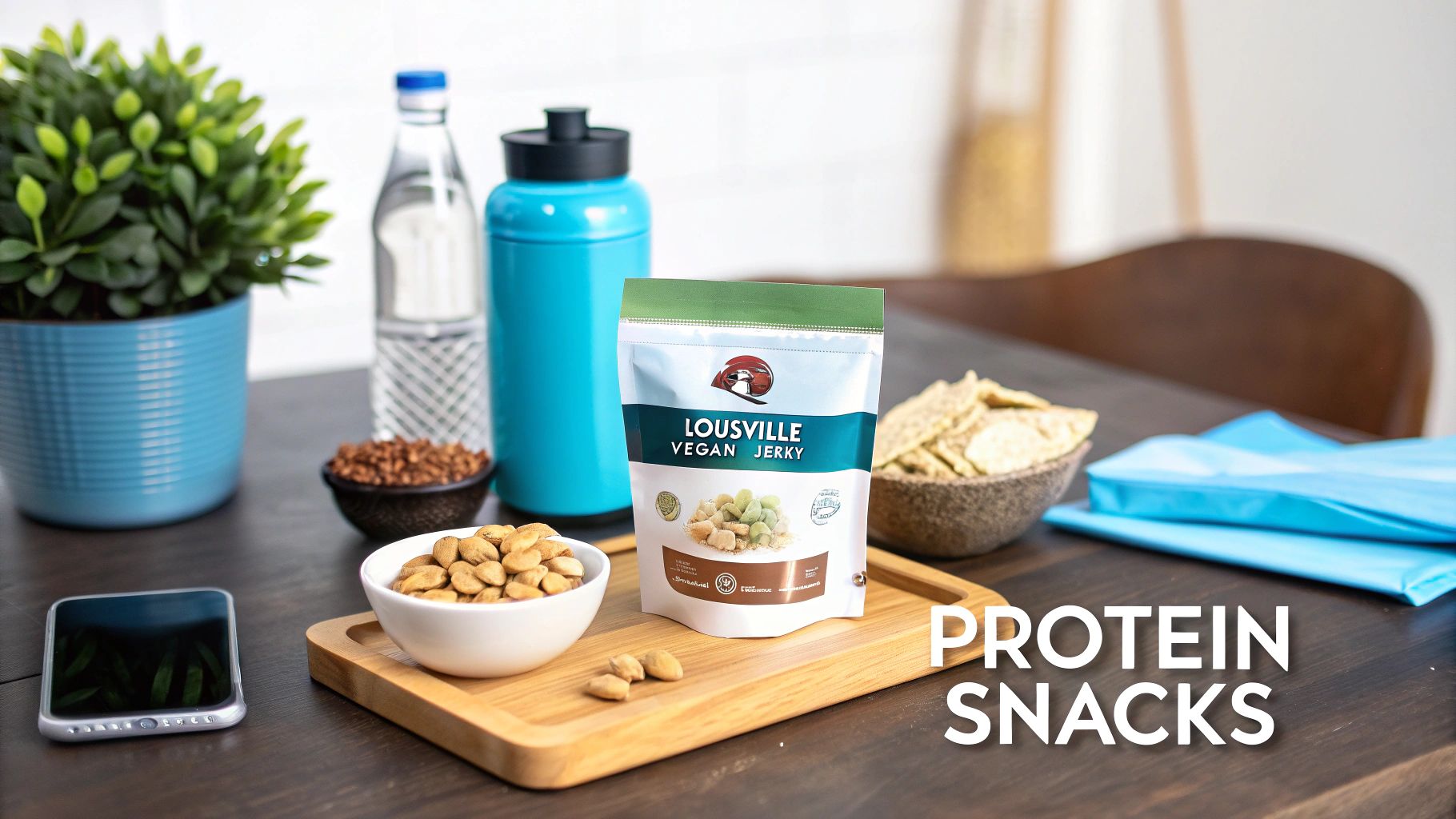
When you're short on time, you need a snack you can count on—something that delivers on taste, texture, and nutrition. This is exactly where Louisville Jerky shines. It perfectly fills that space between pure convenience and a serious protein punch, with a satisfyingly chewy texture and bold flavors that actually crush your cravings.
Unlike so many snacks packed with sugar or empty calories, each bag is crafted to give you a real protein boost. It's a fantastic non-GMO, cruelty-free option for anyone needing a quick refuel, whether you’re leaving the gym, stuck in traffic, or just trying to survive a long workday.
For more inspiration, we've gathered some of our other favorite high protein vegan snack ideas to help you stock your pantry.
Here’s a quick look at the delicious flavor profiles offered by Louisville Vegan Jerky and their protein content per serving.
Louisville Jerky Flavor And Protein Guide
| Flavor Profile | Key Tasting Notes | Protein Per Serving (Grams) |
|---|---|---|
| Smoked Black Pepper | Savory, peppery, with a classic smoky finish. | 21g |
| Pepperoni Pizza | Zesty, savory, with fennel, garlic, and paprika. | 21g |
| Smoky Carolina BBQ | Sweet, tangy, and smoky with a mustard-vinegar kick. | 21g |
| Maple Bacon | A perfect balance of sweet maple and savory smoke. | 15g |
| Buffalo Hot Wing | Tangy, spicy buffalo sauce paired with a fresh hint of dill. | 15g |
With flavors this good and protein this high, it's easy to find a favorite that fits right into your routine.
More Than Just Jerky
The best snacks are the ones that can do more than one thing, and that's what makes Louisville Jerky a true pantry staple. While it’s incredible straight out of the bag, its uses go way beyond just snacking. It's a flavor and protein booster that can take your everyday meals to the next level.
Think of it as your secret weapon for adding a savory, chewy kick to otherwise simple dishes. Tearing up a few pieces over a salad, wrap, or grain bowl adds a surprisingly delicious texture while instantly bumping up the protein and flavor.
This isn't just a happy accident, either. The introduction of Louisville Toppins' was a game-changer, offering a product specifically designed for this. These crispy, bacon-flavored pieces are perfect for sprinkling over salads, baked potatoes, and pizzas, giving you that same protein-and-flavor punch in a super convenient, ready-to-use form. It's a simple way to make sure you're adding a protein boost to any meal, not just your snacks.
How To Build Balanced High-Protein Vegan Meals
Knowing which vegan foods are high in protein is just the first step. The real magic happens when you start putting them together into balanced meals that your body can actually use effectively. It’s about building plates that are as smart as they are satisfying, fueling everything from muscle repair to sustained energy throughout your day.
A common hang-up for people new to plant-based eating is the idea of "complete proteins" and getting all nine essential amino acids at once. Let's clear the air: you don't need to stress about this. The old myth about meticulously combining specific foods like rice and beans in every single meal is outdated. Your body is pretty clever—it pools amino acids from everything you eat over the course of a day.
The Vegan Plate Method
For a simple, no-fuss way to build a solid meal, we always recommend the "plate method." It’s a visual trick that takes the guesswork out of balancing your nutrients, so you don't have to get bogged down counting grams or tracking macros.
Think of your plate as a pie chart for your health. This simple framework ensures you’re getting a great mix of macronutrients and micronutrients every time you sit down to eat.
Here’s how to portion it out:
- Half Your Plate (50%): Vegetables. Load this up with a rainbow of non-starchy veggies. Think broccoli, leafy greens like spinach or kale, bell peppers, and zucchini.
- One Quarter (25%): High-Protein Source. This is your protein powerhouse corner. Fill it with tofu, tempeh, lentils, or a hearty scoop of chickpeas or black beans.
- One Quarter (25%): Complex Carbohydrates. The final section is for your long-lasting energy source. Choose whole grains and starches like quinoa, brown rice, sweet potatoes, or oats.
Making It Delicious And Diverse
This balanced approach doesn't just work wonders for your health; it's also a fantastic launchpad for getting creative in the kitchen. Learning about different Vegetarian Vegan Food Pairings can help you create some truly exciting and flavorful dishes.
Don't forget that a healthy gut plays a massive role, too. A thriving microbiome helps you break down all that plant fiber and absorb nutrients much more efficiently.
The demand for tasty, diverse plant-based options is booming. North America is at the forefront of this movement, especially with plant-based alternatives. This is why you see so many more satisfying options on the market, like chewy vegan jerky in flavors from maple bacon to pepperoni pizza. People want plant-based protein that delivers on both texture and taste.
Common Questions About Vegan Protein
If you’re exploring a plant-based diet, you've probably run into a few recurring questions about protein. It's a common topic, and frankly, there's a lot of old-school misinformation out there. Let's clear the air and tackle some of the biggest concerns head-on.
One of the most persistent myths is that getting enough protein on a vegan diet is a constant struggle. But as our high-protein foods list demonstrates, powerful sources like lentils, tofu, and seeds make it incredibly easy to hit your protein goals without a second thought.
Can You Build Muscle On A Vegan Diet?
Yes, you absolutely can. Let's be clear: muscle growth comes down to two things—smart resistance training and enough protein to repair and build tissue. Your muscles don't care where that protein comes from.
Plenty of elite athletes and bodybuilders are living proof, thriving on plant-based diets. They power their performance with foods like seitan, tempeh, and all kinds of beans and legumes. For those with particularly high protein demands, supplementing can be a smart move. If you're looking to add a supplement to your routine, it's worth reading up on finding the best protein powder to match your needs.
The key is consistency and variety. Your body doesn’t distinguish between plant or animal protein when it comes to building muscle; it just needs the essential amino acid building blocks, which a diverse vegan diet provides in abundance.
Another question we hear all the time is about protein supplements. Are they necessary? Not at all. A well-planned diet based on whole foods should always be your foundation. But they can be a super convenient way to get a quick protein boost, especially after a tough workout or on days when you're short on time. If you're looking for a great post-workout or on-the-go option, check out Gym Snack, which is high in pea protein and rebuilds essential amino acids.
Want to get into the nitty-gritty of how it all works? Take a look at our deeper dive into what vegan protein is and how your body puts it to use. With a little planning, a vegan diet gives you everything you need to feel strong, energized, and ready for anything.
For a convenient, high-protein snack that's always ready to go, check out the delicious, non-GMO, and cruelty-free options from Louisville Jerky Co. at https://lvjco.com.