


Cooking textured vegetable protein really comes down to two things: rehydration and seasoning. Think of it like this: you cover one part dry TVP with about two parts hot, flavorful liquid—like a good veggie broth or seasoned water—let it soak for 10-15 minutes until it’s tender, and then you’re ready to cook it just like you would ground plant-based protein. It’s that simple to start.
Your Guide to Perfectly Cooked TVP
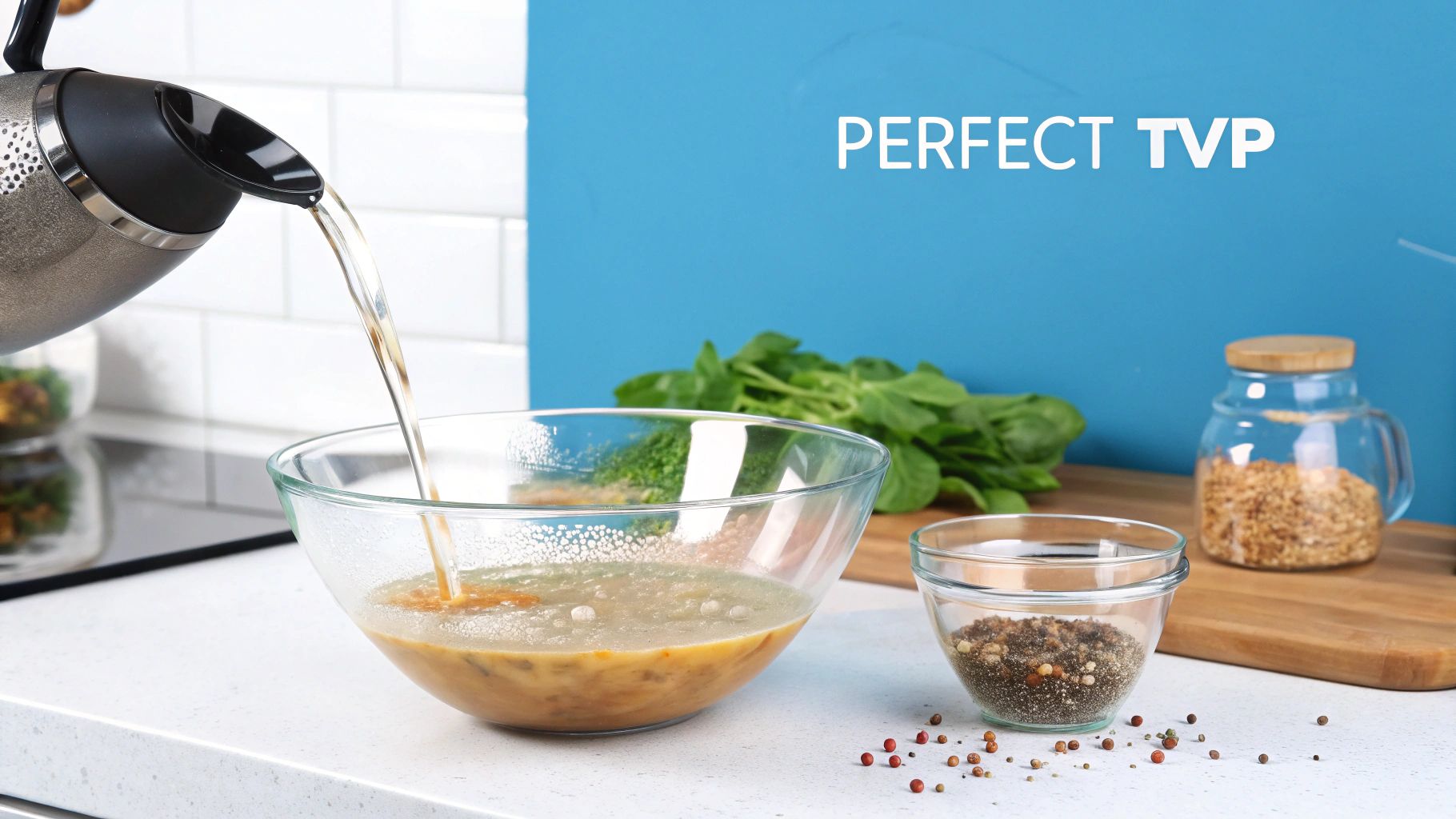
So, you've got a bag of dry Textured Vegetable Protein (TVP) and you're wondering how to turn those little granules into a delicious, savory meal. You've come to the right place. This guide is here to walk you through the entire process, starting with the most important step of all.
The real secret to making TVP taste incredible—and not bland or spongy—is to pack it with flavor right from the very beginning. We'll kick things off with the essential liquid-to-TVP ratio and soaking times, giving you the foundation you need to build any dish.
Mastering the Basics of TVP
Think of dry TVP as a blank canvas. It's completely neutral, which means it’s ready and waiting to soak up any flavor you throw at it. That's precisely what makes it such a powerhouse ingredient in a plant-based kitchen. Made from defatted soy flour, TVP is a high-protein, non-GMO staple that's both easy on the wallet and lasts forever in the pantry.
Before you can use it in tacos, chili, or a rich bolognese, you have to rehydrate it. This initial soak is your first—and best—opportunity to create a deep, savory flavor base.
Here’s a quick-reference table to get you started. Different sizes of TVP granules or chunks might need slight adjustments, but these ratios are a reliable starting point for most common types.
Quick TVP Rehydration Ratios
Use this table as a quick reference for standard liquid-to-TVP ratios and soaking times to achieve the perfect texture for your vegan dishes.
| TVP Type | TVP Amount | Hot Liquid Amount | Soaking Time |
|---|---|---|---|
| Fine Granules | 1 cup | 7/8 cup | 5–7 minutes |
| Chunks/Strips | 1 cup | 1 cup | 10–15 minutes |
| Flakes | 1 cup | 1 cup | 8–10 minutes |
Remember, these are just guidelines. The key is to add enough liquid for the TVP to absorb it all without becoming waterlogged. Once you get the hang of rehydration, a world of culinary possibilities opens up.
The go-to method for most people is mixing 1 part TVP with 2 parts hot water or broth and letting it sit for 10–15 minutes. This technique is a favorite for a reason—it’s used by roughly 75% of home cooks who regularly prepare TVP.
If you're wondering where to find this pantry essential, check out our guide on where to buy TVP to find it in stores near you or online.
Building Flavor During Rehydration
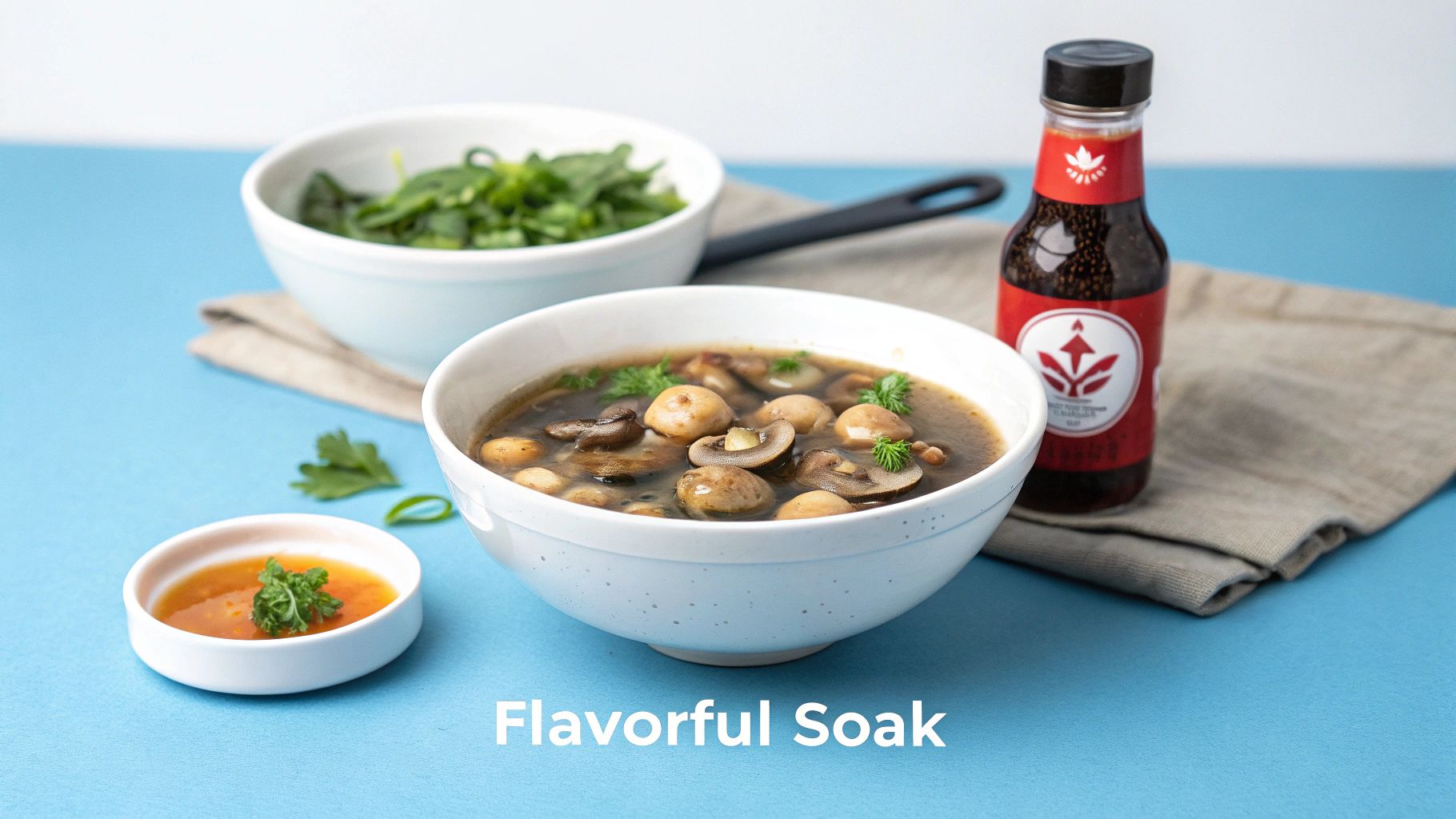
The road to truly delicious TVP starts the second it touches liquid. This is your first—and best—shot at building a serious flavor foundation. Sure, plain water will technically rehydrate it, but it does absolutely nothing for the taste. You'll just end up with a bland, spongy product that you have to work twice as hard to season later.
Think of the rehydration liquid as the marinade that works from the inside out. By using a rich, savory liquid from the get-go, you can transform your TVP from boring to brilliant before it even hits the pan.
Why Hot Liquid Is a Must
I can't stress this enough: always use hot liquid. It's non-negotiable for both texture and flavor. The heat helps the TVP’s protein structure expand and soften properly, allowing it to soak up liquid faster and more completely. The result is a tender, more satisfying texture without any tough or chewy bits.
If you use cold water, the TVP rehydrates slowly and unevenly. This often leaves the granules with a dense, overly firm bite that’s really hard to fix once you start cooking. For the best possible outcome, start with simmering liquid.
Pro Tip: Make sure every last granule is submerged in the hot liquid. As soon as you combine them, give everything a good stir to ensure even saturation. This simple step prevents those dreaded dry pockets and guarantees a consistent texture.
Crafting an Umami-Packed Soaking Liquid
Here's where the real magic happens. This is your chance to get creative and customize the flavor profile for whatever you're cooking. Ditching plain vegetable broth is the secret to unlocking incredible taste. Your goal is to create a soaking liquid loaded with savory, umami notes that will penetrate deep into the protein.
Here are a few of my go-to combinations for a flavor-packed soak:
- For a "Beefy" Vibe: Start with a good vegan "beef" broth. Then, add a splash of tamari or soy sauce for that salty kick, a teaspoon of nutritional yeast for a cheesy, nutty depth, and a few drops of liquid smoke to bring it all home.
- For an Earthy Mushroom Base: Steep dried mushrooms like shiitake or porcini in hot water. This creates an intensely flavorful broth. Just strain the mushrooms out (save them for your recipe!) and use that incredible liquid to rehydrate the TVP.
- For an All-Purpose Savory Boost: A simple but killer mix is a quality vegetable stock combined with a tablespoon of tomato paste and a teaspoon of onion powder. It just works.
Don't forget to add your dry spices directly to the rehydration liquid, too. Things like smoked paprika, garlic powder, cumin, or dried herbs will "bloom" in the hot broth, infusing their essence straight into the TVP granules. This creates a much deeper, more cohesive flavor profile than just tossing them in the pan later.
Seasoning TVP for Maximum Impact
Once your TVP is rehydrated, it becomes this amazing flavor sponge, ready to soak up anything you throw at it. But hold on—before you go wild with the spice rack, there's one tiny, but crucial, step that I swear by for getting the texture just right.
Gently squeeze out the excess water from the rehydrated crumbles. I usually just press them against a fine-mesh sieve with a spoon, but clean hands work too. This simple move is the secret to avoiding a soggy, watery mess and makes more room for all the good stuff to get in.
Creating Versatile Seasoning Blends
With your TVP prepped, it's time for the fun part. TVP is basically a blank canvas, which means you can make it taste like almost anything. The trick is to think about your final dish and build your seasonings from there.
Here are a few combinations that I use all the time:
- For Tacos or Chili: You can't go wrong with a classic blend of chili powder, cumin, smoked paprika, and a pinch of oregano. It creates that perfect warm, savory base for any Tex-Mex dish.
- For a Savory Stir-Fry: I love to mix fresh minced ginger and garlic with a splash of tamari and a little sesame oil. It’s an instant flavor boost that works so well with crisp veggies.
If you really want to get creative and understand how different seasonings play together, checking out a comprehensive guide to herbs and spices can give you some incredible ideas to elevate your cooking.
Using Marinades for Deeper Flavor
For a really intense taste, a marinade is your best friend. This technique lets the TVP soak up a concentrated sauce, infusing flavor deep into every single piece. And don't worry, this doesn't have to take all day.
Even a quick 20-minute soak in a flavorful marinade can make a huge difference. If I'm making a vegan "beef" and broccoli, a simple mix of tamari, rice vinegar, garlic, and a touch of maple syrup does the trick beautifully. Just make sure the TVP is well-coated before it hits the heat.
One of the biggest mistakes I see is people seasoning TVP only after it’s mixed in with everything else. Always season it separately first, either with a dry rub or a marinade. This lets the TVP build its own delicious character instead of just getting lost in the dish.
Finally, don't forget the power of healthy fats. A drizzle of good olive oil or avocado oil when you start cooking does more than just prevent sticking—it adds a satisfying richness to the mouthfeel. This little touch helps mimic the satisfying texture found in many plant-based dishes, creating a more balanced and complete flavor in your compassionate, vegan meals.
Choosing Your TVP Cooking Method
Once you've rehydrated and seasoned your TVP, it's time for the fun part—cooking. This is where you decide the final character of your dish. Will it be crispy and browned? Tender and juicy? The method you pick really shapes the end result.
TVP’s chameleon-like ability to adapt is a huge part of its appeal. It can star in everything from stews and stir-fries to tacos and burgers. This adaptability has made it a staple in kitchens worldwide, especially in the Asia-Pacific region, where you'll find it in traditional curries and noodle soups.
Stovetop and Skillet Frying
For that classic, crumbly "ground" texture with those irresistible crispy edges, the skillet is your best friend. This is my go-to for things like taco filling, shepherd's pie, or a hearty bolognese sauce. The trick is a hot pan and a little bit of oil.
Here's how I do it:
- Heat a tablespoon of a neutral oil in a big skillet over medium-high heat.
- Add your seasoned TVP and spread it out in a single layer.
- Now, hands off! Let it cook without touching it for 3-4 minutes. This is crucial for developing that beautiful crust.
- Once it's browned on the bottom, start breaking it up with a spoon and stir occasionally until it's cooked to your liking.
The right pan makes a world of difference here. If you're curious about what works best, it's worth learning how to choose the right cookware for your kitchen.
Here’s a little trick I’ve picked up: deglaze the pan with a splash of soy sauce or veggie broth right at the end. It lifts all those tasty browned bits stuck to the pan and coats the TVP in an extra layer of savory goodness.
Oven Baking for Firmness
Need something that holds its shape, like a veggie burger, vegan meatloaf, or plant-based meatballs? Baking is the answer. The dry, consistent heat of the oven helps bind everything together, giving you a firm texture that won't fall apart.
For burgers or meatballs, you'll want to mix your seasoned TVP with a binder—think flax eggs, breadcrumbs, or even a little mashed sweet potato. Shape them, then bake at 375°F (190°C) for about 20-25 minutes, giving them a flip halfway through. You'll get that perfect firm-on-the-outside, tender-on-the-inside bite. It's a great technique for making delicious vegetarian meat crumbles that hold together.
Slow Cooker and Air Fryer Methods
For those days you want to just set it and forget it, the slow cooker is a lifesaver. It’s absolutely perfect for dishes where you want deep, melded flavors, like a vegan chili or sloppy joes. Just toss your rehydrated TVP in with everything else and let it simmer on low for 4-6 hours.
On the flip side, if you want crunch and you want it fast, grab your air fryer. Toss your rehydrated TVP crumbles with a touch of oil, some liquid smoke, and soy sauce for a smoky, bacony flavor. Air fry them at 350°F (175°C) for 5-8 minutes, shaking the basket midway. You'll have crispy "bacon" bits ready for salads or potatoes in no time.
Troubleshooting Your TVP: From Chewy to Champion
Even seasoned cooks hit a bump in the road now and then. When you're learning the ropes with a new ingredient like TVP, it’s totally normal for things to go a little sideways. Don't worry, most TVP mishaps are incredibly easy to fix.
Think of this as your troubleshooting guide. Whether your TVP is too tough, a bit watery, or disappointingly bland, we've got the simple fixes to get your dish back on track. Let's tackle these common issues head-on.
The Problem: It’s Tough and Chewy
You take a bite, and instead of a satisfying, tender texture, you get something tough and overly chewy. What went wrong?
Almost every time, this is a simple case of under-rehydration. The TVP just didn't get enough hot liquid or enough time to fully soften up. This is especially common with the larger chunks or strips, which need a little more patience.
The fix is easy. If you're still cooking, just add a splash more broth or water to the pan, pop a lid on, and let it simmer for an extra 5-10 minutes. That extra steam and moisture will give it the chance it needs to become perfectly tender.
The Opposite Problem: It’s Soggy and Watery
On the other end of the texture spectrum, you have soggy TVP. This creates a mushy, watered-down dish where none of the flavors seem to pop. The culprit here is almost always skipping one crucial step: squeezing out the excess water.
After your TVP has rehydrated, you need to get rid of that extra liquid. Gently press it in a fine-mesh strainer or just give it a good squeeze with your hands. This step is non-negotiable because it makes room for the TVP to soak up what you actually want it to taste like—your sauces, spices, and oils.
Think of TVP like a little sponge. A sponge already full of plain water can't absorb a flavorful sauce. Squeeze out the bland water first, and you've got a sponge ready to soak up all the deliciousness you throw at it.
The Rescue Mission: My Dish is Bland
Did you finish cooking, taste it, and feel... nothing? Bland TVP is a classic rookie mistake, and it usually means one of two things: you rehydrated with plain water or you were too shy with your seasonings. TVP is a blank canvas; it has zero flavor on its own, so it's 100% reliant on you for taste.
But a bland dish is far from a lost cause! You can easily revive it by adding a punch of savory, umami flavor.
Try stirring in one of these quick fixes:
- A splash of soy sauce or tamari for that salty, savory depth.
- A teaspoon or two of nutritional yeast for a cheesy, nutty note.
- A few drops of liquid smoke to give it a rich, "cooked-over-a-fire" complexity.
These simple additions can wake up the entire dish, turning a flavorless flop into something you’ll be excited to eat.
A Few Common Questions About TVP
If you're new to cooking with textured vegetable protein, you probably have a few questions. That's totally normal! Let's clear up some of the most common ones so you can feel like a pro in the kitchen.
Can I Rehydrate TVP With Cold Water?
You can, but I wouldn't recommend it. For the best texture, hot water or broth is really the way to go.
Hot liquid works so much faster and more effectively. The heat helps the dehydrated protein structure open up and absorb the liquid (and all that good flavor!) evenly. This gives you that tender, satisfying consistency we're all after.
If you use cold water, you'll find the TVP takes way longer to soften and often ends up with a noticeably chewier, sometimes even tough, texture. Stick with hot liquid for fantastic results every time.
How Should I Store Uncooked and Cooked TVP?
Storing TVP is super easy, but the rules are a little different depending on whether it's dry or already cooked.
-
Uncooked TVP: Just keep it in an airtight container somewhere cool and dark, like your pantry. When stored properly, it’s incredibly shelf-stable and can last for more than a year.
-
Cooked TVP: Once you've cooked it, treat it like any other leftover. Let it cool down, pop it into an airtight container, and it'll keep in the fridge for up to 5 days. It also freezes like a dream for up to 3 months, which makes it perfect for batch-prepping meals.
What Is the Difference Between TVP Granules and Chunks?
The only real difference is size and shape. Think of it as the plant-based equivalent of ground protein versus stew-style pieces. The form you choose really just depends on what you're making.
Granules are small and fine, making them a fantastic substitute for ground crumbles. They are perfect for things like vegan chili, taco filling, bolognese sauce, or sloppy joes.
Chunks or strips are larger and give you a more substantial bite. They work great in recipes where you'd normally use cubed plant protein, like hearty stews, curries, or stir-fries. The rehydration method is identical, but the larger pieces might need a couple of extra minutes to get fully tender.
A lot of people also ask about the nutritional side of things. Is TVP a healthy addition to a plant-based diet? We've got a whole article on that. If you're curious, you can learn more about whether textured vegetable protein is healthy and see how it fits into a balanced lifestyle.
Looking for a convenient, protein-packed vegan snack without any cooking required? Louisville Jerky Co. offers a huge variety of bold, chewy, non-GMO jerky that's perfect for any time. Find your new favorite flavor at https://lvjco.com and taste the difference