


At its core, a meat substitute chicken is a food made entirely from plants, but designed to give you that familiar, satisfying experience of eating chicken. It's all about capturing the taste and texture we love, just without involving any animals.
This guide is for everyone. Whether you've been vegan for years or you're just starting to explore plant-based options, we're here to help you navigate this exciting corner of the food world with confidence.
What's Behind the Plant-Based Chicken Boom?
The food landscape is definitely shifting, and plant-based chicken is leading the charge. It wasn’t long ago that finding a decent, cruelty-free chicken alternative was a real mission. Now, you can walk into almost any grocery store or restaurant and find an incredible variety of options built to satisfy just about any craving.
This isn't just some passing fad; it's a real movement. It reflects a bigger shift in how we're all thinking about the food we eat.
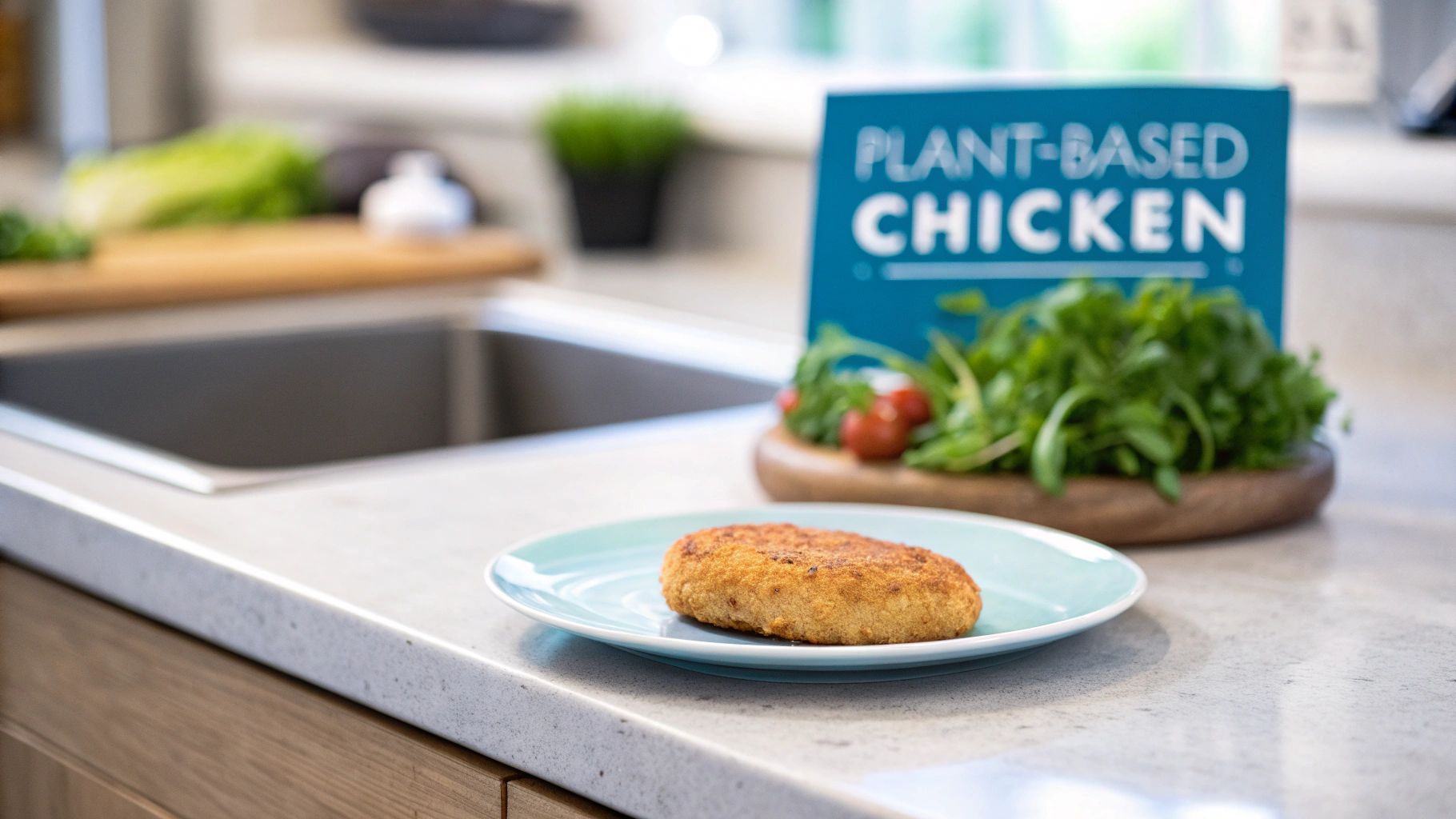
Think of this guide as your roadmap to everything meat substitute chicken has to offer. We'll break down what goes into it, the best ways to cook it, and how to pick the perfect product for whatever you're making.
So, Why Is Everyone Suddenly Talking About It?
The buzz around vegan chicken isn't coming from just one place. It’s a mix of powerful factors that are resonating with more and more people. For a lot of folks, it starts with an ethical choice. Picking a plant-based option is a direct way to avoid supporting industries that cause animal suffering, letting them align their meals with their values.
Then there's the environmental piece of the puzzle, which is huge. It's no secret that producing plant-based proteins is generally much gentler on the planet, requiring less land and water than conventional chicken farming. For many, this is a powerful and practical way to make a more sustainable choice.
Plant-based chicken isn't just a niche product; it's become the heavyweight champion of the plant-based meat world, claiming about 30% of the global market share and ringing up the largest portion of the revenue.
With the entire plant-based meat market valued at roughly USD 10.24 billion and still climbing, it's clear consumers are voting with their wallets. You can dig deeper into the plant-based chicken market growth on Future Market Insights.
It’s Not Just a Substitute
Here’s the thing: we need to stop thinking of these products as mere "substitutes" and start seeing them for what they are—genuinely delicious food. Food innovators are creating options that go way beyond just mimicking animal-based chicken. They're crafting flavorful, satisfying, and creative products that stand on their own.
Take the explosion in convenient, protein-packed snacks, for example. Companies like Louisville Jerky Co. are masters at turning simple plant ingredients into bold, chewy jerky perfect for on-the-go snacking. It’s proof that eating plant-based is anything but restrictive or boring.
What Is Vegan Chicken Actually Made Of?
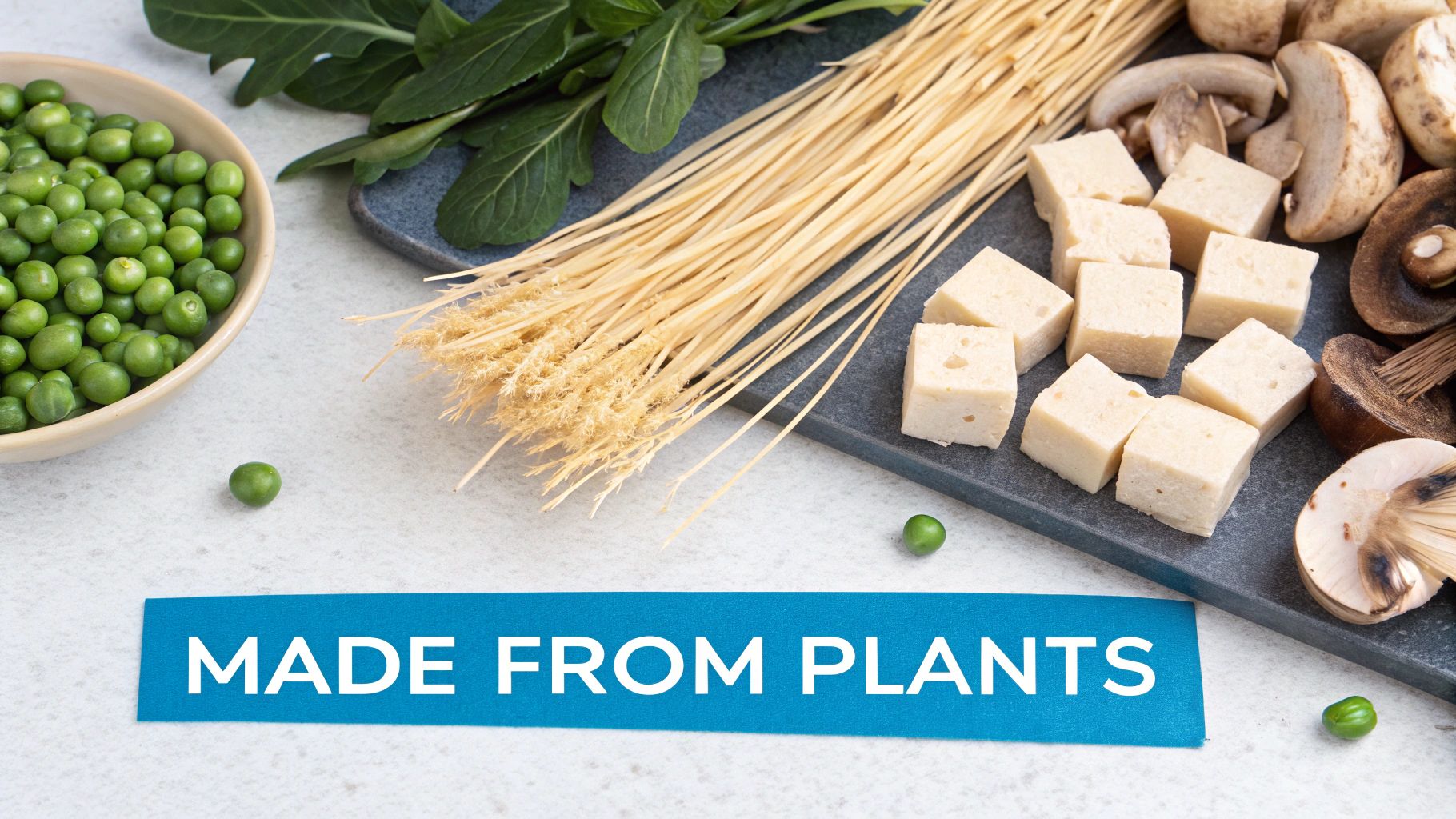
Ever find yourself staring at a perfectly crispy vegan nugget and wondering what kind of sorcery is involved? It’s not magic, but some seriously clever food science that turns simple plants into a familiar, satisfying meal.
Knowing what goes into your food is empowering. It helps you read labels like a pro and pick a meat substitute chicken that lines up with what you care about, whether that's eating cruelty-free or sticking to non-GMO ingredients.
At the core of every plant-based chicken product is a protein source. Think of it as the foundation. Food artisans and innovative brands choose their base ingredients carefully to get a specific result, whether it’s a tender, pull-apart texture or a firm, hearty chew. The goal is always the same: create something that tastes great and has the right feel.
To help you get a clearer picture, here’s a quick rundown of the most common ingredients you'll find on the label.
Common Ingredients in Meat Substitute Chicken
| Ingredient Base | Source | Key Textural Trait | Best For |
|---|---|---|---|
| Soy Protein | Soybeans | Versatile, from soft to fibrous | Tofu, tempeh, TVP for nuggets & grounds |
| Wheat Gluten | Wheat Flour | Dense, chewy, and stringy | Seitan cutlets, roasts, and strips |
| Pea Protein | Yellow Split Peas | Juicy, springy, and clean | Gluten-free patties, nuggets, and tenders |
| Mycoprotein | Fungus | Tender and naturally fibrous | Juicy fillets and shredded pieces |
Each of these ingredients brings something unique to the table, allowing food creators to craft an impressive range of plant-based chicken products. Let's dig a little deeper into what makes each one work so well.
The Power of Soy Protein
Soy is one of the original MVPs of the plant-based world, and for good reason. It’s a complete protein derived from soybeans that can be molded into an incredible variety of textures.
- Tofu and Tempeh: These are the classics. Tofu’s neutral flavor makes it a blank canvas for marinades, while tempeh brings a firmer, nuttier bite to the party.
- Textured Vegetable Protein (TVP): Made from soy flour, TVP is a game-changer. When you rehydrate it, it takes on a surprisingly fibrous texture. It’s the secret weapon in many plant-based grounds, strips, and nuggets.
Want to learn more about this versatile ingredient? We break it down in our guide on what textured vegetable protein is made from. Soy's incredible adaptability is why it’s still a cornerstone of the industry.
Wheat Gluten: The Secret to Seitan
If you’ve ever enjoyed seitan, you’ve experienced the unique magic of wheat gluten. It's the pure protein extracted from wheat flour. When you mix it with water and spices, it forms a dense, elastic dough with a fibrous, chewy structure that’s hard to beat.
The texture of seitan is built from long, interconnected strands, similar to muscle tissue in animals. This is what gives it that signature "pull" and satisfying chew that so effectively replicates the texture of chicken from animal sources. It’s perfect for making hearty cutlets, roasts, and strips that stand up beautifully to grilling or pan-frying.
Pea Protein and Mycoprotein: The New Wave
The plant-based world is always evolving, and right now, pea protein and mycoprotein are leading the charge. These newer ingredients are gaining a ton of fans for their unique qualities and sustainability street cred.
Pea protein, which comes from yellow split peas, is loved for its clean flavor and for being a great hypoallergenic option. You'll often find it in newer nuggets and patties, where it helps create a juicy, convincing texture without any soy or gluten.
Mycoprotein is a fascinating one. It’s made from a naturally occurring fungus through a fermentation process, similar to making beer. The result is a protein that's naturally fibrous and low in fat, making it fantastic for creating those tender, juicy fillets and cutlets everyone loves.
This constant innovation is what makes the plant-based chicken aisle so exciting. Analysts even project that plant-based chicken will continue to lead the market, thanks to ongoing improvements in texture and flavor that are making it harder and harder to tell the difference.
Navigating the World of Plant-Based Chicken Products
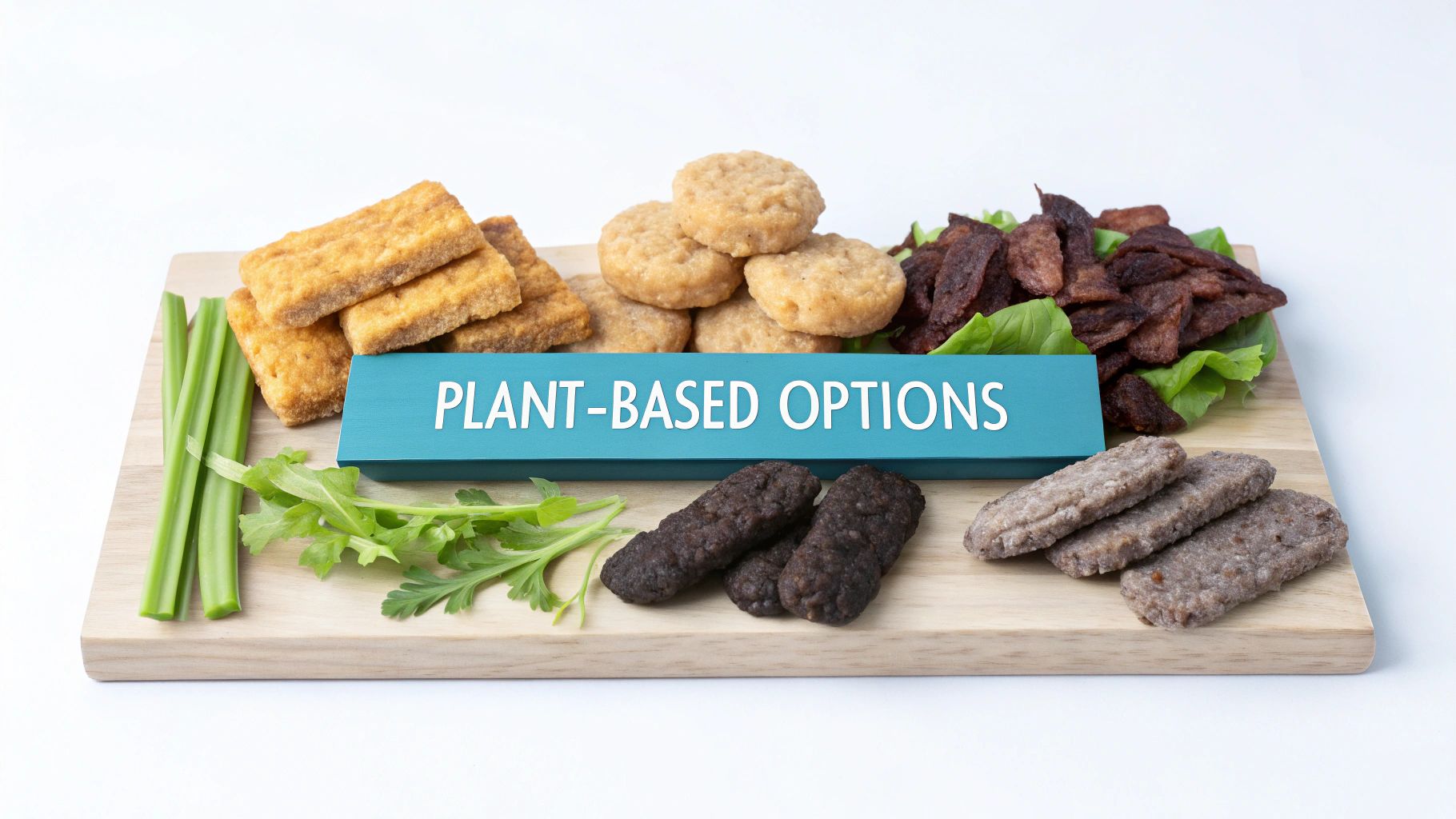
Once you get a feel for the basic building blocks of vegan chicken, the grocery store aisle stops feeling so overwhelming. It actually becomes pretty exciting. The variety of ready-made products on the shelves today is staggering, and there's a perfect cruelty-free option for just about any meal you can dream up.
From freezer-aisle heroes to grab-and-go snacks, the world of meat substitute chicken is built for how we live today. Brands have cleverly designed their products to slot right into the meals you already know and love, making it a breeze to enjoy familiar dishes while staying true to your values.
Patties and Cutlets for Hearty Meals
Think of these as your go-to for a killer sandwich or the star of your dinner plate. Plant-based patties and cutlets are made to be breaded, pan-fried, or baked, giving you a really satisfying bite and a juicy texture inside.
They’re perfect for recreating those classic comfort foods we all crave. Picture a crispy vegan chicken sandwich piled high on a toasted bun, or a golden-brown cutlet served next to a mound of mashed potatoes. These products are engineered for a firm texture that holds up beautifully during cooking, so you don't have to worry about them falling apart.
Nuggets and Tenders for Ultimate Convenience
Let’s be honest, who doesn’t love a good nugget? Vegan chicken nuggets and tenders are maybe the best proof of just how far plant-based food has come. They nail that irresistible combo of a crunchy, seasoned coating and a tender, savory center.
These are the MVPs for quick weeknight dinners, lunches for the kids, or just a satisfying snack. They cook up in minutes in an air fryer or oven, making them an incredibly convenient and delicious staple to keep stocked in your freezer.
Grounds and Strips for Endless Versatility
When a chicken-like element is part of the recipe instead of the main event, grounds and strips are your new best friends. These formats are like culinary chameleons, ready to soak up the flavors of whatever amazing dish you're whipping up.
- Plant-Based Grounds: Amazing in tacos, chilis, and pasta sauces. These crumbles add the perfect texture and protein punch.
- Vegan Strips: Already sliced and ready for action, these are perfect for stir-fries, fajitas, or tossing into a big salad. They have a satisfyingly chewy texture that grabs onto marinades and sauces like a champ.
This kind of versatility makes them a must-have in any well-stocked vegan kitchen. They open the door to adapting countless traditional recipes into compassionate, plant-based meals without missing a beat.
Ready-to-Eat Snacks for On-the-Go Fuel
Sometimes you just need a quick protein hit without any cooking involved. This is where ready-to-eat snacks really shine, offering flavorful and satisfying options that fit a busy lifestyle. And we've come a long way from basic protein bars.
A great meat substitute chicken isn't just for dinner. It can be a convenient, high-protein snack that satisfies cravings anywhere, anytime, proving that plant-based eating can be both delicious and incredibly practical.
This is exactly the niche that a brand like Louisville Jerky Co. nails. Their products take simple plant proteins and turn them into a chewy, flavor-packed snack that’s perfect for fueling up after a workout or beating that 3 p.m. slump. By offering bold flavors that echo classic chicken dishes, like the zesty Buffalo Hot Wing, they give you another awesome tool for your plant-based toolkit.
Exploring all the different products out there is half the fun. If you're curious about who's leading the pack, you can discover more about the top plant-based meat brands making waves in our detailed overview. Finding your favorite formats and flavors is what makes sticking to a cruelty-free, non-GMO lifestyle not just easy, but genuinely enjoyable.
Let’s Talk Nutrition and Texture
When you're trying to find a good chicken substitute, it really boils down to two things: what’s in it, and how does it chew? The nutritional value and the texture are what make or break the experience. Getting a handle on these two key areas will help you find the perfect product for your health goals and, just as importantly, for whatever dish you have in mind.
The great news is that plant-based options are getting better and more nutritious all the time. Brands are really dialing in their formulas to create products that not only taste fantastic but also pack a solid nutritional punch with high protein and added fiber. This makes it easier than ever to whip up a meal that’s both satisfying and kind.
A Closer Look at the Nutritional Perks
One of the biggest draws of plant-based chicken is the health angle. It’s not just about what you get, but also what you get to skip.
Plant-based chicken has a huge appeal for anyone keeping an eye on their health. It almost always has way less saturated fat and zero cholesterol compared to animal-based chicken, while still delivering a solid amount of protein. This is a massive win for everyone from gym-goers tracking their macros to people just trying to make heart-healthier choices. If you want to dive deeper into these market trends, you can explore more on the plant-based chicken market at Future Market Insights.
For those just starting out on a plant-based journey, this practical vegan guide has some great tips for building a strong nutritional foundation.
Now, let's break down how a typical plant-based option stacks up against conventional chicken.
Nutritional Snapshot of Vegan vs Conventional Chicken
This table gives you a general idea of what to expect when comparing the nutrition labels. Of course, individual products vary, but the core differences are usually quite consistent.
| Nutrient | Typical Plant--Based Chicken | Conventional Chicken Breast |
|---|---|---|
| Cholesterol | 0 mg | Varies, but always present |
| Saturated Fat | Generally low to none | Present in varying amounts |
| Fiber | Often contains dietary fiber | 0 g |
| Protein | Comparable, often 15-25g per serving | High, typically 25-30g per serving |
As you can see, a huge benefit of vegan chicken is the addition of fiber—something you’ll never find in animal products. On the flip side, it pays to be a mindful label-reader. Some processed options can be pretty high in sodium, so it’s always a good habit to check the back of the package.
The All-Important Texture Spectrum
Texture is where the real magic happens. It’s that satisfying tear, that tender bite, or that hearty chew that makes a meal feel complete. The base ingredient is the single biggest factor in determining the final texture.
Think of it this way: different ingredients create entirely different eating experiences.
The goal of a great plant-based chicken is to deliver a texture that’s not just a substitute, but genuinely enjoyable on its own terms. Whether it’s a firm bite or a soft, pull-apart feel, the right texture makes the dish.
Here’s a quick guide to how the most common ingredients affect the final feel:
- Soy-Based Products: Soy is the ultimate chameleon. It can give you that soft, shreddable quality perfect for pulled "chicken" or a much firmer, spongier bite like you’d find in a tofu-based cutlet.
- Wheat Gluten (Seitan): If you want a serious chew, this is your go-to. Seitan has a dense, fibrous structure that’s incredibly satisfying and meat-like, making it a star player in roasts or grilled strips.
- Pea Protein: This base usually results in a juicy and springy texture. It’s what gives many plant-based nuggets and patties that tender, bouncy interior.
This is also where a high-quality, ready-to-eat snack like Louisville Jerky absolutely shines. It has perfected a specific texture—that tough, satisfying chew that makes jerky so good. Understanding these textural differences is your secret weapon for picking the right product for any recipe, ensuring every meal is a hit.
How to Cook with Meat Substitute Chicken
Getting the most out of your meat substitute chicken really comes down to knowing how to handle it in the kitchen. Just as you wouldn't cook all animal products the same way, different plant-based options benefit from different techniques. With just a few simple tips, you can take these fantastic plant-based products from good to genuinely unforgettable.
The trick is to match your cooking technique to the product's base ingredient and what you're trying to achieve. Are you craving a super crispy, golden-brown crust? A tender, juicy interior? Or maybe just a quick, flavor-packed meal? There’s a perfect method for every scenario, and learning the basics will give you the confidence to start experimenting.
Mastering the Best Cooking Methods
How you cook your vegan chicken can make or break the final dish. Pan-frying is your best friend for developing that perfect golden crust, while baking is fantastic for a more tender, even cook. And for that unbeatable crunch without all the oil, the air fryer is an absolute must-have.
Here’s a quick rundown to help you choose the right path:
- Pan-Frying for a Crispy Crust: This is the go-to method for things like cutlets, tenders, and seitan strips. A bit of oil in a hot pan creates that satisfyingly crisp exterior while locking in moisture. It’s all about that textural contrast.
- Baking for Tender Results: When you’re working with larger pieces like a plant-based roast or thicker fillets, the oven is your best bet. Baking allows the heat to penetrate gently, so the inside gets perfectly cooked without the outside burning.
- Air-Frying for a Perfect Crunch: For nuggets, patties, and anything breaded, the air fryer is a total game-changer. It blasts hot air all around the food, creating an unbelievably crunchy coating with very little oil. It’s the secret to that deep-fried texture, only healthier.
If you're looking for some hands-on inspiration, this recipe for Crispy Chicken Croquettes Vegan Cheese Filling is a great place to start.
The Art of Infusing Flavor
One of the best things about plant-based proteins is how readily they soak up flavor. Since many start with a neutral taste, they're essentially a blank canvas just waiting for you to get creative with marinades and seasonings.
The real key here is time. Give your chicken substitute a chance to really absorb whatever you throw at it. A good marinade—whether it's a simple mix of soy sauce and garlic or a complex BBQ blend—can completely transform the final product. For seitan and soy-based options, letting them marinate for at least an hour (or even overnight) will make a world of difference. Don't be shy with your spice rubs, either!
A thoughtful marinade or a bold seasoning blend is your secret weapon. It’s how you take a simple plant-based protein and turn it into the star of the show, infusing every bite with incredible flavor.
The Ultimate No-Prep Flavor Boost
Let's be real: sometimes you need that delicious flavor and satisfying texture without any of the work. That’s where pre-flavored, ready-to-eat products become your kitchen’s secret weapon. They’re an instant upgrade for salads, pizzas, grain bowls, and so much more.
Products like Louisville Toppins’ were made for this. They add a savory, bacon-bit-like crunch that delivers a burst of flavor and texture with zero effort. In the same way, tearing up pieces of Louisville Jerky and sprinkling them over a dish adds a chewy, protein-packed, and intensely flavorful kick. This is the ultimate shortcut for making a simple meal feel special.
For more ideas on working with versatile ingredients, be sure to check out our guide on how to cook with textured vegetable protein.
Finding Your Perfect Plant-Based Chicken Match
Choosing the right meat substitute chicken really boils down to two things: what you're making and what you're looking for in a meal. The world of plant-based eating is more exciting than ever, and with so many options out there, you can find the perfect fit for any dish, craving, or schedule.
Whether you're a seasoned vegan hunting for your next kitchen staple or are simply exploring easy plant-based swaps for a weeknight dinner, the right choice is waiting for you. It's all about matching what you want with what a product can do.
A Framework for Your Decision
To make things easier, think about these key factors. They'll help you narrow down the options and land on a product that delivers a great-tasting meal every time.
- What's on the Menu? Planning to make a crispy "chicken" sandwich, a rich stew, or a quick stir-fry? A firm seitan cutlet holds up beautifully on the grill, while soy-based crumbles are a natural fit for pasta sauce.
- How Much Time Do You Have? If you're in a hurry, pre-cooked products or ready-to-eat snacks are a lifesaver. For those moments when you need something delicious now, you can't beat grabbing a bag of Louisville Jerky—no prep required.
- What Texture Are You After? Are you craving a hearty, satisfying chew or something more tender that shreds easily? The main ingredient is your biggest clue. Wheat gluten (seitan) brings the chewiness, while pea or soy proteins usually offer a softer bite.
Your perfect plant-based chicken is one that aligns seamlessly with your cruelty-free values, fits your daily routine, and brings you joy. It's about finding delicious, non-GMO foods that make compassionate eating easy and enjoyable.
While you might see retail sales for plant-based meats go up and down, categories like vegan chicken are still growing strong, and foodservice demand is climbing. This tells us there's a real, lasting interest in high-quality alternatives. You can learn more about these plant-based market trends at Roots Analysis. It’s proof that you’re part of a bigger, positive movement.
Got Questions? We've Got Answers
Jumping into the world of plant-based chicken can bring up a few questions, especially if you're new to it all. Here are some straightforward answers to the things people ask most, so you can feel great about your cruelty-free, non-GMO choices.
Is Plant-Based Chicken Actually Healthy?
It absolutely can be, but like with any food, what matters most is balance. Plant-based chicken usually has some major health perks right off the bat, like having zero cholesterol and way less saturated fat than animal-based chicken.
Many are also packed with protein and dietary fiber, something you simply won't get from animal-based meat. The best move? Just give the nutrition label a quick scan. Check the protein, sodium, and fat to make sure it lines up with what you're looking for.
Can I Make My Own Vegan Chicken at Home?
You sure can, and it's a lot of fun! Most homemade recipes start with a base of either vital wheat gluten (which creates "seitan") or tofu. You then mix in things like nutritional yeast and spices to get that savory flavor and a surprisingly satisfying, chewy texture.
Making your own vegan chicken is a fantastic and budget-friendly option, but it does take time to prep, steam, and cook. For those days when you need a protein boost without the kitchen project, having a ready-to-eat snack on hand is a lifesaver.
What’s the Best Way to Cook With Plant-Based Chicken?
Honestly, one of its best features is how versatile it is. You can use it in pretty much any recipe where you'd normally use animal-based chicken.
- For a Good Crunch: Breaded patties and nuggets are a no-brainer for sandwiches, wraps, or just for dipping.
- For Sauces and Fillings: Crumbles and grounds are perfect for stirring into chili, tacos, or a bolognese sauce.
- For Sautéing and Grilling: Strips are your go-to for fajitas, stir-fries, or tossing on top of a big salad.
The "best" way really just comes down to what you're in the mood to eat. Don't be shy about experimenting to see how it works in your favorite family recipes.
For a delicious and convenient meat substitute chicken snack that's ready whenever you are, check out the protein-packed jerky from Louisville Jerky Co. over at their official website.