


Starting or simplifying a plant-based diet begins in the grocery aisle. The right ingredients not only make cooking easier but also ensure your meals are delicious, satisfying, and nutritionally complete. For many, this dietary shift is a core component of a larger commitment to ethical and environmental values, aligning closely with the principles of sustainable living. A well-planned shopping trip is the first step toward making this lifestyle practical and enjoyable.
This comprehensive plant based diet grocery list is your ultimate guide, designed to demystify shopping and empower you to build a pantry that supports a vibrant, cruelty-free, and non-GMO vegan lifestyle. We'll break down every essential category, from foundational proteins like legumes and tofu to whole grains, fresh produce, and flavorful pantry staples. Forget the guesswork and learn how to shop with intention, save money, and create incredible vegan meals with confidence. This guide moves beyond simple suggestions, offering practical tips on what to buy and how to use it. Let's build your perfect shopping list, one wholesome category at a time.
1. Legumes & Pulses
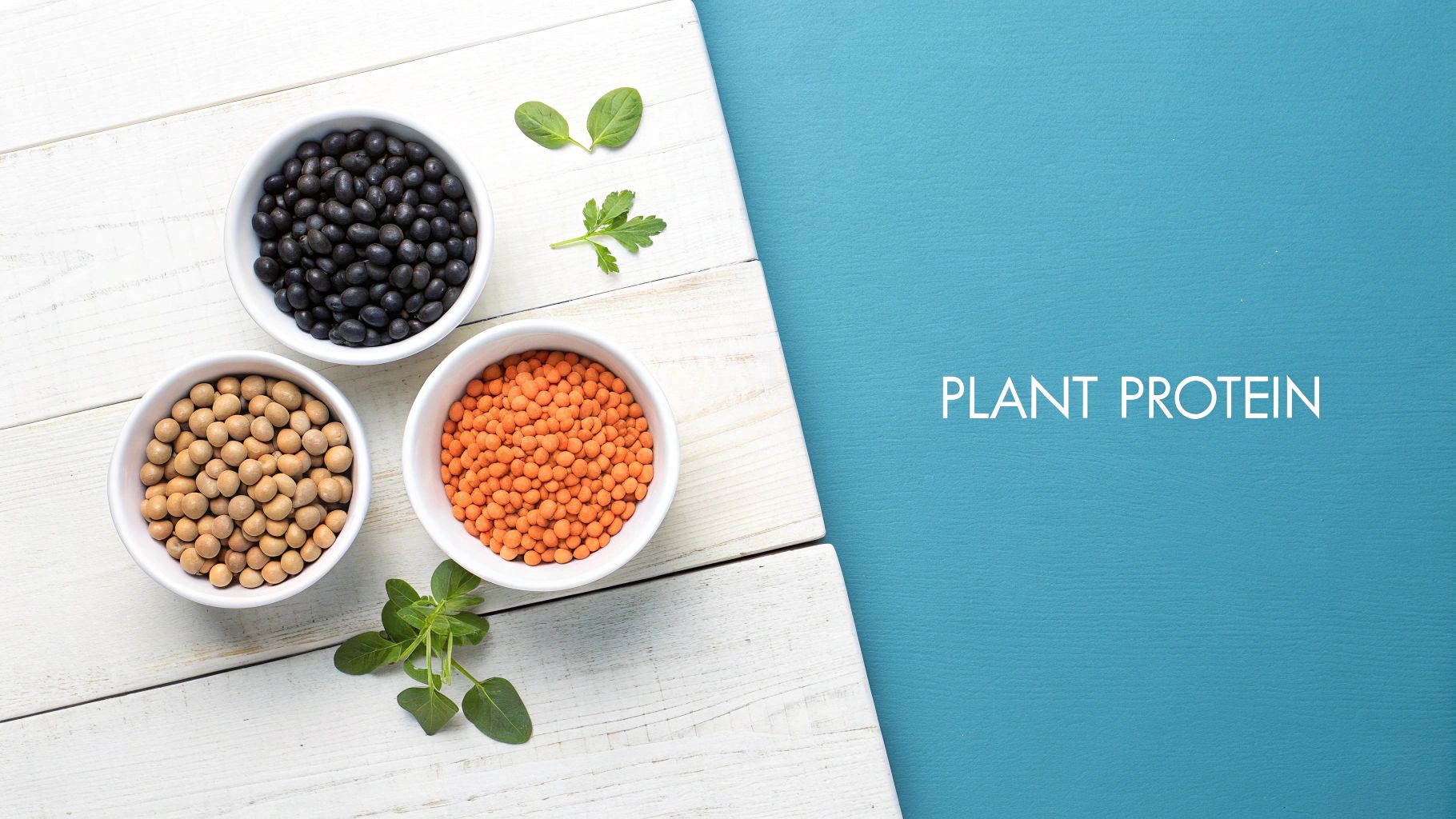
Legumes, which include all varieties of beans, lentils, and peas, are the undisputed cornerstone of a well-rounded plant-based diet grocery list. These nutrient-dense powerhouses are celebrated for being an excellent source of plant protein, fiber, and essential minerals like iron and folate. Their affordability and incredible versatility make them a staple for creating satisfying and nourishing meals, from simple weeknight dinners to elaborate international dishes.
Why They're Essential
Legumes are fundamental for meeting your daily protein needs without relying on animal products. Combining them with grains like rice or quinoa creates a complete protein, providing all the essential amino acids your body needs. Their high fiber content promotes digestive health and helps you feel full and satisfied longer.
Practical Tips for Your Grocery List
When shopping, you can choose between dried and canned options, each offering unique benefits.
- Go Canned for Convenience: Canned beans (black beans, chickpeas, kidney beans) are pre-cooked and ready to use. Just be sure to rinse them thoroughly to reduce their sodium content. Look for options in BPA-free cans.
- Buy Dried for Value: Dried legumes from brands such as Bob's Red Mill are incredibly cost-effective. Soaking them overnight reduces cooking time and can make them easier to digest.
- Grow Your Own: For the freshest ingredients, consider growing your own protein sources. You can find helpful tips for growing your own cowpeas and other legumes to get started.
Add these versatile staples to soups, stews, chilis, salads, and grain bowls for an instant boost of cruelty-free protein and fiber.
2. Whole Grains
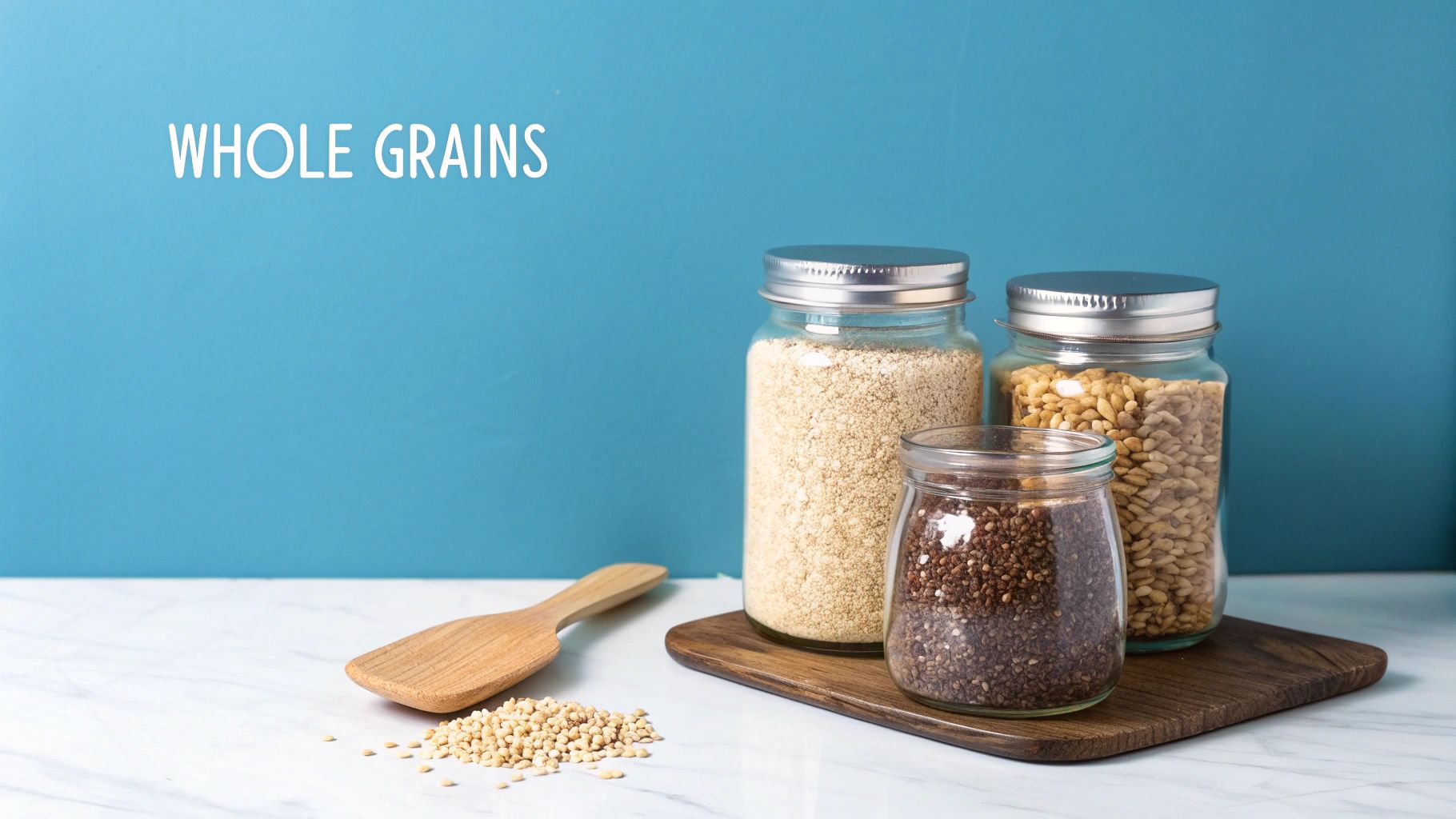
Whole grains are a fundamental energy source in any plant-based diet grocery list, providing complex carbohydrates, fiber, B vitamins, and essential minerals. Unlike refined grains, they retain all parts of the kernel: the bran, germ, and endosperm. This complete profile makes them perfect for fueling your body, supporting digestion, and serving as the versatile base for countless satisfying meals.
Why They're Essential
Whole grains provide sustained energy release, preventing the blood sugar spikes associated with processed carbohydrates. Their high fiber content promotes a healthy gut microbiome and contributes to feelings of fullness, which is beneficial for overall wellness. Grains like quinoa and buckwheat are also notable for being complete proteins, offering all nine essential amino acids.
Practical Tips for Your Grocery List
Stocking your pantry with a variety of whole grains opens up a world of culinary possibilities. Look for brands like Lundberg Family Farms or Bob's Red Mill.
- Build a Diverse Base: Include a mix of options like brown rice, quinoa, oats, farro, and barley. This variety ensures a broader range of nutrients and textures in your diet.
- Cook in Batches: To save time during the week, cook a large batch of your favorite grain and store it in the refrigerator. This makes it easy to assemble quick grain bowls, salads, and stir-fries.
- Boost the Flavor: Toasting grains like quinoa or farro in a dry pan before cooking enhances their nutty, earthy flavors. You can also cook them in vegetable broth instead of water for an extra savory taste.
Incorporate these grains into hearty breakfasts, wholesome grain bowls, pilafs, and side dishes to create balanced and delicious plant-based meals.
3. Nuts & Seeds
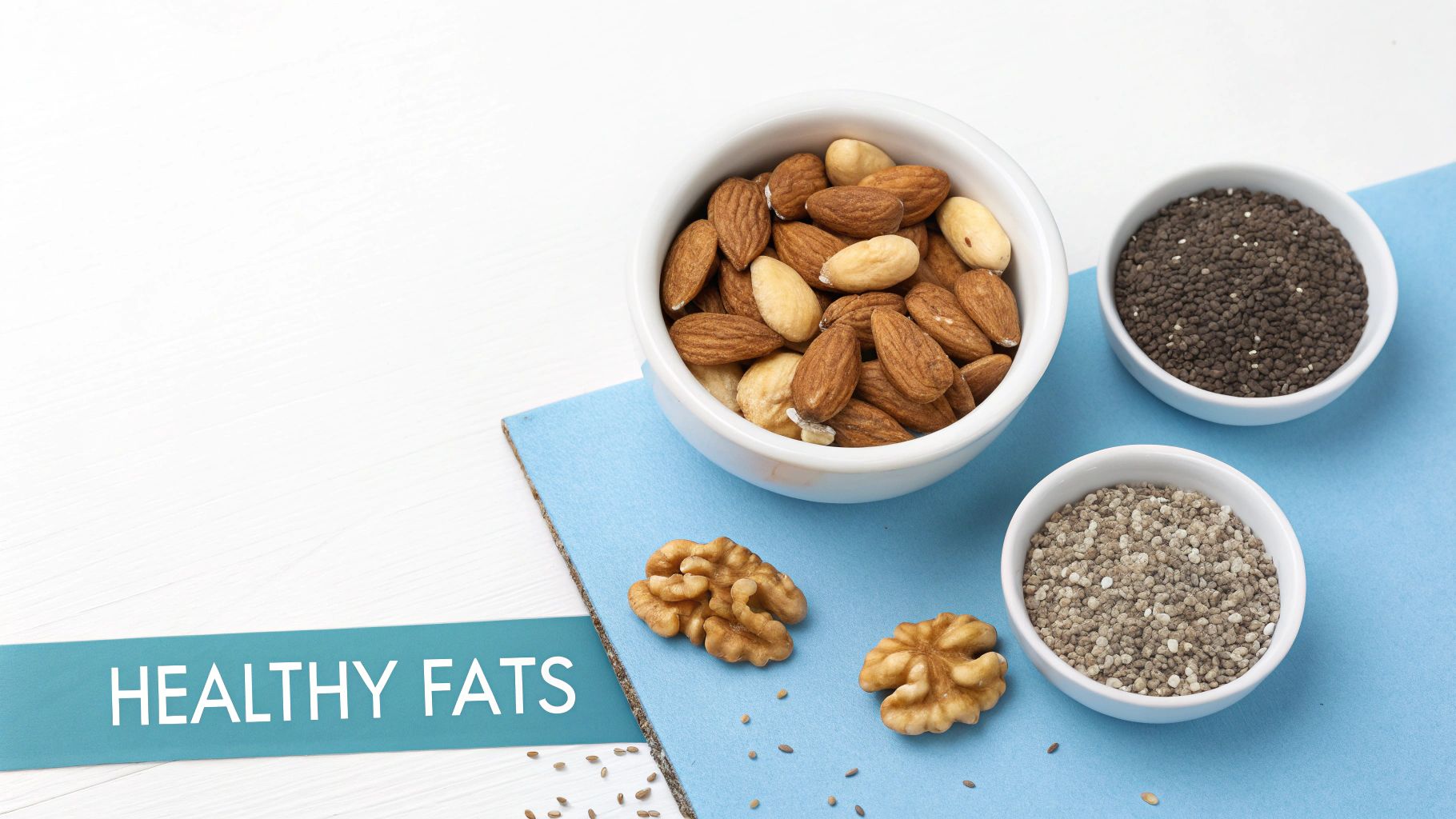
Nuts and seeds are nutrient-dense superfoods that play a vital role in any comprehensive plant based diet grocery list. These tiny but mighty ingredients are packed with healthy fats, plant protein, fiber, and a wide array of vitamins and minerals. From creating creamy sauces to providing a crunchy topping for salads, their versatility and concentrated nutrition make them an essential pantry staple for flavor, texture, and satiety.
Why They're Essential
Nuts and seeds are a primary source of omega-3 fatty acids, particularly walnuts, chia seeds, and flax seeds, which are crucial for brain health and reducing inflammation. They offer a satisfying combination of protein and healthy fats that helps keep you full and energized between meals. Incorporating them into your diet is an easy way to boost your intake of minerals like magnesium, zinc, and selenium.
Practical Tips for Your Grocery List
Whether you're buying raw almonds for homemade milk or chia seeds for pudding, a few simple tips can help you get the most out of these nutritional powerhouses.
- Buy Raw and in Bulk: Raw, unsalted nuts and seeds from non-GMO and organic brands like Navitas Organics are often more versatile and cost-effective. Storing them in an airtight container in the fridge or freezer preserves their freshness and prevents the healthy oils from going rancid.
- Grind for Absorption: Your body can better absorb the nutrients from seeds like flax and chia when they are ground. Use a coffee grinder to make a fresh batch each week to add to smoothies, oatmeal, or vegan baked goods.
- Portion for Snacking: For a convenient and satisfying snack, pre-portion nuts into one-ounce servings. To explore more plant-based snacking options, check out these healthy vegan snack ideas on lvjco.com for inspiration.
4. Vegetables & Leafy Greens
Vegetables and leafy greens are the vibrant foundation of any truly nutritious plant-based diet grocery list. They are packed with essential vitamins, minerals, fiber, and powerful phytonutrients while containing minimal calories. These nutrient-dense foods should make up a significant portion of your daily meals, providing the micronutrients necessary for optimal health, energy, and disease prevention. Their diverse flavors and textures make every meal more exciting and colorful.
Why They're Essential
Vegetables and leafy greens are crucial for their unparalleled density of vitamins and minerals like Vitamin C, Vitamin K, and potassium. Their high fiber content aids digestion, supports a healthy gut microbiome, and contributes to feelings of fullness. Incorporating a wide variety, as advocated by experts like Dr. Michael Greger of Nutritionfacts.org, is linked to a reduced risk of chronic diseases and enhanced overall vitality.
Practical Tips for Your Grocery List
Making vegetables a central part of your shopping and meal prep is easy with a few simple strategies.
- Eat the Rainbow: Aim to consume a variety of colors daily to ensure you get a broad spectrum of nutrients. Think red bell peppers, orange sweet potatoes, green kale, and purple cabbage.
- Embrace Frozen Convenience: Frozen vegetables from non-GMO and organic brands are just as nutritious as fresh, last much longer, and are often more affordable. They are perfect for quick additions to stir-fries, soups, and smoothies.
- Prep Ahead: Dedicate time each week to wash and chop veggies like carrots, celery, and broccoli. Storing them in containers makes it simple to assemble quick salads, grain bowls, and snacks.
- Know Your Greens: Lightly cooking oxalate-rich greens like spinach and chard can improve mineral absorption. Enjoy tender greens like arugula and romaine raw in salads.
By filling your cart with these powerful plants, you build a strong foundation for a healthy, satisfying, and compassionate lifestyle.
5. Plant-Based Proteins
Beyond legumes, a dedicated category of plant-based proteins offers concentrated protein and incredible texture, making them essential for a diverse and satisfying plant based diet grocery list. This group includes tofu, tempeh, seitan, and ready-to-eat meat alternatives, which are brilliant for replicating the texture and heartiness of traditional dishes. These items provide a fantastic way to add substantial, high-protein components to any meal, from quick stir-fries to robust roasts.
Why They're Essential
These specialized proteins are key for creating familiar meals without animal products, making the transition to a plant-based diet easier and more enjoyable. They are protein powerhouses, favored by many plant-based athletes for muscle building and recovery. Their ability to absorb marinades and seasonings allows them to fit seamlessly into countless global cuisines, ensuring your meals are never boring.
Practical Tips for Your Grocery List
Exploring this category opens up a world of culinary possibilities. Look for trusted non-GMO and organic brands like Nasoya, Lightlife, and Field Roast in the refrigerated section of your grocery store.
- Prep Your Tofu: For the best texture, always press your tofu before cooking. This removes excess water, allowing it to get crispier and better absorb marinades. A 30-minute marinade can dramatically enhance its flavor.
- Tame Your Tempeh: Tempeh has a firm texture and nutty flavor. Briefly steaming it for about 10 minutes before marinating helps to soften it and mellow out its strong taste.
- Utilize Seitan's Versatility: Made from wheat gluten, seitan has a uniquely meaty texture, perfect for hearty stews, sandwiches, and stir-fries.
- Read the Labels: When buying pre-made meat alternatives, check the labels for sodium content and additives to make informed choices. Learn more about the different types of vegan protein to find what works best for you.
6. Fruits
No plant based diet grocery list is complete without a vibrant array of fruits. Rich in essential vitamins, minerals, antioxidants, and fiber, fruits offer natural sweetness and incredible nutritional benefits. They are perfect for satisfying sweet cravings in a healthy way, boosting immune function, and adding flavor and color to countless meals, from breakfast bowls to whole-food desserts.
Why They're Essential
Fruits are crucial for providing a wide range of micronutrients that support overall health and disease prevention. Their high fiber content aids in digestion and promotes a feeling of fullness, while their natural sugars provide a quick source of energy. Including a variety of fruits ensures you get a broad spectrum of antioxidants, which help protect your body from cellular damage.
Practical Tips for Your Grocery List
Adding a rainbow of fruits to your cart is simple with a few smart strategies.
- Prioritize Whole Fruits: Choose whole fruits like apples, bananas, and oranges over juices to benefit from their valuable fiber, which helps stabilize blood sugar.
- Buy Frozen for Convenience: Frozen berries and mangoes from non-GMO and organic brands are perfect for smoothies and are just as nutritious as fresh. They are also cost-effective and available year-round.
- Shop Smart: Consider buying organic for produce on the "Dirty Dozen" list, such as berries and apples, to minimize pesticide exposure. Store bananas separately, as they release ethylene gas that can speed up the ripening of other nearby fruits.
7. Plant-Based Oils & Fats
Healthy fats are a vital component of any diet, and plant-based oils offer a diverse range of flavors and nutritional benefits for your grocery list. These culinary essentials provide energy, help absorb fat-soluble vitamins (A, D, E, and K), and support cardiovascular health. From drizzling on salads to high-heat sautéing, having the right oils in your pantry is key to creating delicious and well-rounded plant-based meals.
Why They're Essential
Plant-based oils and fats provide essential fatty acids, like omega-3s and omega-6s, that the body cannot produce on its own. Incorporating a variety of oils, such as heart-healthy olive oil and omega-rich flaxseed oil, ensures you get a balanced intake. They also add richness, flavor, and a satisfying mouthfeel to dishes, making your plant-based cooking more enjoyable and sustainable.
Practical Tips for Your Grocery List
Choosing the right oil depends on your cooking method and nutritional goals. Here’s how to stock your pantry effectively.
- Choose for Temperature: Use robust, refined oils like avocado oil or coconut oil for high-heat cooking (400°F+). For dressings and low-heat finishing, unrefined extra virgin olive oil from a trusted non-GMO source is ideal.
- Prioritize Smart Storage: To prevent rancidity, store your oils in dark glass bottles away from direct sunlight and heat. This preserves their flavor and nutritional integrity.
- Mindful Moderation: While healthy, oils are calorie-dense. For those following a whole-food, plant-based approach, consider using water or vegetable broth for sautéing to reduce oil consumption.
8. Plant-Based Dairy Alternatives
Transitioning to a plant-based diet doesn't mean giving up the creamy textures and familiar flavors of dairy. Plant-based dairy alternatives, including a wide array of non-dairy milks, yogurts, cheeses, and butters, are essential for recreating your favorite recipes in a compassionate, cruelty-free way. These products are often fortified with crucial nutrients like calcium and vitamin D, making them a seamless addition to any plant-based diet grocery list.
Why They're Essential
Dairy alternatives allow you to enjoy classic comfort foods, from a bowl of cereal to a cheesy pasta dish, without animal products. They provide the necessary fats and creaminess for cooking and baking, ensuring your meals remain satisfying and delicious. Many options, especially those made from soy or peas, also offer a significant protein boost, contributing to a balanced nutritional profile.
Practical Tips for Your Grocery List
The dairy-free aisle has exploded with options, so knowing what to look for can help you make the best choices for your needs.
- Choose Fortified & Unsweetened: Look for milks and yogurts from non-GMO and organic brands like Silk, Ripple, or So Delicious that are fortified with calcium and vitamin D. Opt for "unsweetened" varieties to avoid added sugars.
- Pick for Purpose: Oat milk is fantastic for creating a creamy froth in lattes, while soy milk offers the highest protein content, making it a great all-purpose option.
- Embrace Nutritional Yeast: This deactivated yeast is a must-have for any plant-based pantry. It provides a savory, cheesy flavor perfect for sprinkling on popcorn, pasta, or creating vegan cheese sauces. It's also an excellent source of B vitamins, including B12.
9. Herbs, Spices & Seasonings
Herbs, spices, and seasonings are the secret weapons that transform simple ingredients into extraordinary culinary creations on a plant-based diet. These aromatic and flavorful plant compounds are crucial for adding depth, complexity, and excitement to your meals, ensuring that you never find your food bland or boring. Beyond taste, they are packed with antioxidants and anti-inflammatory compounds, making every sprinkle a boost to your overall health and well-being.
Why They're Essential
A well-stocked spice rack is fundamental for crafting diverse and satisfying dishes without relying on animal-based fats or flavorings. Spices like turmeric and ginger offer potent health benefits, while savory additions like nutritional yeast provide a cheesy, umami flavor perfect for vegan recipes. Mastering their use is key to making your plant-based diet grocery list work for you, creating meals that are as delicious as they are nutritious and ensuring long-term enjoyment of a cruelty-free lifestyle.
Practical Tips for Your Grocery List
Building your collection strategically will elevate your cooking and save you money.
- Start with the Basics: Begin with versatile staples like garlic powder, onion powder, cumin, chili powder, oregano, and cinnamon. Brands like Simply Organic and Frontier Co-op offer high-quality organic options.
- Maximize Flavor: For the most potent flavor, buy whole spices like cumin seeds or peppercorns and grind them yourself as needed. Store all spices in airtight containers away from heat and light to preserve their freshness.
- Grow Your Own: A small windowsill garden with fresh basil, cilantro, or thyme provides a constant, fresh supply of flavor. This is a cost-effective way to add vibrant taste to any dish.
- Embrace Umami: Don't forget nutritional yeast. This deactivated yeast is a must-have for its savory, cheese-like flavor, perfect for sauces, tofu scrambles, and sprinkling over popcorn.
10. Whole-Food Plant-Based Pantry Staples
A well-stocked pantry is the secret to maintaining a consistent and enjoyable plant-based diet. These long-shelf-life ingredients provide a solid nutritional foundation and make meal assembly effortless, ensuring you always have the components for a quick, healthy dish. Items like canned goods, broths, and essential condiments are crucial for both everyday cooking and emergency preparedness.
Why They're Essential
Pantry staples eliminate the stress of daily grocery runs and empower you to create flavorful meals from scratch, even on your busiest days. Ingredients like tahini, tamari, and miso paste provide complex flavors, replacing the need for animal-based stocks or sauces. Having these items on hand supports adherence to a whole-food, plant-based lifestyle by making the healthy choice the easy choice.
Practical Tips for Your Grocery List
Building a robust plant-based pantry is simple when you focus on versatile, flavor-building ingredients.
- Choose Canned Goods Wisely: Stock up on canned tomatoes, coconut milk, and various beans. Opt for BPA-free cans or glass jars when possible, and always rinse canned beans to reduce sodium by up to 40%.
- Master Umami and Flavor: Keep essential condiments like tamari or soy sauce, tahini, and miso paste. Tahini creates creamy, dairy-free dressings, while miso adds a savory, umami depth to soups and marinades. Look for non-GMO and organic options.
- Don't Forget the Basics: Vegetable broth (Pacific Foods), nutritional yeast (from brands like Bob's Red Mill), and a variety of vinegars are non-negotiable for elevating simple dishes into something special. These items form the backbone of countless recipes on a plant-based diet grocery list.
10-Item Plant-Based Grocery Comparison
| Item | Complexity 🔄 | Prep & Resources ⚡ | Expected Outcomes 📊 | Ideal Use Cases 💡 | Key Advantages ⭐ |
|---|---|---|---|---|---|
| Legumes & Pulses | Medium 🔄 — dried require soaking/long cook; canned low-effort | Low cost; basic cookware; pressure cooker shortens time ⚡ | High protein & fiber; iron/folate; stable glycemia 📊 | Staples, soups, salads, budget meals 💡 | ⭐⭐⭐⭐ — Affordable, versatile, long shelf life |
| Whole Grains | Medium 🔄 — longer cooking/occasional soaking | Low cost; batch-cookable; simple equipment ⚡ | Sustained energy, B‑vitamins, fiber 📊 | Side dishes, grain bowls, breakfasts 💡 | ⭐⭐⭐ — Filling, heart‑healthy, blood sugar stability |
| Nuts & Seeds | Low 🔄 — mostly ready-to-eat; some grinding | Moderate cost; cool storage recommended ⚡ | Calorie-dense; healthy fats; micronutrients 📊 | Snacks, toppings, milks, nutrient boosts 💡 | ⭐⭐⭐ — Omega‑3s, satiety, portable |
| Vegetables & Leafy Greens | Low‑Medium 🔄 — wash/trim; cooking varies by type | Variable cost; refrigeration or frozen options ⚡ | High micronutrients & fiber; low calories 📊 | Core of meals, sides, salads, volume eating 💡 | ⭐⭐⭐⭐ — Nutrient-dense, disease-preventive |
| Plant-Based Proteins | Medium 🔄 — pressing/marinating for best texture | Moderate cost; refrigerated; check labels ⚡ | Concentrated protein; meat alternative functionality 📊 | Entrees, meat replacements, athletic meals 💡 | ⭐⭐⭐ — High protein, meat-like texture |
| Fruits | Low 🔄 — minimal prep; fresh or frozen options | Low‑moderate cost; seasonal or frozen for year‑round ⚡ | Vitamins, antioxidants, natural sweetness 📊 | Snacks, smoothies, healthy desserts 💡 | ⭐⭐ — Hydration, immune support, portable |
| Plant-Based Oils & Fats | Low 🔄 — choose by smoke point and use sparingly | Moderate cost; small quantities; proper storage ⚡ | Aid fat‑soluble vitamin absorption; satiety 📊 | Cooking, dressings, baking, finishing oils 💡 | ⭐⭐⭐ — Essential fats, flavor, nutrient absorption |
| Plant-Based Dairy Alternatives | Low 🔄 — ready-to-use; some require blending | Moderate cost; fortified options available ⚡ | Dairy replacement; calcium/VitD when fortified 📊 | Beverages, baking, lactose-free diets 💡 | ⭐⭐⭐ — Lactose-free, fortified, versatile |
| Herbs, Spices & Seasonings | Low 🔄 — simple application; pairing knowledge helpful | Low initial cost; store in cool/dark place ⚡ | Enhanced flavor, antioxidants; reduce need for salt 📊 | Flavoring, global cuisines, low-sodium cooking 💡 | ⭐⭐⭐ — Flavorful, healthful, long shelf life |
| Whole-Food Plant-Based Pantry Staples | Low 🔄 — ready-to-use preserved items | Low cost per shelf-stable unit; watch sodium/BPA ⚡ | Convenience, consistent nutrition, reduced waste 📊 | Meal prep, emergency supplies, quick meals 💡 | ⭐⭐ — Convenience, longevity, pantry foundation |
Bringing It All Together: Your Action Plan for Success
Navigating the grocery store on a plant-based diet can feel overwhelming at first, but with a well-structured plan, it quickly becomes an empowering and rewarding routine. This comprehensive plant based diet grocery list is more than just a checklist; it's a strategic framework for building a vibrant, cruelty-free kitchen that supports your health, aligns with your values, and simplifies your daily meal preparation. You now have the tools to stock your pantry with versatile staples, fill your refrigerator with fresh produce, and confidently select powerful plant-based proteins.
The journey to mastering your plant-based kitchen is built on consistency, not perfection. Remember the key takeaways from our guide: a diverse rotation of legumes, whole grains, nuts, and seeds forms the foundation of a balanced diet. Combining these with a rainbow of fruits and vegetables ensures a rich intake of essential micronutrients, while plant-based dairy alternatives and flavorful pantry staples like nutritional yeast and tamari make every meal exciting and satisfying.
Your Actionable Next Steps
To turn this knowledge into lasting habit, we recommend a simple, three-step approach. This will help you transition from theory to practice seamlessly.
- Conduct a Pantry Audit: Before your next shopping trip, take a few minutes to assess what you already have. Cross off items from your new plant based diet grocery list that are already in your cupboards. This simple action prevents overbuying, reduces food waste, and clarifies exactly what you need.
- Start Small and Build: Don't feel pressured to buy everything at once. Choose one or two new recipes you're excited to try this week. Use the sample shopping plan as a guide and purchase only the ingredients required for those specific meals, plus a few versatile staples like oats, beans, or tofu. As you gain confidence, you can gradually expand your inventory.
- Embrace Meal Theming: Dedicate specific nights of the week to certain types of meals, such as "Taco Tuesday" or "Stir-fry Friday." This strategy streamlines your planning process and makes creating your weekly grocery list significantly faster and more intuitive.
By adopting these practices, you transform a potentially daunting task into an efficient and enjoyable part of your lifestyle. Mastering your plant-based shopping routine is the single most effective way to ensure you always have delicious, wholesome, and compassionate meal options at your fingertips. This preparation is the key to unlocking the immense benefits of plant-based eating, from improved energy to a lighter environmental footprint, all while exploring a world of incredible flavors.
Ready to add a convenient, high-protein, and irresistibly savory snack to your plant based diet grocery list? Discover the artisan-crafted, non-GMO vegan jerky from Louisville Jerky Co., perfect for fueling your busy days, post-workout recovery, or simply satisfying a craving. Explore all the delicious, cruelty-free flavors at Louisville Jerky Co. and see why it’s a pantry essential.