


If you're wondering where to buy seitan, you're in luck—you've got plenty of options. These days, it's not some obscure health food item you have to hunt for.
You can usually find seitan hanging out in the refrigerated section of most big grocery stores, right next to its plant-based cousins, tofu and tempeh. But if you're looking for the absolute best selection, online vegan markets are the way to go.
Your Quick Guide to Finding Seitan
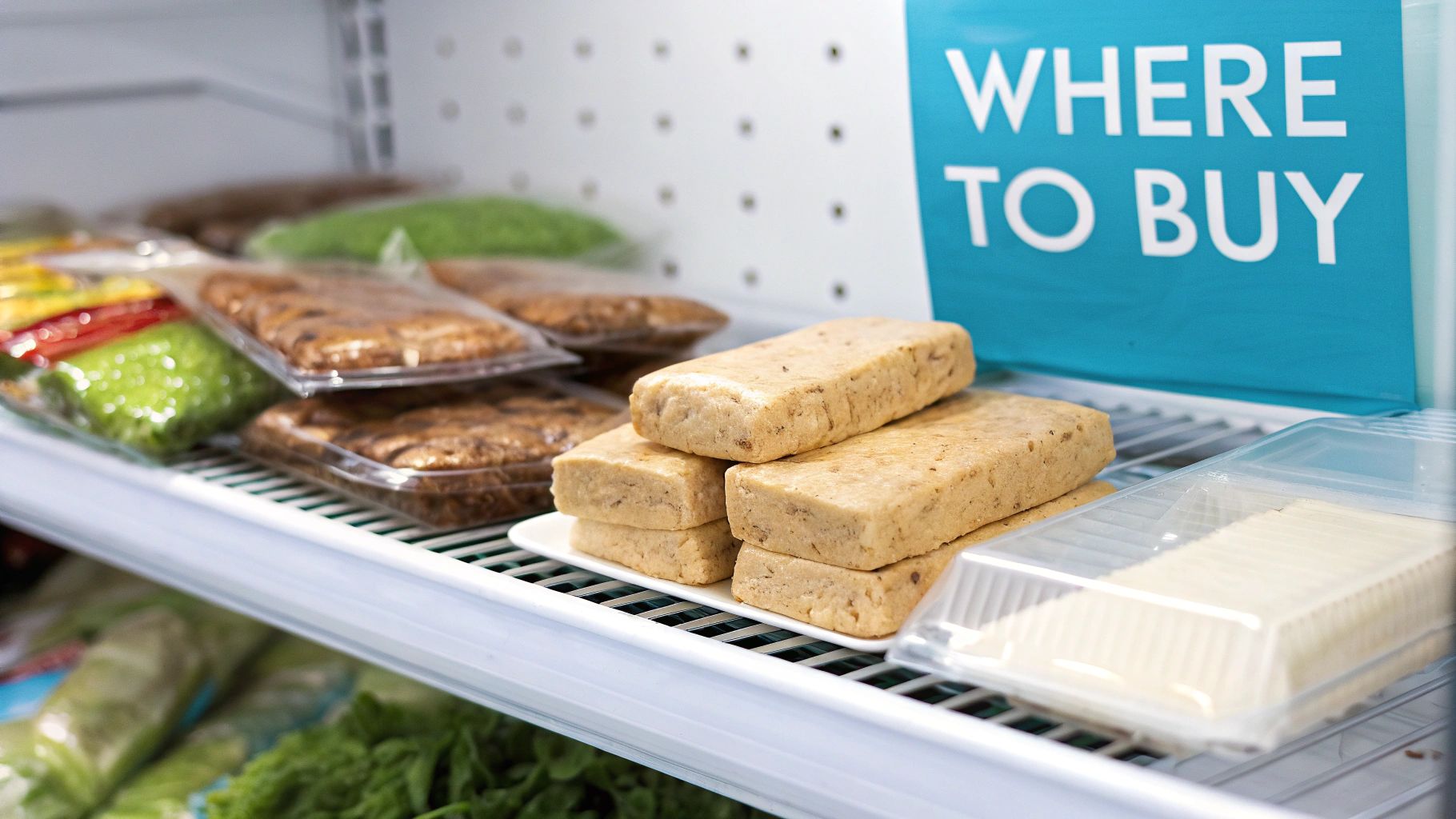
Finding seitan has gotten so much easier as more people look for satisfying, high-protein vegan foods. This super-versatile food, which people often call "wheat meat," has officially gone mainstream.
Its chewy, hearty texture makes it an incredible stand-in for animal-based protein in all sorts of recipes, from rich stews to quick-and-easy stir-fries. Because so many people are looking for delicious cruelty-free meals, the number of seitan products on the shelves has exploded. You can now grab it in several different forms, making it easy to fit into whatever meal you're planning.
Where to Start Your Search
Before you head to the store, it helps to know what you’re actually looking for. Seitan comes in a few different shapes and preparations, which usually determines where you’ll find it.
The most common options you'll see are:
- Pre-cooked Strips or Crumbles: These are your best friend for quick weeknight meals. They’re usually seasoned and ready to toss into tacos, salads, or pasta sauce.
- Plain Blocks or Roasts: Think of these as a blank canvas. They give you total control to slice, dice, and season them exactly how you want for your own recipes.
- Flavored Sausages or Cutlets: When you want a shortcut, these pre-seasoned options make meal prep almost effortless.
Seitan isn't just a niche product anymore; it's a big deal. North America currently leads the world in seitan sales, thanks to its popularity in restaurants and growing presence in grocery stores. And it's no surprise that online stores are quickly becoming a major player, offering convenience and a much wider variety of products. You can get a better sense of the growing seitan market from this industry analysis.
To help you out, I've put together a quick cheat sheet summarizing the most common places you'll find seitan and what to look for when you're there.
Where to Find Seitan at a Glance
| Location Type | Where to Look Inside | Common Forms Available |
|---|---|---|
| Major Grocery Stores | Refrigerated section, near tofu and tempeh. | Pre-cooked strips, ground crumbles, and flavored sausages. |
| Health Food Stores | Refrigerated and freezer sections. | Wider variety, including plain blocks, artisanal flavors, and bulk options. |
| Asian Markets | Canned goods aisle ("mock duck") and refrigerated/frozen sections. | Canned seitan in brine or sauce, unique shapes and textures. |
| Online Vegan Markets | Dedicated seitan or "meat alternatives" category. | The largest selection, from small-batch brands to specialty roasts. |
This guide will walk you through exactly where to buy seitan, whether you're browsing your local store or shopping online. We’ll cover everything from the best brands to watch for to tips on choosing the perfect type for your next meal.
What Exactly Is Seitan?
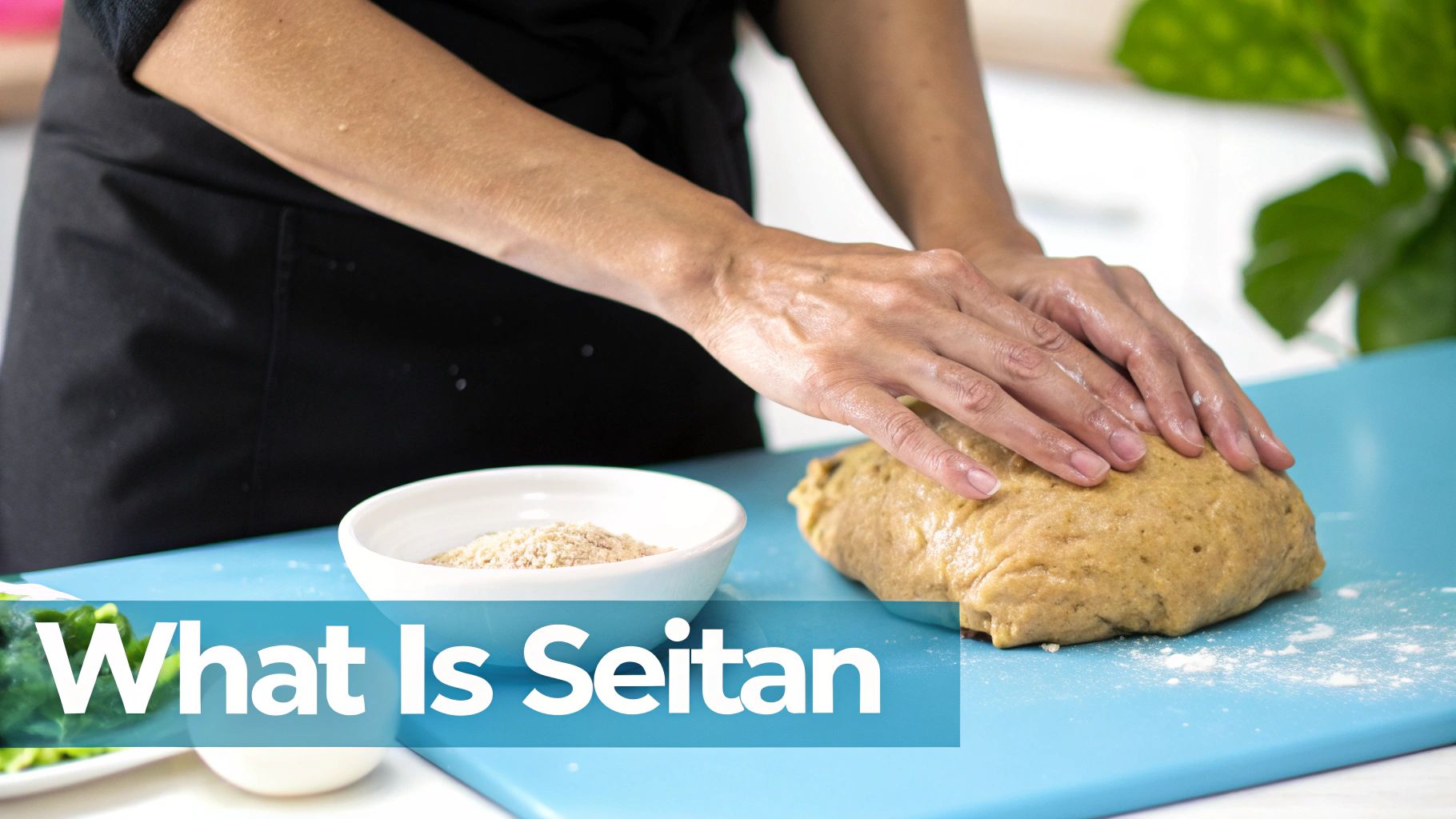
Before you head to the store, let’s get acquainted with what you’re actually looking for. Seitan, affectionately known as "wheat meat," is a powerhouse of plant-based protein. What really makes it stand out from other vegan options is its uniquely firm, satisfying chew.
At its most basic, seitan is made from vital wheat gluten, which is simply the main protein in wheat flour. Imagine taking a ball of wheat flour dough and rinsing it under running water. All the starches wash away, and you're left with a stretchy, elastic clump of pure gluten. That simple process is what gives seitan its famously dense, meat-like texture.
This isn't some new fad, either. Seitan has a rich history that goes back hundreds of years, first developed by Buddhist monks in Asia who were looking for a hearty, high-protein alternative to animal products. The fact that it's still so popular speaks volumes about its versatility and taste.
The Building Blocks of Great Seitan
When you find seitan in a store, it's already been seasoned and cooked. That neutral gluten base is like a culinary sponge, soaking up any flavor you throw at it. This is why you’ll see it sold in so many different ways—from savory strips perfect for fajitas to spicy, ground crumbles for tacos.
Knowing this helps you understand why different brands can taste so different. One company might use a simple broth of soy sauce and ginger, while another might go for a more complex marinade with nutritional yeast, garlic, and herbs.
The real magic of seitan is its incredible transformation. It starts as a humble flour but, through a simple process of washing and cooking, becomes a versatile protein that can mimic the texture of meat in countless cruelty-free recipes.
This knack for absorbing flavor is what makes seitan such a star in the kitchen. Unlike tofu, which can be soft or crumbly, seitan has a firm bite that holds its own whether you're grilling, frying, or simmering it in a stew. It’s this textural integrity that often convinces even the most dedicated meat-eaters.
Why Its Composition Matters for Your Meals
Understanding that seitan is concentrated wheat protein helps you make smarter choices when you're shopping. Because it’s almost pure protein, it brings a substantial, satisfying element to any dish. A typical 100g serving can deliver over 20 grams of protein, making it an excellent staple for anyone on a high-protein vegan diet.
You'll see this in action when you read the labels. Keep an eye out for simple, non-GMO ingredients. The best seitan products really let that great texture do the talking, enhanced with natural, recognizable seasonings. This gives you the perfect starting point for building anything from a hefty sandwich to a savory stir-fry, guaranteeing your plant-based meals are never lacking.
Finding Seitan in Your Local Grocery Store
Trying to track down a specific plant-based item in a big supermarket can feel like a scavenger hunt. The good news? Seitan is getting much easier to find, with major chains like Whole Foods, Trader Joe's, and Kroger all beefing up their vegan sections. The trick is simply knowing where to look.
Your first stop for where to buy seitan should always be the refrigerated section. This is where most stores keep pre-cooked seitan strips and grounds, usually right alongside other plant-based proteins like tofu, tempeh, and vegan sausages. Zero in on the "natural foods" aisle or dedicated vegan case, and you'll likely find ready-to-use options perfect for a quick weeknight dinner.
Mapping Out the Aisles
Don't just stop at the refrigerated case, though. A trip to the frozen food aisle can uncover a whole different world of seitan. This is often where you'll find heartier products that are perfect for bigger, more substantial meals.
Keep an eye out for these gems:
- Breaded Seitan Cutlets: Fantastic for whipping up vegan chicken-style sandwiches or a classic parmigiana.
- Seitan Roasts: A game-changer for holiday dinners, these are often available seasonally.
- Frozen Seitan Grounds: It's always a good idea to stock up on these for future pasta sauces, tacos, or chili.
These frozen versions have a much longer shelf life, which makes them a great staple to have on hand. If you're building a well-stocked pantry, it's also worth learning about other shelf-stable plant-based meats you can keep around.
Top Vegan Brands to Look For
As you browse the shelves, you'll start to recognize a few key players known for great quality and taste. Getting familiar with these brands will help you spot the good stuff in a hurry.
I like to think of the seitan section as a spectrum. On one end, you have the plain, versatile blocks just waiting for you to add your own culinary magic. On the other end, you'll find pre-seasoned, flavored products that are a delicious shortcut to an amazing meal.
Keep an eye out for Upton's Naturals, a brand celebrated for its clean, simple ingredients and classic seitan. You’ll also see brands like Sweet Earth (just double-check you're grabbing their vegan items) and Tofurky, who make everything from seasoned strips to seitan-based sausages. Each one has its own unique texture and flavor, so don't be afraid to try a few and discover what you like best.
How to Read the Label Like a Pro
Once you've picked up a package, a quick glance at the label will tell you everything you need to know. First things first, make sure it’s 100% vegan—and a cruelty-free certification is always a great bonus.
Next, give the ingredients list a quick scan. The best seitan has a short, understandable list, usually starting with vital wheat gluten and water. After that, you should see familiar seasonings like soy sauce, garlic powder, and other spices. Finally, look for a non-GMO certification, which is your assurance that the ingredients were grown without genetic engineering. Taking ten seconds to do this little check ensures you’re bringing home something that’s both delicious and made with integrity.
Shopping for Seitan Online
If your local grocery store’s plant-based aisle is leaving you uninspired, or you just prefer the ease of shopping from your couch, the internet is your new best friend. Buying seitan online opens up a whole new world of options, from small-batch artisanal brands to bulk deals and unique flavors you’d never find on a physical shelf.
Think of the online marketplace as a giant, global farmers market for vegan goodies. You get direct access to producers who are truly passionate about their craft, offering textures and marinades that go way beyond the standard grocery store fare. This is where you can really start to see how incredibly diverse seitan can be.
Top Online Destinations for Seitan
When you start digging into where to buy seitan online, you’ll mainly run into a few types of sellers. Huge platforms like Amazon offer speed and convenience, but dedicated vegan marketplaces give you a more curated and mission-driven experience.
Here are some of the best places to start your search:
- Dedicated Vegan Marketplaces: Sites like Vegan Essentials or GTFO It's Vegan are absolute treasure troves. They’ve done the work of vetting every single product, so you can shop with the confidence that everything is 100% vegan. You'll often discover awesome new non-GMO brands and exclusive items here.
- Thrive Market: This is a membership-based online store that’s all about healthy and sustainable products. Their plant-based section is solid, and you can often snag popular seitan brands at a great price, shipped right to your door.
- Amazon: You just can't beat the sheer volume of options on Amazon. It’s a great place to find multi-packs of a brand you already love or to buy the vital wheat gluten you need to make your own seitan from scratch.
The real secret to success with buying seitan online? Dive into the customer reviews. Pay close attention to what people say about the texture—is it chewy, firm, or soft? Their firsthand feedback is gold for figuring out if a product will be a good fit for your cooking plans.
Navigating the Digital Aisles
The plant-based market has absolutely exploded, which has made online shopping more reliable than ever. Reports show that global demand for seitan is climbing steadily as more people look for high-quality meat alternatives. This boom has pushed online sellers to up their game, making it easy for anyone to get their hands on top-notch vegan products.
When you place an order, always double-check the shipping details. Seitan is typically refrigerated or frozen, so good sellers use insulated packaging and ice packs to make sure it arrives fresh and ready to cook. Keep an eye out for product bundles or bulk options, too—it’s a great way to save money once you find a brand you love.
By moving your search online, you’re no longer stuck with what your local stores decide to carry. You can support small, independent vegan businesses from all over the country and keep your kitchen stocked with the best plant-based protein out there. You’ll never be without the perfect ingredient for your next killer meal.
Choosing the Right Seitan for Your Meal
Finding where to buy seitan is one thing, but picking the right kind is what will take your meal from good to great. The seitan you’d grab for a quick weeknight stir-fry isn't the same one you'd use as a hearty centerpiece for a holiday feast. Knowing the difference empowers you to perfectly match the product to your recipe.
Think of it like choosing the right type of pasta—you wouldn't use delicate angel hair for a chunky, baked casserole. Seitan works the same way. Its incredible versatility really shines when you pick the right texture and shape for the job, making sure your plant-based meals are always satisfying.
This visual guide breaks down where to find seitan online, from big-box retailers all the way to niche vegan shops.
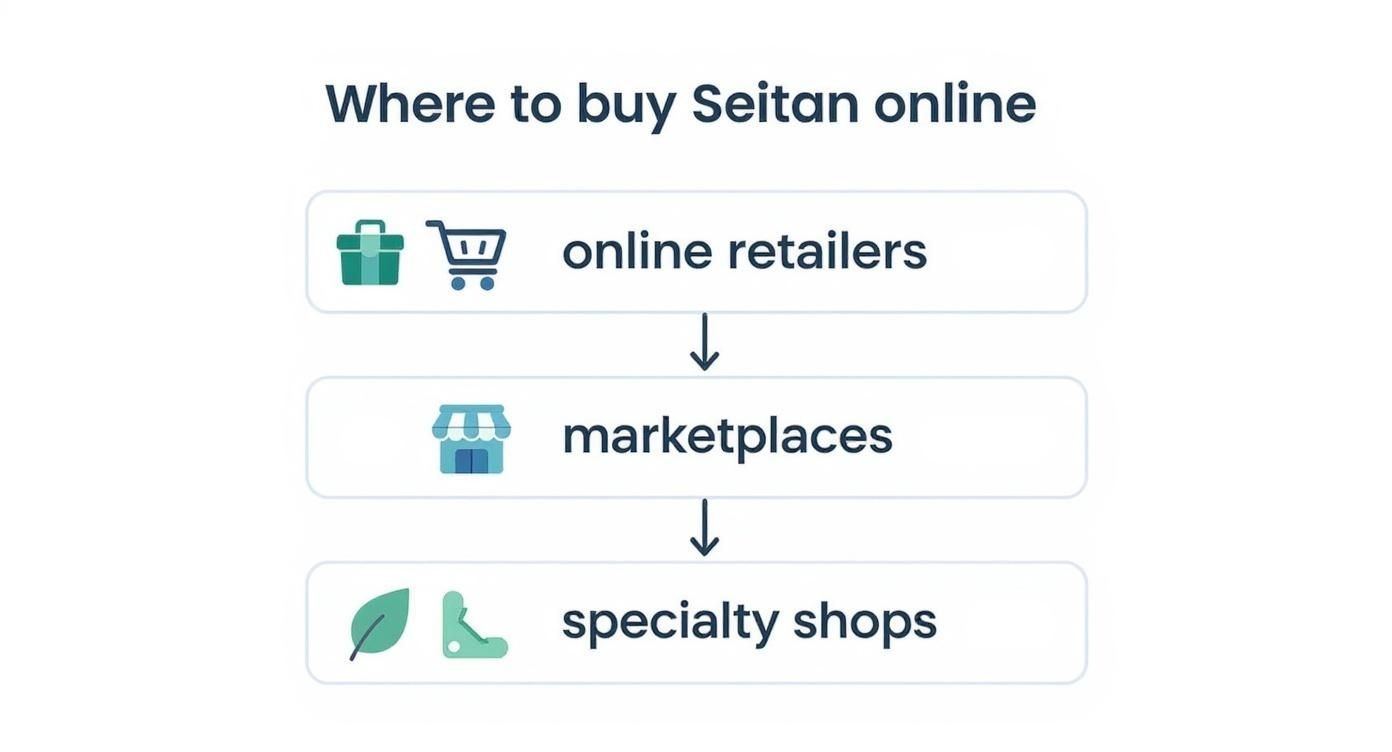
As you can see, your options expand from general stores to highly curated specialty shops. The more specialized you go, the more unique choices you’ll find.
Matching Seitan Form to Your Recipe
Choosing the right type of seitan is all about matching its form to your dish. Each one is designed with a specific cooking purpose in mind, so getting this right is key to nailing the texture of your final meal.
| Seitan Form | Texture Profile | Best For (Vegan Recipes) |
|---|---|---|
| Strips & Cutlets | Thin, chewy, and tender. | Fajitas, stir-fries, wraps, "chicken" sandwiches, or Philly cheesesteaks. |
| Grounds & Crumbles | Loose, crumbly, and absorbent. | Tacos, bolognese sauce, shepherd's pie, chili, or stuffed peppers. |
| Chunks & Medallions | Hearty, dense, and toothsome. | Stews, curries, pot pies, or skewered for kebabs. |
| Roasts & Loaves | Firm, sliceable, and substantial. | Holiday centerpieces, deli-style sandwich slices, or pot roast. |
This table should give you a great starting point. Once you get the hang of it, you'll instinctively know which form to reach for, whether you're simmering a curry or building the ultimate vegan sandwich.
Flavored vs. Plain Seitan
Beyond just the shape, you’ll find pre-seasoned options like Italian sausage-style crumbles or chorizo-flavored seitan. These are fantastic shortcuts, packing a ton of flavor into a dish with almost zero effort. They can save you a ton of time.
On the other hand, plain seitan is a blank canvas. It’s your chance to get creative and infuse it with your own signature marinades, spice rubs, and sauces.
The demand for plant-based proteins has exploded, but it’s interesting to note that traditional, unflavored seitan still holds the largest market share. This tells us that many home cooks prefer a versatile, non-GMO product they can season themselves. For more ideas on impressive plant-based options, check out our guide on the best mock meat available today.
Common Questions About Buying Seitan
So, you know where to find seitan and how to pick the right one for your next meal, but you might still have a few questions rolling around in your head. That's totally normal. Getting the hang of a new ingredient is all about the little details, like how to keep it fresh or why it's such a go-to in the plant-based world.
Let's clear up some of the most common questions people ask when they start bringing seitan into their kitchens. We'll give you the straightforward answers you need to feel confident, from the grocery store aisle all the way to the dinner table.
How Should I Store Seitan After Buying It?
Proper storage is everything when it comes to keeping your seitan delicious. If you bought a pre-packaged, refrigerated version, just leave it sealed in its original container until you're ready to use it. Once it's open, pop any leftovers into an airtight container.
Here’s how to keep it at its best:
- In the Fridge: After opening, seitan will stay fresh for about 3 to 5 days. A great pro-tip: if it was packed in a broth or liquid, keep the leftovers in that same liquid. It’s the best way to stop it from drying out.
- In the Freezer: Seitan freezes like a dream! For longer-term storage, it'll keep for up to three months. Just pat it dry, wrap it up snugly in plastic wrap or foil, and stick it in a freezer bag. When you’re ready to cook, let it thaw overnight in the fridge.
Storing seitan correctly is like preserving a fine ingredient—it protects the texture and flavor you paid for. A little care after you open the package ensures every bite is as delicious as the first.
Is Seitan a Healthy Plant-Based Option?
You bet. Seitan is a powerhouse of plant-based protein. It's a favorite for anyone looking to build or maintain muscle on a vegan diet because it's almost all protein and very low in fat. To give you an idea, a 100g serving can pack over 30 grams of protein.
There are a couple of important caveats, though. Since seitan is literally made from wheat gluten, it's a definite no-go for anyone with celiac disease, a gluten allergy, or a non-celiac gluten sensitivity. It's also smart to glance at the nutrition label on pre-made products. Some of the flavored or marinated kinds can be pretty high in sodium. For the healthiest option, look for brands with simple, recognizable, and non-GMO ingredients.
Can I Make Seitan at Home?
Absolutely! Making your own seitan is a fun and surprisingly easy kitchen project that's also great for your wallet. All you really need is vital wheat gluten, which you can find in the baking aisle at most health food stores or easily order online.
The process is simple: you just mix the vital wheat gluten powder with water or broth and your favorite seasonings to create a dough. Then, you can simmer, steam, or bake it to achieve that perfect firm, chewy texture. The best part? You have total control over the flavor, texture, and salt content, so you can create a custom-made protein that's exactly how you like it.
At Louisville Jerky Co., we're all about creating bold, satisfying flavors with plant-based ingredients you can trust. If you love the hearty, chewy texture of seitan, you'll love our non-GMO vegan jerky. Explore our unique flavors and find your new favorite snack at https://lvjco.com.