


If you're serious about your vegan kitchen, buying textured vegetable protein in bulk is one of the smartest moves you can make. It's the secret weapon behind endless meal possibilities, from rich, hearty chilis to savory jerky, all while sticking to cruelty-free, non-GMO food. This simple, shelf-stable ingredient is your ticket to amazing, high-protein meals that won't drain your wallet.
Your Essential Guide to Buying TVP in Bulk
Consider this your complete playbook for mastering textured vegetable protein (TVP). We're going to demystify this versatile, high-protein, and incredibly affordable plant-based powerhouse. We'll get into why buying in bulk is such a game-changer for home cooks, serious meal-preppers, and even businesses looking to cut costs and their environmental footprint.
You're about to learn how this one ingredient can be the foundation for satisfying, flavor-packed meals and snacks—it's the same magic behind our own Louisville Vegan Jerky. This guide is your roadmap, covering everything from finding quality non-GMO sources to mastering rehydration, storage, and killer recipes.
The Growing Demand for Plant-Based Staples
The shift toward plant-based eating isn't just a fleeting trend; it's a full-blown global movement. This growing awareness is fueling a massive demand for accessible and affordable vegan staples. The global textured vegetable protein market is a prime example, with projections showing it will climb from USD 1.6 billion in 2025 to USD 2.7 billion by 2035.
That incredible growth is because TVP is a champion at creating plant-based alternatives that really nail the texture and absorb flavor beautifully. Textured soy protein, in particular, commands a 36.7% revenue share thanks to its high protein content (often around 50%) and budget-friendly price point. This is the very trend that allows brands like Louisville Jerky Co. to create innovative flavors like our Bourbon BBQ or General Tso's. You can dive deeper into the textured vegetable protein market growth on futuremarketinsights.com.
Our mission is simple: to make TVP a go-to, indispensable staple for anyone living a vegan or plant-curious life.
Why Bulk Buying Makes Sense
Grabbing your TVP in larger quantities brings a ton of benefits that go way beyond your kitchen. It’s a smart choice that lines up perfectly with a thoughtful, plant-based lifestyle.
Buying in bulk has clear advantages whether you're stocking a home pantry or a commercial kitchen. It’s about more than just quantity; it’s a strategic approach to food management.
| Benefit | For Home Cooks & Individuals | For Retailers & Businesses |
|---|---|---|
| Cost Savings | Dramatically lower cost per serving, freeing up your budget for other quality ingredients. | Better profit margins, competitive pricing, and reduced procurement costs. |
| Eco-Friendly | Significantly less packaging waste (less plastic and cardboard) for a smaller carbon footprint. | Reduces inbound shipping materials and overall operational waste. |
| Convenience | A well-stocked pantry means fewer trips to the store and always having a high-protein base on hand. | Streamlines inventory management and ensures a consistent supply for production. |
| Meal Prep Efficiency | Perfect for batch cooking. Prepare a week's worth of meals, snacks, or jerky with ease. | Ideal for large-scale food production, minimizing prep time and ensuring product consistency. |
Ultimately, choosing to buy in bulk is an investment in efficiency, sustainability, and preparedness for delicious meals ahead.
By stocking your pantry with bulk TVP, you're not just preparing for future meals; you're investing in a more sustainable, affordable, and convenient way of eating that reduces waste and simplifies your daily routine.
Here's a quick rundown of the core advantages:
- Significant Cost Savings: The per-ounce price of TVP plummets when you buy in bulk. This frees up your food budget for other high-quality vegan ingredients.
- Reduced Packaging Waste: Fewer individual packages mean a whole lot less plastic and cardboard going into the landfill. It’s a simple way to shrink your environmental footprint.
- Unmatched Convenience: A well-stocked pantry means no more last-minute grocery runs. You'll always have the freedom to whip up a high-protein meal on the fly.
- Meal Prep Champion: Bulk TVP is a meal prepper's dream. It gives you a ready-to-go base for a whole week of lunches, dinners, and snacks.
What Exactly Is Textured Vegetable Protein?
So, what is this stuff you see in the bulk bins? Forget the dry, scientific definitions. The best way to think about textured vegetable protein is to picture how popcorn is made. You take a simple, single ingredient—in this case, soy flour—and apply heat and pressure. The result is something with a completely new and satisfyingly chewy texture.
That simple process is how defatted soy flour gets turned into the familiar granules, chunks, or strips. What you get is a neutral-tasting, porous powerhouse that’s basically a blank canvas for flavor.
Its incredible ability to soak up marinades, broths, and seasonings is the secret behind our vegan jerky. It's how we get that smoky, nostalgic punch into our Maple Bacon jerky or the savory kick in our Smoked Black Pepper variety. The TVP absorbs it all.
The Foundation: A Single, Clean Ingredient
One of the best things about high-quality TVP is its sheer simplicity. At its core, it's a one-ingredient food made from soybeans. That clean foundation is perfect for a cruelty-free, non-GMO vegan lifestyle because you know exactly what you’re putting into your body.
When you buy textured vegetable protein bulk from a source you trust, you're getting a product without a bunch of weird additives, fillers, or artificial junk. It’s just pure plant-based potential, ready for your kitchen.
At its heart, TVP is a testament to the power of simple, plant-based ingredients. It proves that you don't need a long list of chemicals to create a satisfying, protein-rich food that can anchor countless delicious meals.
This minimal processing is also the key to its versatility. Since it starts with such a neutral taste, it never fights with the flavors you want to add. Whether you’re making a spicy chorizo-style crumble or a savory jerky, the TVP steps back and lets your seasonings take center stage.
A Complete Protein Powerhouse
Beyond its fantastic texture, TVP is a true nutritional champion. It's a complete protein, which is a big deal. That means it contains all nine of the essential amino acids our bodies can't make on their own. For anyone on a vegan diet, that makes it an incredibly efficient and reliable way to hit your daily protein goals.
Here’s why that matters for your meals:
- Muscle Maintenance and Growth: That complete amino acid profile is crucial for everything from repairing muscles after a workout to simply maintaining strength.
- Sustained Energy: High-quality protein helps you feel full and satisfied for longer, which means no more midday energy slumps or snack attacks.
- Nutrient-Dense: On top of the protein, it's also a good source of fiber and essential minerals like iron. Plus, it’s naturally low in fat and has zero cholesterol.
This impressive nutritional profile makes TVP way more than just a plant-based alternative—it’s a foundational ingredient for building healthy, well-rounded, and genuinely satisfying vegan meals. If you want to dive deeper, you can learn more about what TVP is made from in our detailed guide. It's a smart choice for anyone looking to boost their protein without compromising on their values or their budget.
How to Source High-Quality Bulk TVP
Sourcing quality textured vegetable protein bulk is the secret to getting the most out of it. Let's be honest, not all TVP is the same, and knowing what to look for can elevate your pantry staple from just okay to genuinely fantastic. It’s about more than just buying an ingredient; it's about choosing a product that aligns with your cruelty-free values and guarantees the best possible texture and flavor in every meal.
Think of it like picking out fresh vegetables at a farmer's market. You instinctively look for vibrant colors and uniform sizes. The same logic applies here—you want a pure, high-performance product that will deliver consistent results.
Identifying Top-Tier TVP
The first step is learning to spot the tell-tale signs of a quality product. These markers tell you a lot about where the TVP came from and how it was processed, which directly impacts how it cooks up in your kitchen.
A good batch of bulk TVP should look clean and consistent. You’re looking for uniformly sized granules or chunks with a pale, even color. Be wary of bags with a lot of dust or a high percentage of broken, crumbly bits—that’s often a sign of low-grade processing or rough handling.
Here are the key quality checks to perform:
- Non-GMO Sourcing: This is a big one. Always confirm the TVP is made from 100% non-GMO soybeans. This not only gives you a cleaner product but also supports more sustainable and ethical farming.
- Single-Ingredient Purity: The best TVP has just one thing on its ingredient list: defatted soy flour. Double-check the label to make sure there are no weird additives, preservatives, or artificial flavorings hiding in there.
- Uniformity is Key: Look for consistency in both the size and color of the pieces. This is what ensures it rehydrates evenly and gives you a predictable texture every time you cook with it.
- Minimal Dust: While a tiny bit of dust at the bottom of the bag is normal, a large amount means you’re looking at a lower-quality product that’s probably old or has been poorly handled.
Vetting Your Suppliers
Once you know what good TVP looks like, the next challenge is finding a supplier you can trust. Whether you're shopping online or at a local health food store, a little bit of research can save you a lot of headaches. A reliable supplier won’t be shy about where their products come from.
Start by looking for official certifications, like the Non-GMO Project Verified seal or a USDA Organic logo. These aren't just for show; they represent a real commitment to quality standards. Customer reviews are also pure gold, giving you honest, real-world feedback on a product before you buy.
The global supply chain for textured vegetable protein is surprisingly strong, with North America and Asia Pacific leading the charge. In North America, demand is fueled by a plant-based food market that recently soared to USD 8 billion. Meanwhile, Asia Pacific's massive soy production keeps prices competitive. This healthy global market means reliable access for companies committed to sourcing the good stuff. You can dive deeper into the global TVP market dynamics at Precedence Research.
Understanding Different TVP Forms
TVP isn’t a one-size-fits-all product. It comes in several shapes and sizes, and each one is cut out for different jobs in the kitchen. Knowing the difference helps you pick the perfect type for whatever you’re making. And if you're not sure where to start, our guide on where to buy TVP has some extra pointers.
Choosing the right form of TVP is like selecting the right tool for a job. Granules are perfect for recreating ground textures, while larger chunks provide the substantial bite needed for stews, curries, and jerky.
Here’s a quick rundown of the most common forms you'll see:
- Granules: These are the fine, small pieces that are perfect for mimicking ground textures. They’re your go-to for taco fillings, chili, pasta sauces, and savory crumbles like our Louisville Toppins'.
- Flakes or Strips: A bit larger than granules, these are fantastic for creating shredded textures. Think vegan pulled "pork" for sandwiches or savory fillings for wraps and burritos.
- Chunks or Nuggets: These are the big, irregular pieces you want for a substantial, chewy bite. They hold their own in hearty stews, curries, and kebabs, and they are the absolute best foundation for making homemade vegan jerky.
By becoming a savvy TVP shopper, you can be confident that every bag you bring home is a high-quality, versatile, and ethical powerhouse for your plant-based kitchen.
Mastering TVP Preparation and Cooking Techniques
Alright, let's get hands-on. You've got your bulk TVP, and now it's time to turn that dry, unassuming stuff into something truly delicious. This is where the magic happens—transforming a pantry staple into a ready-to-cook ingredient that’s packed with potential.
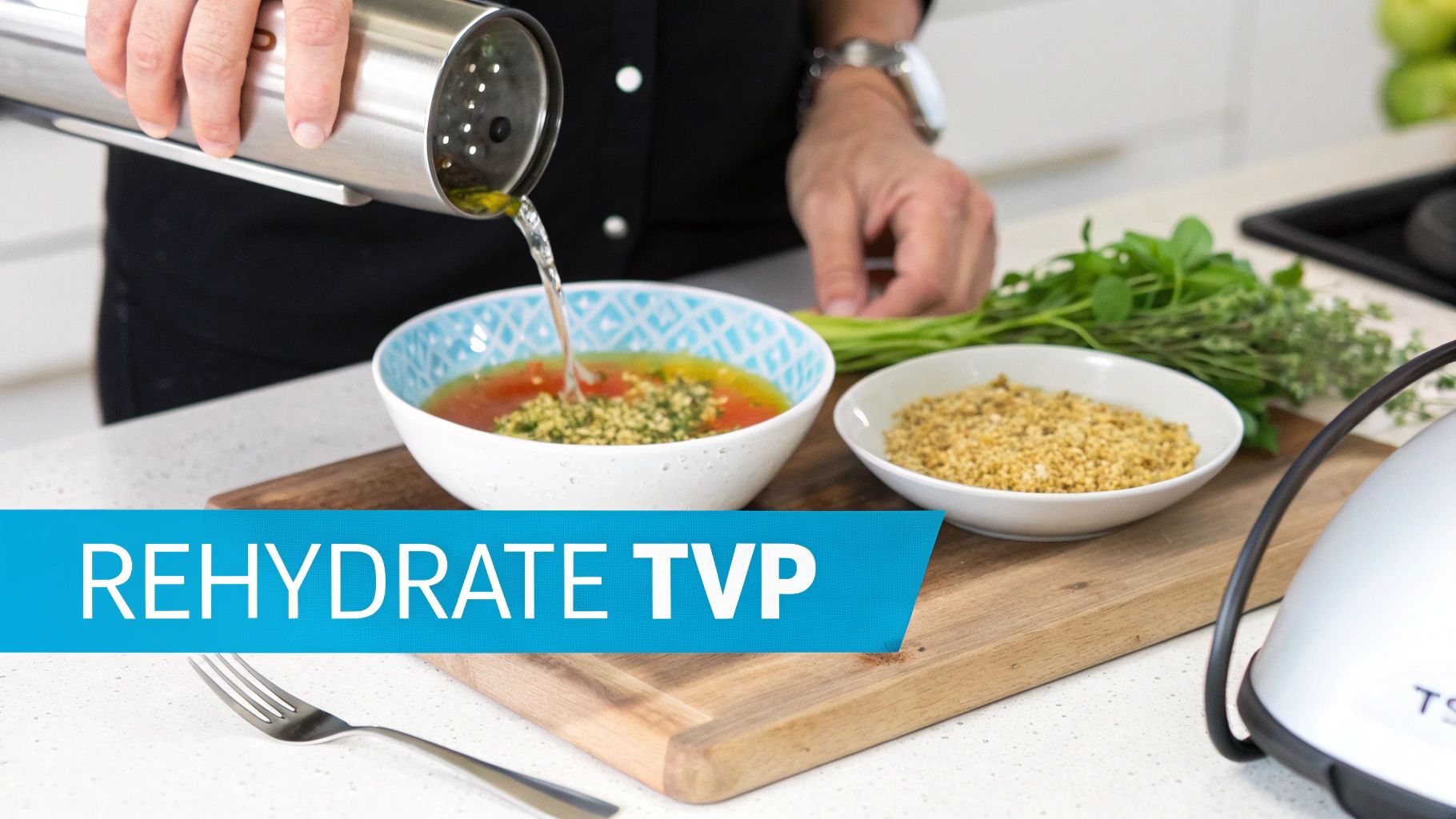
Think of dry TVP as a dehydrated sponge. It’s not much use on its own, but once it soaks up some liquid, it becomes pliable, chewy, and ready for action. The best part? This rehydration step is incredibly simple and is your first chance to start building flavor.
The Art of Rehydration
The basic rule for rehydrating TVP is a simple 1:1 ratio. That means for every cup of dry TVP, you'll need about one cup of hot liquid. This is a solid starting point that works for almost every form, from the fine granules to the bigger chunks. It’s my go-to for getting the texture just right.
But here’s the pro tip that changes everything: never, ever use plain water. TVP is basically a blank canvas, and it will soak up the flavor of whatever you put it in. This is your golden opportunity to infuse it with a deep, savory base.
The most common mistake people make with TVP is rehydrating it in plain water. Always use a seasoned liquid—think vegetable broth, tamari, or a custom spice blend—to infuse flavor from the inside out. This small step takes it from bland to brilliant.
Instead of water, try one of these to create a rich, complex flavor:
- Hearty Vegetable Broth: A low-sodium veggie broth is the gold standard. It lays down a savory, umami-rich foundation that works with almost any dish.
- Seasoned Liquids: Get creative! Mix hot water with a splash of tamari or soy sauce, a dash of liquid smoke, vegan Worcestershire, or even a spoonful of nutritional yeast.
- Spiced Infusions: Add your dry spices—like garlic powder, onion powder, smoked paprika, or cumin—directly into the hot liquid before pouring it over the TVP.
A Step-by-Step Guide to Perfect Texture
Getting the texture right is key. You're aiming for a firm, satisfying chew, not something soggy or spongy. Just follow these simple steps, and you’ll have perfectly prepped TVP every single time.
- Measure and Combine: Put your dry TVP into a heatproof bowl. In another container, heat your liquid until it's very hot but not quite boiling.
- Soak and Infuse: Pour the hot liquid over the TVP, making sure all the pieces get covered. Give it a quick stir, pop a lid or plate on the bowl, and let it sit for 10-15 minutes. This rest is non-negotiable for full absorption.
- Squeeze Gently: Once rehydrated, the TVP will have puffed up to double or triple its original size. Now, gently squeeze out any excess liquid using your hands or by pressing it into a fine-mesh sieve. This step is crucial for preventing a mushy final product and helps it brown beautifully when you cook it.
No matter what you're cooking, remember to follow proper food safety sanitation guidelines to keep your kitchen clean and your meals healthy.
Simple Vegan Recipes to Get You Started
With your TVP rehydrated and seasoned, it’s ready to become the star of the show. It’s incredibly versatile, perfect for quick weeknight meals or big-batch meal prepping.
Here are three easy ideas to show you what it can do:
- Hearty Vegan Chili: Sauté rehydrated TVP granules with onions and garlic until they start to brown. Then, just add them to your favorite chili recipe for a protein-packed, super-satisfying bowl.
- Savory "Chicken-Style" Salad Sandwiches: Use the larger TVP chunks and rehydrate them in a savory broth. Gently shred the pieces with a fork, then mix in vegan mayo, chopped celery, onions, and your favorite seasonings for a killer sandwich filling.
- Quick Breakfast Scramble: Pan-fry some rehydrated TVP granules in a little oil until they get nice and crispy. Toss them into a tofu scramble with some black salt (kala namak), turmeric, and veggies for a high-protein kick-start to your day.
Proper Storage for Long-Term Freshness
Buying textured vegetable protein in bulk is a brilliant move, but its true magic lies in its incredible shelf life. If you store it right, dry TVP can last for a year or even longer. That means you'll always have a high-protein, plant-based staple ready to go when you need it. The trick is to protect it from its four biggest enemies: air, moisture, heat, and light.
Think of dry TVP as a super-thirsty, delicate sponge. It’s made to soak up liquid, which also means it will pull moisture right out of the air. This can lead to spoilage or give it a stale taste, so getting the storage right is non-negotiable if you want to keep it fresh.
Creating the Ideal Environment for Dry TVP
To get the most out of your bulk TVP, you need to create a stable, protective home for it. The best spot is cool, dark, and dry—think a pantry, a cellar, or a quiet cabinet far away from the heat of the stove. Direct sunlight or warmth from appliances will slowly degrade its quality.
The container you choose is just as crucial. You're aiming for a completely airtight seal that locks freshness in and keeps contaminants out.
An airtight container is your TVP's best friend. It’s a fortress against moisture and air, the two main culprits that can spoil your bulk supply and ruin its clean, neutral flavor.
Here are a few great storage solutions that I've found work best:
- Airtight Glass Jars: You can't go wrong with classic Mason jars or other glass containers with tight-fitting lids. They provide a solid seal and let you see at a glance how much you have left.
- Food-Grade Buckets: If you've gone all-in on a huge quantity, a food-grade bucket with a gamma seal lid is the gold standard. These things create a fortress that's totally airtight and moisture-proof.
- Vacuum-Sealed Bags: For the serious prepper, a vacuum sealer is a game-changer. Portioning your TVP into sealed bags sucks all the air out, preserving it perfectly for the long haul.
Storing Rehydrated TVP for Meal Prep
Once you add water, the rules for storing TVP change entirely. At this point, you need to treat it just like any other cooked food to keep it safe and tasty for your meals.
After rehydrating and cooking your TVP, let it cool down completely before you pack it away. Pop it into an airtight container to keep it from drying out or picking up any stray fridge smells.
This is where TVP really shines as a meal-prep champion. You can cook up a big batch over the weekend and have a versatile, protein-packed base ready for the whole week. Cooked TVP stays fresh in the refrigerator for up to five days, making it perfect for whipping up quick tacos, salads, or scrambles. If you want to keep it longer, just freeze it—it holds up beautifully for several months.
The Financial and Nutritional Case for TVP
Opting to buy textured vegetable protein in bulk isn't just about having more on hand; it's a smart decision for both your budget and your health. When you really get down to it, the numbers tell a compelling story. TVP delivers a fantastic amount of high-quality plant protein for a tiny fraction of what you'd pay for other sources, making a healthy, plant-based diet far more affordable and sustainable.
This isn't about pinching pennies. It's a fundamental shift in how you approach your grocery budget. By stocking up on this kitchen workhorse, you're building a long-lasting, protein-packed foundation for countless meals. You effectively insulate yourself from the wild price swings of other proteins, all without ever skimping on nutrition.
Crunching The Numbers: Cost Per Gram of Protein
Let's be honest—protein can be the priciest part of any meal. But when you put TVP head-to-head with other common vegan options, its financial edge becomes impossible to ignore. This incredible efficiency means you can stretch your food budget way further without giving up the essential nutrients your body needs.
To see just how well bulk TVP stacks up against the competition, take a look at this quick breakdown.
Cost and Protein Comparison Per Serving
This table breaks down the approximate cost per gram of protein for bulk TVP compared to other common plant-based protein sources, showcasing its economic advantage.
| Protein Source (per 100g serving) | Grams of Protein (Approx.) | Average Cost Per Serving | Cost Per Gram of Protein |
|---|---|---|---|
| Bulk TVP (Dry) | 50g | $0.55 | ~$0.01 |
| Lentils (Dry) | 25g | $0.40 | ~$0.02 |
| Chickpeas (Canned) | 8g | $0.90 | ~$0.11 |
| Firm Tofu | 16g | $1.20 | ~$0.08 |
As you can see, the data doesn't lie. TVP provides an impressive protein punch for an exceptionally low cost, making it the clear winner for anyone watching their wallet. For a deeper dive into its health benefits, check out our guide on whether textured vegetable protein is healthy.
And once you've stocked up, keeping it fresh is simple.
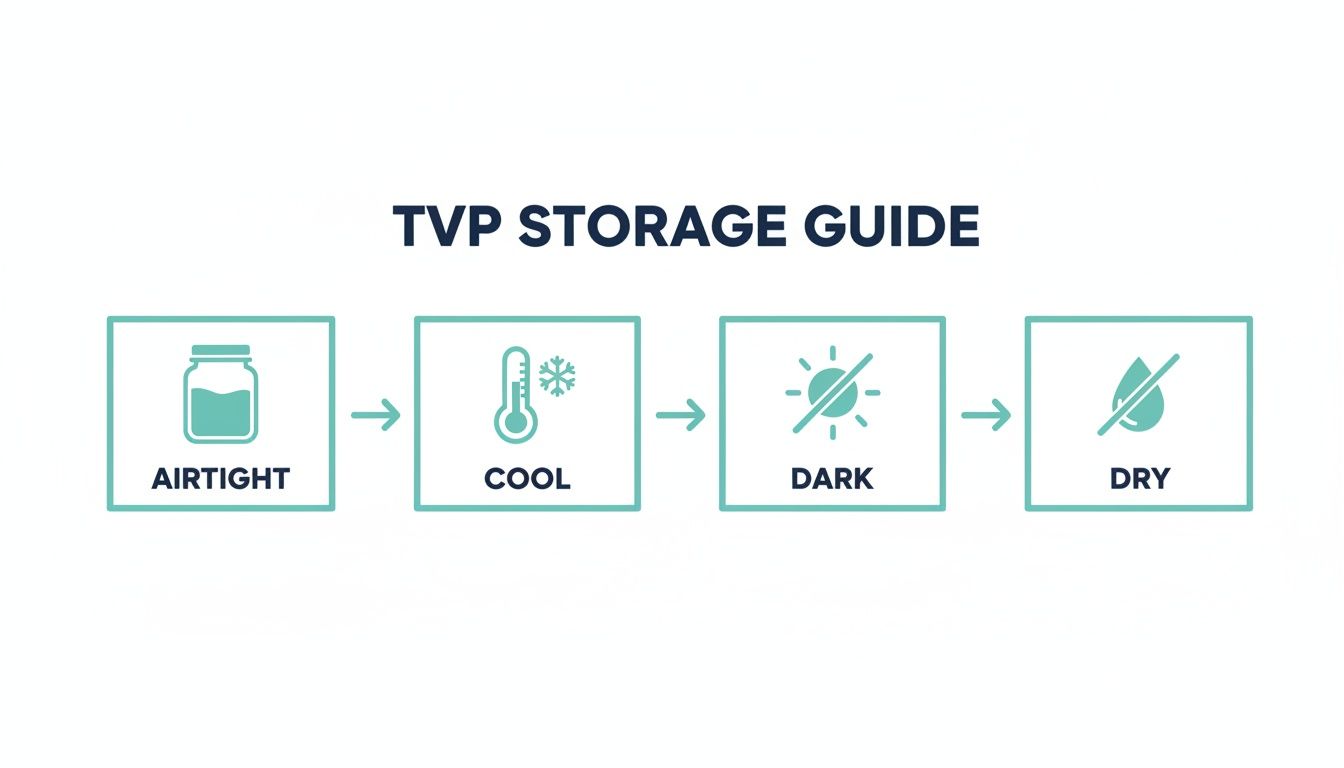
Just remember these four simple rules—airtight, cool, dark, and dry. Following them is the secret to getting the most out of TVP's impressive shelf life.
A Closer Look at the Nutritional Profile
Beyond the price tag, TVP’s nutritional stats are a perfect match for a health-conscious lifestyle. It's made from defatted soy flour, which means you get a clean, single-ingredient product that’s packed with goodness. If you're looking to bring more plant-based foods to your table, TVP is a fantastic choice that slips easily into all sorts of hearty and flavor-packed vegetarian meals.
Textured vegetable protein is a nutritional powerhouse, offering a complete amino acid profile, high fiber content, and zero cholesterol. It's an efficient way to fuel your body while adhering to cruelty-free principles.
Here’s a quick rundown of the nutritional highlights that make it such a valuable part of any diet:
- Complete Protein: TVP contains all nine essential amino acids. That makes it a complete protein, which is vital for muscle repair, growth, and just about every other function in your body.
- High in Fiber: You get a solid dose of dietary fiber in every serving, which is great for digestive health and helps you feel full longer, making it a useful ally for weight management.
- Low in Fat and Carbs: As a lean protein, it’s naturally low in both fat and carbohydrates—perfect for anyone keeping a close eye on their macros.
- Zero Cholesterol: Being 100% plant-based means it is absolutely free of cholesterol, making it a fantastic heart-healthy option.
At the end of the day, buying textured vegetable protein in bulk is a strategic move that pays off in a big way. You get a wildly cost-effective, nutrient-dense, and versatile ingredient that makes creating delicious, satisfying, and wholesome meals easier than ever.
Common Questions About TVP
If you're new to cooking with textured vegetable protein, you probably have a few questions. It's totally normal. Let's walk through some of the most common ones so you can feel confident adding this amazing ingredient to your kitchen lineup.
Is TVP Actually Healthy and Safe?
Yes, absolutely. High-quality TVP is usually made from a single ingredient: soybeans. It's a powerhouse of complete protein, giving you all nine essential amino acids your body can't make on its own. On top of that, it's loaded with fiber, naturally low in fat, and has zero cholesterol.
The key is to choose wisely. Always look for TVP made from non-GMO soybeans without any strange additives or preservatives. It's a trusted staple in countless vegan products for a reason—including our own Louisville Vegan Jerky. You can count on it as a solid, nutritious part of any plant-based diet.
Think of TVP as more than just an alternative. It’s a clean, nutrient-packed food in its own right. With its high protein and fiber, it's a fantastic building block for satisfying meals that help you feel good without cutting corners on your values.
What About TVP's Environmental Impact?
This is where TVP really shines. When you stack it up against animal-based proteins, its environmental footprint is tiny in comparison. Growing soybeans uses dramatically less land, water, and energy than raising livestock. It also means far fewer greenhouse gas emissions are produced.
By choosing plant proteins like TVP, you're making a real, positive choice for the planet. Buying it in bulk takes that a step further, cutting down on packaging waste and the carbon footprint from shipping lots of small orders. It's a win for your kitchen and a win for the Earth.
I've Heard Soy Affects Hormones. Is That True?
This is a common myth that science has pretty thoroughly put to rest. Soybeans contain compounds called phytoestrogens, but these are plant-based and fundamentally different from human estrogen. They interact with our bodies in a much weaker and more complex way.
Over and over, decades of research have shown that eating soy foods like TVP in normal amounts doesn't mess with hormone levels in men or women. In fact, many studies point to a variety of health benefits. Just stick to reputable, non-GMO sources to make sure you’re getting a pure, high-quality product.
Can I Just Throw Dry TVP Into a Recipe?
You can, but you probably shouldn't. While you could technically add dry TVP to a very liquidy, slow-cooking dish like a chili or stew, it’s a risky move. Dry TVP is like a sponge—it's incredibly hard and will soak up a huge amount of liquid, potentially leaving the rest of your dish dry.
For almost every other recipe—think tacos, breakfast scrambles, or veggie burgers—rehydrating it first is non-negotiable. Soaking it beforehand is what gives TVP its signature chewy, satisfying texture and allows it to absorb all the delicious seasonings evenly. Skip this step, and you'll likely end up with hard, flavorless bits in a sad, dry meal.
Ready to taste what expertly seasoned TVP can do? The team at Louisville Jerky Co. has mastered the craft of creating bold, satisfying vegan jerky that hits all the right notes. Explore our collection and find your new favorite snack today!