


You're probably here because you want one warm appetizer that feels nostalgic, crowd-friendly, and easy to pass around with a toothpick, but you also want it fully vegan and worth making. That's exactly where vegetarian little smokies come in.
The problem is that a lot of online recipes get the flavor close enough, then completely miss the texture. You end up with soft bites that taste smoky but don't have that springy, sausage-like chew that makes little smokies satisfying in the first place.
That gap matters more than people admit. For party food, texture is what makes guests come back for seconds. A sticky-sweet glaze can hide a lot, but it can't rescue a mushy center.
Why Most Homemade Vegan Smokies Miss The Mark
Most homemade vegetarian little smokies fail for one reason. The recipes treat texture as if it comes from seasoning, when it really comes from structure.
At party-planning time, that mistake is easy to make. You bake a tray, toss the links in sauce, set them in the slow cooker, and expect them to firm up as they sit. Instead, they stay soft, or worse, they turn oddly rubbery on the outside while the middle never quite sets.
The step most recipes underplay
The biggest miss is the post-bake rest. In one small-batch vegan lil smokies method, the links need to rest in the refrigerator for at least 4 to 5 hours, and the recipe treats that rest as essential because protein matrix hydration during that period determines whether you get an authentic chew or a mushy bite (vegan BBQ lil smokies resting method).
Don't judge the texture when the links are hot from the oven. That's the stage where most people think they failed, then make it worse by overcooking.
That rest changes how the proteins hold together. If you skip it, the links are harder to handle, less cohesive in sauce, and much more likely to fall into the disappointing middle ground between pâté and rubber.
What works and what doesn't
A few patterns show up again and again in successful batches:
- What works: Steam-trapped cooking, even shaping, and chilling before saucing.
- What doesn't: Loose foil, uneven logs, and serving right after baking.
- What works for parties: Making them ahead so the final texture is already set before they go into glaze.
The good news is that vegetarian little smokies aren't difficult. They're just less forgiving than many recipes make them sound. Once you treat texture as the main goal, not an afterthought, the whole process becomes more reliable.
The From-Scratch Method For Perfect Texture
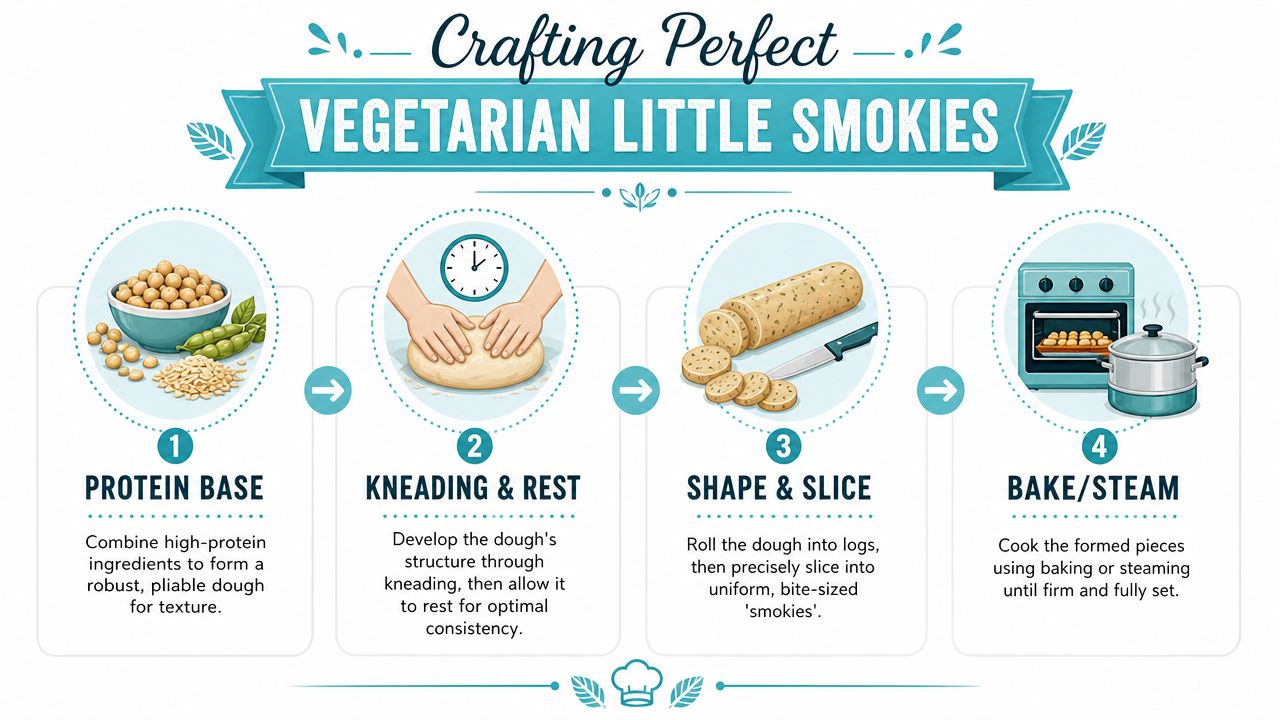
If you want homemade vegetarian little smokies that hold their shape in sauce and give you that compact, chewy bite, build the method around protein structure, not just smoky flavor. A seitan-style dough is the most dependable route because it creates a stronger matrix than carrots alone and a firmer result than a soft tofu mixture without enough binder.
Build a dough that can handle sauce
Start with a high-protein base such as vital wheat gluten, then add your smoky, savory seasonings and enough wet ingredients to make a pliable dough. The goal isn't softness. The goal is a dough you can roll into mini links without cracks or stickiness.
For anyone who wants to understand plant protein structure more thoroughly before shaping a batch, this primer on how to cook with textured vegetable protein is useful background for thinking about chew, moisture, and how protein behaves in savory recipes.
Shape matters more than people think
Uniform links cook more evenly and look better on a platter. If one piece is thick and another is thin, one will firm up while the other dries out.
I've had the best results when every link is kept close in size and rolled firmly enough to smooth the surface. Ragged seams tend to split later once the glaze starts bubbling.
A practical manufacturing reference for plant-based sausage-style texture also points to structure as the core challenge. One patented process uses gluten as the primary structuring protein, with controlled washing, fermentation, steam-cooking, rapid cooling, and refrigerated storage to develop elasticity and sliceable texture (plant-based sausage texture patent process). Home cooks aren't reproducing that full process, but the lesson carries over. Strong protein development and controlled moisture are what make links hold together.
Steam-bake, then chill
For small-batch vegan lil smokies, a strong benchmark is to form the dough into mini links, steam-bake under foil at 400 to 450°F for about 15 to 20 minutes, then refrigerate them for at least 4 to 5 hours so the chew and link integrity fully develop. That timing comes from tested recipe practice, and it's one of the clearest patterns behind a successful homemade batch.
Practical rule: Tight foil sealing isn't fussy technique. It keeps enough steam around the links to cook them through without drying the outside before the center sets.
Watch your oven setup
One detail that gets overlooked is oven-position variability. In a tested vegan lil smokies method, even trays baked in the same oven didn't behave identically. One top-rack batch came out “perfectly,” while others turned irregular. That's a useful reminder that your oven isn't neutral.
Here's the simplest way to troubleshoot:
| Issue | Likely cause | Fix |
|---|---|---|
| Links feel soft after baking | Foil wasn't sealed tightly or links were too thick | Seal more tightly and shape smaller, even pieces |
| Links turn dry at the edges | Too much exposed heat | Keep them wrapped and avoid overbaking |
| Texture still feels off after chilling | Dough hydration or shaping was inconsistent | Mix thoroughly and standardize link size |
| Some trays cook better than others | Rack-position difference | Rotate trays or favor the rack that gives smoother results |
Finish after the texture is set
Once chilled, the links are much easier to slice, toss, and simmer in sauce without breaking. That's when they start behaving like proper little smokies instead of fragile homemade dough.
The temptation is to rush them from oven to glaze. That's almost always the moment where texture gets sacrificed.
The Quick And Flavorful Jerky Shortcut
Game day is two hours away, the slow cooker is still empty, and you need something smoky that can hold up on a buffet table. This is the method I use when I want little-smokies flavor without mixing dough, shaping links, and waiting through a full chill.
It also solves a problem that a lot of homemade vegan cocktail-sausage recipes never really address. Many rely on carrots, mushrooms, or a heavy layer of sauce for the effect, so the final bite reads more like glazed appetizer pieces than a protein-forward smokie. Jerky starts with the protein and chew already in place.

Why jerky works here
Good vegan jerky has already been dried, seasoned, and structured to resist turning mushy. That matters once you add glaze. A softer base can disappear into the sauce after 20 minutes in a warm cooker. Jerky keeps its edges, stays pleasantly chewy, and gives you a denser bite that feels closer to an actual cocktail sausage.
I reach for this shortcut in three situations:
- Short prep window: You can go from package to serving dish fast.
- Need for consistency: The result does not depend on shaping skill or oven behavior.
- Higher-protein goal: The base ingredient contributes substance, not just smoke flavor.
How to turn jerky into little smokies-style bites
Cut the jerky into short, sausage-like pieces. If the strips taper, trim the thin ends for snacking and use the thicker center sections for the appetizer. That small step gives you more even texture across the batch.
Next, soften the pieces briefly in hot liquid. Water works, but a mix of vegetable broth and a splash of soy sauce gives better flavor. Keep the soak short. Five to ten minutes is usually enough, depending on the thickness. The jerky should bend easily and feel plump, but it should not shred when pressed.
Drain well, then warm the pieces in glaze over low heat until they are coated and glossy. Do not simmer hard. Aggressive boiling can push them from chewy to spongy, especially with thinner jerky.
If you like making your own pantry staples, this guide on how to make jerky at home for better control over texture gives useful context for how moisture level changes the final chew.
Choosing between jerky and from-scratch links
The from-scratch route offers more control over shape and gives you that classic, uniform little-smokies look. The jerky shortcut gives you speed, stronger built-in chew, and a more practical high-protein option for casual hosting.
One factual option here is Louisville Jerky Co., which sells plant-based jerky in smoky and barbecue-style flavors that work well once cut down and glazed. I prefer thicker pieces for this use because they soften on the outside while keeping some resistance in the center.
For parties, that texture pays off. Guests usually care less about perfect sausage geometry than whether each bite tastes smoky, saucy, and satisfying.
Crafting The Perfect Sweet And Smoky Glaze
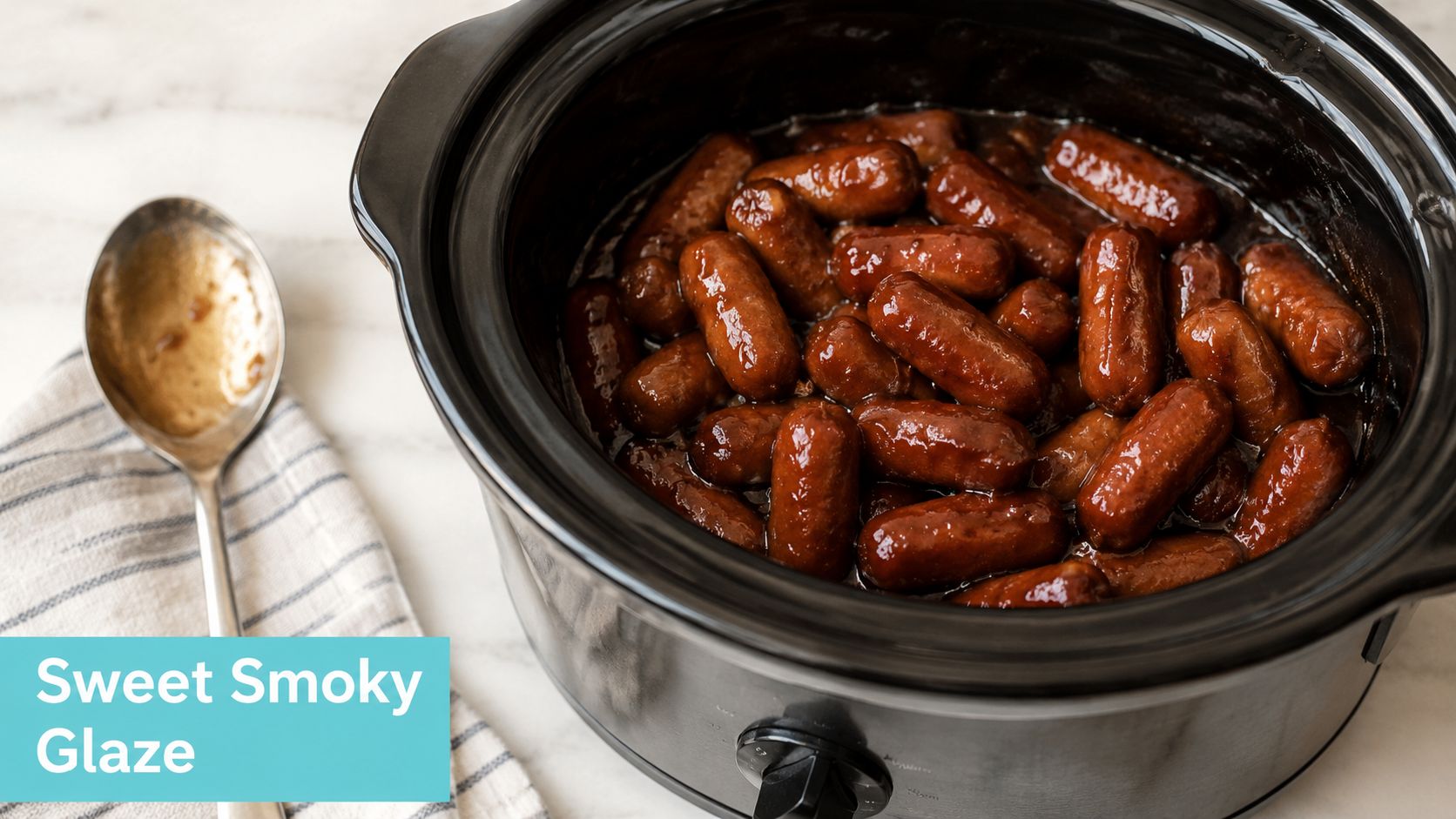
You pull the lid for the first party refill, and the room should smell sweet, smoky, and sharp enough to make people reach for another toothpick. That comes down to the glaze. If the sauce is too sweet, the smokies taste dull. If the smoke is too heavy, they taste artificial. If the acid is missing, the whole pot eats flat.
The base formula that stays balanced
Start with a vegan barbecue sauce that already has decent body. Then build around it with maple syrup or agave for gloss, apple cider vinegar for bite, and a restrained amount of liquid smoke for depth. I keep the sweetener modest at first because the sauce tightens and tastes sweeter after a short simmer.
For carrot-based smokies, I like a glaze that has a little more acidity. Carrots bring their own sweetness, so the vinegar keeps the finish from turning sticky and candy-like. For from-scratch seitan-style links, I usually push the smoke a touch higher because the base has more protein and can carry it. Jerky-based bites often need the least help. They usually arrive with smoke and salt already built in.
If you want better control over that last part, this guide to liquid smoke flavour explains why a few drops can round out a glaze and why too much makes it taste harsh.
How to tweak it without throwing it off
Make one adjustment, taste, then stop and check the finish after a minute of simmering. Cold sauce in the bowl and hot sauce in the pan do not taste the same.
- Need more sweetness: Add a small drizzle of maple syrup.
- Need more tang: Add a splash of apple cider vinegar.
- Need more heat: Stir in cayenne or a little vegan hot sauce.
- Need more smoke: Add liquid smoke by drops, not by instinct.
The right glaze coats the back of a spoon and leaves a clean line when you drag a finger through it.
That texture matters as much as flavor. A thin glaze slides off and pools in the bottom of the cooker. A thick one turns tacky and starts clumping around the smokies instead of glazing them. I simmer the sauce just long enough to soften the vinegar edge and let the sugars settle, then I shut it down before it reduces into paste.
For a visual walkthrough of smoky barbecue-style flavor building, this video is handy:
Matching the glaze to the smokie style
From-scratch links benefit from a gentler hand. Spoon the warm glaze over them, turn carefully, and give them a few minutes to absorb flavor without rough stirring. That keeps the casing-like exterior intact and helps the sauce cling instead of streaking off.
Jerky-based pieces can take a stronger glaze and a faster toss. Their chew holds up better, and the higher protein base makes them especially good for snack tables where guests want something that feels more substantial than a sugar-heavy appetizer.
For larger gatherings, it helps to plan the sauce the same way you plan serving gear and holding equipment. This guide to event essentials is a useful reminder that hot appetizers stay appealing longer when the setup is organized before guests arrive.
If the pan looks loose at the end, reduce the glaze before serving, not after the smokies have been sitting in it. That one choice keeps the texture chewy and the coating glossy.
Serving Storing And Party Planning Tips
Guests arrive in waves, not all at once. Vegetarian little smokies need to taste just as good for the second round of snackers as they do for the first, which means your holding plan matters almost as much as the recipe itself.
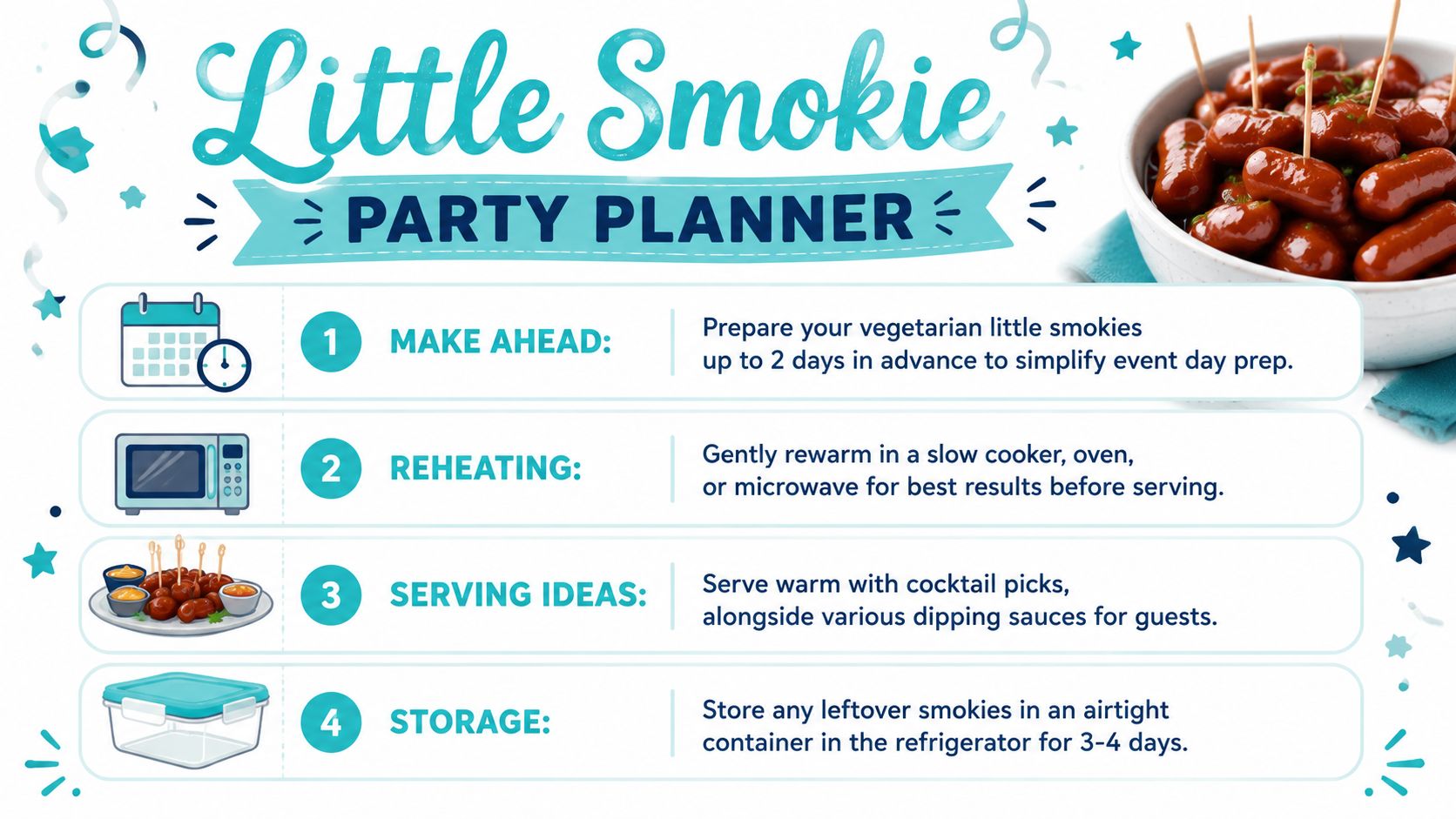
The biggest service mistake is too much heat. Once the glaze is hot and fluid, the job shifts from cooking to holding. Keep the slow cooker on warm or low so the sauce stays glossy and the smokies stay chewy instead of turning tight or waterlogged.
Hold them gently, not aggressively
From-scratch smokies need a lighter hand than the jerky shortcut version. Their texture is excellent when rested properly, but that same structure can split or toughen if they sit at a simmer too long. Stir only now and then, and use a spoon or small silicone spatula instead of tongs.
Jerky-based smokies are more forgiving on a buffet. They hold their chew longer, and the higher-protein base makes them a smarter choice for longer parties where food may sit out for a while before the tray gets refreshed.
A shallow layer of sauce helps. If the smokies are submerged, the coating loosens and the pieces can soften more than you want.
Warm glaze should coat the links. It should not pool heavily in the bottom of the cooker.
Set out toothpicks, a small spoon for extra glaze, and plenty of napkins. If you want the table to stay neat, place a small bowl nearby for used picks. That tiny setup detail keeps the serving area from looking picked over after half an hour.
A simple hosting rhythm
I use a three-part schedule that keeps the texture under control.
- Day before: Make the smokies, cool them fully, and refrigerate the glaze separately if possible.
- One hour before guests arrive: Reheat gently and combine with the glaze once both are warm.
- During service: Stir lightly, scrape down the sides if sauce starts setting, and add a spoonful of hot water only if the glaze gets too sticky.
For a bigger gathering, layout matters as much as cooking time. This guide to event essentials is helpful for planning serving gear, traffic flow, and the practical setup that keeps self-serve appetizers easy to manage.
Leftovers and next-day use
Cool leftovers before sealing them up. Trapping steam in the container thins the glaze and softens the exterior overnight.
A small saucepan is the best reheating tool because you can control the heat and loosen the sauce a little if needed. The microwave works for single portions, but short bursts are safer than one long blast.
| Situation | What to do |
|---|---|
| Freshly glazed leftovers | Cool completely, then refrigerate in an airtight container |
| Sauce thickened overnight | Rewarm over low heat and add a small splash of water |
| Texture feels too firm after chilling | Cover and warm slowly so the center softens before the glaze scorches |
Leftovers also earn their keep. Slice them into mac and cheese, tuck them into baked potato skins, or serve them over rice with something sharp on the side, like mustardy slaw or quick pickles.
Beyond The Basics Vegan Appetizer Pairings
The nicest vegetarian little smokies spreads don't feel overloaded. They feel balanced. You want the warm, smoky, sticky bite of the smokies in the center, then a few cooler or crunchier options around them so the table doesn't become one long note of barbecue sauce.
Contemporary vegan little smokie recipes often yield party-sized batches of 30 to 32 links, with a clear focus on crockpot holding and bite-sized portions that mirror the role of classic cocktail sausages in entertaining culture (party-sized vegan little smokies format). That makes them an anchor appetizer, not just an extra plate on the edge of the table.
Build contrast around the slow cooker
A strong spread usually includes:
- Something cool and creamy: Vegan spinach dip, cashew dip, or whipped white bean dip.
- Something crisp: Cucumbers, celery, endive, crackers, pita chips.
- Something rich but clean: Vegan cheese with fruit or olives.
- Something with heat: Jalapeño poppers or a spicy dip so the smokies aren't carrying all the bold flavor alone.
Warm appetizers land better when the rest of the table gives people a break between bites.
Drinks matter more than people expect
If you're serving wine, a resource on vegetarian vegan wine pairings can help you think through smoky, sweet, and spicy foods in a more intentional way. That's especially helpful if your glaze leans tangy or your spread includes richer dips and salty snacks.
A practical hosting trick is to put the smokies at the center of the table, not the edge. Guests naturally circle back to the hot item, and that keeps the rest of the appetizers moving too. If you're using the jerky shortcut for one tray and a from-scratch version for another, label them clearly so gluten-free and wheat-avoiding guests can find their way around your setup more easily.
Vegetarian little smokies work because they're familiar. What makes them memorable is when the texture is right and the rest of the spread supports them instead of competing with them.
If you want a faster route to smoky, chewy appetizer bites, browse Louisville Jerky Co. for plant-based jerky options that can be adapted into little-smokies-style party snacks with a simple glaze.