


At its core, textured vegetable protein (TVP) is made from high-protein plant flour—most often from soybeans. Think of it as a blank canvas, ready to soak up incredible flavors and give your food a satisfying, chewy texture.
What Exactly Is Textured Vegetable Protein?
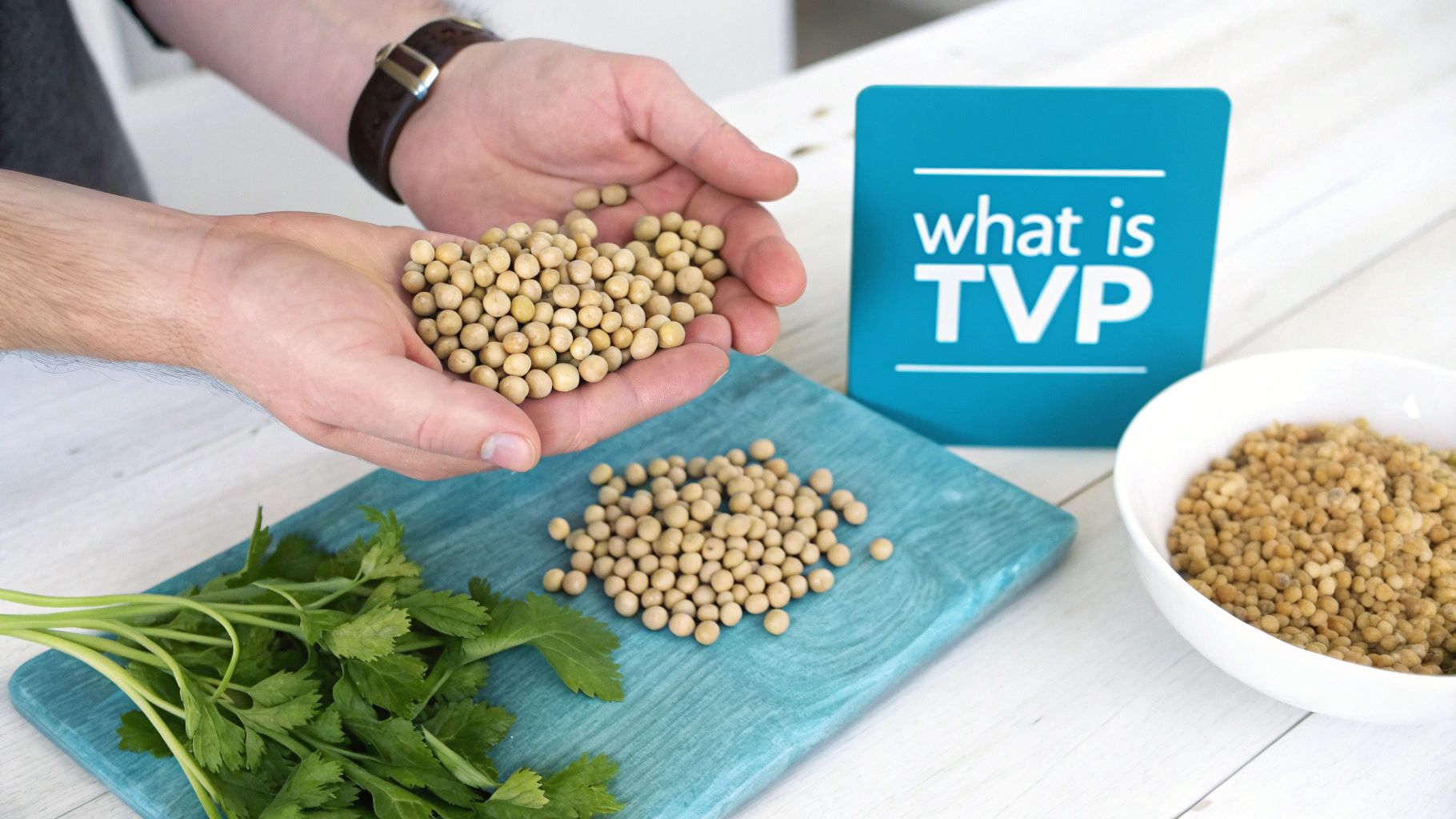
If you've ever bitten into a plant-based burger or taco and wondered where that hearty, meat-like bite comes from, the answer is often TVP. It’s the secret ingredient that provides the signature chew in countless vegan favorites, from classic chili to our very own Smoky Carolina BBQ jerky.
Simply put, TVP is a highly versatile food ingredient made to replicate the texture of ground meat using only plants. One of its best features is its neutral flavor, which allows it to act like a sponge, soaking up any marinade, broth, or seasoning you throw at it.
To get a better handle on this ingredient, let's break down its key features.
TVP at a Glance
This table provides a quick rundown of what makes TVP such a unique and useful ingredient in the kitchen.
| Characteristic | Description |
|---|---|
| Base Ingredient | Primarily defatted soy flour, but can also be made from pea, wheat, or other legumes. |
| Protein Content | Very high; typically around 50% protein by dry weight. |
| Texture | Fibrous, porous, and chewy, designed to mimic the texture of ground meat. |
| Flavor Profile | Naturally neutral and mild, making it excellent at absorbing flavors. |
| Form | Sold dry in various shapes and sizes, from small granules to larger chunks. |
| Primary Use | A popular ingredient for creating meat-like textures in a wide range of recipes. |
As you can see, its simple nature and powerful performance make it a staple in plant-based cooking.
From Simple Soybeans to a Meaty Texture
The journey from a humble soybean to a satisfying protein starts with a pretty straightforward process. First, the oil is pressed out of the soybeans, leaving behind a high-protein, defatted soy flour. This flour, or a more refined soy protein concentrate with a protein content of around 70%, is the key building block.
This protein-packed flour is then mixed with water to create a thick dough. The real magic happens next, in a process called extrusion.
Think of it like a high-tech pasta maker. Instead of simply pushing dough through a die to make shapes like spaghetti or penne, the extruder also cooks and pressurizes the plant-protein dough before forcing it through a specialized outlet.
As the dough exits the machine, the abrupt drop in pressure makes it puff up and expand, creating a fibrous, porous structure. This is precisely what gives TVP its satisfying, meat-like chew, making it such a convincing and beloved ingredient in the plant-based world. You can learn more about the specifics of how TVP is manufactured and why it's such a high-protein food.
The Plant-Based Sources Behind TVP
Textured vegetable protein starts its life in a surprisingly simple place: a plant. Even though it might seem like some kind of space-age food, the ingredients at its core are as ancient as farming itself. The specific plant used is a big deal, as it dictates everything from the protein punch to the final texture and nutritional stats.
The undisputed champion in the world of TVP is the humble soybean. It’s the go-to for a few very good reasons. Soybeans are incredibly efficient to grow and are naturally packed with protein, which is why defatted soy flour has become the gold standard for creating the TVP base.
Another huge plus is its neutral flavor. Soy-based TVP doesn't have a strong taste of its own, making it the perfect blank canvas. It’s a sponge, ready to soak up all the rich, smoky, and savory marinades we use to make our jerky. That chameleon-like quality is exactly what lets us create so many different and bold flavors.
Beyond the Soybean
While soy is the main player, it’s certainly not the only one. As more people look for great plant-based foods, other sources have stepped into the spotlight, each bringing something unique to the table.
- Pea Protein: This one is a rising star, especially for anyone looking for a soy-free and gluten-free option. Made from yellow split peas, it creates a wonderfully firm and satisfying texture and is a top pick for its hypoallergenic qualities.
- Wheat Protein: If you're after a chewier, more elastic bite, wheat protein is often the answer. While soy is king, wheat protein holds its own in the TVP market, offering a gluten-rich base that's either blended with other proteins or used on its own for all kinds of snacks and plant-based foods. Check out the latest on the global TVP market to see how it stacks up.
- Other Legumes: Food innovators are always experimenting, using protein from fava beans, lentils, and chickpeas to create specialized TVPs with different textures and nutritional perks.
This variety just goes to show how versatile plants can be. When you ask what is textured vegetable protein made from, the answer is a commitment to simple, wholesome ingredients.
At Louisville Vegan Jerky Co., our dedication to cruelty-free, non-GMO principles starts right here, with these foundational ingredients. We make sure our sources align with our values, so the building blocks of our jerky are as clean and conscious as they are delicious.
A Conscious Choice for a Vegan Lifestyle
Opting for products made from plant-based proteins like soy is a direct vote for a more compassionate and sustainable way of living. Growing these crops takes a fraction of the resources—we're talking land, water, and energy—compared to raising animals for protein.
This efficiency isn't just better for the planet; it's a cornerstone of the vegan ethic. By going straight to the plant for protein, we can create incredibly satisfying foods without any animal involvement. You can dive deeper into the world of plant-based proteins in our guide on what is vegan protein.
At the end of the day, every bag of our jerky begins as a simple plant, which we transform into a protein-packed snack that’s both kind to the earth and seriously tasty.
From Plant Flour to Protein Fiber
So, how exactly does a simple plant flour become a chewy, fibrous ingredient that provides a satisfying, meat-like texture? The whole transformation hinges on a clever manufacturing process called extrusion. This is the key that unlocks TVP's signature texture and makes it all possible.
Think of an extruder as a high-tech pressure cooker. It's a specialized piece of equipment that cooks, pressurizes, and shapes a plant-protein mix in one continuous motion. It’s what lets us create the perfect foundation for our vegan jerky, giving our Maple Bacon flavor its tender chew and our General Tso's its satisfying bite.
The journey starts with a few common plant sources.
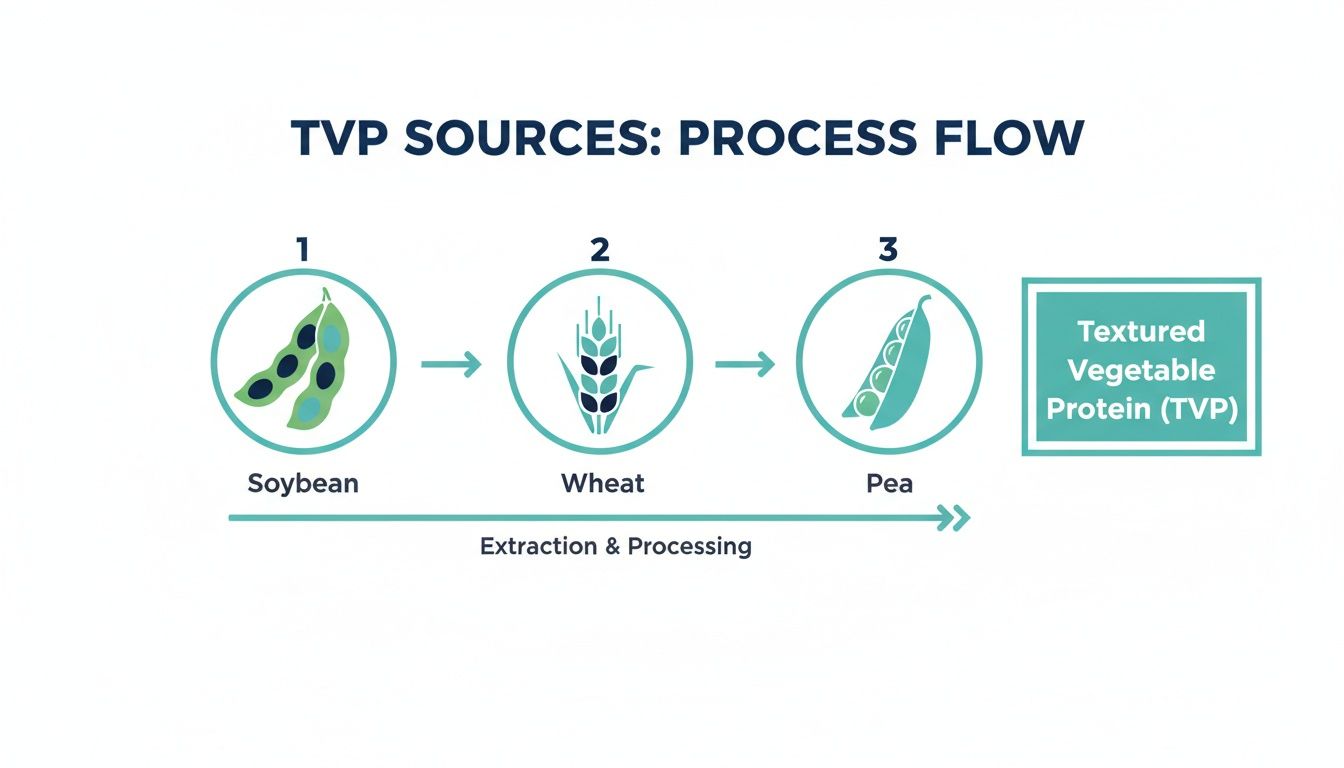
As you can see, soy is the original and most common base, but wheat and pea proteins have become major players, too, helping create a wider variety of plant-based textures.
The Extrusion Process Step-by-Step
Turning a basic plant powder into a protein-packed ingredient is a surprisingly straightforward process. While the machinery is complex, the concept breaks down into a few key steps that build that familiar, satisfying texture.
- Mixing the Dough: First, a high-protein plant flour—most often defatted soy flour—is mixed with water. This creates a thick, paste-like dough that’s ready for the next stage.
- Heating Under Pressure: The dough is then fed into the long, heated barrel of the extruder. Inside, it’s cooked under intense heat and extremely high pressure.
- Forcing Through a Die: At the very end of the barrel, the cooked, pressurized dough is pushed through a small opening called a shaping die. This die determines the final form of the TVP, whether it's granules, chunks, or strips.
This carefully controlled sequence is what sets the stage for the final, almost magical transformation.
The "Puff" That Creates the Texture
The real magic happens the moment the TVP leaves the machine. As the super-hot, pressurized dough exits the die and hits the normal, lower-pressure atmosphere, it expands instantly. All the built-up moisture flashes into steam, creating a rapid "puffing" effect.
This sudden expansion is what forms the iconic porous and fibrous structure of TVP. It creates a network of tiny air pockets and interconnected protein strands, which is precisely what gives TVP its spongy, meat-like texture and its incredible ability to soak up marinades and sauces.
Without this crucial step, you’d just have a dense, cooked protein paste. Extrusion is the brilliant technique that restructures plant protein into something with a satisfying, familiar chew—all without involving any animals. It’s the smart science that helps us turn wholesome plants into the delicious, protein-rich snacks you love.
Unpacking The Nutritional Power of TVP
Beyond its incredible texture, the real story behind TVP is its powerhouse nutritional profile. It's not just a plant-based alternative; it's a genuinely clean and effective fuel for the body. When you dig into what this ingredient offers, it's easy to see why it's become a go-to for so many people living a conscious lifestyle.
The first thing that stands out is the protein content. It's exceptionally high. Since TVP is made from defatted plant flour, the manufacturing process essentially concentrates the protein, leaving behind a seriously potent ingredient.
Just look at the numbers: a typical half-cup serving of dry TVP packs a remarkable 25 grams of protein. That puts it in the top tier of plant-based protein sources, making it a highly efficient way to fuel up.
That kind of protein is exactly what your body needs for muscle repair, sustained energy, and that satisfying feeling of fullness after a meal. For anyone with fitness goals, incorporating plant-based proteins like TVP can make a huge difference. If you're new to this, a good bodybuilding guide for beginners can show you how crucial protein is from the start.
A Look at the Macronutrients
When TVP is made from soy, it’s what we call a complete protein. This is a big deal. It means the TVP contains all nine essential amino acids—the ones your body can't make itself and must get from food. In terms of protein quality, this makes it an excellent plant-based source.
The defatting process also means TVP is naturally very low in fat and has absolutely zero cholesterol. This makes it a fantastic heart-healthy choice for bulking up meals without adding a lot of saturated fat. On top of that, it’s a solid source of dietary fiber, which is great for digestive health.
TVP delivers a powerful combination of high-quality protein and essential fiber while remaining low in fat. This makes it a functional and efficient ingredient for anyone from athletes to busy families looking for nutritious, plant-based options.
To really appreciate its protein punch, it helps to see how it stacks up against other common foods.
Protein Content Comparison Per 100g
This table gives you a clear comparison of the typical protein found in 100 grams of dry TVP versus other popular protein sources.
| Protein Source | Average Protein (grams) |
|---|---|
| TVP (Dry) | ~50g |
| Lentils (Dry) | ~25g |
| Tofu (Firm) | ~17g |
| Chickpeas (Cooked) | ~8g |
| Quinoa (Cooked) | ~4g |
As you can see, the numbers really do speak for themselves. Dry TVP stands in a class of its own, offering a significant advantage if you're looking to efficiently meet your daily protein goals.
Rich in Essential Minerals
It doesn't stop with the macros. TVP is also a great source of key minerals that your body needs to function at its best. In a single serving, you're getting a meaningful dose of:
- Iron: Absolutely essential for carrying oxygen in your blood and keeping fatigue at bay.
- Magnesium: Plays a huge role in muscle function, nerve health, and energy production.
- Copper: Helps support a healthy and robust immune system.
This impressive nutritional package is what solidifies TVP's place as a smart staple in any plant-focused diet. For a deeper dive into its benefits, you can explore our full guide on whether textured vegetable protein is healthy and how it can fit into your routine.
Flavoring and Cooking with TVP
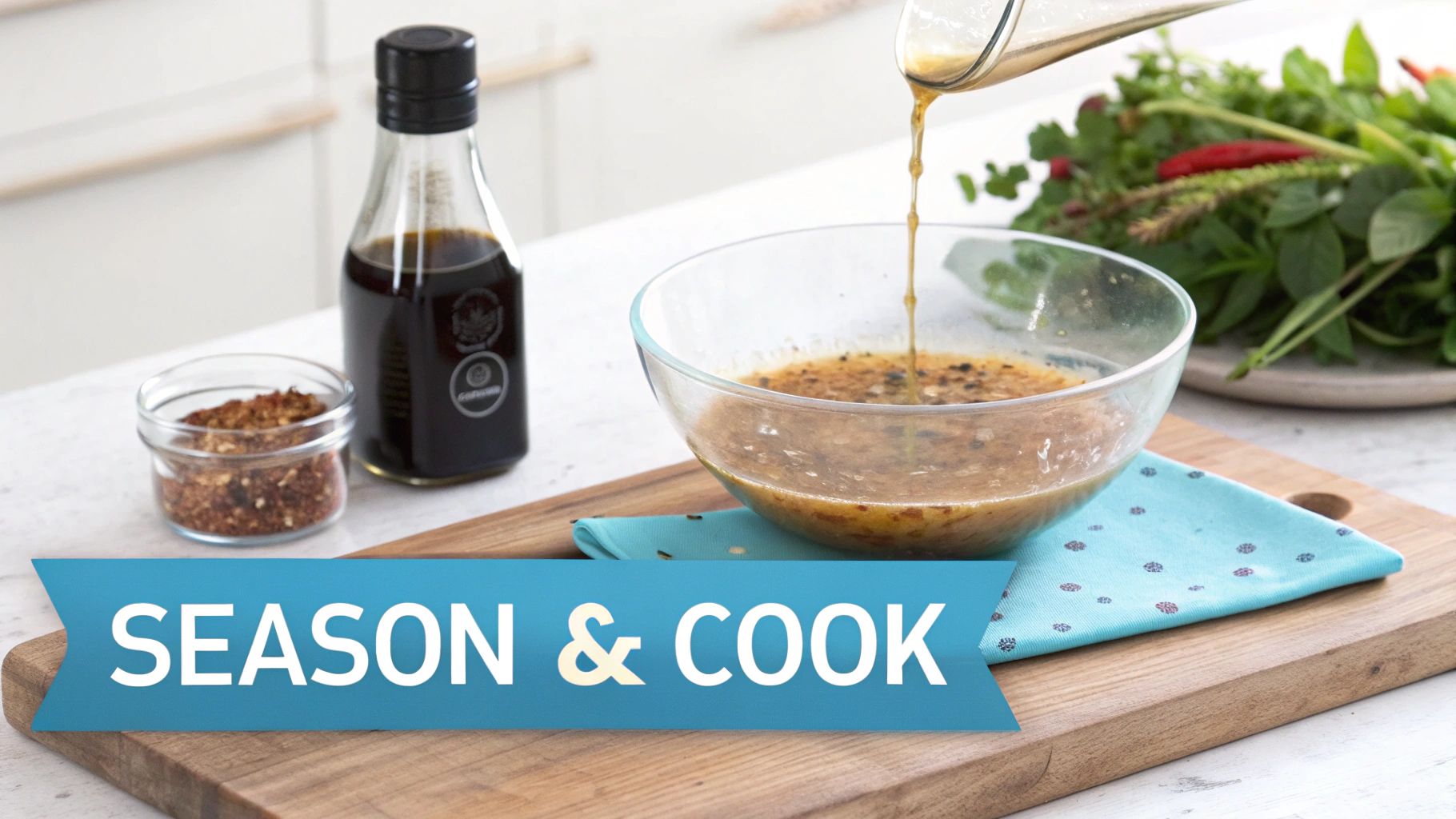
One of the best things about TVP is its incredible ability to absorb flavor. On its own, it’s pretty neutral, making it a perfect blank canvas for whatever you have in mind. Turning those dry granules into something delicious all starts with one simple but crucial step: rehydration.
The process couldn't be easier. Just soak the TVP in hot liquid for about 10-15 minutes. You could use plain hot water, but this is your first and best chance to start building flavor. Using a good, savory vegan broth infuses the TVP from the inside out, creating a much richer starting point.
Mastering the Art of Marination
Once your TVP is rehydrated to a tender, chewy texture, the real fun begins. Marinating is where you get to be creative and dial up the flavor to make the dish truly yours. This is exactly how we get the bold, smoky, and savory notes you love in our jerky.
Here are a few tips for creating a marinade that really hits the mark:
- Build a Savory Base: Start with a foundation of tamari or soy sauce for that salty, umami kick. It provides the deep, satisfying flavor that makes plant-based proteins so good.
- Add a Touch of Sweetness: A little sweetness from something like maple syrup or agave nectar helps balance the salt and creates a more complex taste.
- Introduce Smoky Notes: For that classic jerky or bacon flavor, a few drops of liquid smoke are a must. It adds an authentic, smoky depth that elevates everything.
- Layer with Spices: Don't forget the essentials like garlic powder, onion powder, paprika, and black pepper. These spices round everything out and give your TVP a well-seasoned finish.
The key to delicious TVP is thinking of it like a sponge. Its porous texture is designed to soak up every drop of marinade, ensuring each bite is packed with the bold flavors you’ve carefully layered together.
Beyond Jerky: Creative Kitchen Uses
While we’re pretty good at turning TVP into amazing jerky, its versatility goes far beyond snacks. It's a fantastic staple for all sorts of plant-based meals. For a complete walkthrough, check out our guide on how to cook with textured vegetable protein for more detailed tips.
Need a little inspiration? Here are a few practical ideas to get you started:
- Vegan Tacos or Chili: Sauté rehydrated TVP crumbles with onions, garlic, and your favorite taco or chili seasonings for a hearty, satisfying filling.
- Hearty Bolognese Sauce: Add rehydrated TVP to your tomato-based pasta sauce to create a rich, "meaty" texture that's perfect with spaghetti.
- Crunchy Salad Toppings: For an instant boost of protein and crunch, sprinkle something like our Louisville Toppins’ over salads and bowls.
For more ideas on how plant-based proteins can be transformed, you can find inspiration in recipes like this flavorful curried tofu salad. TVP really empowers you to get creative and make compassionate cooking a delicious part of your daily routine.
Reading Labels and Navigating Allergens
Whenever you're trying a new food, knowing what’s inside is key—and TVP is no different. The big thing to remember is that most TVP is made from soy, and sometimes wheat.
Since soy and wheat are two of the most common food allergens out there, a quick scan of the label is a non-negotiable first step. Don't just assume it's safe; always double-check.
Thankfully, food labeling laws make this pretty straightforward. When you look at the ingredients list, major allergens like soy and wheat are required to be clearly identified. You'll usually see them in bold text or called out in a "Contains" statement right below the list. It’s designed to be easy to spot.
What Certifications Tell You
Beyond just the ingredients, certifications on the packaging can give you a ton of information at a glance. Think of them as a trusted shortcut to understanding a product’s quality and whether it fits with your personal standards.
Keep an eye out for these seals to feel more confident in your purchase:
- Non-GMO Project Verified: This little butterfly logo is your assurance that the ingredients haven't been genetically modified. It's a go-to for anyone committed to more natural food sources.
- Certified Vegan: This one guarantees the product is completely free of animal-derived ingredients and wasn’t tested on animals. It’s a clear sign of a brand's commitment to cruelty-free practices.
When you choose products that carry these certifications—like those from Louisville Jerky Co.—you’re not just getting a tasty snack. You're getting peace of mind, knowing it meets high standards for ethical and transparent production. It’s all about finding brands you can trust and making choices you feel great about.
Got Questions About TVP? Let's Dig In.
As you start exploring textured vegetable protein, it's natural for a few questions to bubble up. Getting straight answers is the best way to get comfortable with this amazing ingredient and start making the most of it in your own kitchen.
So, is TVP Actually Good For You?
For most people, absolutely. TVP is a fantastic, healthy addition to just about any diet, especially a plant-based one. Think of it as a lean, clean protein source. It's packed with plant protein, naturally low in fat, and gives you a solid dose of fiber and minerals. Because it starts as defatted flour, you won't find any of the cholesterol or saturated fat that comes with animal protein.
Of course, like anything else, it's all about balance. TVP shines brightest when it's part of a diet full of different whole foods. Its simple, wholesome nature makes it an easy and efficient way to meet your protein needs.
TVP is a true protein powerhouse. A standard half-cup serving can deliver around 25 grams of protein, and its fiber content helps you feel full and satisfied long after you've finished eating.
Does It Really Taste Like Meat?
On its own, not really. Straight out of the bag, dry TVP has a very mild, slightly nutty taste. It’s basically a blank canvas, which is exactly what makes it so brilliant.
The magic happens when you add liquid. Its texture is like a sponge, ready to soak up any flavor you throw at it. Rehydrate it in a rich vegetable broth, add your favorite marinades, herbs, and spices, and it takes on an incredibly savory, chewy texture that does a fantastic job of mimicking ground meat.
What’s the Best Way to Store TVP?
Dry TVP is a dream pantry staple because it lasts for ages. The key is to keep it in an airtight container somewhere cool and dark—a cupboard or pantry is perfect. Just keep it away from direct sunlight and moisture.
Stored this way, it can easily last for a year or even longer. Once you've rehydrated it, though, you need to treat it like any other fresh, cooked food. Pop it in a sealed container in the fridge and use it up within 3-5 days.
Ready to see—and taste—what expertly seasoned TVP can do? Louisville Jerky Co. takes this humble plant protein and turns it into a smoky, chewy, and seriously satisfying snack. Check out all our bold flavors and find your new go-to at https://lvjco.com.