


You're in the snack aisle, holding a bag that looks harmless. Maybe it's fruit chews. Maybe it's marshmallows. Maybe it's one of those “better for you” gummies that seems plant-based at first glance. Then you turn the package over, scan the ingredients, and pause at one small word: gelatin.
That moment is familiar to a lot of vegans, vegetarians, and anyone shopping with religious or dietary restrictions in mind. Gelatin often hides in foods that otherwise look simple, colorful, and easy to grab on the go. It's one of those ingredients that can make you feel like you need a decoder ring just to buy a snack.
The good news is that gelatin free snacks aren't rare or joyless. You can absolutely find chewy, crunchy, sweet, and savory options that fit a cruelty-free lifestyle. You just need a few practical habits, a better sense of what ingredients do, and some fresh ideas beyond the usual fruit cup and rice cake routine.
Your Guide to Navigating the Snack Aisle
A lot of people start their gelatin-free journey with one disappointing discovery. You find a snack you used to love, read the label more carefully, and realize it doesn't match your values or dietary needs after all. Then every shelf starts to feel a little suspicious.
That's especially true in places where convenience matters. School lunch packing. Office drawers. Road trip snack stops. Break room baskets. If you're helping with stocking healthy vending selections, the challenge gets even bigger because you're not just shopping for yourself. You're trying to offer options that feel inclusive, practical, and satisfying.
Gelatin free snacks can fit all of those situations. Some are clearly labeled vegan. Others take a little label reading. Some are sweet and nostalgic. Others are savory, chewy, and substantial enough to keep you going between meals.
Small mindset shift: Don't think of gelatin-free snacking as a list of “can'ts.” Think of it as learning a new shortcut to foods that match your ethics and still taste good.
Once you know what gelatin is, why it shows up in snacks, and what ingredients replace it, shopping gets much easier.
What Is Gelatin and Why Do People Avoid It
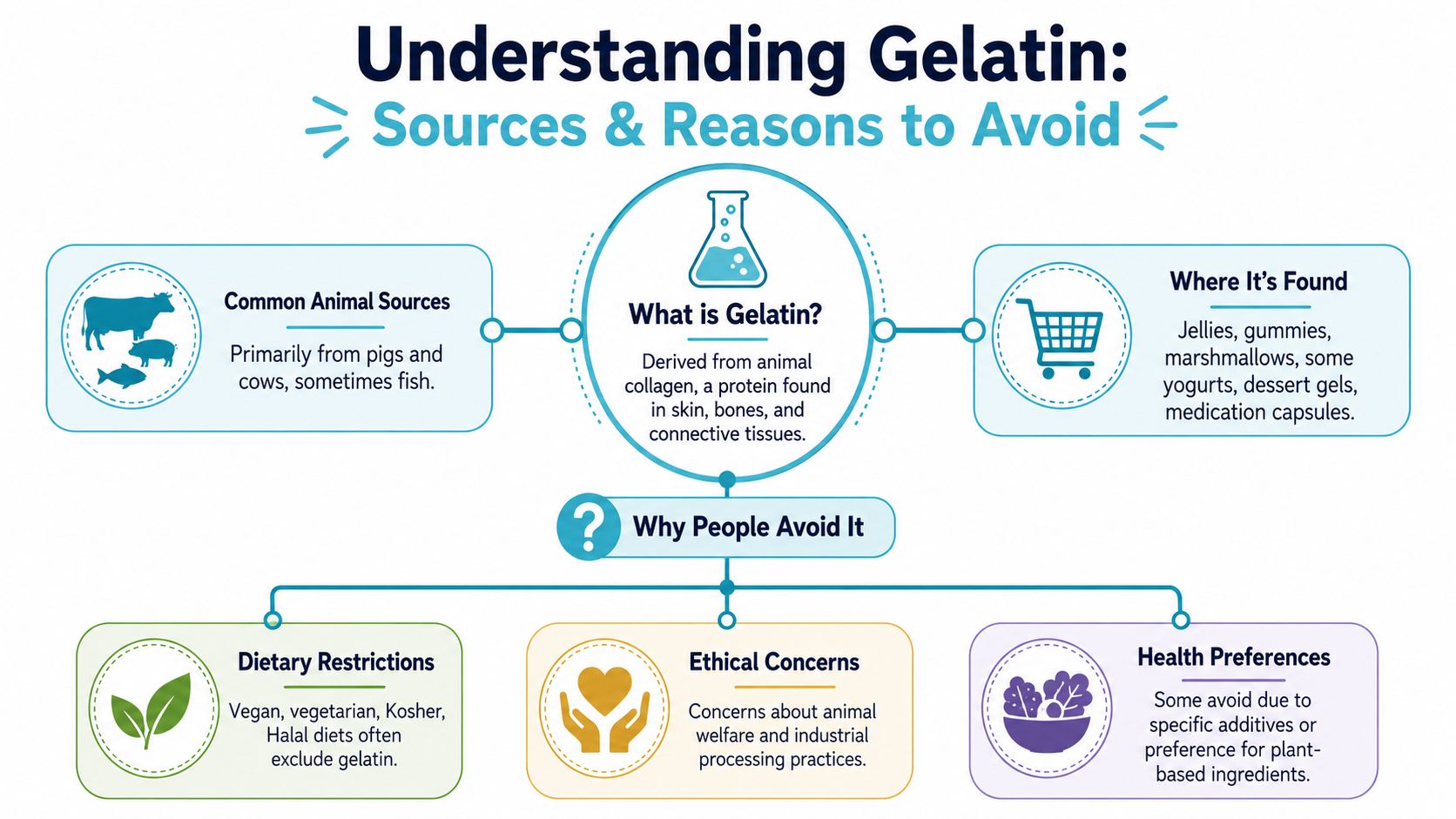
Gelatin is an animal-derived ingredient made from collagen found in the bones, skin, and connective tissues of animals such as pigs, cows, and fish, which is why it can be unsuitable for vegans, many vegetarians, and people following halal or kosher dietary rules, as explained in this overview of foods high in gelatin.
Why it shows up in snacks
Food makers use gelatin because it creates a very specific texture. It helps gummies bounce, dessert cups set, and chewy candies hold together. It isn't there by accident. It's doing a job.
That's why avoiding it can feel tricky at first. A product may look fruit-based or harmlessly sweet, but the texture often depends on an ingredient that comes from animals. Once you know that, ingredient lists start to make more sense.
Why people skip it
For vegans, the reason is simple. If an ingredient comes from animals, it doesn't fit a cruelty-free lifestyle.
For vegetarians, it's often a similar issue. Some vegetarians avoid gelatin because it isn't just animal-adjacent. It is animal-derived. For halal and kosher shoppers, gelatin can also raise serious compliance questions based on origin and processing.
Some people avoid gelatin for a broader plant-based preference too. They'd rather choose snacks made with ingredients like fruit, starches, seeds, or seaweed-derived gels than rely on an animal-based texturizer.
A useful way to think about it is this:
| Question | Short answer |
|---|---|
| Is gelatin vegan? | No |
| Is gelatin vegetarian-friendly for many people? | Often no |
| Can gelatin affect halal or kosher suitability? | Yes |
| Does texture matter when replacing it? | Absolutely |
Where confusion usually happens
The confusion isn't usually about obvious things like plain nuts or potato chips. It's about foods with a soft set, a stretch, or a chew. Gummies, marshmallows, jelly-style desserts, and some creamy or novelty snacks are where people get tripped up.
Gelatin avoidance isn't only about what you remove. It's also about understanding what creates texture, so you can choose plant-based alternatives with confidence.
That's where label reading becomes your superpower.
Becoming a Gelatin Detective by Reading Labels
The gelatin market was valued at USD 7.05 billion in 2024, which helps explain why it still appears across many products, and industry development of alternatives such as starch, pectin, carrageenan, and agar has grown alongside demand for vegan, halal, and kosher options according to this gelatin market analysis.
What to look for first
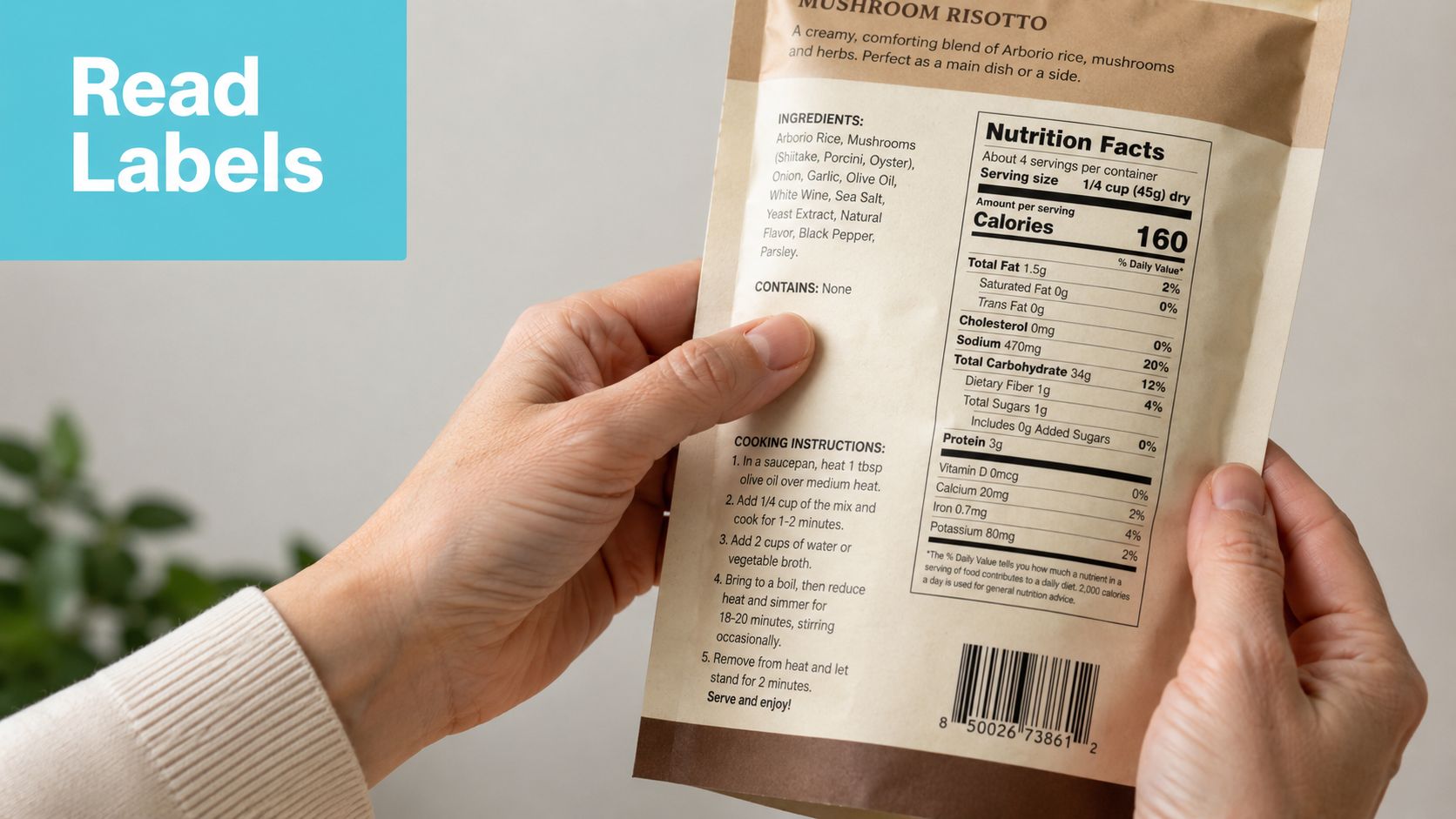
Start with the ingredient list, not the front of the package. “Made with fruit,” “naturally flavored,” and “plant-based style” don't guarantee anything.
Your first pass should be quick. Scan for the word gelatin. If it's there, you have your answer. If it isn't, keep reading and look for what's being used to create the texture instead.
Plant-based ingredients that often replace gelatin
This is the fun part. Instead of only hunting for a red flag, learn the green flags too.
- Agar works well in firmer gels and jelly-like textures.
- Pectin is common in fruit-forward products and jams.
- Carrageenan can help create a smooth set in some foods.
- Starch often shows up in chewy or structured snacks.
When you recognize these names, the label stops feeling mysterious. You can tell that a company built the texture with plant-based structure rather than animal collagen.
A simple label-reading routine
Use this routine in the store:
- Check the product type. If it's gummy, marshmallow-like, jelly-like, or bouncy, slow down.
- Read the ingredient list fully. Don't stop after the first few items.
- Look for texture clues. Agar, pectin, carrageenan, and starch can point to a gelatin-free formula.
- Check allergy context if needed. Gelatin-free doesn't automatically mean school-safe or office-safe.
Practical rule: “Gelatin-free” solves one problem. It doesn't automatically solve every dietary restriction.
The texture clue most people miss
A lot of readers wonder why vegan gummies or homemade jellies can feel different. The answer is texture chemistry, not poor recipe design. A study on gelatin-free jelly candies found least gelling concentrations of 16% for defatted pea starch and 12% for corn starch, compared with 6% for gelatin, which shows why plant systems often need more solids to build structure in similar applications, as described in this study on gelatin-free jelly candies.
That helps explain why one vegan snack is springy, another is tender, and another is more jammy. They're not trying to imitate gelatin in exactly the same way. They're using different plant tools to get to a satisfying result.
The Ultimate Gelatin-Free Snack Aisle Guide
Walking into the store helps once you stop treating all gelatin free snacks as one category. They aren't. Some are there for sweetness and nostalgia. Others are there to carry you through a long afternoon, a commute, or a workout.
The biggest gap in a lot of snack advice is chew. Plenty of lists offer applesauce cups, crackers, and popcorn. Those can be useful, but they don't always scratch the itch for something substantial.
Sweet choices that still fit
If you're craving the candy aisle feeling, focus on snacks built with plant-based gelling agents or no gelling agents at all.
A few categories worth watching:
- Fruit chews and fruit snacks made with pectin or starch instead of gelatin
- Jelly candies that use agar for structure
- Dried fruit when you want chew without any added gelling system
- Vegan marshmallow alternatives from brands that clearly label their ingredients
For school or office sharing, ingredient reading matters even more. Some snack guides point out a useful blind spot: a snack can be gelatin-free and still contain other major allergens, which is why classroom and workplace shopping often needs a broader filter than gelatin alone. This overview of allergen-free snacks is helpful for thinking in that more practical way.
Savory options that feel like real fuel
Gelatin-free snacking becomes more exciting. Adults often want something salty, protein-forward, and portable, not just another sweet bite. Independent snack roundups have highlighted interest in satisfying, chewable savory formats like pretzels, roasted legumes, popcorn, and jerky-style snacks in this discussion of easy store-bought allergy-friendly snacks.

That's why plant-based jerky matters in this conversation. It gives you chew, portability, and a more filling experience than candy-style snacks. One example is Louisville Vegan Jerky, which fits the gelatin-free category while offering a savory option people can keep in a work bag, gym bag, or glove compartment. If you want more ideas in that lane, this roundup of healthy vegan snack ideas is a useful place to browse.
A quick aisle-by-aisle way to think
| Snack mood | What to look for |
|---|---|
| Want chewy and sweet | Pectin-based fruit snacks, agar jellies, dried mango, fruit leather |
| Want crunchy and simple | Popcorn, pretzels, roasted chickpeas, plantain chips |
| Want savory and substantial | Vegan jerky, seasoned legumes, seed mixes |
| Need group-friendly options | Original packaging, clear ingredients, broader allergen check |
The point isn't to replace every old favorite with a direct copy. It's to build a snack lineup that fits your life better.
Craft Your Own Cruelty-Free Snacks at Home
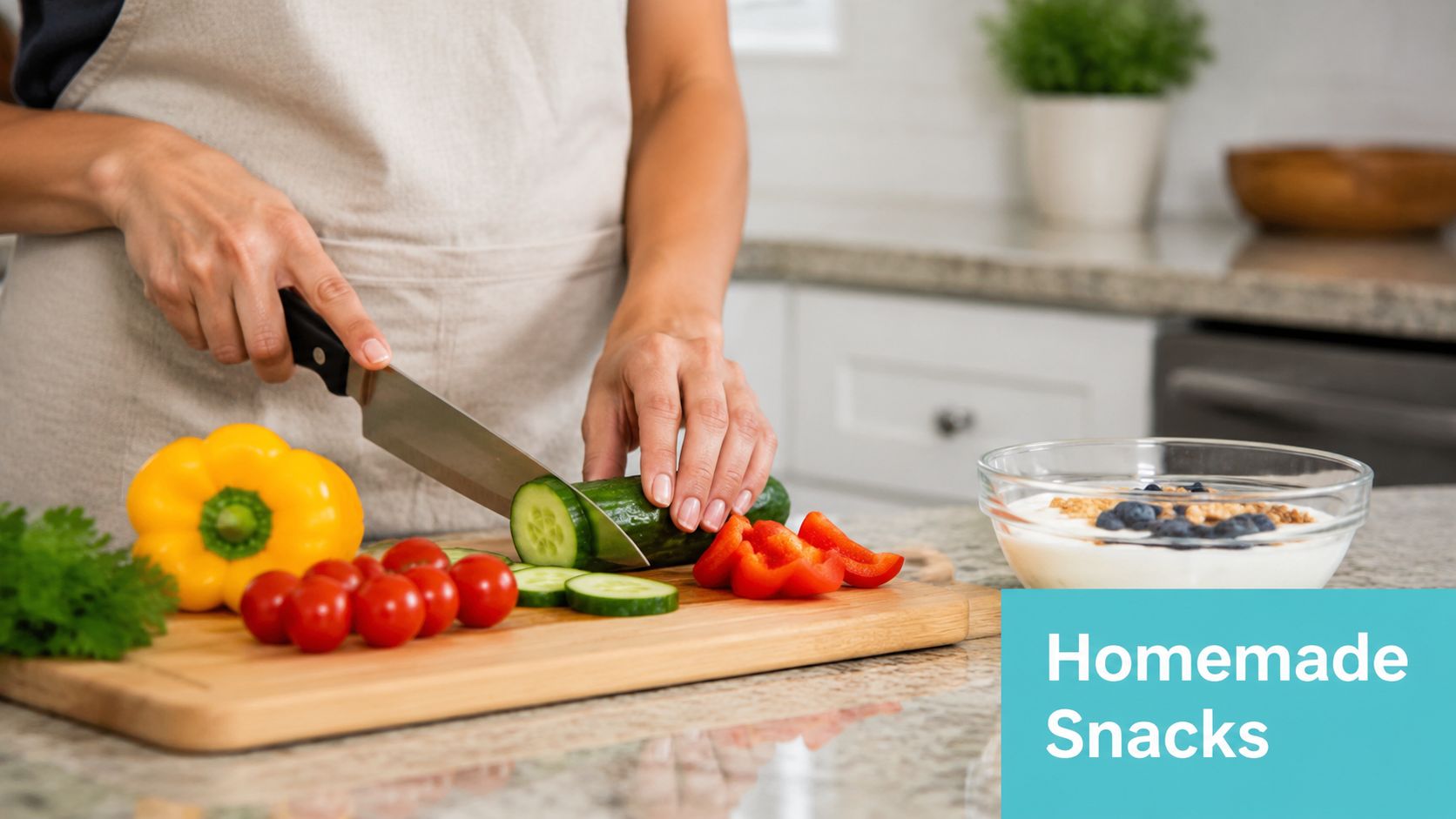
Homemade gelatin free snacks can be wonderfully simple. You don't need a specialty kitchen or a long ingredient list. You just need recipes that are built for plant-based ingredients from the start.
Start with easy wins
Skip the temptation to “veganize” an old gelatin dessert by swapping one spoonful for another. Plant gelling agents behave differently, so success usually comes from using a recipe that already understands that.
Good beginner ideas include:
- Energy balls made with oats, nut or seed butter, and mix-ins
- Chia puddings for spoonable snacks with natural thickening
- Homemade fruit leather for a chewy, lunchbox-friendly option
- Roasted chickpeas when you want crunch instead of chew
If you like a gentle caffeine lift in the afternoon, this DIY matcha energy ball recipe is a nice example of a no-bake snack that stays fully plant-based.
Why vegan recipes matter here
A common home-kitchen mistake is assuming all gelling agents swap one-to-one. They don't. As noted earlier in the article, some plant starch systems may need 12% to 16% to create firmness that 6% gelatin provides in comparable candy-style applications, which is why following a tested vegan recipe matters so much.
That difference affects texture, not just ingredient amounts. A recipe developed for agar may set quickly and firmly. One built around starch may feel softer or denser. Neither is wrong. They're different structures.
If your homemade snack sets differently than a conventional gelatin dessert, that doesn't mean you failed. It usually means the plant-based ingredient is doing a different job in a different way.
Savory homemade snacks count too
A lot of DIY snack content leans sweet, but savory homemade snacks are often more useful day to day. Build your own trail mix with nuts, seeds, dried fruit, and a chopped chewy element. Add crunchy roasted beans to lunch boxes. Keep seasoned popcorn around for quick evenings.
If you're curious about making chewy savory snacks from scratch, this guide on how to make jerky at home can help you understand the process and texture considerations.
Here's a visual if you want a little kitchen inspiration before you start experimenting:
Home prep works best when you keep your standards realistic. You're not trying to recreate every conventional snack perfectly. You're building snacks that taste good, travel well, and align with your values.
Live Your Best Gelatin-Free Life with Confidence
Once you know what to look for, gelatin free snacks stop feeling confusing. You start to recognize the usual problem products. You read labels faster. You notice the plant-based ingredients that signal a better fit. Shopping becomes less about second-guessing and more about choosing what sounds good.
That confidence matters because a cruelty-free lifestyle works best when it feels livable. You need snacks for the boring moments as much as the intentional ones. Commutes. Work breaks. Study sessions. Long drives. Last-minute school pickups. When your options include chewy fruit snacks, crunchy pantry staples, and savory choices that satisfy, it gets much easier to stay aligned with your values.
There's also something freeing about understanding the difference between “animal-free” and “technically snackable.” You don't have to settle for the least exciting option on the shelf. You can look for food that fits your ethics and still feels enjoyable.
If you care about the bigger meaning behind these choices, this reflection on what cruelty-free means adds helpful context.
Keep it simple. Read the label. Learn a few plant-based texture ingredients. Build a short list of go-to snacks you want to eat. That's enough to turn gelatin-free living from a hassle into a habit.
If you want a chewy, savory option to add to your gelatin-free routine, take a look at Louisville Jerky Co.. Their plant-based jerky gives you a cruelty-free snack format that goes beyond candy-style treats and fits real-life moments like work breaks, travel, and post-workout snacking.