


When you see the label “cruelty-free” on a product, it’s a straightforward promise: that product, and every single ingredient inside it, was developed without ever being tested on animals. It’s a commitment that runs deep, covering the entire journey from the raw materials all the way to the finished item on the shelf.
What Cruelty Free Means in Practice
Think of "cruelty-free" as an unbroken chain of compassion. For a product to truly earn that title, every single link in its supply chain has to be free from animal testing. This isn't just a trendy marketing phrase; it’s a serious, verifiable commitment to producing things ethically.
This idea has clearly struck a chord with people. The global market for cruelty-free cosmetics alone was valued at a whopping USD 14.84 billion in 2023 and is expected to climb to USD 23.54 billion by 2030. You can dig into more data on this expanding market to see just how much consumer demand is shifting industries toward more ethical practices.
The Core Principles of Cruelty Free
At its heart, the cruelty-free movement is grounded in a few non-negotiable principles. These aren't just suggestions; they are the bedrock of what it means to be a truly ethical brand.
To make it crystal clear, here’s a breakdown of what a company must commit to:
| Principle | What It Means in Practice |
|---|---|
| No Final Product Testing | The finished product you buy—whether it’s a snack or a face wash—is never tested on animals. Period. |
| No Ingredient Testing | Each individual ingredient that goes into the product has not been tested on animals, either by the company or by its suppliers. |
| No Third-Party Testing | The company doesn't commission or pay any other organization to conduct animal tests on its behalf. |
| No "Required by Law" Testing | The brand does not sell its products in physical stores in countries where animal testing is mandated by law. |
These principles work together to create a comprehensive standard that leaves no room for loopholes. It's about ensuring compassion is woven into every part of the process.
A truly cruelty-free promise means that compassion is embedded in every step of a product's journey, from the initial concept to the moment it reaches your hands.
For a 100% plant-based brand like us at Louisville Jerky Co., this commitment is just a natural part of who we are. Since we only use vegan ingredients and processes, our products are inherently developed without any animal involvement.
This means every delicious, protein-packed bite you take is not just satisfying your hunger, but also aligning with a kinder way of living. When you grab one of our snacks, you’re choosing a product that is ethical by its very nature.
Cruelty-Free vs. Vegan: What's the Real Difference?
It’s a common mix-up: you see the words “cruelty-free” and “vegan” on a package and figure they’re one and the same. While both labels come from a place of compassion, they actually point to two totally different things in the world of ethical products.
Getting the hang of this difference is the key to making sure the products you buy truly line up with what you believe in.
Here’s a simple way to remember it: cruelty-free is about the process, while vegan is about the ingredients.
A product that’s cruelty-free means it was developed without any animal testing. On the other hand, a product that’s vegan contains absolutely zero ingredients that come from animals.
This little distinction makes a huge difference. For instance, you could have a face cream that's certified cruelty-free because it was never tested on rabbits, but it might contain animal-derived ingredients like honey or lanolin. That means it isn't vegan.
When Labels Get Tricky
It can get confusing from the other direction, too. A company might create a product using only plant-based ingredients, but they could still be testing other products in their lineup on animals. This puts shoppers who want to avoid supporting animal harm entirely in a tough spot.
The term 'cruelty-free' really took hold back in the 1980s, thanks to a major push from animal rights activists. They cemented its meaning around the testing process, which is separate from the ingredient-focused 'vegan' label. This movement has had a massive impact; today, the global vegan fashion market is projected to grow from USD 556.3 billion in 2024 to USD 1,281.2 billion by 2034. You can read more about the history and trends of cruelty-free beauty.
This is where a brand that’s 100% vegan cuts through all the noise and offers real peace of mind.
Being 100% vegan means a brand’s entire philosophy is built on avoiding animal exploitation. This inherently includes a commitment to developing products without animal testing, resolving the confusion between the two labels.
At Louisville Jerky Co., our promise is straightforward. Because every single product we make is 100% vegan, you never have to play detective with our labels. We only use plant-based ingredients, which means our jerky is naturally developed without any animal testing—period.
If you're thinking about moving toward a plant-based lifestyle, we've got a great resource on how to transition to a vegan diet.
When you grab one of our snacks, you’re getting the whole ethical package: no animal ingredients and no animal testing, guaranteed. It’s just delicious, high-protein fuel you can feel genuinely good about, without ever having to second-guess what’s behind the brand.
How To Read Cruelty Free Labels
Ever walk down a store aisle, pick up a product with a cute bunny logo, and assume it’s cruelty-free? It’s a common mistake. Unfortunately, not all bunny logos are created equal, and figuring out which ones are legitimate can feel like a bit of a maze.
The key is to think of the official certification logos as a seal of approval from a trusted third party. These organizations do the heavy lifting—the audits, the supply chain investigations, the paperwork—so you don't have to just take a company's word for it. They ensure a brand's commitment is genuine.
This quick visual breaks down the core difference between cruelty-free (which is all about the process) and vegan (which is all about the ingredients).
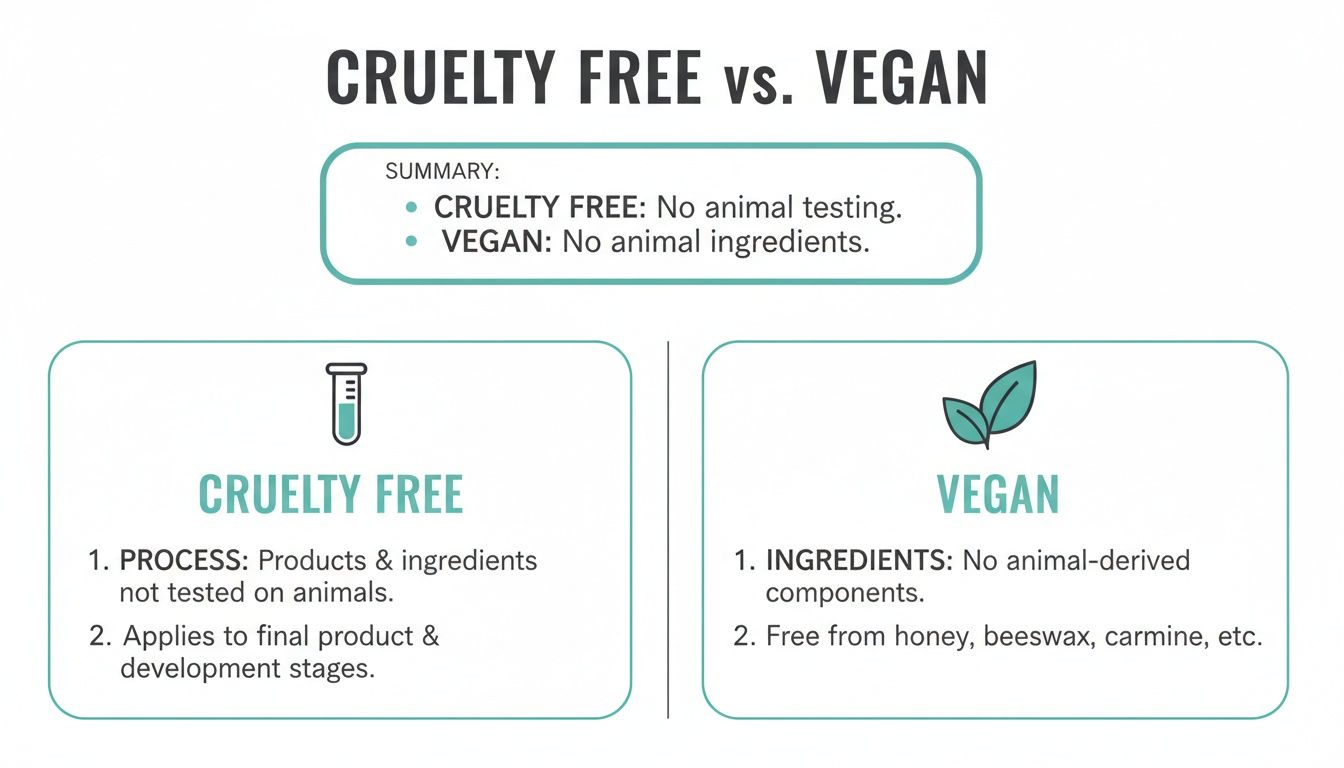
As you can see, the two concepts are related, but they tackle different ethical concerns. A product can be one without being the other.
The Most Trusted Certifications
So, what should you actually look for on the package? There are three main certifications that are considered the gold standard in the cruelty-free world. They stand out because they have strict rules, conduct thorough audits, and require brands to re-commit every single year. This keeps everyone honest and ensures the standard remains high.
Here are the top three you need to know:
- Leaping Bunny Program: This is often seen as the most rigorous certification. To earn this logo, a brand must prove that no new animal testing happened at any stage of product development—not by them, not by their labs, and not by their ingredient suppliers.
- PETA's Beauty Without Bunnies: PETA's program certifies companies that have verified they and their suppliers do not conduct, commission, or pay for any animal testing on ingredients, formulas, or the final product.
- Cruelty Free International: This is the global organization behind the Leaping Bunny program. They work to ensure the same high standards are applied consistently across the world.
These groups don't mess around. Take Garnier, for example. When they earned their Leaping Bunny certification in 2021, it was only after they audited a staggering 500 suppliers who handle over 3,000 different ingredients. That's the level of commitment it takes.
True cruelty-free certification isn't just a logo; it’s a verified promise. It represents a brand's dedication to a transparent supply chain where every ingredient and process meets a high ethical standard, completely free from animal testing.
To help you tell these certifications apart at a glance, here’s a quick comparison of the most trusted programs.
Comparing Top Cruelty Free Certifications
This table breaks down the key features of the most reliable cruelty-free certifications, making it easier to identify products that genuinely meet the standard.
| Certification | Key Verification Method | Global Recognition |
|---|---|---|
| Leaping Bunny Program | Requires independent audits of the entire supply chain and a fixed cut-off date for testing. | Internationally recognized, especially in the US and EU. |
| PETA's Beauty Without Bunnies | Relies on company-submitted statements and supplier assurances without independent audits. | Very high consumer recognition, particularly in the US. |
| Cruelty Free International | The global partner for Leaping Bunny, enforcing the same strict audit-based standards worldwide. | The most consistent and recognized standard globally. |
Keeping these logos in mind helps you confidently bypass any vague marketing claims or unofficial bunny symbols that have no real authority behind them. Just like learning to read an ingredient list, knowing your certifications is a powerful tool for making conscious choices. For more tips on decoding labels, check out our guide on what non-GMO means.
How to Verify Cruelty-Free Claims Yourself
So, what do you do when you find a product you love, but it's missing one of those official certification logos? You don't have to just take their word for it or give up. With a little detective work, you can easily check a brand's cruelty-free claims for yourself.
Your first stop should be the company’s website. Head straight for their FAQ page or "About Us" section and look for their animal testing policy. A vague, one-liner like "we don't test on animals" isn't quite enough. A truly committed brand will get specific, stating that neither they, their ingredient suppliers, nor any third parties test on animals at any stage.
If their on-site policy looks good, it's time to cross-reference their claims with the pros.
Your Verification Checklist
The best way to confirm if a brand walks the walk is to check the databases managed by the major certification organizations. These lists are the gold standard.
Here’s a simple process you can follow:
-
Check the Leaping Bunny Database: The Leaping Bunny Program website has a searchable database of certified brands. Getting on this list requires a company to pass rigorous third-party audits, so it’s an incredibly trustworthy source.
-
Search PETA's Beauty Without Bunnies List: PETA also maintains a massive list of companies that have signed a pledge confirming they don't test on animals. It's another fantastic tool for a quick search.
-
Investigate the China Connection: This one is a huge deal. You need to find out if the brand sells its products in physical retail stores in mainland China. For a long time, the Chinese government required animal testing for many imported cosmetics. While laws are changing, it's a critical piece of the puzzle.
A brand's commitment doesn't stop at its own borders. If a company sells products in a country that mandates animal testing, they can't be considered truly cruelty-free by global standards.
Knowing how to check these things for yourself puts the power back in your hands. You can shop confidently, knowing your choices truly line up with your values.
The Simplicity of Vegan Food Products
When it comes to food, especially products like ours at Louisville Jerky Co., things get a lot simpler. Because we're a 100% vegan company, our entire reason for being is to leave animals out of the equation.
This means that every single part of our process, from sourcing our plant-based ingredients to making the final product, is inherently free from animal testing. Our vegan promise is your guarantee—no need to dig through fine print or check databases. Just delicious, ethical jerky you can feel great about.
Making Cruelty-Free a Part of Your Lifestyle
Knowing what does cruelty-free mean is one thing, but actually living it is where you make a real difference. It’s not about overhauling your entire life overnight. Instead, it’s a journey of weaving more conscious, compassionate choices into your day-to-day routine, from the food in your pantry to the products in your shower.
This shift isn't just about what you don't buy; it's about what you actively do choose. It’s about building a lifestyle where kindness is a key ingredient.
Extending Compassion to Every Corner of Your Life
Switching to cruelty-free products can feel like a massive undertaking, but it doesn't have to be. The secret is to take it one step at a time. A great way to start is by simply replacing items with a cruelty-free alternative as you run out of them.
This "one-at-a-time" approach makes the whole process feel manageable and much more sustainable in the long run. Here’s how you can get started:
-
In Your Kitchen: This is a fantastic starting point. Choosing plant-based foods is one of the most direct ways to embrace cruelty-free living. When you grab a bag of Louisville Jerky Co., you’re getting more than a tasty, high-protein snack—you’re choosing a brand that’s 100% vegan and, by its very nature, free from animal testing. Looking for more? Check out these high-protein vegan snack ideas.
-
In Your Bathroom Cabinet: The next time you run out of your favorite lipstick or face wash, take a moment to find a certified replacement. As you get more into the cruelty-free world, you'll discover amazing swaps for all your old favorites. For instance, it's easier than ever to find things like vegan and cruelty-free Clinique Almost Lipstick Black Honey dupes.
-
In Your Closet and Home: This mindset can extend to what you wear and how you clean. Look for clothing brands that use vegan materials and cleaning products that skip animal testing and animal-derived ingredients. The same principles apply!
Living a cruelty-free lifestyle is about celebrating life’s best moments without compromising your ethics. It's the joy of knowing your choices contribute to a kinder world.
Enjoying Life with Ethical Choices
Going cruelty-free isn't about sacrifice—it’s about finding new ways to enjoy yourself with a clear conscience.
It’s about packing a bag of our Smoky Carolina BBQ jerky for a weekend hike or adding that perfect savory crunch to your salad with Louisville Toppins'. It's sharing a Big Game Bites bundle with friends, knowing everyone is digging into a snack that’s as kind as it is delicious.
Every small choice you make creates a ripple effect, pushing more companies to adopt better, more ethical practices. By making compassion a part of your daily rhythm, you’re doing more than just buying a product. You’re casting a vote for the kind of world you want to live in.
Your Cruelty-Free Questions Answered
Trying to shop ethically can feel like decoding a secret language, right? You’ve got questions, and we’ve got straightforward answers to help you feel completely confident in your choices. Let's clear up some of the most common gray areas around what "cruelty-free" really means.
We want to cut through the confusion so you can feel good about every purchase you make.
Is a Vegan Product Always Cruelty-Free?
Not necessarily, and this is probably the most important distinction to get right. When you see a "vegan" label, it's a guarantee that the product itself contains zero animal-derived ingredients—no honey, no milk, no collagen, nothing. But that label doesn't say a word about animal testing.
It's entirely possible for a company to make a lotion with plant-based ingredients but still test its other products on animals. This is a loophole that a lot of shoppers want to close.
That said, brands that are truly committed to veganism usually build their entire philosophy on avoiding animal harm in all forms, which means their products are also cruelty-free. For 100% certainty, your best bet is to look for both a vegan label and a trusted cruelty-free certification.
Can a Cruelty-Free Brand Be Owned by a Parent Company That Tests on Animals?
Yes, and this is a classic ethical crossroads for conscious shoppers. A smaller, forward-thinking brand can absolutely earn its Leaping Bunny certification, even while being owned by a corporate giant that doesn't follow the same rules.
This leaves you with a personal decision. Some people choose to support the cruelty-free subsidiary, sending a message to the parent company that the market for ethical products is profitable. They see it as voting with their dollars for positive change within the larger industry.
For a truly vegan lifestyle, many people choose to avoid these brands altogether, ensuring none of their money indirectly supports a parent corporation's harmful practices.
Ultimately, the important thing is to be aware of these corporate family trees so you can make an informed choice that truly aligns with your personal values.
Are Cruelty-Free Products More Expensive?
This is one of the biggest myths we hear! A cruelty-free certification has absolutely no direct impact on a product's price. The cost you see on the shelf comes down to things like ingredient quality, packaging choices, and marketing spend—not its animal testing policy.
You can find amazing, ethical, and cruelty-free options at every price point, from drugstore staples to high-end luxury items.
In fact, tons of modern brands are launching as cruelty-free from the get-go, baking ethical practices into their business model from day one. This has made compassionate choices more accessible and affordable than ever.
What Is the Issue with Products Sold in China?
This has long been a major roadblock for global cruelty-free brands. For years, the government in mainland China mandated animal testing for most imported cosmetic products sold in physical stores. This meant any brand that wanted a spot on a retail shelf there had to agree to have its products tested on animals.
While these rules have been changing and loosening up, the situation is still complicated. A brand that sells in brick-and-mortar stores in mainland China generally can't be certified cruelty-free because they might be subject to post-market testing—where officials can pull products from shelves for animal testing at any time.
However, a brand that sells online directly to Chinese consumers can often sidestep these requirements. That's why a company’s sales channels are so critical for verifying its global cruelty-free status, and it’s a detail certification bodies look into very carefully.
At Louisville Jerky Co., we keep it simple. Our commitment to being 100% vegan means our entire process is built on compassion, ensuring that every delicious snack is inherently cruelty-free. Explore our full range of bold, plant-based jerky flavors at https://lvjco.com.