


Let's get one thing straight: vegetarian chicken seasoning is 100% plant-based. It’s a smart blend of herbs and spices designed to give you that savory, comforting flavor of chicken, but without any actual chicken involved. The name is all about the flavor goal, so you can be sure every dash is completely vegan and cruelty-free.
Think of it as the secret weapon in your pantry for adding that familiar, umami-rich depth to your favorite plant-based meals.
The Flavor Blueprint For "Chicken"
Instead of a single ingredient, picture this seasoning as a carefully crafted flavor blueprint. Every single component has a job to do, and they all work together to create a taste that feels both nostalgic and deeply satisfying. It's a clever trick played on your taste buds, using only the power of plants.
At its heart, this seasoning is all about hitting that signature savory note. It isn't magic—it's just a well-thought-out mix of herbs and spices that layer on the flavor.
Unlocking The Savory Secret
The real genius lies in its foundation of classic herbs, the kind of smells and tastes that remind you of a home-cooked Sunday dinner. The blend masterfully combines these elements to build a convincing "chicken" flavor from the ground up.
Here’s what’s usually in the mix:
- Aromatic Base: You'll almost always find garlic powder and onion powder. They create that essential savory backbone that’s the starting point for so many great comfort foods.
- Herbaceous Notes: Sage, thyme, and rosemary bring in that nostalgic, roasted aroma that instantly makes you think of traditional dishes.
- Umami Power: Nutritional yeast is a game-changer here. It adds a cheesy, nutty, and intensely savory flavor that does a fantastic job of mimicking the richness you get from cooked foods.
- Smoky Depth: A touch of smoked paprika often rounds things out, lending a subtle smokiness that hints at a slow-roasted or even grilled flavor.
This is exactly how brands like Louisville Jerky Co. manage to pack so much bold, nostalgic flavor into their plant-based jerky. They prove you don't need animal products to create a truly rich taste.
It's no surprise that convenient flavor solutions like this are taking off. The global chicken seasoning market—which inspires products like Louisville Vegan Jerky's Orange Chicken—was valued at a whopping USD 4.2 billion in 2024. It's even projected to hit USD 6.8 billion by 2033.
This isn't just a trend; it's a massive shift in how people cook. We want quick, flavorful meals that fit into our busy lives. You can read more about the rise of convenient seasonings and what it means for home cooks everywhere.
Deconstructing The Perfect Plant-Based Chicken Flavor
Ever wonder how a plant-based dish can taste so convincingly like chicken? It's not magic, but it is a bit like composing music. You're not looking for one solo instrument; you need a whole orchestra of savory, aromatic, and herbaceous notes playing in harmony to create that familiar, comforting flavor.
This careful balancing act is the secret behind any great vegetarian chicken seasoning.
The whole process starts with building a deep, savory foundation. In the culinary world, we call this umami—that rich, mouth-watering quality that makes food feel satisfying and complete. In vegan cooking, we have a few all-stars that deliver this punch.
- Nutritional Yeast: This is the MVP for many vegan chefs. It's a deactivated yeast that brings a cheesy, nutty, savory flavor that’s crucial for mimicking the richness of cooked foods.
- Mushroom Powder: When you dry and grind down mushrooms like shiitake or porcini, you get a concentrated blast of earthy depth and a serious umami kick.
- Tamari or Miso: These fermented soy products are flavor bombs. Tamari or a bit of white miso paste adds a salty, complex savoriness that rounds everything out.
The Aromatic and Herbaceous Layers
Once you've got that savory umami base down, it's time to layer in the aromas and herbs that connect with our food memories. Think about the smells of a classic Sunday roast—that’s what we're aiming for. Onion and garlic powders are absolute must-haves, forming the aromatic bedrock that makes the entire blend pop.
Then, we bring in the classic herbs.
A thoughtful mix of sage, thyme, rosemary, and marjoram provides that warm, woodsy, and slightly peppery aroma that makes plant-based proteins taste authentically "roasted." Each herb contributes a unique note, but together, they create a powerful sense of culinary nostalgia.
From this core recipe, the possibilities are endless. A pinch of smoked paprika can add a "grilled" vibe, while celery salt and black pepper can help mimic the taste of a crispy "fried" coating. It's this kind of creativity that's fueling massive growth in the seasonings market, which is projected to jump from USD 24.51 billion in 2024 to USD 34.17 billion by 2030. This boom is driven by consumers who want more exciting flavors for plant-based foods.
To really get a feel for how these ingredients work, let's break them down.
Vegan Chicken Flavor Component Guide
This table maps out the core flavor profiles in a typical vegetarian chicken seasoning and shows which plant-based ingredients get the job done.
| Flavor Profile | Key Vegan Ingredients | Purpose in the Blend |
|---|---|---|
| Savory (Umami) | Nutritional Yeast, Mushroom Powder, Tamari, Miso | Creates a deep, rich, and satisfying base that provides body and complexity. |
| Aromatic | Onion Powder, Garlic Powder | Forms the foundational aromatic layer, adding a pungent sweetness and familiar savory scent. |
| Herbaceous | Sage, Thyme, Rosemary, Marjoram, Parsley | Adds the classic warm, earthy, and woodsy notes that evoke traditional roasted dishes. |
| Warm & Peppery | Black Pepper, White Pepper, Paprika | Provides a gentle heat and complexity, brightening the other flavors and adding a subtle kick. |
| Subtle Sweetness | A touch of vegan-friendly sugar (optional) | Balances the salt and savory notes, rounding out the profile for a more complete taste. |
By understanding how each of these components contributes, you can see how it's possible to build such a complex and convincing flavor from simple, cruelty-free sources.
Now that you know what goes into the seasoning, the next logical step is figuring out what to put it on. If you're ready to start cooking, our guide on the best meat substitutes for chicken is the perfect place to find your protein canvas.
Your Go-To DIY Vegetarian Chicken Seasoning Recipes
Ready to level up your spice game? Making your own vegetarian chicken seasoning at home is one of the easiest kitchen projects you can tackle, and the payoff is huge. You get to be the master of your own flavor universe, tweaking every pinch and dash to perfectly suit your taste.
The best part? You know exactly what's going in. No weird fillers, no sneaky additives, just pure, flavorful herbs and spices.
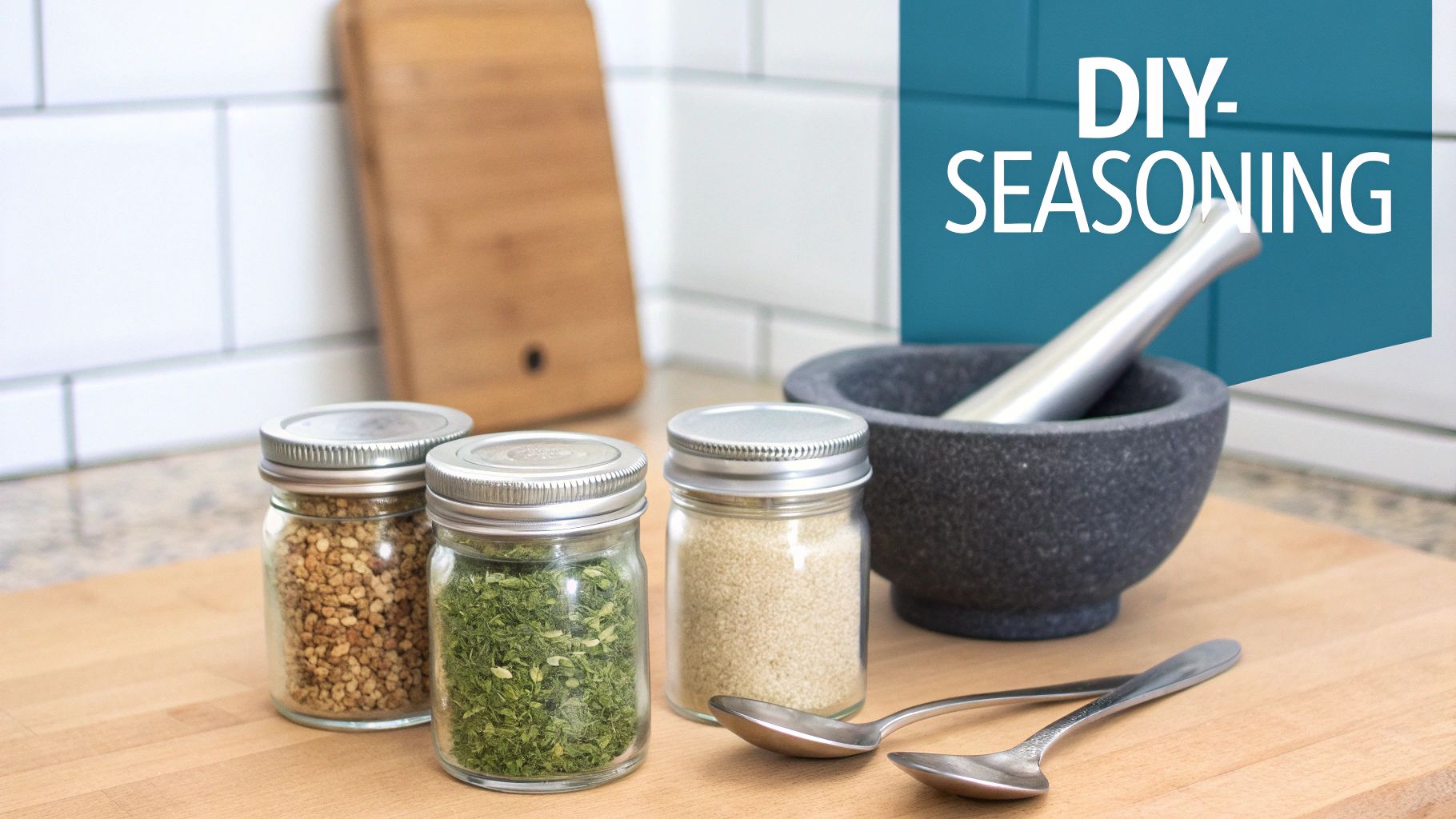
Whipping up your own blend is a total game-changer. You control the salt, dial the heat up or down, and create a signature profile, all while saving a little money. Here are three of my favorite, foolproof recipes to get you started on your seasoning adventure.
Classic Roasted Herb Blend
Think of this as your desert-island seasoning—the one you'd want if you could only have one. It captures that comforting, savory aroma of a classic Sunday roast and works beautifully on just about everything, from baked tofu to roasted potatoes.
- 3 tbsp Nutritional Yeast
- 2 tbsp Onion Powder
- 1 tbsp Garlic Powder
- 2 tsp Dried Thyme
- 2 tsp Dried Sage
- 1 tsp Dried Rosemary, finely crushed
- 1 tsp Black Pepper
- 1 tsp Paprika
- 1 tsp Sea Salt (or to taste)
Just dump all the ingredients into a jar, give it a good shake, and you're done. It's that simple. This blend is your secret weapon for that timeless, savory depth.
Smoky and Savory Grilling Blend
Craving that just-off-the-grill flavor without firing up the barbecue? This is the blend for you. It's smoky, rich, and a little bit sweet, making it perfect for pan-seared seitan, jackfruit dishes, or anything you want to give a smoky edge to.
- 3 tbsp Smoked Paprika
- 2 tbsp Nutritional Yeast
- 1 tbsp Onion Powder
- 1 tbsp Garlic Powder
- 2 tsp Coconut Sugar (optional, but great for caramelization)
- 2 tsp Dried Thyme
- 1 tsp Black Pepper
- 1 tsp Sea Salt
- ½ tsp Mustard Powder
Mix it all together, and let that smoked paprika work its magic. It's the key ingredient here, lending an incredible wood-fired flavor that can transform a simple meal.
Spicy Fried Chik'n Blend
If you love a good kick of heat and that crispy, savory coating on fried foods, this one's a must. It's designed to be mixed right into your flour or breading to create the perfect spicy crust for tofu nuggets or tempeh cutlets.
- 3 tbsp Nutritional Yeast
- 2 tbsp All-Purpose Flour (helps it stick)
- 1 tbsp Paprika
- 1 tbsp Garlic Powder
- 2 tsp Onion Powder
- 2 tsp Celery Salt
- 1 tsp Black Pepper
- 1 tsp Cayenne Pepper (add more or less depending on your heat tolerance!)
- ½ tsp Dried Thyme
Whisk everything together until it's completely combined. The cayenne brings the heat, while the celery salt adds that familiar, savory note you find in all the best fried food recipes.
Pro Tip: Want to unlock even more flavor? Toast whole spices like peppercorns or rosemary in a dry pan over medium heat for 30-60 seconds, just until you can smell their aroma. Let them cool completely, then grind them up. It makes a world of difference.
To keep your homemade seasonings tasting their best, store them in a sealed, airtight container. A small jar in a cool, dark pantry is the perfect spot. Stored properly, these blends will stay fresh and potent for up to six months.
How To Use Vegetarian Chicken Seasoning Like A Pro
So, you’ve whipped up your own perfect DIY blend or found a store-bought favorite. Now for the fun part: actually using it. Getting the most out of your vegetarian chicken seasoning is more than just a quick sprinkle here and there; it’s about coaxing that deep, savory flavor right into the heart of your plant-based proteins. The right technique can take a dish from pretty good to "I can't believe this is vegan!"
Think of different plant-based proteins as unique canvases. You wouldn't use the same brushstroke on all of them, right? It’s the same with seasoning.
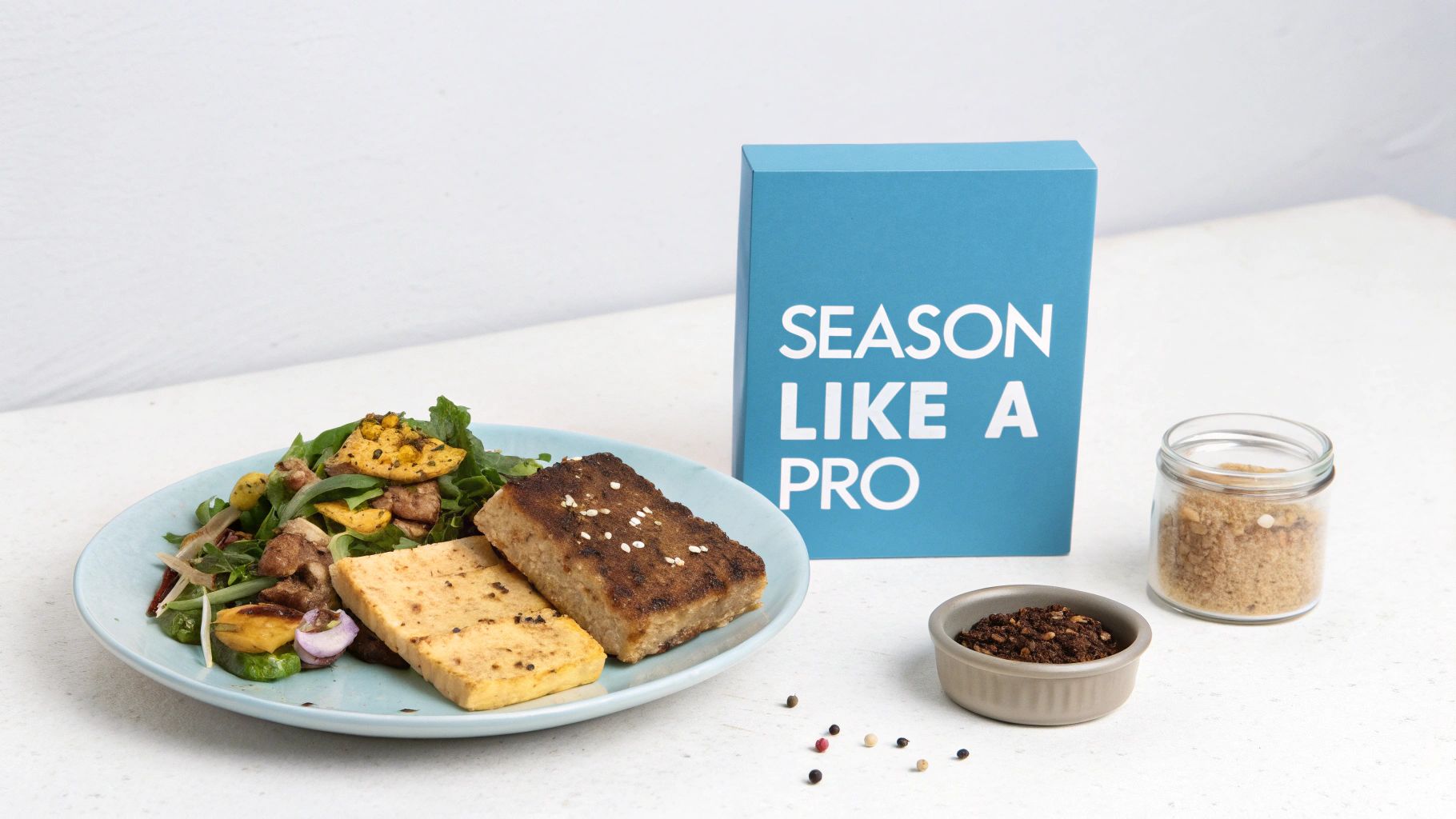
Mastering Plant-Based Proteins
To nail that rich, chicken-like flavor, you have to work with your ingredients, not just throw seasoning at them. Each protein has a distinct texture and density, so let's break down how to get the flavor deep inside some of the most popular options.
- For Tofu: First things first, press it! Getting that water out turns the block into a flavor sponge. Cube or slice it, toss it with a little oil and a generous coat of seasoning, and then pan-fry or bake it. You’ll get a perfectly crispy, flavorful crust that’s impossible to resist.
- For Seitan: The secret here is to season from the inside out. When you're making the seitan dough, knead your vegetarian chicken seasoning right into the vital wheat gluten mixture. This ensures every single bite is packed with that savory goodness.
- For Soy Curls or TVP: These dehydrated products are incredibly thirsty. The best way to season them is to rehydrate them in a seasoned broth. Just whisk your spice blend into hot water and let them plump up, soaking in all that flavor. If you're new to TVP, our guide on how to cook textured vegetable protein is a great place to get started.
- For Jackfruit: Young green jackfruit has a wonderfully stringy, shreddable texture that’s a dead ringer for pulled plant-based recipes. Let it simmer away in a seasoned sauce or broth, allowing it to break down and absorb every last drop of that savory, herbaceous flavor.
Beyond The Main Course
Don't just stop at proteins. This seasoning’s savory, umami-rich profile can elevate just about any dish you can imagine.
Don't limit your seasoning to just dinner. This versatile blend can become a staple for adding a savory kick to soups, snacks, and side dishes, making every part of your meal more delicious.
Get creative and start experimenting! Try adding a dash to:
- Soups and Stews: A spoonful whisked into a creamy vegan noodle soup or a hearty vegetable stew adds an incredible layer of depth.
- Crispy Breading: Mix it into your flour or breadcrumb coating for next-level tofu cutlets or onion rings.
- Savory Snacks: Sprinkle it over freshly made popcorn or roasted chickpeas for an addictive, can't-stop-eating treat.
The market for snacks with these flavor profiles is exploding. Vegan chicken products, which are the perfect canvas for seasonings like those in Louisville Vegan Jerky's Buffalo Hot Wing flavor, hit a market value of USD 18.48 billion in 2024. It’s projected to climb to USD 25.94 billion by 2034, with soy-based options leading the charge. You can read more about the growth of the vegan chicken market and its impact.
For those times you want instant flavor and crunch with zero effort, products like Louisville Toppins' are a game-changer. Sprinkling them over salads, pizzas, or baked potatoes gives you that savory punch without any prep.
Buying The Best Seasoning And What To Look For
While mixing your own seasoning blend is a fantastic way to control the flavor, let's be real—sometimes you just need to grab something from the store. But walking down the spice aisle can be a bit of a minefield. How do you find a top-notch, pre-made vegetarian chicken seasoning that actually tastes good?
It's all about becoming a savvy label-reader. The mission is simple: find a blend that packs an authentic, savory punch without any sneaky, non-vegan ingredients.
First things first, flip that bottle around and scan the ingredient list. You'd be surprised how many generic "poultry" or "chicken" seasonings contain hidden animal products. Keep an eye out for deal-breakers like chicken fat, chicken bouillon, or milk powder. These are more common than you'd think, but totally unnecessary for achieving that rich, umami flavor we're after.
Reading Labels Like An Expert
Once you’ve confirmed there are no animal products, the next step is to check for quality. The best seasonings rely on the power of herbs and spices, not a bunch of fillers and artificial junk.
Here’s what to look for—and what to avoid:
- Artificial Additives: Steer clear of artificial flavors, colors, and preservatives. A short, clean ingredient list is almost always a sign of a better product.
- Excessive Sodium: Many commercial blends are basically salt with a little bit of flavor thrown in. You want a seasoning where herbs and spices are the star of the show, not just a salt overload.
- Certifications: Look for products clearly labeled as vegan, cruelty-free, and non-GMO. These labels aren't just buzzwords; they're a guarantee that the product aligns with your standards.
Choosing brands that are open about their ingredients is about more than just flavor. It's about supporting companies that care about creating a better food system. That's a huge part of our philosophy here at Louisville Vegan Jerky, where we obsess over finding the highest-quality seasonings for our jerky.
Powders vs Rubs vs Marinades
Not all seasonings are created equal, and the form they come in can make a big difference in your cooking. Whether you grab a powder, a rub, or a marinade really depends on what you're making.
Let's break down the most common types of vegetarian chicken seasoning and figure out when to use each one for your plant-based meals.
Comparing Seasoning Types For Plant Based Cooking
| Seasoning Type | Best For | Application Tip |
|---|---|---|
| Powders | Everyday use, soups, sauces, and seasoning tofu or seitan dough directly. | Powders dissolve easily, which is great for getting flavor evenly mixed into liquids or the inside of your protein. |
| Rubs | Pan-searing or grilling plant-based proteins to create a flavorful crust. | A rub has a coarser texture that sticks to the surface. Pat it onto oiled tofu or tempeh right before it hits the heat. |
| Marinades | Infusing dense proteins like extra-firm tofu or seitan with deep, lasting flavor. | Marinades are liquid or paste-based. For the best results, let your protein soak for at least 30 minutes to really absorb the flavor. |
Each format has its own superpower. Powders are your versatile workhorse, rubs are for creating that perfect crust, and marinades are your ticket to deep, infused flavor.
Flavor Beyond The Shaker: Perfect Pairings and Recipes
Once you’ve nailed the perfect blend, it's time to let your vegetarian chicken seasoning really shine in the kitchen. This isn't a spice mix that’s meant to gather dust on the shelf. It’s your secret weapon for creating unforgettable meals packed with that savory, comforting flavor you crave.
Let's think beyond just a simple tofu coating. The real magic happens when you pair this seasoning with ingredients that bring out its best qualities. It’s absolutely fantastic with earthy mushrooms and sweet bell peppers, and it adds an incredible depth when stirred into grains like quinoa or a pot of fluffy rice. Even a simple sprinkle can elevate a rich vegan gravy or a tangy BBQ sauce into something truly special.
Mini Recipe Inspirations
To get your creative juices flowing, here are a few ideas where this seasoning makes all the difference. Mastering flavor is everything, especially for ambitious projects like starting a pop-up restaurant, and these concepts are a great place to start.
-
Creamy Vegan "Chicken" Noodle Soup: This seasoning is the key to creating an authentically rich and savory broth. It builds the perfect, comforting base for tender noodles, carrots, and celery.
-
Savory Seitan Pot Pie: Try working the blend directly into your seitan dough. This infuses every single bite of the filling with a deep, roasted flavor that stands up beautifully to the creamy vegetable sauce and flaky crust. If you're new to seitan, check out our guide to what seitan is to learn more.
-
Spicy BBQ Soy Curl Sandwiches: Rehydrate your soy curls in a broth made with this seasoning, then toss them in your favorite vegan BBQ sauce. The seasoning lays down that foundational savory flavor that makes the smoky, spicy sauce really pop.
When you're craving those bold flavors but don't have time to cook, a great pre-made snack is the answer. Louisville Vegan Jerky bottles that same savory experience in grab-and-go flavors like Smoky Carolina BBQ or Buffalo Hot Wing, giving you a satisfying, flavor-packed bite with zero prep.
Got Questions? We've Got Answers
Still curious about vegetarian chicken seasoning? Let's tackle some of the most common questions that pop up. This should clear things up and get you cooking with confidence.
Is This Just a Fancy Name for Poultry Seasoning?
Not quite, though they're definitely cousins. Both blends often rely on a classic herb foundation of sage and thyme, but that's usually where the similarities end.
Vegetarian chicken seasoning is built from the ground up to be 100% plant-based. It goes the extra mile by adding ingredients like nutritional yeast, mushroom powder, or onion and garlic granules to create a rich, savory, and deep umami flavor that you just don't get from standard poultry seasoning. It's all about mimicking that "chicken-y" taste without any animal products.
A quick heads-up: always double-check the label on generic poultry seasoning. Some brands sneak in chicken fat or bouillon, so it's not always a safe bet for a plant-based kitchen.
What's the Shelf Life for a DIY Blend?
When you store it right, your homemade seasoning mix will stay fragrant and flavorful for a good long while.
Think of it like any other spice in your cabinet. Keep it in a sealed, airtight jar away from heat and light—your pantry is perfect. Stored this way, it'll easily last for 6 to 12 months. The key is to start with fresh spices; if your ground thyme has been sitting around for three years, your blend won't have much punch.
Can I Use It To Make a Quick Vegan Broth?
You absolutely can, and it's a fantastic kitchen hack! This seasoning is the perfect shortcut to a flavorful vegan "chicken" broth.
Just whisk a tablespoon or two of your seasoning mix into about four cups of hot water. For an even richer flavor, add a little splash of tamari or soy sauce. In seconds, you've got a savory broth that's ready for soups, stews, or for cooking grains like quinoa and rice.
Ready to see how amazing expertly seasoned vegan snacks can be? Check out the bold and delicious jerky from Louisville Jerky Co. and discover your new go-to snack at https://lvjco.com.