


So, you're looking for Textured Vegetable Protein, or TVP as it's often called. Good news—finding this plant-based powerhouse is easier than you might think. You can typically spot it in the bulk bins of health food stores, on the shelves at big grocery chains like Whole Foods and Kroger, or from a ton of online shops like Amazon and Thrive Market. It's become a surprisingly accessible staple for a well-stocked pantry.
Your Quick Guide to Finding Textured Vegetable Protein
If you're new to it, TVP is a fantastic, high-protein plant-based food made from soybeans. It's become a go-to for so many people looking to cook satisfying vegan meals, not just because it's cruelty-free, but because it's seriously affordable and lasts forever in the cupboard.
Think of TVP as a blank canvas. It comes dehydrated, and when you add water or broth, it soaks up all the flavor you throw at it. This chameleon-like quality makes it the perfect stand-in for ground meat in classics like tacos, bolognese sauce, and hearty chili.
This guide will walk you through the best spots to find it. Whether you're an online shopper who loves convenience or someone who prefers to browse the aisles in person, we'll point you in the right direction so you can start cooking.
Where to Find TVP At a Glance
Feeling a bit lost? No worries. This quick-reference table breaks down the most common places to buy TVP, so you can figure out what works best for you.
| Shopping Method | Where to Look | Best For |
|---|---|---|
| Online Retailers | Amazon, Thrive Market, Vitacost, VeganEssentials.com | Convenience, wide brand selection, and specialty non-GMO options. |
| Local Grocery Stores | Whole Foods, Trader Joe's, Sprouts, Kroger (health food aisle) | Buying single bags, checking labels in person, immediate availability. |
| Bulk Bins | Health food stores, co-ops, WinCo | Cost savings, reducing packaging waste, buying exact amounts. |
From grabbing a single bag for tonight's dinner to stocking up for the long haul, there's a purchasing method that fits your needs perfectly.
Shopping for TVP Online From Your Couch to Your Kitchen
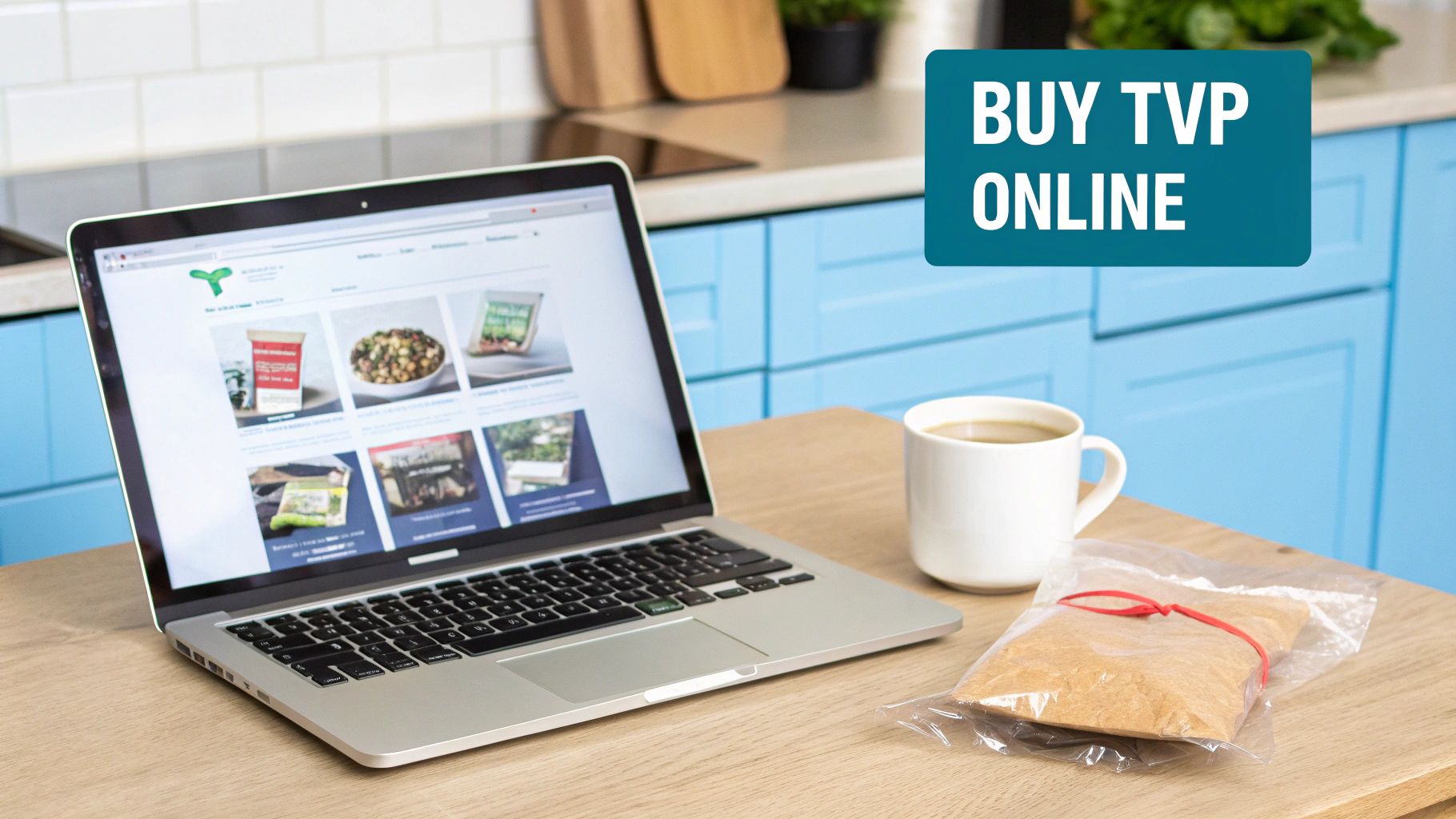
Sometimes, the easiest way to find exactly what you need is right from your own home. The convenience of online shopping means a world of cruelty-free pantry staples is just a click away. When you’re hunting for textured vegetable protein, the internet opens up a massive selection that your local grocery store probably can't compete with.
This boom in online availability is no surprise. As more people explore plant-based eating, the demand for versatile ingredients like TVP has skyrocketed. The global market, valued at around USD 2.03 billion in 2025, is expected to jump to USD 3.54 billion by 2033. That's a whole lot of people discovering how great this stuff is. You can dig into more of the numbers behind this plant-based shift over at Precedence Research.
Major Online Marketplaces
For sheer variety and competitive pricing, the big online retailers are a fantastic place to start. Think of them as massive digital supermarkets where you can find just about any brand, size, or form of TVP imaginable.
- Amazon: No surprise here. Amazon carries dozens of TVP brands, from the big names to smaller, niche producers. It's a great place to compare prices, but always be sure to read the details to find non-GMO options.
- Thrive Market: If you're committed to clean eating, this membership-based market is for you. They focus on healthy, sustainable, and organic products, making it easy to find high-quality, non-GMO TVP.
- Vitacost: Much like Thrive Market, Vitacost is all about health and wellness. You can often find some really good deals on TVP and other vegan pantry staples, so it's worth checking out.
The best part about these platforms is the ability to read customer reviews. Getting firsthand feedback on a product's texture and quality before you buy is incredibly useful. If you want more tips on navigating the digital aisles, check out our guide on vegan grocery shopping online.
When you're trying to decide where to click "add to cart," it helps to see how the major players stack up.
Comparing Top Online Retailers for TVP
| Retailer | Typical TVP Selection | Price Range (Per Ounce) | Best For |
|---|---|---|---|
| Amazon | Extensive; dozens of brands, sizes, and forms (granules, chunks, flakes). | $0.20 - $0.50 | Unbeatable variety and price comparison. |
| Thrive Market | Curated; primarily organic and non-GMO brands in various sizes. | $0.30 - $0.60 | Health-conscious shoppers seeking high-quality, vetted products. |
| Vitacost | Good; a mix of popular health-food brands and their own house brand. | $0.25 - $0.55 | Finding deals and discounts on trusted vegan pantry staples. |
| Butler Foods | Niche; exclusively sells their own famous Soy Curls. | Varies | Fans of Soy Curls looking to buy directly from the source. |
| Vegan Essentials | Specialized; a handpicked selection of non-GMO and organic TVP. | $0.35 - $0.70 | Supporting a 100% vegan business and finding specialty items. |
This table gives you a quick snapshot, but your best bet will depend on whether you prioritize variety, specific dietary standards, or price.
Dedicated Vegan and Specialty Stores
Beyond the retail giants, there’s a whole world of dedicated vegan e-commerce sites that offer a more curated selection. These stores have already done the hard work for you, ensuring that everything they stock is 100% vegan and cruelty-free.
Butler Foods, the makers of the legendary Soy Curls, sells directly from their website. It’s a fan-favorite for a reason—the unique, whole-soy texture is just fantastic. Another great spot is Vegan Essentials, a long-standing pillar of the community that carries a thoughtfully selected range of goods, including several forms of non-GMO TVP.
Shopping from these dedicated vegan retailers not only gives you access to unique products but also supports businesses that are fully committed to a compassionate, plant-based mission. It’s a powerful way to vote with your dollar.
When you're on these sites, make good use of the search filters. Toggling by "organic" or "non-GMO" helps you zero in on a product that fits your standards. And a pro tip: always check the price-per-ounce to find the best value, especially when comparing different bag sizes. With these pointers, you’ll be well on your way to stocking your kitchen with the perfect TVP for any recipe you can dream up.
Navigating Your Local Grocery and Health Food Stores
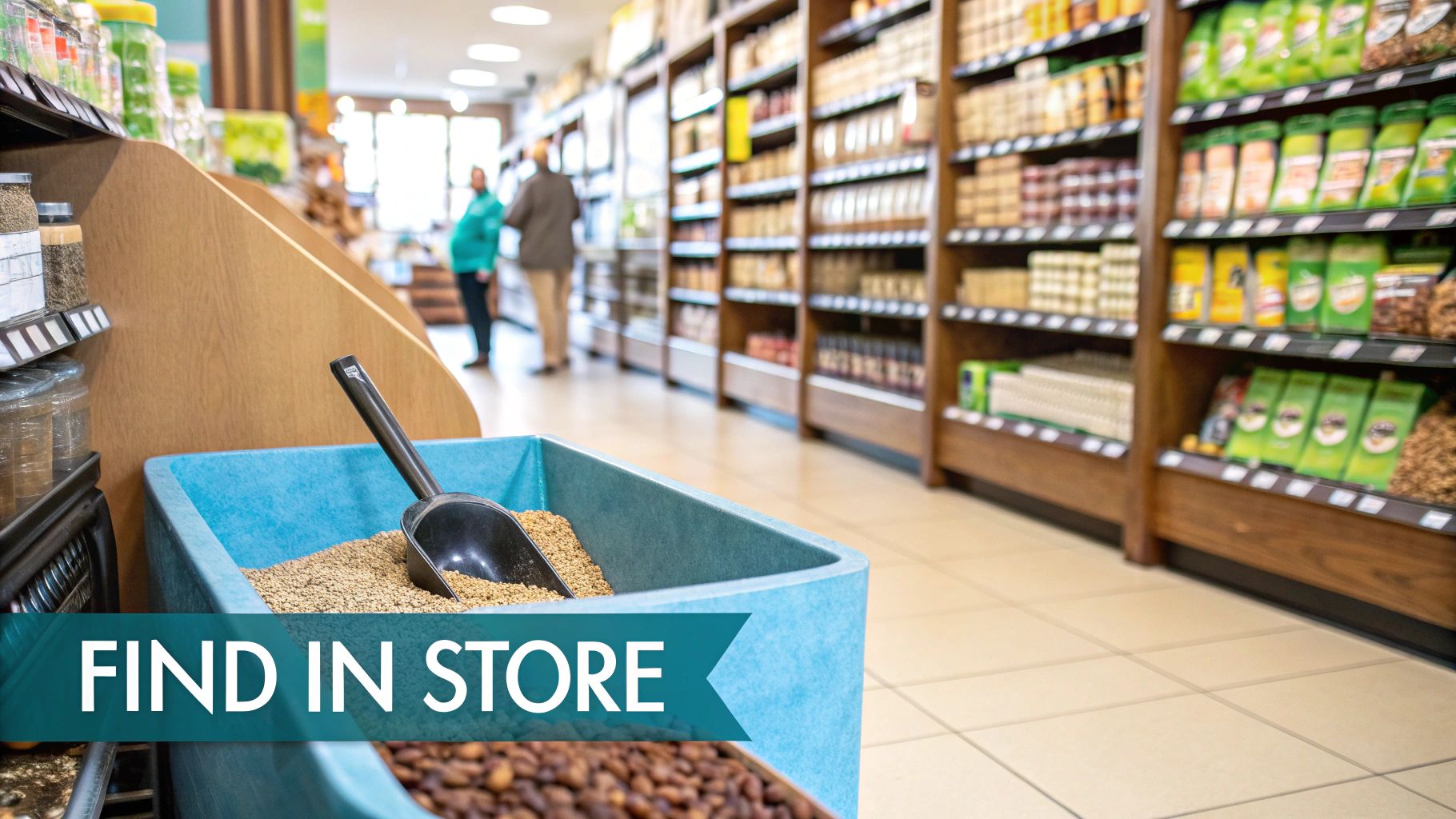
While the internet offers a world of options, sometimes you just want to walk into a store and grab what you need for dinner tonight. If you prefer shopping in person, finding textured vegetable protein is a pretty simple treasure hunt once you know where to look. Thankfully, most major grocery chains and nearly all health food stores have caught on and now keep this plant-based staple on their shelves.
Your main task is just knowing which aisles to hit first. Most of the time, you'll find TVP hanging out in one of a few predictable spots.
Where to Look Inside the Store
Think of the grocery store in zones. TVP is almost always grouped with its friends: the healthy, shelf-stable, and plant-based goods. These are its most common hiding spots:
- The Natural Foods Aisle: This is ground zero. Start your search here, looking alongside other vegan food items, bags of quinoa, gluten-free pastas, and organic canned goods.
- The Baking Aisle: It might sound odd, but sometimes you'll find it here. Because it's a dry, granular product, some stores stock it near specialty flours, grains, and other baking ingredients.
- The Bulk Bins: This is my personal favorite spot to get it. Buying from the bulk section is often the cheapest way to go, and you can get the exact amount you need—no more, no less. It’s a win for your wallet and the planet.
Still can't find it? Pull out your phone. A quick search for "textured soy protein" or "TVP" in your grocery store's app can often show you the exact aisle.
Major Chains and Local Gems
Plenty of big-name grocery stores have gotten on board with plant-based eating, so they're reliable spots to check. Stores like Whole Foods Market and Sprouts Farmers Market are a sure bet. Even the "natural foods" section of massive chains like Kroger and Safeway usually carries at least one brand.
But don't forget about the smaller, local stores. They can be hidden gems for unique brands and sometimes even better prices.
Your local food co-op is a fantastic resource. They almost always carry high-quality, non-GMO TVP, and they tend to source from companies with ethical and transparent practices. It’s a great way to stock your pantry while supporting your community.
Also, make a point to check out any ethnic or Asian markets in your area. They are treasure troves for soy-based products and often carry varieties you won't find anywhere else, sometimes for a fraction of the cost.
What to Look for on the Label
Once you've got a bag of TVP in your hand, the label tells you everything you need to know. The first thing I always check for is a non-GMO certification. Since TVP comes from soy—one of the most commonly genetically modified crops—this little seal gives you peace of mind that you're getting a quality ingredient.
If you can, opting for an organic certification is another smart move. This means the soybeans were grown without synthetic pesticides or fertilizers, which is better for you and the environment. Taking a second to read the label helps you make a choice that aligns with your health goals and values, so you can feel good about every bite.
Buying TVP in Bulk: A Smart Move for Your Wallet and the Planet
If you're serious about your plant-based cooking, buying textured vegetable protein in bulk is a total game-changer. It takes what is already one of the most affordable vegan proteins and makes it an incredible value. When you buy a larger quantity, the price per serving plummets, letting you stretch your grocery budget further without ever skimping on quality.
But the benefits go beyond just saving money. Choosing to buy bulk is a fantastic way to live a little more sustainably. You drastically cut down on packaging waste—fewer plastic bags, fewer containers, and less trash heading to the landfill. Every time you fill up your own reusable container from a bulk bin, you're making a small but meaningful choice for the environment.
Where to Find Bulk TVP
So, where do you find the good stuff in bulk? Your local health food store or food co-op is usually the best place to start. They almost always have impressive bulk sections where you can scoop your own TVP granules or chunks right into a bag. Don't overlook value-focused stores like WinCo Foods, either; they're famous for their sprawling bulk aisles.
If you'd rather shop from your couch, plenty of online retailers have you covered. Websites that specialize in vegan pantry essentials or even emergency preparedness supplies are great sources. You can often find TVP in large quantities, from a manageable five-pound bag all the way up to a fifty-pound sack for the truly dedicated.
Storing Your Bulk Purchase for Lasting Freshness
Once you've brought your TVP home, storing it correctly is crucial to protect your investment. A few simple steps will keep it fresh and ready for all your culinary creations.
- Go Airtight: Get that TVP out of the flimsy bag it came in and transfer it to airtight containers. Glass jars, dedicated plastic food bins, or even vacuum-sealed bags work perfectly to keep out air, moisture, and pantry pests.
- Keep it Cool and Dark: Your pantry or a kitchen cupboard is the ideal spot. Direct sunlight and heat are the enemies of freshness and can degrade the quality over time.
- Label, Label, Label: Always jot down the date you bought it on the container. This makes it easy to follow a "first in, first out" system, so you're always using up the oldest stock before it has a chance to go stale.
A simple, organized storage system is all it takes to make sure that giant bag of TVP stays fresh and flavorful down to the very last scoop. It’s a tiny bit of effort that guarantees you’re always ready to whip up a high-protein meal without any waste.
The secret is out on TVP, and global demand is exploding. As more people discover how great it is in everything from veggie burgers to sausages, the market is set to grow significantly. In fact, some projections show the market hitting between USD 2.65 billion and USD 6.49 billion by 2032-2034. You can dig into more details on the Textured Vegetable Protein Market over at Polaris Market Research.
Before you go all-in on a massive bag, take a moment to estimate how much your household actually uses. A quick calculation of how many meals you make with TVP each week will give you a good idea of your monthly needs. This helps you buy just the right amount to keep things fresh and avoid waste. For more tips, check out our guide to buying textured vegetable protein in bulk. Buying smart is the first step toward a sustainable kitchen that’s both kind and economical.
How to Choose the Right TVP for Your Recipes
Once you’ve figured out where to buy textured vegetable protein, the fun part begins: picking the right kind for what you’re cooking. You’ll quickly find that not all TVP is the same. I like to think of it like choosing pasta—you wouldn't grab angel hair for a hearty baked ziti, right? The same logic applies here.
Different forms of TVP are made to create specific textures, and understanding them is the secret to making your plant-based dishes truly great. It's about moving from simply swapping ingredients to intentionally creating the perfect bite and mouthfeel.
Matching TVP Form to Function
The TVP you see on the shelf usually comes in three main styles: granules, chunks, and flakes. Each one has a job to do in the kitchen, and getting to know them will make you a much more confident and creative cook.
To make things easier, here's a quick guide to help you match the TVP form to your culinary needs.
Table: TVP Forms and Their Best Culinary Uses
| TVP Form | Texture Profile | Best For (Example Recipes) |
|---|---|---|
| Granules | Fine, crumbly, similar to ground meat | Tacos, bolognese sauce, chili, shepherd's pie |
| Chunks/Strips | Chewy, firm, substantial bite | Stews, stir-fries, kebabs, vegan "beef" & broccoli |
| Flakes | Soft, delicate, less common | Plant-based "tuna" salad, binders for veggie burgers |
Let's break down what makes each one so useful.
- Fine Granules: These tiny bits are your absolute go-to for anything that needs a ground meat texture. Once rehydrated, they become perfectly crumbly and are brilliant in vegan taco filling, a rich bolognese, or a classic chili. They’re like little sponges, soaking up marinades and spices beautifully.
- Chunks or Strips: When you want something with more heft and a satisfying chew, grab the chunks or strips. These larger pieces are perfect for robust stews, sizzling stir-fries, and kebabs. Their size helps them stand up to hearty sauces and lots of veggies without getting lost.
- Flakes: You might not see flakes as often, but they have their own unique charm. Their softer texture is fantastic for creating a plant-based "tuna" salad or as a binder in veggie burgers, where they add protein without making the patty too dense. If you're curious about the science behind it all, you can learn more about what textured vegetable protein is made from and how the different shapes are created.
Buying TVP, especially in bulk, comes with some great perks that go beyond just stocking your pantry.
Prioritizing Quality and Peace of Mind
Beyond just the shape and size, the quality of your TVP really matters. TVP is made from soy, and since a lot of soy is genetically modified, being a mindful shopper is key.
Pro Tip: Always look for the "Non-GMO Project Verified" seal on the package. This little label is your guarantee that the product was made without any genetic engineering. It’s a simple way to get peace of mind about what you’re eating.
If you can, opting for an organic TVP is another great step. Organic means the soybeans were grown without synthetic pesticides or fertilizers, which is better for you and the environment. These certifications aren't just marketing—they're a sign that the company is committed to producing food ethically and sustainably.
Bringing TVP Home: From Pantry to Plate
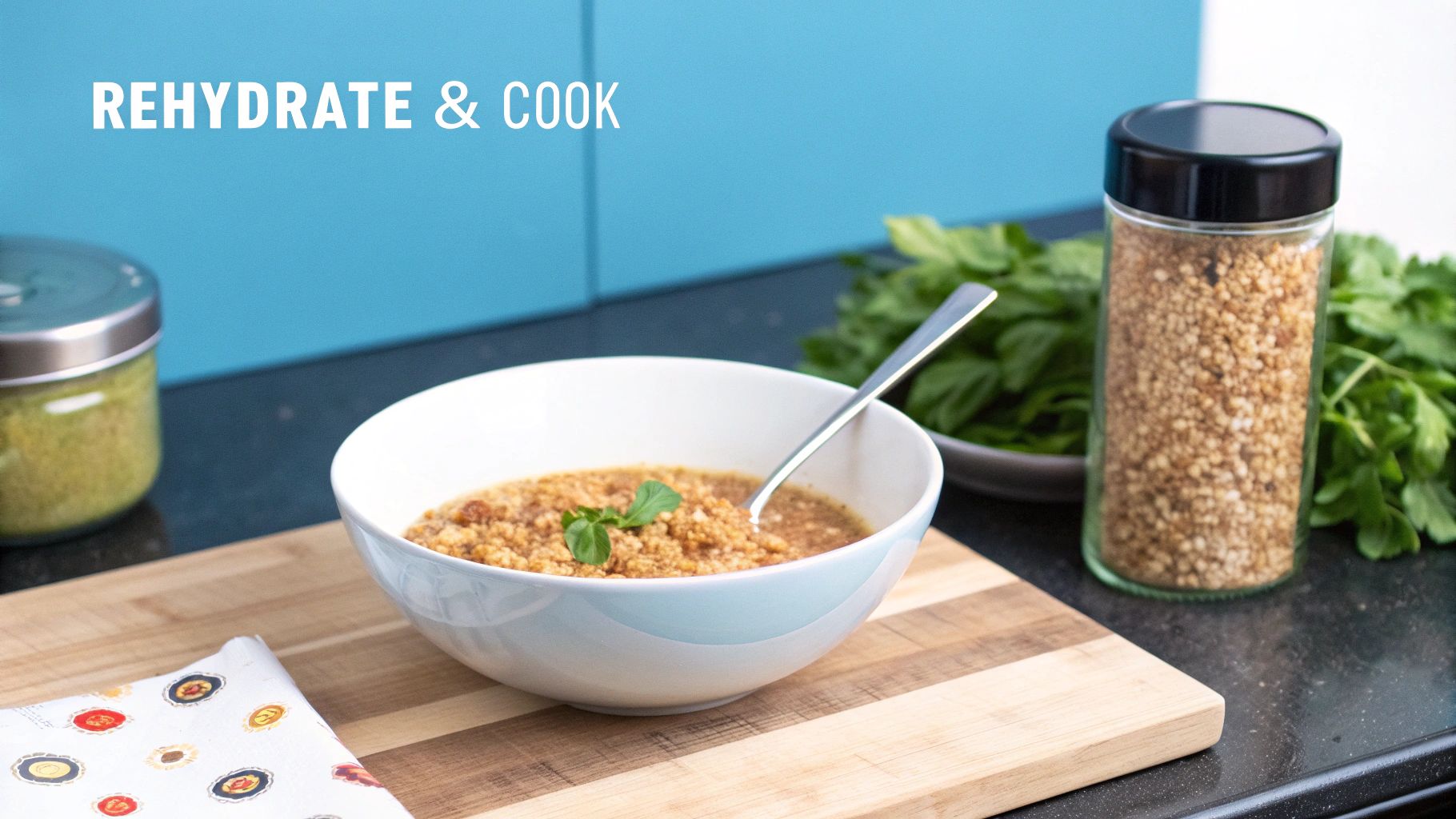
So, you've tracked down some TVP and brought it home. Awesome. Now comes the fun part: turning that bag of dry stuff into a delicious meal. But first, let's talk storage. To keep your TVP in top shape, get it out of the bag and into an airtight container. Stash it somewhere cool and dark, like your pantry, to protect it from moisture.
Properly stored, it will be ready whenever you need it. And you'll likely be needing it more often, as TVP is a huge player in modern plant-based cooking. The market was valued at a whopping USD 1.5 billion in 2023 and is expected to climb to USD 4.3 billion by 2035. You can dig into more details about the rise of textured vegetable protein at the National Law Review.
The Magic of Rehydration
Before you can cook with it, your dry TVP needs to be rehydrated. Think of this step as waking it up—transforming it from a crunchy, dry product into a tender, juicy ingredient ready to soak up flavor.
It's a really simple process:
- Measure: The rule of thumb is a 1-to-1 ratio. For every cup of dry TVP, plan on using about a cup of hot liquid.
- Soak: Pour hot water over the TVP. Even better, use a hot vegetable broth to start building flavor from the get-go.
- Wait: Give it about 5-10 minutes. You'll see it plump up as it absorbs all the liquid.
- Squeeze: Gently press out any extra water. This is the pro move! It keeps your final dish from getting soggy and helps the TVP brown nicely when you cook it.
Infusing Flavor from the Start
Using broth is a fantastic starting point, but why stop there? The rehydration liquid is your first and best opportunity to infuse the TVP with deep, foundational flavor. This is where you can get creative.
Infusing flavor during rehydration is the secret to unforgettable TVP dishes. By seasoning the soaking liquid, you ensure every single granule is packed with taste before it even hits the pan.
Try adding a splash of soy sauce or tamari for some umami, a dash of liquid smoke for a rich flavor, or a mix of spices like smoked paprika, garlic powder, and cumin. Whatever you add here gets absorbed right into the core of the TVP.
Quick Recipe Ideas to Get Started
Once your TVP is rehydrated, you're just minutes away from a fantastic meal. It cooks up incredibly fast.
- 15-Minute Bolognese: Sauté your rehydrated TVP with onions and garlic, then pour in your favorite jarred marinara sauce. Let it simmer for a few minutes, and you're done.
- Savory Breakfast Crumbles: Cook rehydrated granules with a pinch of sage, a little black pepper, and maybe some fennel for a classic sausage flavor. It's the perfect partner for a tofu scramble.
Got Questions About TVP? We've Got Answers.
Even after diving in, you might still have a few things on your mind. Let's clear up some of the most common questions so you can feel totally confident adding this plant-based powerhouse to your kitchen.
Is TVP Actually Healthy and Cruelty-Free?
Yes, absolutely. TVP is a fantastic source of complete protein and fiber, and it’s naturally very low in fat. Since it’s made from soybeans, it’s a 100% vegan, cruelty-free food with zero animal products involved.
If you want to be extra sure you're getting the best quality, look for TVP from brands that are certified non-GMO. This way, you know it aligns perfectly with your health goals and ethical standards.
How Long Can I Keep Dry TVP?
One of the best things about TVP is its incredible shelf life. When stored properly, uncooked, dry TVP can easily last for a year or even longer.
The secret is simple: keep it in an airtight container in a cool, dark place like your pantry. This protects it from moisture and pests, keeping it fresh and ready for whenever a recipe calls for it.
Storing TVP properly is the easiest way to preserve its quality and make your purchase last. A good container is all it takes to lock in freshness for months on end.
Can I Really Swap TVP for Ground Meat?
You bet. TVP granules are an amazing one-to-one substitute for ground meat in all sorts of recipes, from your go-to pasta sauce to taco fillings and chili.
A good rule of thumb is that one cup of dry TVP granules, once rehydrated with about a cup of hot water or broth, gives you the equivalent of roughly one pound of ground meat. From there, it’s ready to soak up all the delicious flavors of your dish.
Ready to explore bold, satisfying flavors? Louisville Jerky Co. offers a huge range of plant-based jerky perfect for snacking on the go. Discover your new favorite flavor today