


The best snacks for hiking are always going to be nutrient-dense, lightweight, and shelf-stable. A good rule of thumb I've learned over the years is to pack a mix: complex carbs like dried fruit or oat bars for a quick boost, plant-based proteins like vegan jerky or roasted chickpeas for muscle endurance, and some healthy fats from nuts and seeds for that long, slow burn.
Understanding Trail Nutrition for Peak Performance
Before you start just throwing snacks into your pack, it’s worth taking a minute to think about what your body actually needs out there. Hiking is tough work that burns a ton of calories, but just eating enough isn't the full picture. The type of fuel you choose makes a huge difference in your energy, endurance, and how much fun you have.
Solid trail nutrition really comes down to three things, each one playing a specific role in keeping you going strong from the trailhead to the summit and back. If you're scoping out your next big trip, say to one of the incredible Top Trails in Bled & The Soča Valley, you'll want to have your nutrition dialed in for the challenge.
The Three Pillars of Hiking Energy
A well-balanced vegan hiking menu should always feature a smart mix of these macronutrients. Here’s a quick rundown of what each one does for you on the trail:
- Complex Carbohydrates: These are your body's go-to energy source, perfect for powering you up those steep switchbacks. Think of them as the kindling for your metabolic fire.
- Plant-Based Proteins: Super important for repairing muscle tissue that gets broken down during a tough hike. Protein helps keep soreness at bay and really supports your endurance over the long haul.
- Healthy Fats: These are the slow-burning logs on the fire. They provide sustained, long-lasting energy for those all-day treks and are incredibly calorie-dense, which means more energy for less weight in your pack.
The real goal here is to avoid the dreaded "bonk"—that sudden, awful crash in energy when your body runs out of gas. A smart mix of these three ensures a steady stream of fuel, keeping you sharp and strong.
It’s no surprise that the demand for good, portable trail food is exploding. In fact, the camping snacks market is on track to hit USD 21.2 billion by 2033, all thanks to more people getting outside. This just goes to show how much we all value convenient, high-performance options.
At the end of the day, mastering your trail nutrition is all about choosing foods that give you the most bang for your buck, or rather, for their weight. This idea, called nutrient density, is your secret weapon. By focusing on nutrient-dense vegan snacks, you make sure every single ounce you carry is actively working to fuel your performance on the trail. A great place to start is learning how a plant-based diet for athletes can really boost your game.
Assembling Your Ultimate Plant-Based Snack Pack
Now for the fun part—building your perfect vegan hiking arsenal. This is more than just grabbing a pre-made bag of trail mix from the store. Think of it as your chance to curate the perfect fuel source for your adventure, one that will keep you energized, happy, and performing your best on the trail.
Let's start by rethinking that classic trail mix. The global trail mix market hit a staggering USD 5.44 billion in 2024, which tells you just how much hikers depend on this simple fuel. But when you make your own, you get to control the quality, nail the flavors you actually like, and skip all the unnecessary additives. You can discover more insights about the trail mix snacks market and its impressive growth if you're curious.
Building Your Perfect Plant-Based Mix
A truly great snack pack is all about balance. You need a mix of textures, flavors, and, most importantly, different nutritional jobs. The goal is to have quick-energy carbs, satisfying fats, and muscle-repairing proteins all working together.
Here are some non-GMO, cruelty-free staples to get you started:
- Complex Carbs: This is your primary engine fuel. Think dried fruits like mangoes and dates for that immediate sugar boost, or some whole-grain pretzels for a salty crunch.
- Healthy Fats: For that slow, steady burn of energy that lasts for hours, you can't beat raw nuts and seeds. Almonds, walnuts, pumpkin seeds, and sunflower seeds are all fantastic, calorie-dense choices.
- Plant-Based Proteins: This is what gives you staying power. Beyond the protein in nuts, try adding some roasted chickpeas or edamame for a savory, crunchy hit that keeps hunger at bay.
A rookie mistake is packing only sweet stuff. After a few hours of sweating, your body is going to scream for salt. Tossing in savory things like salted nuts, pretzels, or even vegan jerky is key to keeping your taste buds happy and your electrolytes in check.
The Power of Savory Plant Protein
While a good trail mix is the foundation, adding a dedicated high-protein snack can be a total game-changer, especially for muscle recovery and that feeling of sustained fullness. This is exactly where a quality vegan jerky comes in.
Louisville Jerky offers that chewy, satisfying texture and bold flavors—like Smoky Carolina BBQ—that can be a serious morale boost when you’re facing a tough climb. Unlike sugary snacks, it delivers the essential amino acids your muscles need to repair themselves while you're still moving. It's lightweight, packs down small, and is easily one of the best shelf-stable protein snacks for hiking you can find.
When you pull all these elements together, you get the ultimate snack pack. Imagine pairing some homemade no-bake energy bites with a bag of savory jerky and a handful of dried apricots. This combo gives you immediate energy, long-term fuel, and the protein your body needs to crush that final mile. Your snack break goes from just a pit stop to a truly restorative moment on the trail.
To make building your pack even easier, here's a quick cheat sheet. Use this table to mix and match items to ensure you're getting a good balance of everything your body needs.
Your Plant-Based Hiking Snack Cheat Sheet
| Primary Macronutrient | Snack Idea | Why It's Great for Hiking |
|---|---|---|
| Quick-Energy Carbs | Dried mango, dates, or apricots | Provides a fast glucose spike for immediate energy on steep climbs. |
| Sustained-Energy Carbs | Whole-grain crackers or pretzels | Delivers a slower, more sustained release of energy and helps replenish salt. |
| Healthy Fats | Almonds, walnuts, or pumpkin seeds | Calorie-dense for long-lasting fuel; keeps you feeling full and satisfied. |
| Plant-Based Protein | Louisville Vegan Jerky | Lightweight, chewy, and packed with amino acids to help repair muscles on the go. |
| Plant-Based Protein | Roasted chickpeas or edamame | Offers a crunchy, savory protein source that combats flavor fatigue. |
| Hydration + Carbs | Squeezable applesauce pouch | Easy to eat while moving, provides hydration, and offers a quick carb boost. |
Think of this table not as a rigid set of rules, but as a source of inspiration. The best trail menu is the one you'll actually look forward to eating
Tailoring Your Food Plan for Any Trail Length
It’s an old trail lesson: the snacks that get you through a two-hour loop are not the ones you want to rely on for a three-day trek. A one-size-fits-all food plan just doesn't work out here.
Learning how to match your food to the trail’s length and difficulty is one of the most important skills you can develop as a hiker. It’s the key to staying energized, keeping your pack light, and actually enjoying yourself. Think of it this way: the more demanding the hike, the more strategic you need to be with your carbs, proteins, and fats.
Quick Day Hikes and Short Loops
When you’re only out for a few hours, the game is all about lightweight, easy-to-digest snacks that give you a quick pick-me-up. You aren’t packing for a full-blown meal, just something to keep an energy crash at bay.
- Fresh Fruit: An apple or a firm banana is perfect. They’re full of natural sugars for a fast hit of fuel and help with hydration.
- Energy Bites: I’m a huge fan of no-bake energy bites made with oats, dates, and seeds. They’re easy to pop in your mouth without even stopping.
- A Little Trail Mix: For a short hike, you don't need a massive bag. Just a small handful of your favorite nuts and dried fruit is usually enough to top off the tank.
On these shorter trips, you're just carrying a little insurance against hunger or a sudden dip in energy. It’s not about replacing a meal, but bridging the gap until you’re back at the car.
Full-Day Treks and Strenuous Climbs
This is where your nutrition plan gets serious. If you’re out from sunrise to sunset, strategic snacking is everything. It’s what keeps you moving steadily all day long. Your pack is heavier, so every single item has to earn its spot by being packed with nutrients.
On a long day, I usually plan to eat something every 90 minutes to two hours, making sure to mix my macros. I’ll go for quick carbs right before a big ascent, then refuel with a mix of protein and fats on the way down to help my muscles start recovering. For more shelf-stable ideas that work well on these long days, check out our guide on packing non-perishable snacks for travel.
Multi-Day Backpacking Expeditions
Welcome to the world where every ounce counts. On multi-day trips, lightweight, calorie-dense, and non-perishable foods are absolutely non-negotiable. Your focus shifts from just "snacks" to a complete meal strategy covering breakfast, lunch, dinner, and all the fuel needed in between.
There's a reason the backpacking dehydrated food market is booming—one segment is expected to hit USD 2,500 million by 2035 as hikers look for better, lighter options. It's no surprise that 35% of hikers on multi-day trips say snacks are a top gear priority.
This is where a staple like Louisville Vegan Jerky becomes so valuable. It delivers that crucial, satisfying protein your body needs for muscle repair day after day, all without adding much weight or bulk. Combine it with calorie-dense foods like nut butters, dehydrated meals, and hearty grain mixes, and you’ve got a powerful, sustainable menu to keep you going for the long haul.
Smart Prep and Packing Hacks for the Trail
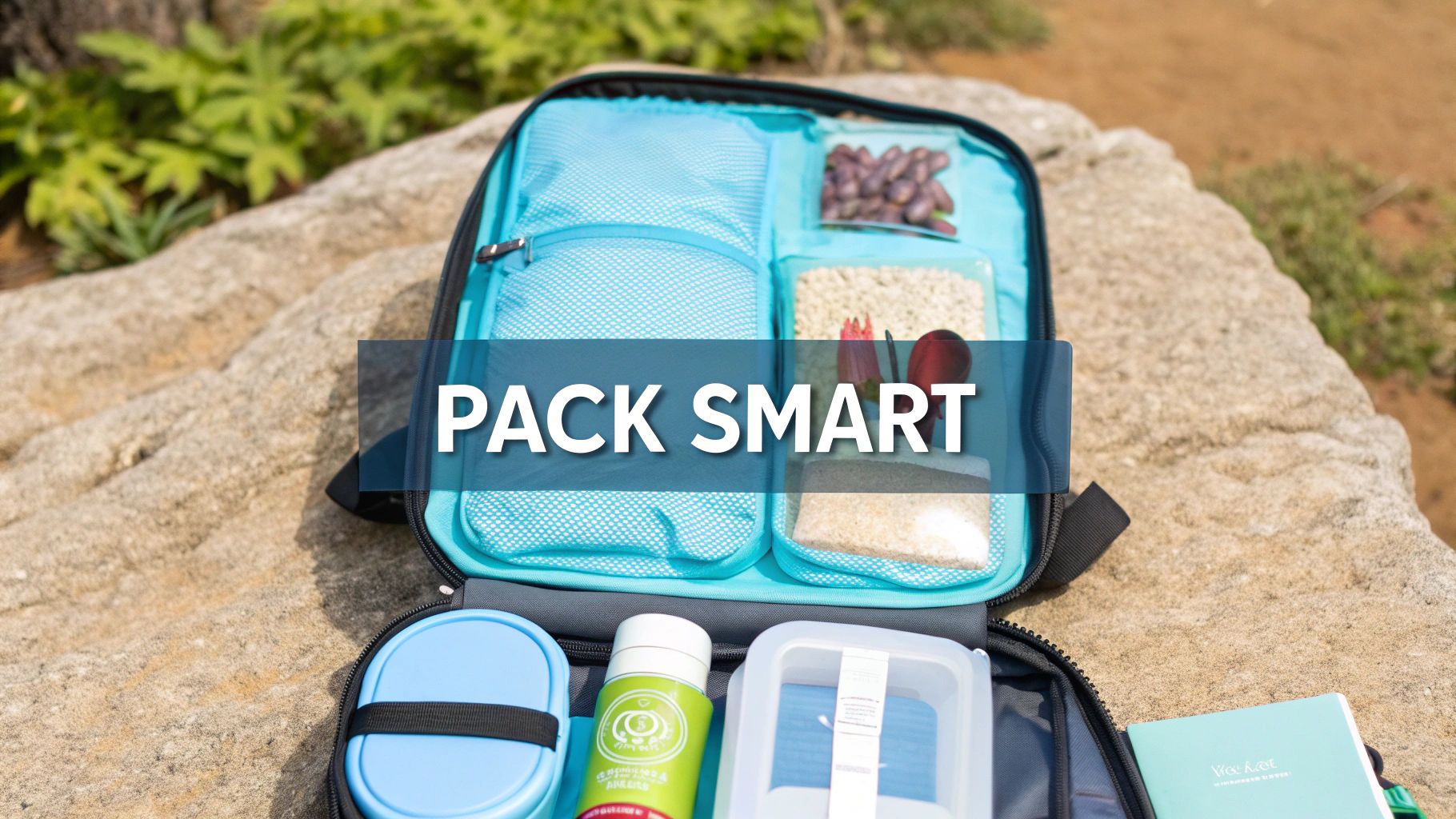
It doesn't matter how perfect your trail snacks are if they end up as a sad, crushed mess at the bottom of your pack. We’ve all been there. Smart prep and strategic packing are what separate a refreshing snack break from a frustrating hunt for something edible.
The single best thing you can do is get rid of bulky commercial packaging before you even hit the trail. Repackaging your food isn't just a space-saver; it’s a core part of practicing Leave No Trace. When you pre-portion everything into reusable silicone bags or lightweight containers, you carry only what you need and end up with just one small bag for trash.
Protect Your Fuel and Pack Like a Pro
Once everything is portioned, the goal is to keep it intact. Soft items like crackers, sandwiches, or homemade energy balls don't stand a chance against a few miles of jostling if they're not protected.
- Go hard-sided for delicate food: A small, rigid container is non-negotiable for anything that can get crushed. It's your food's best defense.
- Layer strategically: Think like a grocery bagger. Sturdy stuff like jerky, nuts, and seed butter packets go on the bottom of your food bag. Lighter, more fragile snacks sit safely on top.
- Keep favorites within reach: Your go-to energy boosters need to be accessible on the move. I always stash a handful of trail mix or a bag of jerky in my pack’s hip belt pockets or top lid. That way, I can refuel without breaking stride.
Even for a day hike, borrowing organizational tips from something like an ultimate family vacation packing list can spark some great ideas for keeping your gear in order.
Remember the golden rule of the outdoors: Pack it in, pack it out. This means every single wrapper, fruit peel, and crumb. A dedicated, sealable trash bag makes this second nature and shows respect for the trail.
Embrace the "Snack Sack"
Here’s a simple trick that changed my hiking game: the "snack sack." I dedicate one stuff sack or dry bag for all my food. This keeps everything in one place, prevents the smell of my garlic jerky from getting into my rain jacket, and makes finding what I want a breeze.
When it's time for a break, you just pull out one bag instead of emptying half your pack. This little system protects your healthy snacks for hiking and streamlines the whole experience, giving you more time to actually enjoy the view. It’s a small change that pays off big time in convenience.
Why Louisville Jerky Belongs in Your Pack
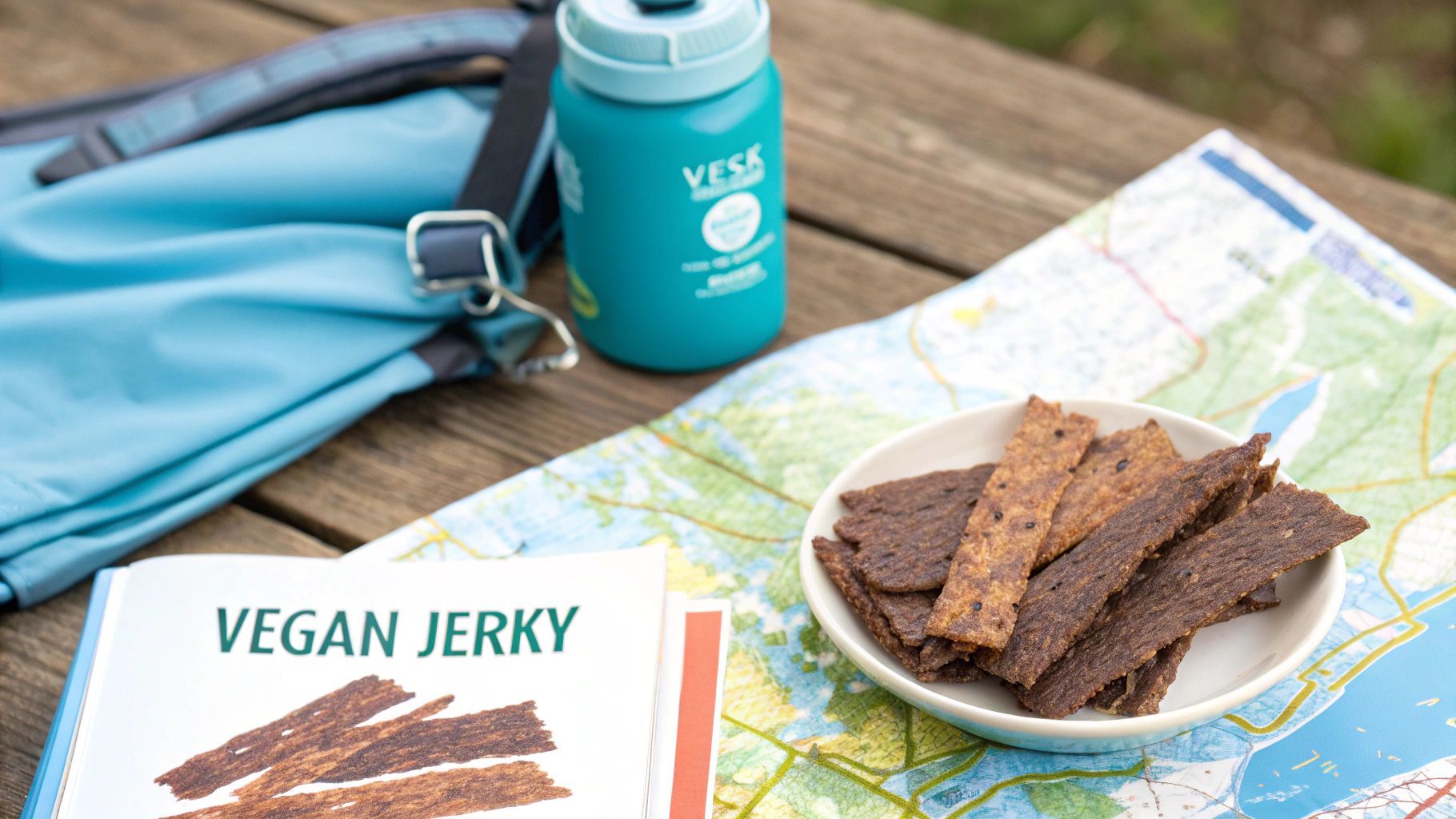
When you're out on the trail, every single thing in your pack has to earn its keep. Space and weight are precious. This is exactly why Louisville Jerky has become a non-negotiable staple for so many of us who hit the trails. It’s not just another snack; it's proper, high-performance fuel that’s built for adventure.
Its biggest selling point for any hiker is the incredible protein-to-weight ratio. We all know protein is key for keeping your muscles going and helping them recover, but getting enough of it on the trail without weighing yourself down can be a real challenge. This jerky solves that problem, delivering a solid punch of plant-based protein in a package that’s both lightweight and compact. It’s easily one of the most efficient ways to carry fuel.
It’s About More Than Just Protein
The nutrition label is solid, but what really makes this jerky stand out when you’re halfway up a tough climb is the texture. It’s got that satisfying, hearty chew that feels like you’re eating real food, not just another sugary energy bar or a handful of trail mix.
That feeling can make a massive difference mentally. Pausing for a few minutes to enjoy something savory and substantial can completely reset your attitude and give you the push you need to face that next set of switchbacks.
The real magic of a perfect hiking snack is that it fuels your body and lifts your spirits at the same time. Louisville Vegan Jerky nails this combination, turning a quick break into a genuinely restorative moment.
Flavors That Fight Trail Fatigue
Let’s be real: eating the same old snacks on a multi-day trip gets boring fast. That "flavor fatigue" is a real thing. Louisville Vegan Jerky keeps things interesting with a bunch of bold, distinct flavors that you’ll actually look forward to eating.
You can mix it up from one day to the next:
- Go for the smoky sweetness of Maple Bacon.
- Get a kick from the zesty fire of Buffalo Hot Wing.
- Savor the classic, peppery taste of Smoked Black Pepper.
Having that variety means you’re never bored with your food options. Plus, knowing the brand is committed to small-batch, non-GMO, and cruelty-free ingredients just feels right when you’re out enjoying nature. It’s a snack that aligns with the values of a conscious adventurer.
Ultimately, it’s the grab-and-go convenience that seals the deal. It’s shelf-stable, needs zero prep, and is ready the second you are. Just toss a bag in your pack, and you’ve got a reliable, delicious, and powerful source of plant-based fuel for whatever the trail throws at you.
Got Questions About Vegan Hiking Snacks? We've Got Answers.
Figuring out trail food can feel complicated, but it doesn't have to be. Even seasoned hikers are constantly tweaking their go-to snack list. Let's tackle some of the most common questions people have when planning their hiking fuel.
How Much Food Should I Actually Pack for a Day Hike?
A good rule of thumb is to pack 200-300 calories for every hour you plan on hiking. If you're heading out for a four-hour trek, that means you'll want somewhere between 800 and 1,200 calories in your pack.
Of course, it's always smart to throw in a little extra. You never know when a trail might take longer than you thought, or you just have one of those extra-hungry days. Think about a good mix of nutrients—a small bag of trail mix, some dried mango, and a pouch of vegan jerky will give you that perfect blend of quick carbs for immediate energy, fats for endurance, and protein for muscle repair.
What Are the Best Vegan Protein Sources Besides Nuts?
Nuts are great, but if you have an allergy or just want to mix it up, there are some fantastic, trail-ready options. Vegan jerky is at the top of my list. It's loaded with protein, lightweight, and that savory, chewy texture is a huge morale boost when you’re feeling tired.
A few other protein-packed powerhouses that travel well are:
- Roasted Chickpeas: You get that salty, crunchy fix plus a solid hit of protein and fiber.
- Salted Edamame: Super tasty, easy to eat on the move, and they pack a surprising amount of protein.
- Sunflower or Pumpkin Seeds: These are little nutritional dynamos, full of protein, healthy fats, and key minerals.
Don't forget about single-serving seed butter packets! They're incredibly convenient and a great high-energy choice to smear on crackers or an apple slice.
How Do I Keep My Snacks from Getting Smashed?
Ah, the dreaded pack-pocalypse. We've all been there. A little smart packing is all it takes to avoid a bag full of crumbs. For anything delicate—like crackers or those homemade energy balls you're so proud of—a small, hard-sided container is your best friend.
Tougher items like jerky, nut butter packets, and trail mix can handle being at the bottom of your food bag. Just make sure to place the lighter, more fragile snacks right on top.
Pro Tip: I always keep all my snacks in one dedicated stuff sack or dry bag. It not only protects them but also makes it so much easier to grab a quick bite without having to dig through your entire pack.
Is It a Bad Idea to Eat Just One Type of Snack?
It might seem easier to just grab a big bag of one thing, but you'll probably regret it. Relying on a single snack often leads to "flavor fatigue," where the thought of eating another handful of the same old thing is just unappealing. When that happens, you're less likely to fuel up when your body needs it.
More importantly, your body performs best with a variety of fuel sources. You need those quick-release carbs for instant energy bursts, plus the slower-burning proteins and fats that provide sustained power. Mixing it up keeps your palate happy and ensures you're getting the well-rounded nutrition you need to feel strong from the trailhead to the summit and back again.
Ready to upgrade your trail fuel? Louisville Jerky is the perfect high-protein, delicious, and cruelty-free snack to power your next adventure. Find your new favorite flavor today!