


Let's get one thing straight right away: a well-planned, plant-based diet doesn't just work for athletes—it can give them a serious competitive edge. The old-school myth that you need meat and dairy for strength and endurance is just that: a myth.
When you build your meals around whole plant foods, you're giving your body exactly the kind of high-quality fuel it needs to handle intense training.
Can Athletes Really Thrive on Plants?
The short answer? A definite yes.
We’re seeing a massive shift in the world of sports. More and more athletes are moving to plant-based eating, not because it’s a trend, but because it’s a smart strategy to boost performance. This isn't just anecdotal, either; it's backed by solid science showing that a thoughtfully designed vegan diet can power elite-level strength, endurance, and, crucially, recovery.
The days of steak dinners being the symbol of athletic success are long gone. A plant-based approach provides a powerful framework for building a body that's not just strong, but also incredibly resilient.
Fueling a Competitive Edge
Making the switch offers some game-changing advantages that can directly translate to better results in training and on competition day. We're not talking about small adjustments here; these are fundamental improvements in how your body functions under pressure.
- Faster Recovery Times: Plant-based foods are packed with antioxidants and anti-inflammatory compounds. This is huge for athletes, as it helps calm muscle soreness and speed up cellular repair after a brutal workout.
- Sustained Energy Levels: Think of complex carbohydrates from whole grains, beans, and sweet potatoes as your body's slow-release energy source. You get a steady stream of fuel without the dreaded energy crash.
- Optimized Body Composition: A diet centered around whole plant foods is naturally high in fiber and low in saturated fat. This helps athletes maintain the lean, powerful physique they need to perform at their best.
A well-designed plant-based strategy is more than just a diet; it's a performance tool. By reducing inflammation and improving blood flow, it creates an internal environment where your body can adapt, repair, and excel more efficiently.
Ultimately, going plant-based is an investment in your long-term health and athletic career. Of course, diet is only one piece of the puzzle. To really thrive, you also have to nail your recovery. Gym Snack is a great on-the-go option that's pea protein-based. In fact, exploring practices like the post-workout sauna benefits for peak recovery can be another great way to help your muscles repair and bounce back stronger.
The Science of Plant-Based Performance
When an athlete goes plant-based, they're doing more than just swapping a steak for a sweet potato. They're actually rewiring their body’s internal engine to run cleaner and more efficiently. Think of it this way: a plant-based diet acts like a high-octane, low-gunk fuel. It cuts down on internal friction—what we call inflammation—and fine-tunes everything from how oxygen gets to your muscles to how quickly your cells repair themselves.
This isn't just theory; it’s grounded in real physiological advantages that directly influence how you train, how you compete, and how fast you bounce back.
Better Blood Flow Equals Better Performance
One of the biggest game-changers for a plant-based athlete is a dramatic improvement in blood flow. It all comes down to nitrates, which are abundant in foods like leafy greens and beets. When you eat these, your body converts the nitrates into nitric oxide, a brilliant little compound that tells your blood vessels to relax and widen.
Imagine upgrading your body’s plumbing from narrow pipes to wide-open channels. These more flexible arteries allow blood, packed with oxygen, to reach your working muscles with incredible efficiency. For an athlete, that means more power, greater endurance, and pushing back that wall of fatigue during a tough workout.
Taming Inflammation and Oxidative Stress
Every hard training session causes tiny micro-tears in your muscle fibers. This process kicks off inflammation and oxidative stress, which is a necessary part of getting stronger. The problem arises when that inflammation sticks around for too long, slowing down your recovery and even raising your risk of injury.
This is where a plant-based diet truly shines. Plants are absolutely loaded with antioxidants and anti-inflammatory compounds—the stuff that animal products just don't have. These molecules are like your body’s dedicated cleanup crew, neutralizing the damaging free radicals your workout produced and calming the inflammatory fires.
By keeping systemic inflammation in check, a plant-based diet frees up your body's resources to focus on what matters most: repairing and rebuilding muscle. The result? You can get back to training sooner, often with more intensity, building a powerful cycle of consistent gains.
This diagram breaks down the core benefits that create this athletic edge.
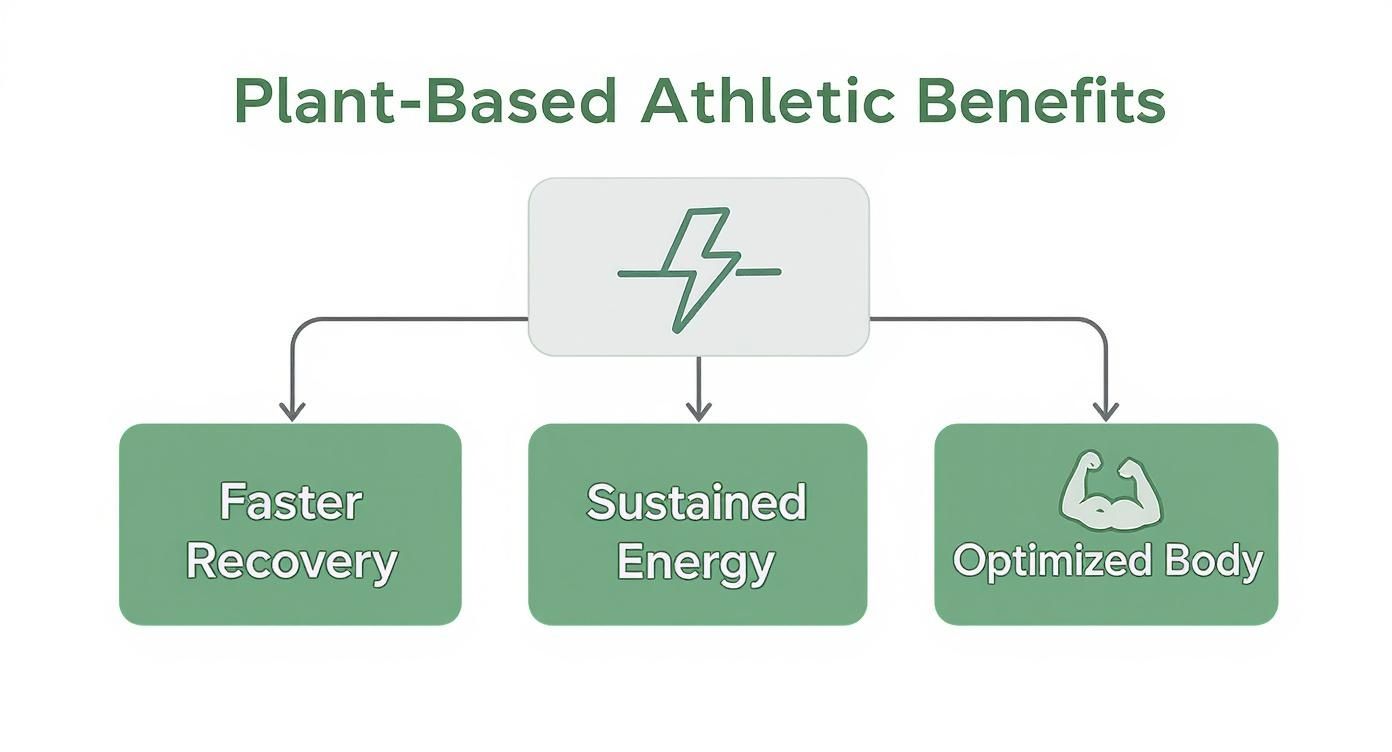
As you can see, it’s not about one single advantage. It's about how these benefits work together to support everything from muscle repair to sustained energy.
Fueling Your Gut Microbiome
Here’s an element of performance that’s often overlooked: gut health. Your digestive system is home to trillions of bacteria—your gut microbiome—that play a huge role in how you absorb nutrients, how strong your immune system is, and even your overall inflammation levels.
It turns out that a high-fiber, plant-based diet is the perfect fuel for these good bacteria.
A healthy gut doesn't just feel better; it helps you pull more essential nutrients from your food, making sure your muscles are getting everything they need to perform. It also reinforces your immune system, which is crucial since intense training can temporarily weaken your defenses. To get a handle on the fuel itself, you can explore our guide on what is vegan protein.
The science backing this up is getting stronger every year. A major review of studies found that plant-based diets significantly boost key performance metrics. For example, plant-based athletes showed an average endurance time to exhaustion of 12.2 minutes, a huge jump from the 8.8 minutes managed by omnivores. These aren't just random numbers; they’re the direct result of better blood flow, less oxidative stress, and a healthier gut working in perfect harmony.
Mastering Your Plant-Based Macronutrients
Building a powerful, high-performance body on a plant-based diet isn't about restriction; it's about strategy. Forget the guesswork. The real key lies in mastering your macros: protein, carbohydrates, and fats.
Think of them as the core members of your performance team. Each one has a specific job, and getting the balance just right is what separates good from great. For any athlete, this goes beyond just eating enough—it's about eating smart. The source, timing, and combination of these nutrients directly fuel your energy, dictate your recovery, and drive strength gains.
A dialed-in approach ensures your body gets exactly what it needs, right when it needs it.
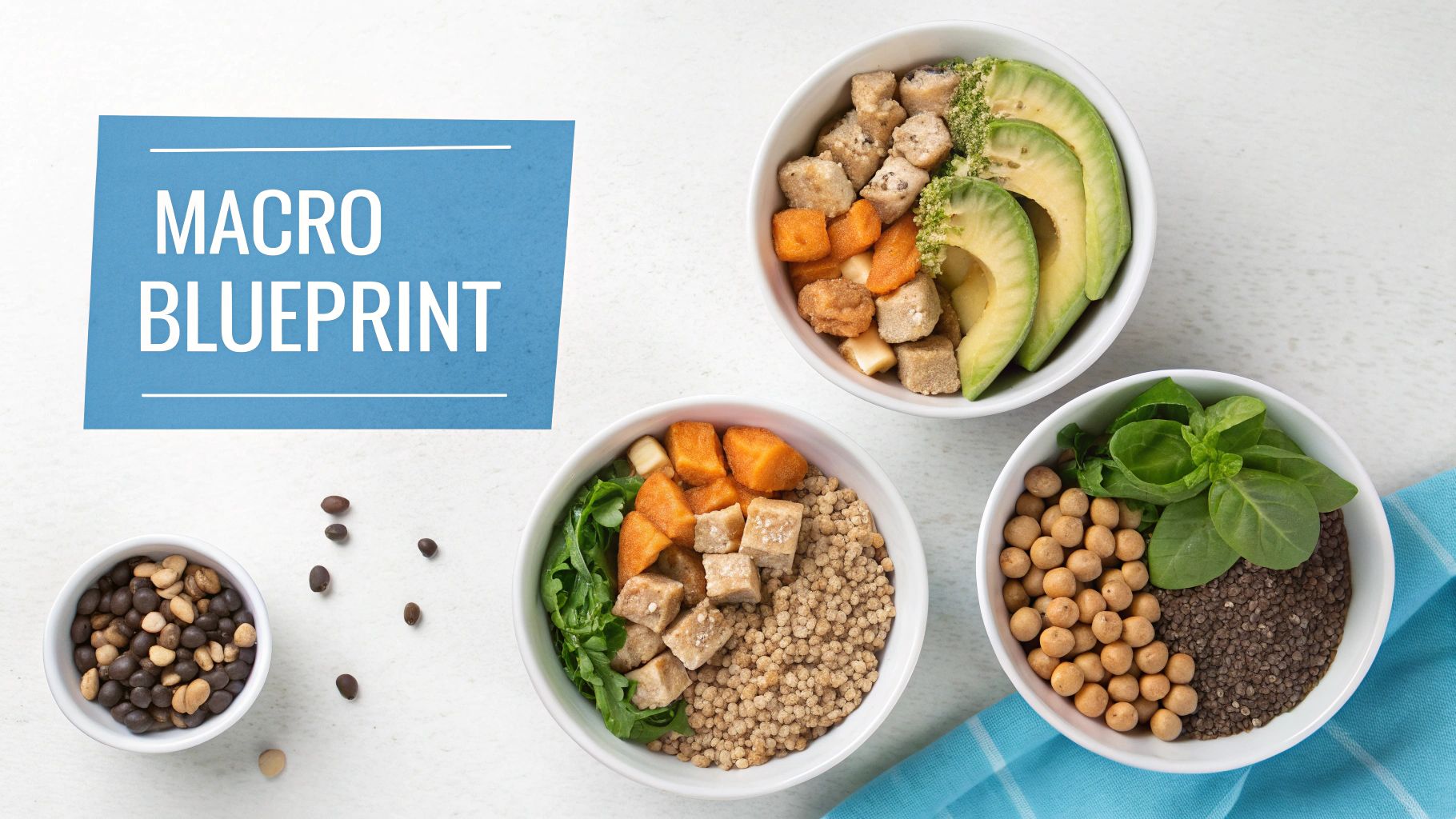
Plant Protein: The Building Blocks of Muscle
Protein is the undisputed MVP when it comes to muscle repair and growth. After a tough training session, your muscles are essentially broken down and crying out for amino acids—the building blocks of protein—to rebuild themselves stronger than before.
One of the oldest myths in the book is that it’s hard to get "complete" protein from plants. Let's put that one to rest. While it's true that some plant foods are low in certain essential amino acids, you can easily get everything you need by combining different sources throughout the day.
Think of it like building with LEGOs; one food group provides some of the pieces, and another provides the rest. The end result is a complete structure. For an even deeper look, check out our full guide on plant-based protein for muscle building.
Most athletes thrive on around 1.6 grams of protein per kilogram of body weight. Hitting this target is absolutely achievable with a well-planned, whole-food plant-based diet.
A simple and effective strategy is to pair different food groups. This practice, known as protein combining, ensures you're covering all your amino acid bases.
Complete Plant Protein Pairings
| Food Group 1 (Example) | Food Group 2 (Example) | Complete Protein Meal Idea |
|---|---|---|
| Legumes (Lentils) | Grains (Brown Rice) | A hearty lentil and rice bowl with roasted vegetables. |
| Grains (Whole-wheat bread) | Seeds (Hummus) | A classic hummus and veggie sandwich. |
| Legumes (Black Beans) | Grains (Corn Tortillas) | Black bean tacos topped with salsa and avocado. |
| Nuts (Peanut Butter) | Grains (Whole-grain toast) | Simple and effective peanut butter toast for a quick snack. |
You don't even need to eat these foods in the same meal! As long as you're eating a variety of sources throughout the day, your body will pool the amino acids it needs.
Carbohydrates: Your High-Performance Fuel
Carbohydrates are the main engine of your performance, fueling both your brain and your muscles, especially during high-intensity workouts. One of the biggest mistakes an athlete can make is to skimp on carbs—it's like showing up to a race with an empty gas tank. The trick is to choose the right types and time them properly.
- Complex Carbohydrates: These are your steady, long-haul fuel. Found in foods like oats, quinoa, brown rice, sweet potatoes, and beans, they digest slowly, providing a sustained release of energy. This is what prevents that dreaded mid-workout crash.
- Simple Carbohydrates: Think of these as your rocket fuel. Foods like bananas, dates, and other fruits digest quickly, giving you a rapid energy spike. They’re perfect for a pre-workout boost or to quickly restock your glycogen stores right after training.
By using both types strategically, you ensure you have the explosive power for your session and the reserves to recover afterward.
Healthy Fats: The Inflammation Fighters
Fats often get a bad rap, but for a high-performing athlete, the right kinds are non-negotiable. Healthy, unsaturated fats are your body's maintenance crew, playing a vital role in reducing inflammation, supporting joint health, and absorbing crucial fat-soluble vitamins.
Intense exercise naturally creates inflammation. Omega-3 fatty acids, in particular, are incredibly effective at calming this response, which translates to faster recovery and less muscle soreness.
Weaving these fats into your diet is easy—and delicious.
- Avocados: Add them to salads, bowls, or mash them onto whole-grain toast.
- Nuts and Seeds: Walnuts, chia seeds, and flaxseeds are omega-3 powerhouses.
- Olive Oil: A go-to for dressings and low-heat cooking.
By focusing on these nutrient-dense fats, you’re not just optimizing your performance today; you’re investing in your long-term joint health and overall well-being.
Key Micronutrients for Plant-Based Athletes
If macronutrients are the fuel in your tank, think of micronutrients as the high-grade oil and spark plugs that keep the engine firing on all cylinders. For any athlete on a plant-based diet, getting the macros right is only half the battle. To really perform at your peak, you need to dial in certain vitamins and minerals.
Paying close attention to these key players is your best defense against deficiencies that can sap your energy, slow your recovery, and hold you back. It’s about building a rock-solid nutritional foundation that lets you train harder, bounce back faster, and feel your best.
This is what turns a good plant-based diet into a high-performance fueling strategy.
The Micronutrient Watchlist
Some nutrients are just a bit harder to come by or aren't as easily absorbed from plants. This doesn’t mean you’re destined for a deficiency; it just means you need to be a little more strategic.
Here’s what you need to keep an eye on:
- Iron: This mineral is your oxygen delivery service, carrying it straight to your hard-working muscles. When iron is low, fatigue and a drop in endurance are usually the first signs. The non-heme iron found in plants gets a huge absorption boost when you pair it with vitamin C.
- Vitamin B12: Absolutely critical for nerve function and producing red blood cells, B12 simply isn't found in plant foods. For this one, a reliable, cruelty-free supplement isn't just a good idea—it's non-negotiable for every vegan athlete.
- Calcium: It's famous for bone health, but calcium is also a key player in muscle contractions and nerve signals. You can't build a powerful athletic body on a weak frame.
- Vitamin D: Nicknamed the "sunshine vitamin," this one works hand-in-hand with calcium to keep your bones strong and your immune system ready for action. The truth is, many people—plant-based or not—are running low on Vitamin D.
- Zinc: Think of zinc as part of your body's repair crew. It supports your immune system, helps build new proteins, and aids in wound healing. All are essential for an athlete pushing their limits.
To get a clear picture of your levels and catch any potential shortfalls, it’s a smart move for plant-based athletes to consider getting regular blood tests for vitamins and minerals.
Proactive nutrition is everything for a plant-based athlete. When you know which micronutrients need a little extra attention, you can build a diet that doesn't just prevent problems but actively boosts every part of your performance.
Sourcing Your Micronutrients from Plants
Once you know what you’re looking for, the fun part begins: loading up your plate with delicious, whole foods. Building your meals around a variety of these sources is the best way to cover your bases naturally.
| Micronutrient | Top Plant-Based Sources | Pro-Tip for Athletes |
|---|---|---|
| Iron | Lentils, spinach, tofu, fortified cereals, blackstrap molasses, kidney beans. | Always eat iron-rich foods with a source of vitamin C, like bell peppers, broccoli, or a squeeze of lemon, to dramatically increase absorption. |
| Calcium | Fortified plant milks, tofu (made with calcium sulfate), leafy greens (collards, kale), tahini. | Make it easy on yourself. Look for plant milks and yogurts that are explicitly fortified with both calcium and vitamin D. |
| Zinc | Pumpkin seeds, lentils, chickpeas, hemp seeds, oats, tofu. | Soaking or sprouting your beans, grains, and seeds before cooking helps reduce phytates, which can get in the way of zinc absorption. |
Vegan Performance Enhancers
Beyond the essentials, a couple of compounds can give you a real competitive edge. In the past, athletes relied on animal products to get them, but now you can find incredibly effective, certified vegan versions.
- Creatine: As one of the most heavily researched supplements out there, creatine is proven to help your muscles generate explosive power for heavy lifting and high-intensity bursts. Since plants don't contain it, supplementation can offer a very noticeable boost in strength.
- Beta-Alanine: This amino acid acts like a buffer against the acid that builds up in your muscles during intense efforts, helping you fight off that burning sensation and push harder for longer. It's a game-changer for any activity lasting one to four minutes.
Of course, these aren't a substitute for a solid diet, but they can be powerful tools to get the most out of your training. The evidence is clear: a well-planned plant-based diet can absolutely support elite performance. In fact, a huge analysis of 36 trials found no significant difference in physical performance between plant-based athletes and their omnivore counterparts, putting a lot of old myths to rest. You can read more about the findings that support plant-based diets for peak athletic performance.
A Day in the Life: A Sample Meal Plan
Theory is great, but let's be honest—seeing how it all comes together on your plate is what really matters. This sample meal plan isn't meant to be a strict set of rules. Think of it more as a blueprint, a practical look at how you can fuel your body for peak performance without a ton of hassle.
You can (and should!) tweak this based on your training load, calorie needs, and what you actually like to eat. The goal is to show you just how satisfying and powerful a day of plant-based eating can be.
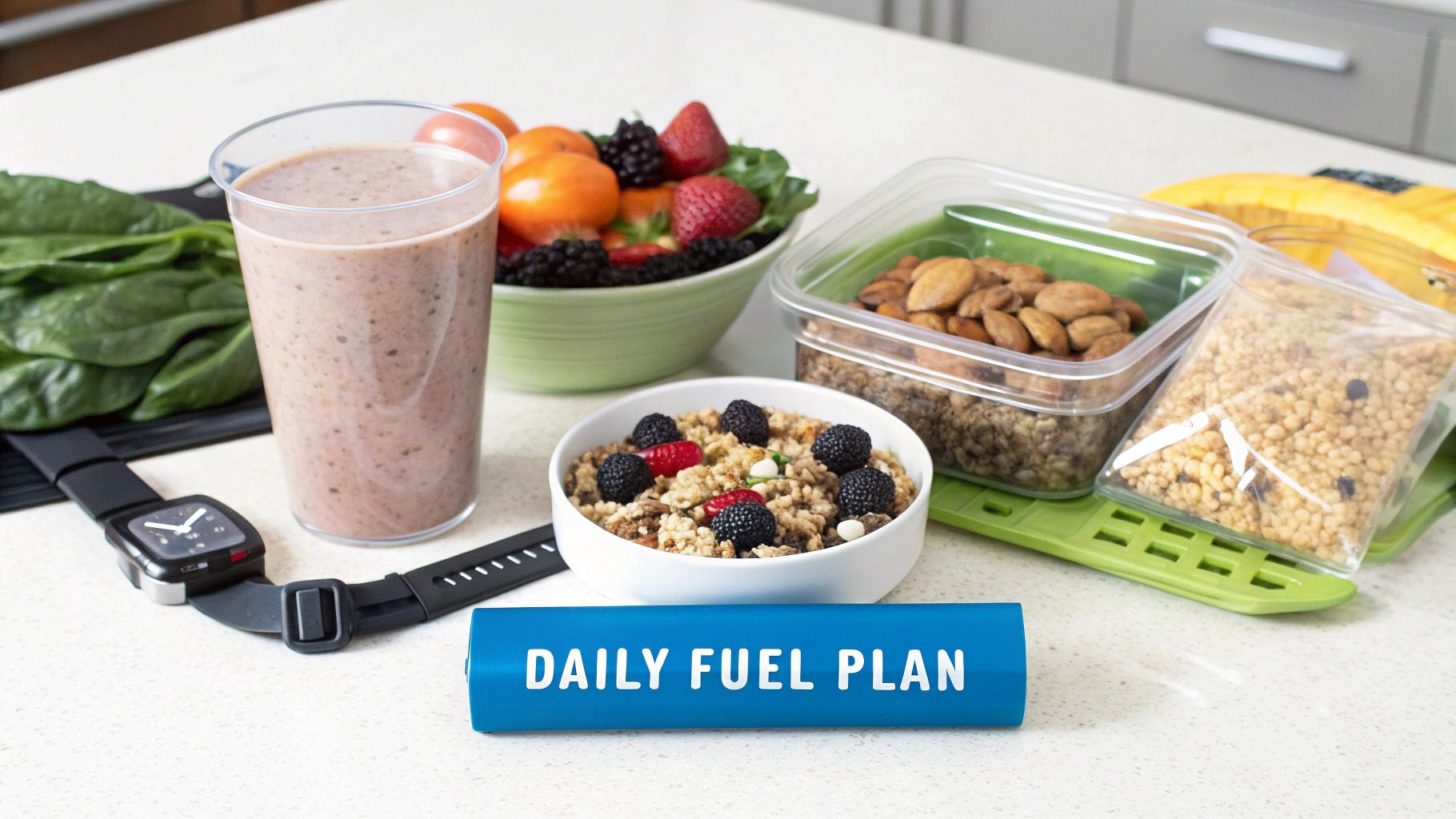
Pre-Workout Fuel
Before your workout, you need a quick hit of energy that’s easy on the stomach. The idea is to top off your glycogen stores without feeling weighed down. This is where simple carbs become your best friend.
- Option 1 (30-60 minutes before): A large banana with a couple of dates. This classic combo delivers fast-acting glucose to get your muscles firing from the very first rep.
- Option 2 (60-90 minutes before): A small bowl of oatmeal topped with a handful of berries. The oats give you a slightly more sustained energy release, which is perfect for longer training sessions.
This little boost is your insurance against hitting the wall, making sure you have the gas in the tank to push through that final set or last mile.
Energizing Breakfast
Once the workout is done, your body is screaming for nutrients. Your mission now is to replenish your energy stores and send a high-quality protein signal to your muscles to start the repair process. For an athlete, this is arguably the most important meal of the day.
A Tofu Scramble Power Bowl is a fantastic option. Just crumble some firm tofu and sauté it with turmeric, spinach, and a pinch of black salt (kala namak) for that eggy flavor. Serve it up with a side of roasted sweet potatoes for those complex carbs and a few slices of avocado for healthy fats.
That post-workout window is prime time for refueling. A meal with about 25-30 grams of protein and a good source of carbohydrates will maximize muscle protein synthesis and set you up for your next session.
Midday Power Lunch
Lunch needs to do two things: refuel you from your morning and head off that dreaded afternoon energy crash. A balanced mix of protein, carbs, healthy fats, and a boatload of micronutrients from colorful veggies is the ticket.
- Meal Idea: You can't go wrong with a massive quinoa bowl. Start with a base of cooked quinoa, then pile on chickpeas, chopped bell peppers, cucumber, and a big dollop of hummus. Toss a handful of roasted pumpkin seeds on top for extra protein and a satisfying crunch.
A meal like this provides a steady stream of energy to carry you through the rest of the day, whether you've got another workout on the schedule or just need to stay sharp.
Smart Snacking Strategies
For an athlete, snacks aren't indulgences; they're strategic moves. They bridge the gap between meals, keep your energy stable, and prevent you from making poor food choices when you get hungry.
- Protein Smoothie: Blend a scoop of your favorite vegan protein powder with a frozen banana, a spoonful of almond butter, and some unsweetened plant milk.
- Edamame: A simple cup of steamed edamame is packed with protein and fiber.
- Louisville Vegan Jerky: When you need something savory, convenient, and high in protein, a bag of plant-based jerky is an absolute game-changer. It’s perfect to throw in a gym bag and crushes salt cravings.
- Apple with Peanut Butter: A timeless combination of simple carbs, protein, and healthy fats that just works.
Having these on hand means you’re always prepared. To get your kitchen stocked, check out our comprehensive plant-based diet grocery list to make your next shopping trip a breeze.
Recovery-Focused Dinner
Dinner is your last chance of the day to give your body the building blocks it needs to repair and rebuild while you sleep. You want something rich in protein and complex carbs, but also easy enough to digest so it won't mess with your rest.
A Lentil and Vegetable Curry served with brown rice is perfect. Lentils are a powerhouse of protein and iron, the veggies add a huge spectrum of vitamins, and the brown rice provides the slow-release carbs your body needs for overnight recovery. It’s a deeply satisfying meal that ensures you wake up feeling repaired, recharged, and ready to do it all again.
Stories of Elite Plant-Powered Athletes
All the science and theory behind a plant based diet for athletes is great, but seeing it in action is what really drives the point home. The real proof is in the incredible careers of elite competitors who didn't just adopt a vegan diet—they reached the absolute pinnacle of their sports with it.
These athletes are living, breathing proof that you don’t need meat and dairy to build a powerful, resilient body. They’re shattering old-school myths and showing everyone that a plant-powered approach can actually be a serious competitive edge.
Venus Williams: A Champion's Comeback
Take tennis icon Venus Williams. She's a perfect example of an athlete who turned to plants to save her career. After being diagnosed with an autoimmune disorder that brought on crippling fatigue and joint pain, her future in the sport looked grim.
But instead of hanging up her racquet, she completely overhauled her diet, embracing a raw vegan approach to fight inflammation and take back her health. The results were nothing short of incredible. Williams didn't just get back on the court; she competed at the highest echelons of the sport, crediting her plant-based lifestyle for her renewed energy and recovery.
Scott Jurek: The Ultramarathon Legend
When you talk about endurance, you have to talk about Scott Jurek. This guy has dominated some of the most punishing ultramarathons on Earth, including the legendary Western States 100-miler, all while fueled exclusively by plants.
Jurek is vocal about how his plant-based diet is his secret weapon for recovery. He found that it allowed him to push his body to its absolute limits during brutal training blocks and bounce back faster than ever. In a sport where resilience is everything, that’s a game-changer.
These stories aren't just one-offs. They represent a growing wave of top-tier athletes discovering that a plant-based diet is a powerful tool for faster recovery, less inflammation, and a longer, more sustainable career.
And the science is catching up to their real-world results. Recent studies are showing that plant-based diets offer clear advantages in body composition and endurance. One piece of research looking at over 9,600 people found that sticking closer to a plant-based diet was directly linked to a lower BMI, smaller waist circumference, and reduced body fat. You can dig deeper into the research on how plant-based diets benefit athletic performance to see for yourself.
By sharing their journeys, athletes like Williams and Jurek give the rest of us a powerful blueprint for what's possible. They prove that choosing a plant-based path isn't a sacrifice—it's a direct route to unlocking your full athletic potential.
Got Questions? We've Got Answers
Making the switch to a plant-based diet can feel like a huge step, especially when your performance is on the line. It's totally normal to have a few questions buzzing around. Let's tackle some of the most common concerns athletes have, so you can move forward with confidence.
"But Where Do You Get Your Protein?"
Ah, the classic question. The good news is, it's way easier than most people think. You don't need to meticulously track every single gram if you're smart about it. The trick is simply to build your meals around a variety of protein-rich plant foods.
Some of the heaviest hitters include:
- Legumes: Think lentils, chickpeas, black beans, and split peas. These are absolute staples.
- Soy-Based Foods: Tofu, tempeh, and edamame are fantastic because they're complete proteins, delivering all nine essential amino acids your body can't make on its own.
- Grains & Seeds: Quinoa, hemp seeds, and chia seeds aren't just for carbs and fats; they pack a serious protein punch.
- Plant Protein Powders: A high-quality vegan powder (pea, soy, or brown rice are great) is a game-changer for hitting those post-workout recovery goals.
Just by making sure a couple of these are on your plate at every meal, you’ll be well on your way to fueling muscle repair and growth without a second thought.
"Will I Get Weaker or Lose Muscle?"
Nope. This is probably the biggest myth out there, and it’s been busted time and time again by world-class athletes and solid science. Your muscles don't care where the protein comes from.
As long as you’re eating enough total calories and hitting your protein goal (aim for around 1.6 grams per kilogram of body weight), your body will have everything it needs to maintain and build lean mass.
At the end of the day, what matters most is the total amount of protein and getting a full range of amino acids. A varied plant-based diet easily covers all your bases for strength, power, and hypertrophy. You can make the exact same gains as any other athlete.
"What Should I Eat for the Fastest Recovery?"
This is where a plant-based diet can give you a real edge. To bounce back faster, reduce soreness, and get back to training, you want to load up on foods that fight inflammation and restock your energy.
- Antioxidant Powerhouses: Berries, tart cherries, and pomegranates are your best friends for fighting off the oxidative stress that comes from a tough workout.
- Nitrate-Rich Veggies: Leafy greens like spinach and kale, plus powerhouse foods like beets, help improve blood flow. This is key for flushing out metabolic waste from your muscles.
- Quality Healthy Fats: Avocados, walnuts, and chia seeds are loaded with omega-3s, which are famous for their ability to cool down inflammation throughout the body.
Combine these anti-inflammatory foods with a solid protein source, and you've got a killer recovery meal. A plant-based diet for athletes isn't about restriction—it's about unlocking a new level of performance and resilience.
For a ridiculously tasty, high-protein snack that satisfies cravings and fuels you on the go, check out the amazing, cruelty-free flavors from Louisville Jerky Co. at https://lvjco.com.