


When you're settling in for a long flight, the best snacks you can have are nutrient-dense, low-sodium, and mess-free. Think roasted chickpeas, whole-grain crackers, or even something satisfying like Louisville Vegan Jerky. Packing your own food is a total game-changer, helping you sidestep the sad, unhealthy in-flight options so you land feeling energized, not bloated and exhausted.
Why Packing Your Own Flight Snacks Is a Game Changer
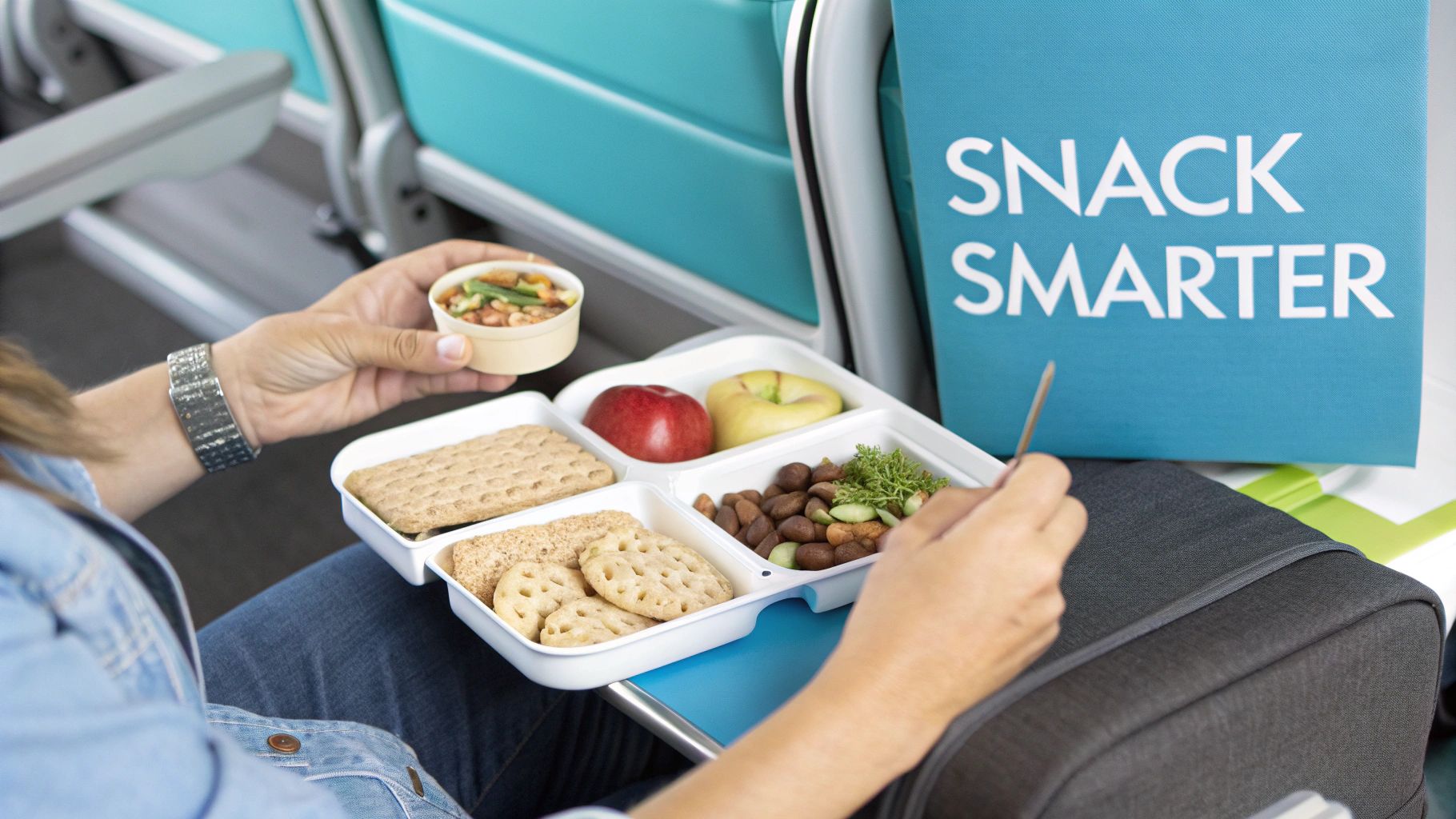
We've all been there: staring at the limited, uninspiring food choices on a long flight, especially when trying to stick to a healthy or plant-based diet. Relying on what the airline offers is a real gamble. You wouldn't start a cross-country road trip with a mystery amount of low-grade fuel in your car, right? So why would you start an hours-long flight without the right fuel for your body?
Taking control of your travel snacks is about so much more than just avoiding hunger. It’s about actively managing how you feel at 30,000 feet.
The Pitfalls of Airline Food
Let's be honest, airline snacks are notorious for being packed with sodium, sugar, and preservatives. In the pressurized environment of a plane cabin, those ingredients can really do a number on your body. High-sodium foods can make you feel dehydrated and bloated, while sugary treats give you a quick energy spike followed by an even quicker crash. You're left feeling completely wiped out.
It's not just a feeling, either. The Hunter College Airline Food Study found that the average snack on major U.S. airlines clocked in at around 255 calories and a whopping 403mg of sodium. That's nearly a quarter of your recommended daily sodium intake in one tiny bag.
Key Benefits of Smart Snack Packing
Bringing your own healthy snacks puts you back in control of your in-flight health and comfort. When you pack your own stash, you can be sure that every bite fits your vegan, non-GMO, and cruelty-free values.
Here’s why it makes such a difference:
- Sustained Energy Levels: The right snacks provide a steady stream of energy, helping you fight off that dreaded travel fatigue.
- Dietary Control: You get to eat delicious, plant-based food that meets your specific needs without having to compromise.
- Improved Hydration and Comfort: Ditching the salty airline snacks helps your body stay hydrated and keeps uncomfortable in-flight bloating at bay.
- Cost Savings: Airport and airplane food is ridiculously expensive. Packing from home is a smart, budget-friendly move that leaves more money for the fun parts of your trip.
It's not just about comfort, either. Unexpected delays and cancellations can leave you stranded, and having your own food supply becomes a lifesaver. To protect yourself financially from these hiccups, it's worth looking into missed connection travel insurance.
Ultimately, packing smart transforms a long-haul flight from an endurance test into a genuinely comfortable journey. And this guide will show you exactly how to nail it.
The Anatomy of the Perfect Airplane Snack
Knowing you need to pack your own snacks is one thing, but figuring out what makes a snack truly flight-worthy is another. It’s not just about grabbing something labeled "healthy." It’s about understanding how your body works at 30,000 feet. Think of it like this: on a long road trip, you wouldn't put cheap, dirty fuel in a high-performance car. The same goes for your body on a long flight—it needs clean, steady fuel to prevent you from feeling sluggish and worn out before you even land.
The right mix of nutrients is your secret weapon for staying energized and comfortable. The main goal is to keep your blood sugar stable and your stomach satisfied, which helps you sidestep that dreaded mid-flight energy crash and uncomfortable bloating. The key is a powerful combination I like to call the "Travel Trio."
The Travel Trio for Sustained Energy
To build the perfect airplane snack, you want to focus on three core components that work together beautifully. This trio is designed to give you a slow, steady release of energy that will keep you going for hours, holding hunger and fatigue at bay.
- Clean Protein: This is your foundation for feeling full. Protein slows down digestion, which keeps you satisfied for much longer and helps prevent the sharp blood sugar spikes you get from eating carbs alone. This is your best defense against constant hunger pangs on a long haul.
- High Fiber: Fiber is protein's best friend. It also helps you feel full while supporting healthy digestion, which can get a bit sluggish after hours of sitting. Plus, it helps regulate your blood sugar by slowing down how quickly sugar is absorbed.
- Complex Carbohydrates: Forget simple carbs like white bread or candy that give you a quick rush followed by a hard crash. Complex carbs break down slowly, providing a sustained source of fuel to keep your energy levels steady from takeoff to landing.
These three elements create a fantastic synergy. The protein and fiber essentially act as the brakes on the fast-burning fuel of carbohydrates, ensuring you get a smooth, long-lasting energy supply. This is the fundamental blueprint for any and all healthy snacks for long flights. If you're looking for more ideas on this, check out our guide to high-protein vegetarian snacks.
Ingredients to Leave on the Ground
Just as important as knowing what to bring is knowing what to leave behind. Some ingredients are notorious for making you feel worse in a pressurized cabin.
The two biggest offenders? Excess sodium and simple sugars. High-sodium snacks are a major contributor to dehydration and can cause that awful bloated feeling and even swelling in your hands and feet. The cabin air is already incredibly dry; salty foods are the last thing your body needs.
Simple sugars—found in candy, pastries, and a surprising number of granola bars—send your blood sugar on a wild roller coaster. Sure, you'll get a quick burst of energy, but the inevitable crash will leave you feeling more tired and irritable than when you started.
Travelers are catching on. A 2023 survey revealed that at least 70% of consumers around the world are trying to make healthier food choices, with half specifically looking for snacks lower in calories, sodium, and added sugars for their flights. You can learn more about airline food trends and see just how much passenger preferences are changing.
By focusing on the Travel Trio—clean protein, high fiber, and complex carbs—and steering clear of too much salt and sugar, you’re giving your body exactly what it needs to thrive. This isn’t just about avoiding "bad" food; it’s about strategically fueling yourself for a better, more comfortable travel experience.
To make it even easier, here’s a quick-reference checklist you can use when planning your travel snacks.
Your In-Flight Snack Nutrition Checklist
Use this table as a quick reference to evaluate and choose the best snacks for your flight based on key nutritional goals.
| Nutritional Goal | Why It Matters on a Flight | Excellent Vegan Sources |
|---|---|---|
| High Protein | Keeps you feeling full and satisfied, preventing hunger and stabilizing blood sugar for hours. | Lentils, chickpeas (roasted), nuts, seeds, edamame, tofu, or plant-based jerky like Louisville Vegan Jerky. |
| High Fiber | Aids digestion (which slows down when you're sitting for long periods) and helps you feel full. | Whole grains (oats, quinoa), fruits, vegetables, beans, and seeds (chia, flax). |
| Complex Carbs | Provides a slow, steady release of energy to prevent the dreaded energy crash and keep you alert. | Whole-wheat crackers, rolled oats, quinoa salads, sweet potatoes, and apples. |
| Low Sodium | Helps prevent dehydration and the uncomfortable bloating and swelling that can occur at high altitudes. | Unsalted nuts and seeds, fresh fruits and veggies, and homemade snacks where you control the salt. |
| Low Added Sugar | Avoids the quick energy spike and subsequent crash that leaves you feeling tired and irritable. | Look for snacks with natural sugars from fruit rather than refined sugars or high-fructose corn syrup. |
This simple checklist helps you look past the clever marketing and choose snacks that will genuinely support your well-being on long-haul flights. Before you know it, you'll be an expert at packing for a happy, energized journey.
Navigating TSA Food Rules Without Stress
So you’ve packed the perfect lineup of healthy snacks for your long haul. Awesome. But now comes the part that can trip up even the most seasoned travelers: getting your food through airport security.
The rules can feel a bit arbitrary, but a little know-how is all you need to breeze through the checkpoint without having to surrender your carefully planned meals.
The Liquids And Gels Rule Explained
The biggest thing to get right is the Transportation Security Administration (TSA) rule about liquids and gels. It’s actually pretty simple. Just ask yourself: can I spill it, spread it, or squirt it? If the answer is yes, it needs special handling.
This rule directly impacts some of our go-to vegan snacks, like hummus, nut butters, and plant-based yogurts. To bring these in your carry-on, they must be in containers of 3.4 ounces (100 ml) or less.
All those little containers then have to fit into one clear, quart-sized, zip-top bag—the same one you use for your travel-sized shampoo and toothpaste.
- Good to Go (in any reasonable amount): Solid foods are your best friend here. Think roasted chickpeas, vegan jerky, whole fruit, nuts, seeds, and protein bars.
- Restricted (must follow the 3-1-1 rule): Anything creamy or spreadable falls into this category. This includes single-serving hummus cups, small almond butter packets, or little tubs of vegan yogurt.
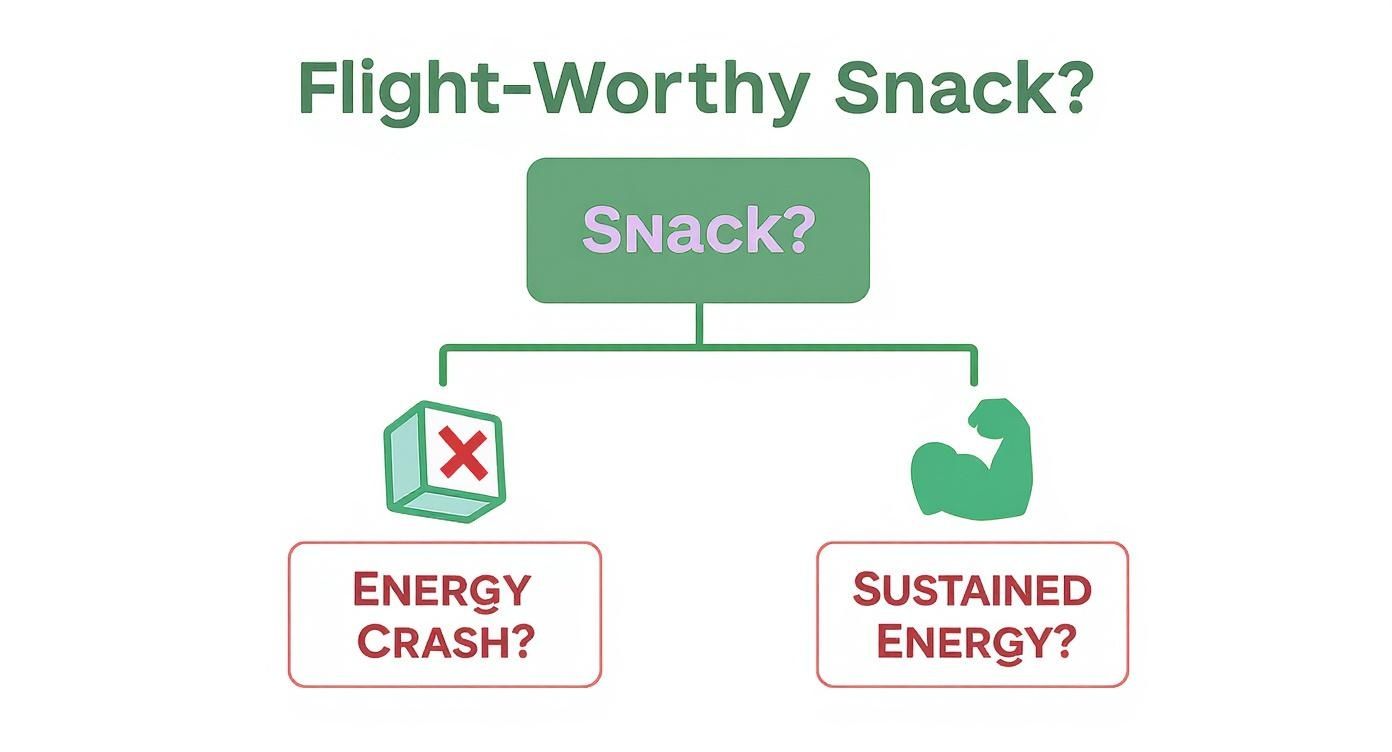
The takeaway? Solid, protein-rich snacks are almost always the path of least resistance for hassle-free travel.
Pro Tips For Packing And Security
Knowing the rules is one thing, but packing smart is what really makes the difference. Here are a few tips to make your trip through security as smooth as possible.
Keep It Visible And Accessible
TSA officers might want a closer look at your food. I’ve found that packing snacks in clear bags or containers makes their job easier and gets me through the line faster. It's also a great idea to keep your main snack bag at the top of your carry-on, so you can pull it out in a second if they ask.
Handle Powders With Care
Good news—you can absolutely bring your vegan protein powder! Just know that powders in containers larger than 12 oz (350 ml) might need extra screening. To keep things moving, I either leave it in the original container or, even better, pre-portion what I need into smaller, clear bags.
The whole point is to avoid any surprises at the security line. When you separate your liquids and gels ahead of time and keep your solid foods easy to see, you signal to the agents that you know what you’re doing. This usually means a much quicker and more pleasant experience for everyone.
And while we're talking about carry-on wellness, it’s worth thinking beyond just food. If you’re curious about which supplements to carry while traveling and how to pack them, there’s great info on that, too.
With these tips, you can pack your healthy snacks for long flights with total confidence, knowing they'll be right there with you when you need them.
Top-Tier Vegan Snacks for Long-Haul Flights
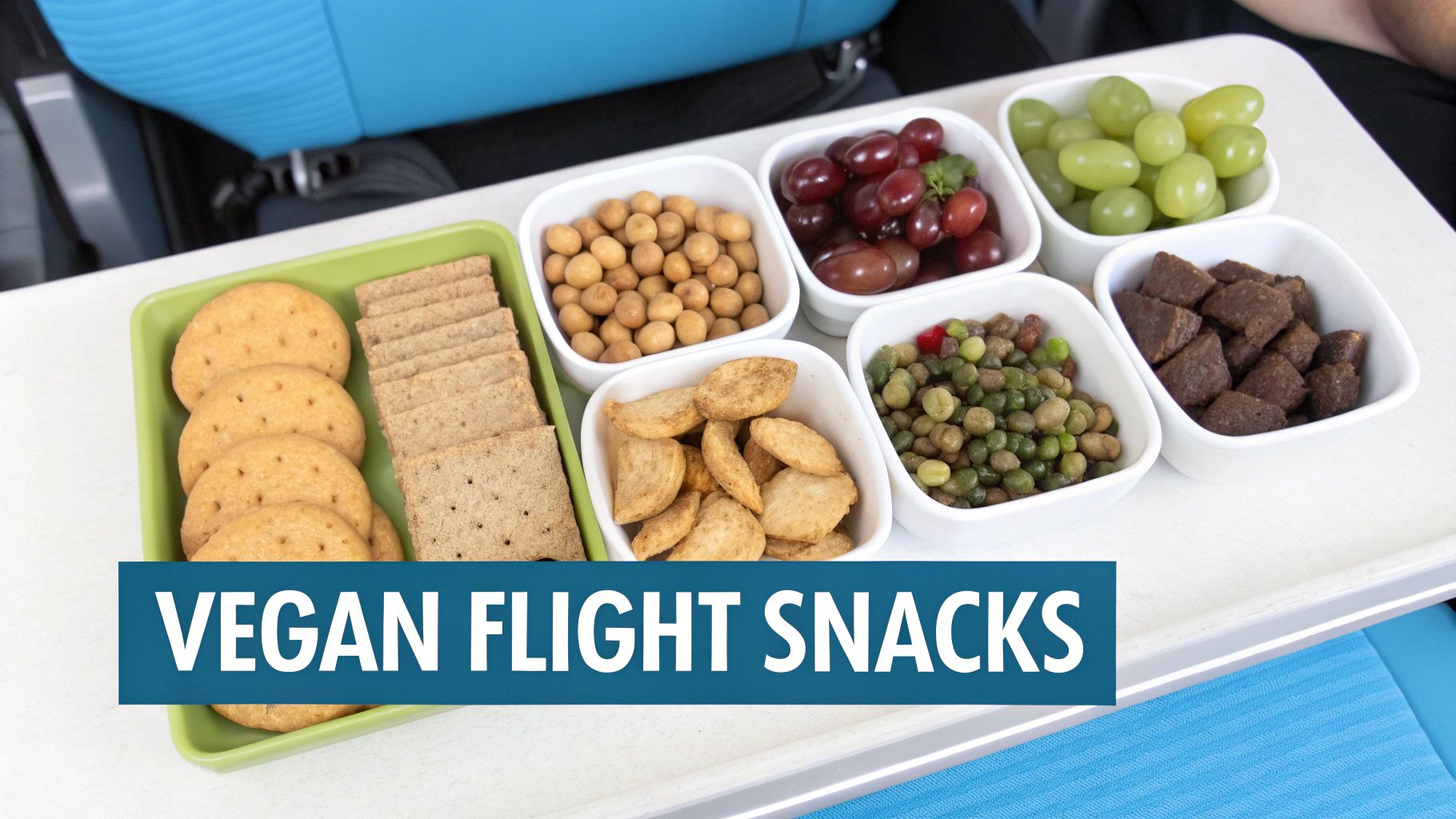
Alright, you know the rules for a great flight snack. Now for the fun part: building your travel menu. When you choose the right healthy snacks for long flights, you're guaranteed to have delicious, cruelty-free fuel whenever hunger decides to show up mid-flight.
The best game plan is to pack a mix of snacks that cover all your bases—keeping you fueled, full, and hydrated from the moment you take off until you touch down. I like to break my travel stash into three key categories: high-protein powerhouses, fiber-rich fillers, and hydrating heroes.
High-Protein Powerhouses
Protein is your secret weapon against that nagging, empty feeling that sets in on a long flight. It digests slowly, which helps keep your blood sugar steady and makes you feel satisfied for hours. Think of these snacks as the anchor of your in-flight meal.
-
Louisville Jerky: This is more than just a snack; it's a genuinely savory, satisfying experience. It packs a serious protein punch with a fantastic, chewy texture that crushes cravings for something hearty. Flavors like Smoky Carolina BBQ and Maple Bacon are mess-free, easy to pack, and bring that savory satisfaction you really need on a long trip.
-
Roasted Chickpeas or Edamame: Crunchy, salty, and totally addictive—in the best way. A handful gives you a great mix of protein and fiber, making them a way better choice than a bag of greasy potato chips. You can easily roast your own at home or just grab a pre-packaged bag.
-
Nuts and Seeds: A classic for a reason. Almonds, walnuts, pistachios, and pumpkin seeds are loaded with protein, healthy fats, and fiber. Just try to grab unsalted or lightly salted versions to keep your sodium down and help you stay hydrated.
Fiber-Rich Fillers
Fiber is protein's best friend. It also helps you feel full and keeps your digestion running smoothly, which can get a little sluggish after sitting for hours on end. These snacks offer that slow-burn energy you need to avoid crashing.
A well-rounded snack pack should feel like a toolkit for your body. The protein provides the core strength, while fiber and complex carbs offer the slow-release energy needed to keep everything running smoothly without the dreaded sugar crash.
Need some more ideas for your carry-on? Check out these healthy vegan snack ideas that work for any travel day.
This is all about complex carbs that deliver lasting energy, not a quick sugar rush that leaves you feeling worse later.
-
Whole-Grain Crackers: Perfect for pairing with a TSA-friendly container of hummus (under 3.4 oz) or just enjoying on their own. They offer a great crunch and a dose of complex carbs for steady fuel.
-
Rolled Oats or Oatmeal Cups: Just ask a flight attendant for some hot water, and you've got a warm, comforting mini-meal. Oats are an incredible source of soluble fiber, which is fantastic for keeping you full.
-
Homemade Granola Bars: When you make your own, you control exactly what goes in. You can pack them with good stuff like oats, seeds, and dried fruit, without all the extra sugar you find in most store-bought bars. Plus, they’re sturdy and easy to pack.
Hydrating Heroes
That airplane cabin air is no joke. With humidity levels often dipping below 20%—drier than the Sahara Desert—it's easy to get dehydrated, which just leads to headaches and fatigue. Drinking plenty of water is a must, but your snacks can help, too.
These picks have a high water content, giving you another way to fight back against the dry cabin air.
-
Cucumber and Celery Sticks: These are basically water in a crunchy package—over 95% water, in fact. They're incredibly refreshing, light, and don’t make a mess.
-
Grapes and Berries: Grapes, strawberries, and blueberries are all great for hydration and a dose of antioxidants. The trick is to pack them in a hard-sided container so they don't get squished in your bag.
-
Apple Slices: An apple is the perfect two-for-one snack, giving you both hydration and fiber. Slicing them up beforehand makes for easy munching, even in a cramped airplane seat.
By packing a balanced mix from these three categories, you're essentially creating your own in-flight wellness kit. You’ll have everything you need to stay energized and comfortable, so you can step off the plane feeling great.
Packing Strategies for Freshness and Convenience
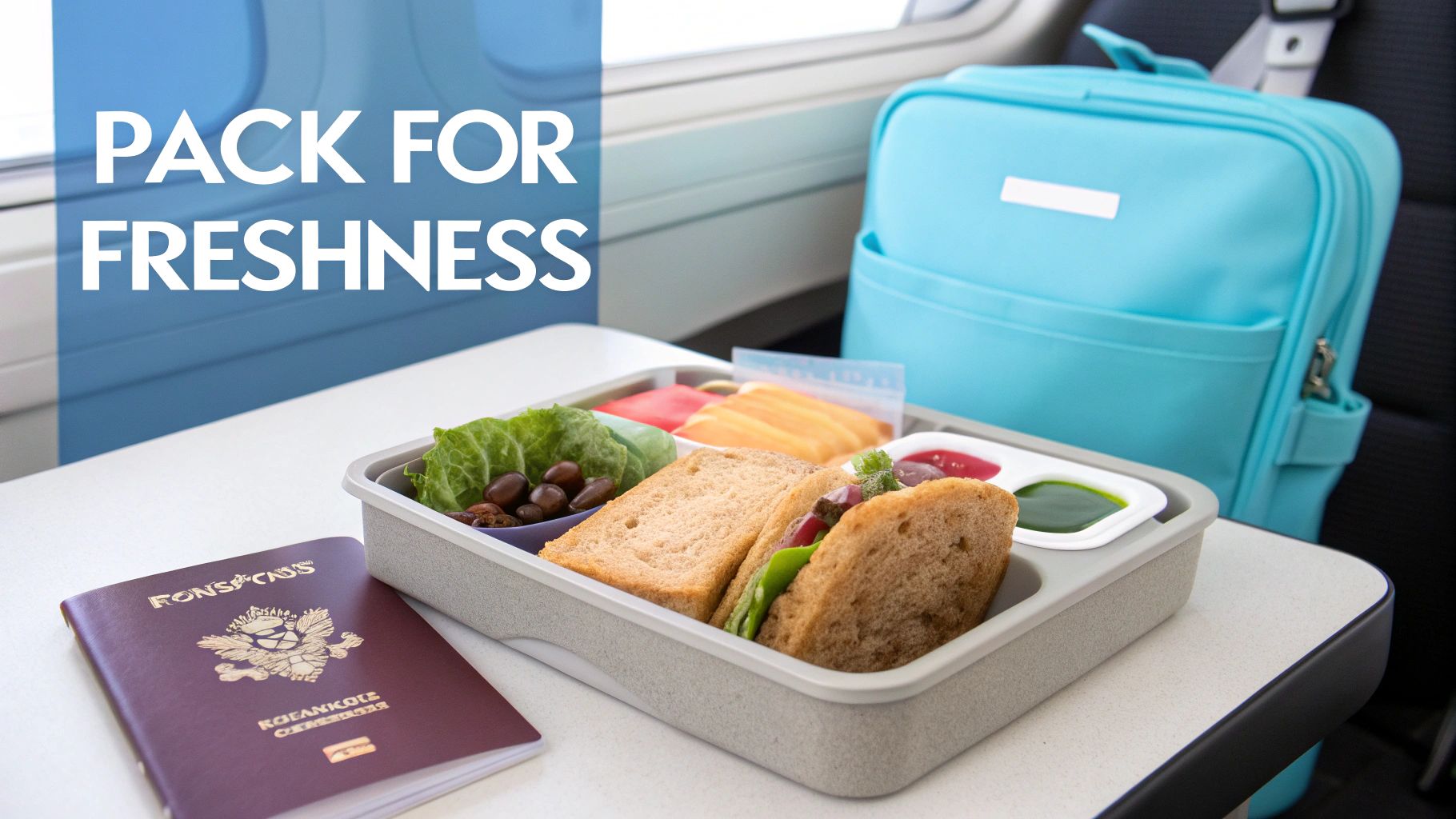
Having the perfect lineup of healthy snacks for long flights is one thing, but how you pack them is what really makes the difference. It's the secret to turning a random assortment of food into a well-oiled wellness plan for your journey. The right packing strategy keeps your snacks fresh, organized, and easy to grab, even when you’re crammed into a middle seat.
Think of your snack bag as a toolkit. You wouldn't just toss a hammer, screwdriver, and nails into a bag and hope for the best, right? Organizing your snacks with a little intention prevents crushed crackers, bruised apples, and the dreaded "dig of desperation" to find what you’re looking for. It’s the line between a chaotic mess and easy, stress-free snacking at 30,000 feet.
Choosing the Right Containers
The cornerstone of any great packing strategy is your containers. Ditching those flimsy single-use plastic bags for something sturdier is a total game-changer. It protects your food and makes everything so much more accessible.
Here are a few of my go-to container types for travel:
- Bento-Style Boxes: These compartmented boxes are a traveler's best friend. They’re fantastic for keeping crunchy things from getting soggy next to wet things, like crackers and cucumber slices. The separate sections also prevent everything from getting crushed inside a stuffed carry-on.
- Reusable Silicone Bags: I love these for trail mix, nuts, or our vegan jerky. They’re flexible, super lightweight, and they flatten out as you eat your snacks, freeing up precious bag space for the trip home.
- Hard-Sided Containers: If you're bringing anything delicate like berries, cherry tomatoes, or sliced bell peppers, a small, hard-sided container is a must. It’s like a little suit of armor that guarantees your produce arrives ready to eat, not as a sad, mushy pulp.
The Art of Pre-Portioning
It is ridiculously easy to mindlessly munch your way through a long flight, often just out of boredom. Pre-portioning is a simple but incredibly effective trick to stop that from happening. Instead of packing the whole giant bag of trail mix, divide it into smaller, single-serving portions before you go.
This little bit of prep work pays off in two big ways. First, it nudges you toward mindful eating, helping you actually pay attention to whether you’re hungry. Second, it just makes life easier in a tight space. Trust me, managing a small bag is far less clumsy than trying to wrestle with a giant, open package on a tiny tray table.
Think of it as creating your own in-flight "snack packs." This small step on the ground makes a world of difference in convenience and control once you’re up in the air.
A Smart Snack Timing Strategy
To really nail your in-flight wellness, think beyond what you pack and consider when you’ll eat it. Having a rough timeline for your snacks can help you keep your energy levels steady and fight off common travel woes like dehydration and fatigue.
Here’s a sample game plan for a long-haul flight:
- Post-Takeoff Power-Up (First 1-2 Hours): Kick things off with something high in protein. This is a great time to break out the Louisville Vegan Jerky or a handful of roasted chickpeas. A protein-rich snack helps stabilize your blood sugar from the get-go and keeps you feeling satisfied for longer.
- Mid-Flight Hydration (Middle Hours): The dry cabin air is no joke. Fight back with hydrating snacks like cucumber slices, celery sticks, or juicy grapes. They help replenish fluids and feel incredibly refreshing.
- Pre-Landing Energy (Final 1-2 Hours): As you start your descent, a snack with complex carbs will give you that final boost of sustained energy. Whole-grain crackers with a bit of nut butter or a crisp apple are perfect choices to help you feel alert and ready to hit the ground running.
This simple strategy transforms your snack bag into an active tool for feeling good. You can find more great ideas in our guide to the best healthy travel snacks. With the right food and a solid plan, you’ll land feeling fantastic.
Have a Few More Questions About Your Flight Snacks?
Even with the best-laid plans, a few last-minute questions always seem to pop up before a big trip. Getting those nagging little details sorted out can be the difference between a last-minute scramble at the airport and a totally relaxed, confident takeoff. Let's tackle some of the most common questions about packing healthy snacks for long flights.
Think of this as your final, snack-focused pre-flight check. We’ll cover everything from bringing protein powder on board to keeping your kids’ snacks from ending up all over the plane.
Can I Bring Vegan Protein Powder on a Plane?
Absolutely. You can pack vegan protein powder in both your carry-on and your checked bags. Just be aware of the rules for powders. The TSA says any powder-like substance over 12 oz (about 350 ml) might need a little extra screening. All this means is they may ask you to pull it out of your bag for a quick look.
To keep things moving smoothly at security, you have a couple of easy options. You can leave the powder in its original, sealed container so it’s easy to identify. Or, my personal favorite trick, pre-portion single servings into small, clear bags. It saves a ton of space and makes it incredibly easy to mix a shake mid-flight without a giant tub taking over your bag.
What Are the Best Mess-Free Vegan Snacks for Kids?
Anyone who has traveled with kids knows the real challenge: finding snacks that don’t end up crusted onto the seat, their clothes, and your hair. The secret is picking foods that are easy for little hands to manage and won't crumble, drip, or leave a sticky film on everything they touch.
Here are a few parent-tested, kid-approved vegan lifesavers:
- Dried Fruit Rings: Things like apple or mango rings are perfectly chewy and fun to eat but don’t have the goopy stickiness of some other dried fruits.
- Whole-Grain Pretzels: A classic for good reason. They deliver that satisfying crunch with virtually no mess.
- Roasted Chickpeas: A fantastic, protein-packed swap for greasy chips. No oily fingers here!
- Louisville Vegan Jerky: Kids seem to love our jerky. It's tough enough to keep them occupied for a bit, but still easy to handle, and the savory flavors are a great break from all the sweet stuff.
Pro-tip for sliced veggies like carrots or bell peppers: a bento-style box is a game-changer. Those little compartments are perfect for keeping everything contained and preventing it from getting squished.
How Do I Keep Fresh Produce From Bruising?
Keeping your fresh fruit and veggies crisp and un-smushed is all about packing smart. First, start by choosing sturdier produce that can handle being knocked around a bit in your bag. Think apples, oranges, or mini cucumbers—they’re far more resilient than, say, a delicate peach.
For anything more fragile, like berries or pre-sliced veggies, a hard-sided container is non-negotiable. It acts like a little suit of armor, protecting its contents from becoming pulp at the bottom of your tote. It also helps to wash and thoroughly dry your produce before you pack it; this keeps it from getting slimy on a long journey.
For those extra-long international flights, I recommend a small insulated lunch bag. Just make sure any gel pack you use is frozen completely solid when you go through security. This little trick can keep celery and carrot sticks perfectly crisp for hours.
Are There Any Vegan Snacks I Should Avoid Bringing?
Yes! Just because a snack is vegan and healthy doesn't automatically make it a great choice for a plane. Remember, you’re sharing a small, enclosed space with a lot of other people, so a little consideration goes a long way.
The biggest no-go is anything with a super strong, lingering smell. I'm talking about things like durian fruit, snacks heavy on raw garlic or onions, or certain pungent fermented foods. Beyond the smell, it’s also kind to avoid anything that's excessively loud to eat. Nobody wants to sit next to someone crinkling a giant chip bag for an hour straight.
Finally, just skip anything that’s too complicated or likely to spill. A quinoa salad is a fantastic healthy meal, but trying to balance it on a wobbly tray table during a bit of turbulence is a disaster waiting to happen. The best healthy snacks for long flights are simple, self-contained, and can be enjoyed without making a mess or a scene.
Ready to stock up on the perfect travel companion? Louisville Jerky Co. crafts delicious, protein-packed vegan jerky that's mess-free, TSA-friendly, and satisfies every savory craving at 30,000 feet. Check out our full range of flavors and build your travel bundle today at https://lvjco.com.