


When you're building an emergency kit, the best non-perishable snacks are the ones that are packed with nutrients, don't require any cooking, and can sit on a shelf for a long time. I always recommend things like dried fruit, nuts, seeds, whole-grain crackers, and especially plant-based jerky. These aren't just filler; they provide the sustained energy and critical calories you'll need during a crisis.
Why Smart Snack Choices Matter in an Emergency
Think of your emergency kit as your family’s lifeline when things go sideways. We all know to pack flashlights and first-aid supplies, but the food you include plays a role that goes way beyond just staving off hunger. The right snacks can provide physical energy, mental clarity, and even a small sense of normalcy when everything feels chaotic.
Choosing your emergency snacks isn't something to do at the last minute. It’s not just about grabbing whatever’s in the pantry; it’s about making strategic decisions that can genuinely impact your comfort and resilience.
More Than Just Calories
During an emergency, your body is under a ton of physical and psychological stress. The snacks you eat need to do more than just deliver empty calories. You're looking for a solid balance of carbohydrates for a quick energy boost, protein to keep you feeling full, and healthy fats for long-term fuel.
This is exactly why focusing on nutrient-dense, plant-based foods is such a smart move. Unlike sugary junk food that gives you a quick high followed by a hard crash, quality whole-food ingredients offer the kind of sustained power that helps you think clearly and act decisively.
It’s no surprise that the demand for reliable emergency food has skyrocketed. The global market is valued at a staggering USD 8.51 billion. Here in North America, which accounts for 41.3% of that market, both families and government agencies are prioritizing these supplies, largely due to the increasing frequency of natural disasters. You can actually see more data on this trend by checking out the growing emergency food market analysis.
The Psychological Boost of Familiar Foods
Never, ever underestimate the power of comfort food during a crisis. A high-stress situation is the absolute worst time to be trying new or unappealing foods. Packing snacks that you and your family already know and love can be a huge morale booster.
A familiar taste can be incredibly grounding when everything else feels uncertain. It's a small piece of routine that reminds you of normal life, which can reduce anxiety and improve your outlook.
Including a favorite type of vegan jerky, a go-to trail mix, or that one brand of crackers everyone likes can make a tough experience just a little more bearable. This emotional support is a critical—and often overlooked—part of a truly effective emergency kit.
The Vegan Advantage in Emergency Preparedness
Focusing on exclusively plant-based, non-perishable snacks gives you several key advantages in an emergency kit. The benefits go far beyond personal ethics and into the practical side of safety and shelf life.
- Longer Shelf Stability: Many vegan staples like dried fruits, nuts, and seeds are naturally shelf-stable for a very long time without needing a bunch of artificial preservatives. They're simply less prone to spoilage than most animal-based products.
- Reduced Allergen Risk: Plant-based snacks are naturally free from common allergens like dairy and eggs. This makes them a safer bet for households with dietary restrictions or if you end up sharing supplies with neighbors during a community-wide event.
- Cruelty-Free Peace of Mind: If you follow a vegan lifestyle, knowing your emergency supply aligns with your values brings an extra layer of comfort. Your preparedness plan shouldn't force you to compromise on your non-GMO and cruelty-free principles.
Thinking through these details is the key to creating a truly useful emergency supply. Let's break down the core principles for selecting the best snacks.
Core Principles for Selecting Emergency Snacks
This table is a quick reference guide to help you remember the most important criteria when choosing snacks for your kit.
| Principle | Why It Matters | Vegan-Friendly Example |
|---|---|---|
| Nutrient-Dense | Provides sustained energy, not just empty calories, to handle physical/mental stress. | Almonds, walnuts, or sunflower seeds |
| Long Shelf Life | Ensures food is safe and edible for at least 12 months without refrigeration. | Dried apricots or vacuum-sealed Louisville Vegan Jerky |
| No Cooking Needed | Guarantees you can eat it even if power, water, and gas lines are out. | Whole-grain crackers or peanut butter packets |
| Familiar & Liked | Offers a psychological comfort boost and reduces stress in a crisis. | A favorite brand of granola bars or a personal trail mix |
| Dietary-Friendly | Accommodates allergies (gluten-free, nut-free) and lifestyle choices. | Gluten-free pretzels or seed-based protein bars |
Keeping these five principles in mind will ensure your kit is packed with food that is not only safe and nutritious but also genuinely helpful when you need it most.
Ultimately, building an emergency kit is an act of empowerment. It's about taking back some control in a situation that feels completely out of your hands. By making smart, intentional choices about the non perishable snacks for your emergency kit, you're setting your family up for resilience, comfort, and safety, no matter what comes your way.
Building Your Kit with Nutrient-Dense Vegan Staples
An effective emergency kit is more than just a random collection of canned goods. It’s a well-thought-out supply of foundational foods designed to keep you going. The real goal is to stock nutrient-dense vegan staples that deliver a powerful combination of calories, protein, and healthy fats. These are the building blocks for sustained energy, which is absolutely crucial for maintaining stamina and thinking clearly when it matters most.
Let's get practical and build a purposeful, life-sustaining menu. Here’s a blueprint for choosing the best non perishable snacks for your emergency kit, broken down by category.
Energy-Dense Dried Fruits and Leathers
When you need a quick, natural energy surge, dried fruits are one of your best options. They're loaded with carbohydrates and natural sugars your body can convert to fuel in a hurry. You might be surprised to learn they also hold onto a good amount of the vitamins and fiber from their fresh state.
When you're shopping, make it a point to look for options with no added sugars or sulfites. Simple is better.
- Dried Apricots: A fantastic source of potassium and vitamin A.
- Raisins and Dates: These are high in iron and fiber, giving you a satisfyingly sweet boost.
- Fruit Leathers: A perfect, kid-friendly choice. Just be sure to grab brands made from 100% fruit puree—no extra corn syrup or artificial colors.
Think of these as your go-to for a fast pick-me-up. A small handful can make a world of difference when you feel your energy start to lag.
Protein-Packed Nuts, Seeds, and Butters
Protein is what keeps you feeling full and satisfied. It's also essential for muscle repair, which can be surprisingly important during physically demanding situations. The great thing about plant-based protein sources is that they are naturally shelf-stable and packed with healthy fats and other key nutrients.
For the longest possible shelf life, always go for roasted and lightly salted (or unsalted) varieties that come in vacuum-sealed packages. Oxygen is the main enemy of freshness for nuts and seeds, so airtight is the way to go.
A critical part of emergency preparedness is choosing foods that work hard for you. A single serving of almonds not only provides protein and healthy fats but also offers vitamin E and magnesium, supporting brain function and energy production under stress.
Here are some of my top recommendations:
- Almonds, Walnuts, and Cashews: These are true caloric powerhouses, brimming with healthy fats.
- Sunflower and Pumpkin Seeds: If you have a nut allergy, these are excellent alternatives that still offer plenty of protein and minerals.
- Nut and Seed Butters: I love the single-serving squeeze packets of peanut, almond, or sunflower seed butter. They’re perfectly portioned, completely mess-free, and you don’t need any utensils.
Satisfying Plant-Based Jerky
For a savory, high-protein snack that genuinely hits the spot, it’s hard to beat a quality plant-based jerky. It gives you that familiar, satisfying chew and bold flavor that can be a massive morale booster in a tough situation. It's a simple, delicious way to get a serious protein punch without any cooking.
Brands like Louisville Jerky have a variety of amazing flavors, which ensures your emergency food supply is anything but bland. That chewy texture and rich taste can provide a real sense of normalcy and comfort. When you're picking out a jerky, look for non-GMO ingredients and a solid protein count per serving. To get a better handle on why this macronutrient is so vital, you can learn more about what vegan protein is and how it benefits your body.
Complex Carbs for Lasting Fuel
While dried fruits give you that quick burst of energy, complex carbohydrates are what provide the slow-burning, sustained fuel your body needs to keep going for hours. They help you avoid the energy spikes and crashes that come with simple sugars.
Always try to find whole-grain options to get the most fiber and nutrients.
- Whole-Grain Crackers: These are perfect for pairing with nut butter to create a balanced mini-meal of carbs, protein, and fat.
- Pretzels: A simple, salty, and satisfying classic.
- Rice Cakes: They're lightweight, versatile, and make a great base for any other toppings you have in your kit.
When you're reading labels, make sure the first ingredient listed is a whole grain, like whole wheat or brown rice. It's also a smart move to find low-sodium versions to help manage thirst, since clean water could be a limited resource. For other non-perishable comfort items, this helpful guide to vegan gum options is a great resource.
By thoughtfully combining items from these core food groups, you're not just stocking food—you're creating a versatile and resilient emergency supply that will support your physical and mental well-being through any challenge.
Smart Packing and Storage for Maximum Shelf Life
So, you've gathered a solid stash of nutrient-packed, plant-based snacks for your emergency kit. That’s a huge first step, but don't stop there. How you pack and store everything is just as important as what you bought—it's what ensures your food is still safe and tasty when you actually need it.
The golden rule I always follow is to store emergency food in a cool, dark, and dry place. This isn't just a suggestion; it's your best defense against heat, light, and moisture, which are the biggest enemies of shelf life. Any of these can ruin your food's nutritional value, wreck its texture, and just make it go bad faster.
The Ideal Storage Environment
Think about a cool basement, an interior closet away from an outside wall, or even a pantry that doesn't get warm from the oven or fridge. The key is stability. You want to avoid places with big temperature swings, like a garage, attic, or outdoor shed. That constant heating and cooling can make packaging expand and contract, which might break the seal and let nasty stuff in.
I tell people to treat their emergency snacks like a fine wine—they do best in stable, predictable conditions. Keeping things consistently cool stops the fats in nuts and seeds from going rancid, and the darkness helps preserve the vitamins in dried fruit that sunlight would otherwise destroy.
Choosing the Right Containers
Let's be honest, the original packaging is made to look good on a store shelf, not to survive years in storage. To really protect your investment from pests, moisture, and getting crushed, you'll need to upgrade your setup.
- Go Airtight and Rodent-Proof: I highly recommend sturdy, food-grade plastic bins with locking lids or even metal containers. These create a serious barrier that mice and bugs can't just chew through like they can with cardboard boxes or flimsy bags.
- The Power of a Vacuum Sealer: If you're buying things like nuts or making your own trail mix in bulk, a vacuum sealer is a game-changer. Removing all the oxygen slows down spoilage dramatically, often extending freshness by months, if not years.
While we're focused on food here, applying some general smart packing strategies can make your whole emergency kit more efficient and easier to manage.
This shows how you can build a balanced vegan snack kit by focusing on the core macronutrients.
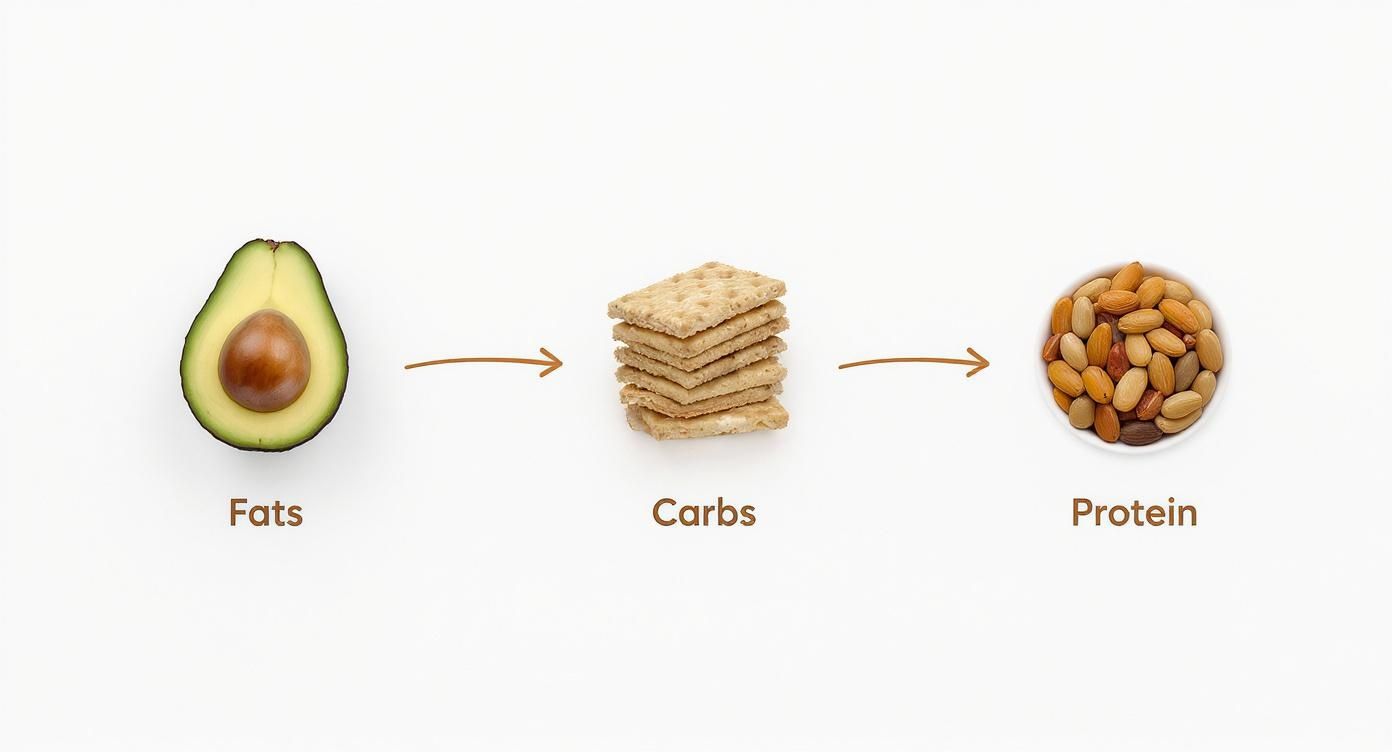
Starting with a solid base of fats, carbs, and protein ensures you’ll have sustained energy when it counts.
Implementing a Rotation System
Even the most shelf-stable foods don't last forever. A simple rotation system is the only way to avoid that horrible moment of discovering your entire food supply expired two years ago. This is where the "First-In, First-Out" (FIFO) method is your best friend.
It’s a really straightforward process:
- Label Everything. The moment you add something to your kit, grab a permanent marker and write the expiration or "best by" date in big, clear numbers right on the package.
- Organize by Date. Put the newest items in the back and the oldest ones right up front where you can see them.
- Rotate Every Six Months. Set a reminder on your phone or calendar to check your kit twice a year. Pull anything that's getting close to its date into your regular pantry to eat and replace it with fresh supplies, which of course go to the back.
This simple habit keeps your kit fresh and ready, turning it from a forgotten box into a living, useful pantry. And if you're looking for more great items to add to your rotation, you can find a ton of info on great shelf-stable vegan options that last. By mastering these simple storage tricks, you’re turning a pile of snacks into a reliable resource you can count on.
Where to Find and How to Stock Your Supplies
Once you've mapped out exactly what you need for your emergency kit, the next question is, where do you get it all? It's one thing to have a list, but it's another to build out your supply efficiently. Knowing where to shop is key, especially when you’re sticking to vegan, non-GMO, and cruelty-free standards. Thankfully, you’ve got a few great options, each with its own pros and cons.
Your local grocery store is probably the most obvious place to start. It’s convenient, and you can physically pick up items, check expiration dates, and read labels right there. It’s perfect for grabbing essentials like nuts, seeds, and dried fruit. The downside? The selection for more specialized items—like that plant-based jerky you love or certain allergen-free protein bars—can be pretty hit-or-miss.
That’s where online retailers really come in handy. The variety is just so much better. You can easily find snacks that meet your exact dietary and ethical needs. Websites that focus on vegan products or emergency preparedness are absolute goldmines for discovering new brands and stocking up on things you already trust.
A Smart Mix of Local and Online Shopping
Honestly, I’ve found that a hybrid approach works best for me. I use local stores for the common, heavier items to save on shipping costs, then hit up online shops for specialty foods, bulk orders, and those unique flavors that keep an emergency kit from feeling boring.
- Local Grocery Stores: Go here for the basics—whole-grain crackers, nut butters, and standard dried fruits. Always keep an eye out for sales and clip those coupons to make your budget stretch further.
- Online Specialty Retailers: This is your best bet for finding specific brands like Louisville Jerky, plus a wider range of gluten-free and non-GMO certified snacks. You can often score much better prices on multi-packs online, too.
- Big-Box Warehouse Clubs: If you’ve got the storage space, these clubs are fantastic for buying staples like nuts, seeds, and protein bars in huge quantities. The cost per item drops significantly.
The way we buy emergency supplies is definitely changing. While brick-and-mortar stores are still the go-to for many—making up about 92.4% of the emergency food market—online retail is catching up fast. It’s especially popular for people placing bulk orders or looking for food that fits specific dietary needs. With the global emergency food market expected to hit USD 14.95 billion by 2033, we’re only going to see more and better options pop up online. You can read a bit more about these emergency food sales channels and what it means for shoppers.
Smart Ways to Stock Up
Getting the supplies is just the first step. Stocking them smartly is what really matters. The goal is to build a high-quality kit that stays fresh and ready to go, all without having to spend a fortune in one go.
Think of stocking your emergency kit less like a one-time shopping spree and more like an ongoing investment in your family's security. A little planning goes a long way in making the process affordable and stress-free.
Here are a few practical methods that I’ve found really work:
The "One for Me, One for the Kit" Method: This is my favorite. Whenever you see your go-to non-perishable snacks on sale, just buy double. Put one in the pantry for now, and the other goes straight into your emergency kit. This lets you build your supply gradually without a huge upfront cost.
Use a Subscription Service: For items you know you love and will need to rotate regularly, a subscription can be a game-changer. Something like the Louisville Jerky Club is perfect for this. You get a fresh supply delivered to your door every month—enjoy some now and cycle the rest into your kit. It’s an easy way to guarantee you always have the freshest products on hand.
Look into Curated Bundles: A lot of companies sell pre-made emergency food kits. They’re super convenient, but you have to do your homework. Always check the contents to make sure they fit your vegan diet and contain food your family will actually want to eat in a stressful situation. They can be a great starting point, but you’ll probably want to add some personal favorites.
By combining savvy shopping with a smart stocking strategy, you can build a robust and reliable supply of non perishable snacks for your emergency kit. This thoughtful approach ensures you’re always prepared without breaking the bank or compromising your values.
Your 72-Hour Vegan Emergency Snack Plan
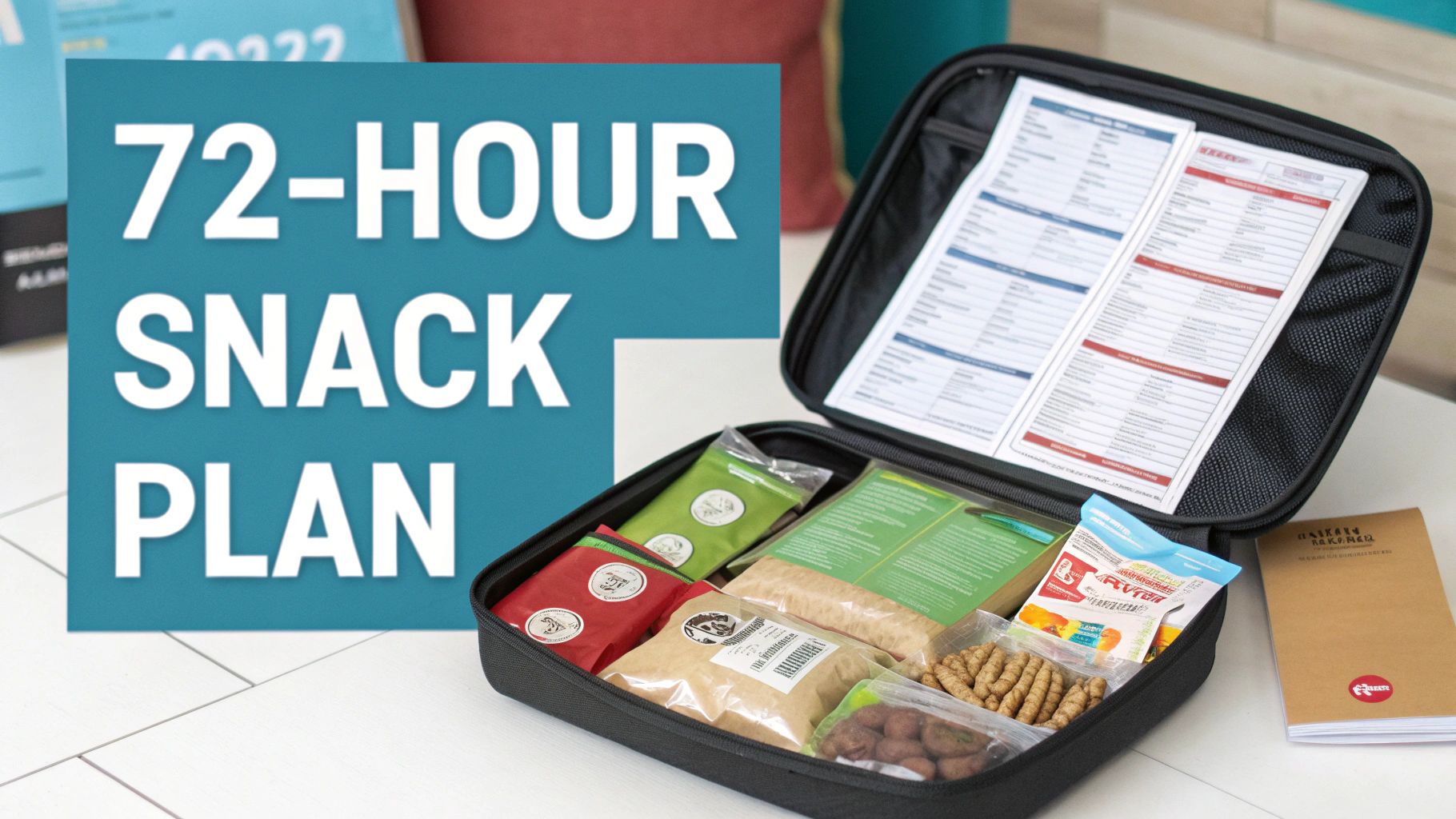
It’s one thing to talk about nutrient density and smart packing in theory. It’s another to see what it actually looks like in practice. So, let's pull it all together and build out a sample 72-hour emergency snack supply for one adult, focusing on entirely vegan, no-cook options.
This isn't just about throwing random items in a bag. It's a strategic menu designed to keep your energy up, provide some variety, and even offer a little comfort when you need it most. We're aiming for roughly 1,800-2,000 calories a day, which is a solid target to handle the stress of an emergency without needing complex meals. Every single item here is one of those grab-and-go non perishable snacks for your emergency kit.
Building Your Daily Menu
The last thing you want is flavor fatigue. Surviving on granola bars alone for three days is a surefire way to kill your morale. A good plan mixes up your macronutrients and gives your taste buds something to look forward to.
Think in terms of pairings. Combine something rich in carbs, like crackers, with a protein powerhouse like a nut butter packet or some plant-based jerky. This gives you a quick burst of energy followed by the slow-burning fuel that keeps you going. The savory, chewy texture of jerky, for example, is a perfect counterpoint to the sweetness of dried fruit, making a snack feel more like a satisfying mini-meal. Some of the best high-protein hiking snacks I've found are actually ideal for this exact purpose.
Remember, the goal of your 72-hour kit is self-sufficiency. Each item should be ready-to-eat and contribute to your overall energy and morale. This plan is a template—feel free to swap in your personal favorites to make it your own.
Sample 72-Hour Vegan Emergency Snack Menu
To help you visualize how this all comes together, here’s a detailed plan. I’ve laid it out to be simple and balanced, with a breakfast, lunch, dinner, and a flexible snack to keep you fueled all day long. No cooking or refrigeration needed.
This kind of real-world example shows you how different vegan snacks can create a cohesive, life-sustaining menu.
| Day | Breakfast | Lunch | Snack | Dinner |
|---|---|---|---|---|
| 1 | Instant Oatmeal Packet (add cold water) | Whole-Grain Crackers with Peanut Butter Packet | Dried Apricots | Louisville Vegan Jerky (Smoky Carolina BBQ) & Trail Mix |
| 2 | Granola Bar & Apple Sauce Squeeze Pouch | Tortilla with Single-Serve Hummus Cup | Roasted & Salted Almonds | Rice Cakes with Avocado Mash Pouch & Black Pepper |
| 3 | Breakfast Bar (high-fiber) & Dried Berries | Protein Bar (at least 15g protein) | Fruit Leather (100% fruit) | Louisville Vegan Jerky (Maple Bacon) & Sunflower Seeds |
Laying out your kit this way transforms your approach from just collecting food to strategically planning your nutrition for those critical first days. It ensures your non perishable snacks for your emergency kit are practical, enjoyable, and ready to provide the physical fuel and mental comfort needed to get through anything. It’s all about being prepared, thoughtful, and resilient.
Still Have Questions About Your Emergency Vegan Snacks?
When you're putting together an emergency kit, a few questions always seem to pop up. That's completely normal. Getting those nagging uncertainties sorted out is the best way to feel truly confident in your prep. So, let's tackle some of the most common questions I hear about keeping your vegan snack supply ready for anything.
How Often Should I Rotate My Emergency Kit Snacks?
I always tell people to check their kits twice a year. Every six months is a perfect cadence. Set a reminder on your phone or mark it on your calendar—maybe for the first weekend of spring and fall.
During this check-in, you’re looking at every single expiration date. Just as important, you need to physically inspect the packaging. Is anything crushed, dented, or torn? If so, it’s got to go.
The easiest way to stay on top of this is the "eat one, replace one" system. If you spot a snack that’s a few months from expiring, don't wait. Move it to your regular pantry to eat that week and immediately add a fresh one to your kit. This little habit prevents waste and guarantees your emergency stash is always good to go.
Pro Tip: Consistency is everything. Making this a scheduled, non-negotiable task is the single best thing you can do to maintain a reliable food supply.
What Are the Biggest Mistakes When Choosing Vegan Snacks?
I see a few common missteps all the time. The biggest one is probably focusing only on quantity and completely forgetting about calories and nutrition. Grabbing a bunch of high-sugar or super-salty snacks is a bad move. They can make you dehydrated and lead to an energy crash, which is the last thing you need in an emergency.
Another major pitfall is stocking your kit with foods you’d never eat otherwise. In a high-stress situation, familiar comfort foods can be a huge psychological boost. Stick with things you genuinely enjoy.
And, of course, you have to be a diligent label-reader. Always scan the ingredient list for hidden animal products. Things like whey, casein, or gelatin can sneak into products you’d assume are plant-based. A quick check ensures your kit truly aligns with your vegan values.
What Other Food-Related Items Should My Kit Include?
Your food stash is only half the equation. You need the tools to actually eat it. It's easy to overlook these small but critical items.
Here’s a quick checklist of non-food essentials:
- A sturdy manual can opener (don't rely on electric ones).
- Reusable utensils for everyone, like a simple spork.
- Napkins or a small roll of paper towels.
- A few durable trash bags to keep your area clean and sanitary.
And don't forget about water. If you've packed things like instant oatmeal or soup mixes, you'll need a way to prepare them. The rule of thumb is one gallon of water per person, per day. If you can’t store that much, make sure you have a reliable water filter or purification tablets as a solid backup plan.
Looking for a high-protein, plant-based snack that actually tastes amazing? Check out the non-GMO, cruelty-free jerky from Louisville Jerky Co. at https://lvjco.com to add some serious flavor to your emergency kit.