


Taking the leap into a vegan lifestyle is an amazing journey, but let's be honest—that first trip to the grocery store can feel like navigating a maze. What do you even buy? This is exactly where a vegan starter kit comes in.
Think of it as your curated welcome package to plant-based eating. It cuts through the confusion and makes sure you have everything you need for delicious, balanced meals right from the get-go.
Why a Vegan Starter Kit is Your Secret Weapon for Going Plant-Based
Deciding to go vegan is one thing; figuring out what to stock your kitchen with is another. It's easy to get bogged down by unfamiliar ingredients and endless label-reading. This initial hurdle is where a lot of people get tripped up, feeling like they're not sure what to buy or how to cook a satisfying meal.
A well-planned starter kit is basically a roadmap for your new cruelty-free kitchen. Whether you buy a pre-made one or build your own, the goal is to kick decision fatigue to the curb and set yourself up for success. No more staring blankly at the tofu section—you'll have a game plan and the key ingredients for truly tasty, non-GMO, vegan meals.
Ditching the Overwhelm
One of the biggest myths about veganism is that it's complicated and restrictive. In my experience, it's the exact opposite—it opens up an entirely new world of flavors. A starter kit is the perfect bridge to that world, introducing you to the foundational items you'll come to rely on.
- It makes shopping a breeze. You get a structured list of what you actually need, so you avoid buying random things that will just sit in your cupboard.
- It builds your cooking confidence. When you have the staples on hand, you feel much more empowered to experiment with new recipes.
- It keeps your meals balanced. Good kits are built around the essentials: protein, healthy fats, and complex carbs, taking the nutritional guesswork out of the equation.
This idea isn't just a niche trend; it's catching on in a big way. The global plant-based meal kit market, which is full of these kinds of starter packs, was valued at USD 954.2 million back in 2022. It's now projected to explode to USD 6,875.8 million by 2035. That massive growth signals a real demand for convenient solutions that help people switch to a plant-based diet. You can dig into the data over on Future Market Insights.
A great vegan starter kit does more than just fill your pantry; it gives you peace of mind. It's the assurance that you have what you need to eat well and feel great, so you can stick with your commitment without feeling like you're missing out. Your first month shouldn't be about just surviving—it should be about thriving.
Building Your Foundational Vegan Pantry
A well-stocked, cruelty-free pantry is your secret weapon. It’s what makes vegan cooking feel less like a chore and more like an adventure. When you have the right staples on hand, a satisfying meal is never more than a few minutes away.
Let's break down the absolute essentials for building that pantry. We'll focus on versatile, non-GMO ingredients that will become the backbone of countless meals you'll make. I like to think of a great pantry in three core zones: whole grains, legumes, and healthy fats. These are the building blocks for creating meals that are balanced, flavorful, and keep you energized.
Grains and Legumes: The Core of Your Kit
First up, whole grains. Things like quinoa, brown rice, farro, and good old-fashioned oats provide that slow-release energy and hearty texture that makes a meal feel complete. They are the perfect base for everything from grain bowls and robust salads to a comforting bowl of morning porridge. When you're shopping, keep an eye out for packages that are clearly labeled 100% whole grain to make sure you're getting all the good stuff.
Legumes are just as crucial. Canned or dried chickpeas, black beans, and lentils are protein-and-fiber powerhouses that can be used in so many ways. They can bulk up a chili, become the star of a flavorful curry, or get blended into homemade hummus. For a really deep dive into what to stock up on, check out this fantastic plant-based diet grocery list.
Having a plan for your pantry makes the whole transition to plant-based eating so much smoother.
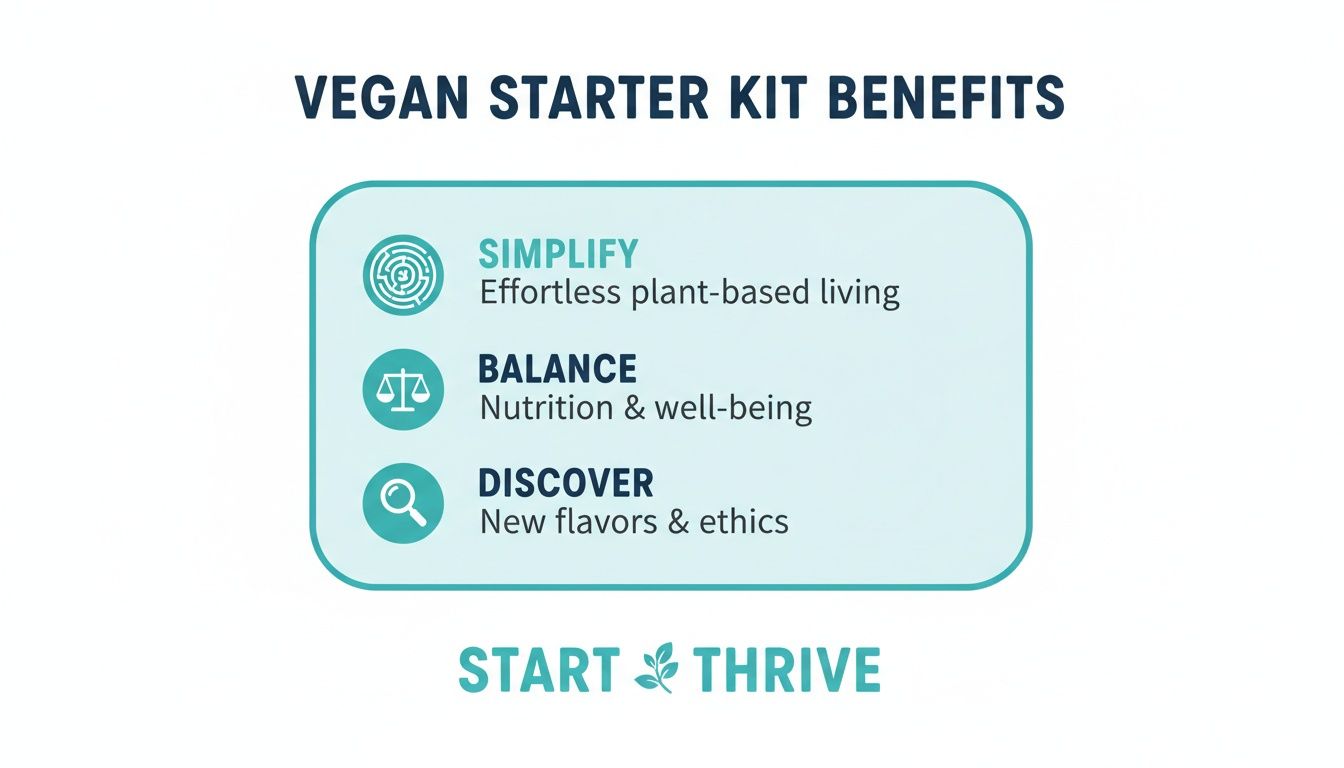
It really comes down to simplifying your life, making sure your meals are balanced, and having fun discovering new foods along the way.
Healthy Fats and Plant-Based Milks
You can't forget about healthy fats—they're what bring the flavor and satisfaction. Your starter kit should absolutely include nuts and seeds like almonds, walnuts, chia seeds, and flaxseeds. They're perfect for snacking, adding a bit of crunch to a salad, or giving a smoothie some staying power. Raw cashews are my personal favorite multi-tasker; once soaked, they can be blended into unbelievably creamy sauces and dressings.
Of course, a modern pantry isn't complete without a few trusty plant-based milk alternatives for your coffee, cereal, and recipes. The dairy-free aisle can be overwhelming, but each milk has its own unique personality.
The key to a successful vegan pantry is versatility. Choose ingredients that can pull double or triple duty in different recipes. A can of chickpeas isn't just one meal; it’s the potential for hummus, a curry, or roasted snacks.
To help you figure out where to start, here's a quick look at some of the most popular options and what they do best.
Choosing Your Go-To Plant-Based Milk
This table breaks down the most common choices to help you find the right fit for your morning coffee or next big cooking project.
| Milk Type | Best For | Flavor Profile | Key Tip |
|---|---|---|---|
| Oat Milk | Coffee, Lattes, Baking | Creamy and naturally sweet | Look for "barista blend" versions for the best foam in hot drinks. |
| Soy Milk | All-purpose cooking, Cereal | Rich and neutral | It has the highest protein content, making it great for recipes that need structure. |
| Almond Milk | Smoothies, Cereal | Light with a nutty hint | Choose unsweetened varieties to control the sugar in your recipes. |
| Coconut Milk | Curries, Soups, Creamy Sauces | Rich, creamy, and tropical | Canned, full-fat coconut milk is best for cooking, while the carton version is better for drinks. |
Once you have a handle on these different milks, you'll know exactly which one to grab for any situation.
By stocking these foundational items, you’re not just filling your shelves; you're setting yourself up for success. Your pantry becomes the launchpad for all your culinary creativity, making delicious, cruelty-free cooking the easiest choice.
Getting a Handle on Plant-Based Proteins
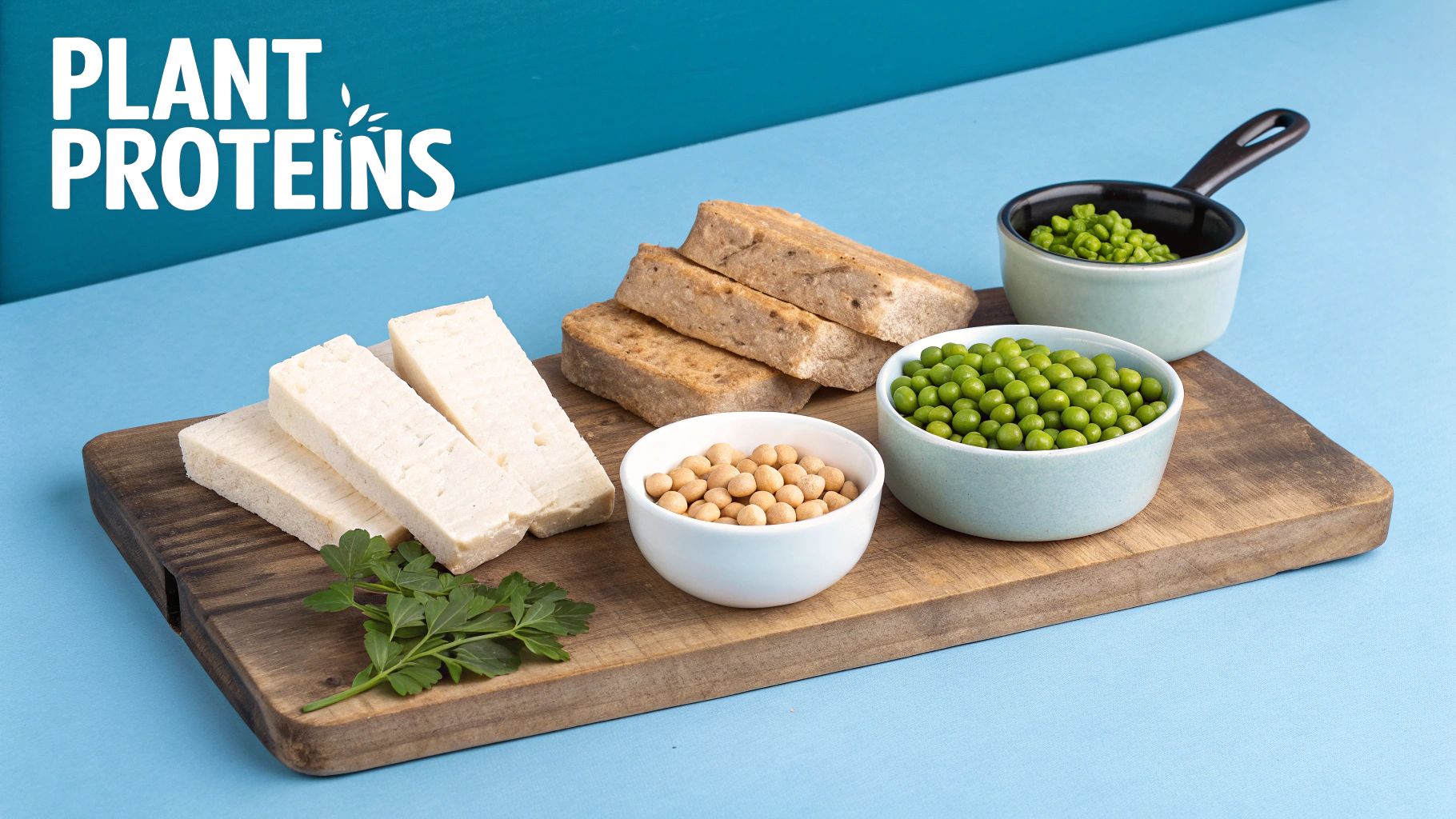
Alright, let's talk about the first thing everyone asks: "But where do you get your protein?" It's the classic question, but honestly, once you know what to stock in your vegan starter kit, it becomes a non-issue. Beans and lentils are a given—they're economical, healthy, and versatile—but the real fun begins when you dive into the wider world of plant protein.
The key to sticking with any new way of eating is keeping things interesting. That's where soy-based workhorses like tofu and tempeh, along with wheat-based seitan, really shine. Each one brings something totally different to the table, both in texture and flavor, and can easily become the centerpiece of your meal.
Tofu and Tempeh: The Building Blocks of Your Kitchen
Think of tofu as a blank canvas. Made from condensed soy milk, it has a super mild taste that’s perfect for soaking up whatever flavors you throw at it. If you've ever had amazing, crispy tofu at a restaurant and wondered why yours comes out soggy, the secret is pressing it first. Get that water out, and you’re golden.
- Extra-Firm Tofu: This is your go-to for anything you want to hold its shape. Cube it for stir-fries, bake it, air fry it, or crumble it up for a fantastic breakfast scramble.
- Silken Tofu: Don't try to press this one! It’s incredibly soft and perfect for blending into creamy pasta sauces, salad dressings, vegan mayo, or even decadent chocolate mousses.
Tempeh is a different beast altogether. It's made from whole, fermented soybeans packed into a dense cake, giving it a firm, chewy bite and a slightly nutty flavor that tofu just doesn't have. It holds up beautifully when grilled, pan-fried, or simmered in a stew, and it makes an incredible sandwich filler when sliced thin and marinated.
The demand for these convenient proteins is exploding. The market for plant-based meal kits—which are essentially pre-packaged vegan starter kits—is projected to jump from USD 2.108 billion in 2024 to a staggering USD 12.42 billion by 2035. In North America, there's a huge appetite for kits featuring vegetable proteins and superfoods like tempeh, a trend that's been growing since the mid-2010s. You can read more about these plant-based market trends and see the full report.
Seitan and Edamame: The Hearty and the Effortless
If you're looking for something with a serious "bite," you need to meet seitan. It's made from vital wheat gluten, which gives it a remarkably dense, chewy texture. This makes it the perfect base for vegan steaks, savory roasts, or even deli-style sandwich slices. You can find it pre-made or try making your own to customize the seasonings.
Forget bland, boring meals. Mastering a few simple preparation techniques for these proteins will empower you to create dishes that are not just satisfying but genuinely exciting to eat. A pressed and pan-seared block of tofu is a completely different experience from a soft, unpressed one.
Finally, don’t sleep on the humble edamame. These young soybeans are a powerhouse of whole-food protein. I love keeping a bag in the freezer to steam in the pod with a sprinkle of flaky sea salt for a quick, satisfying snack. You can also toss the shelled beans into salads, grain bowls, or stir-fries for an easy protein boost and a pop of bright green. They're a must-have for any beginner's kit because they require virtually zero prep.
Essential Flavor Boosters And Smart Snacks
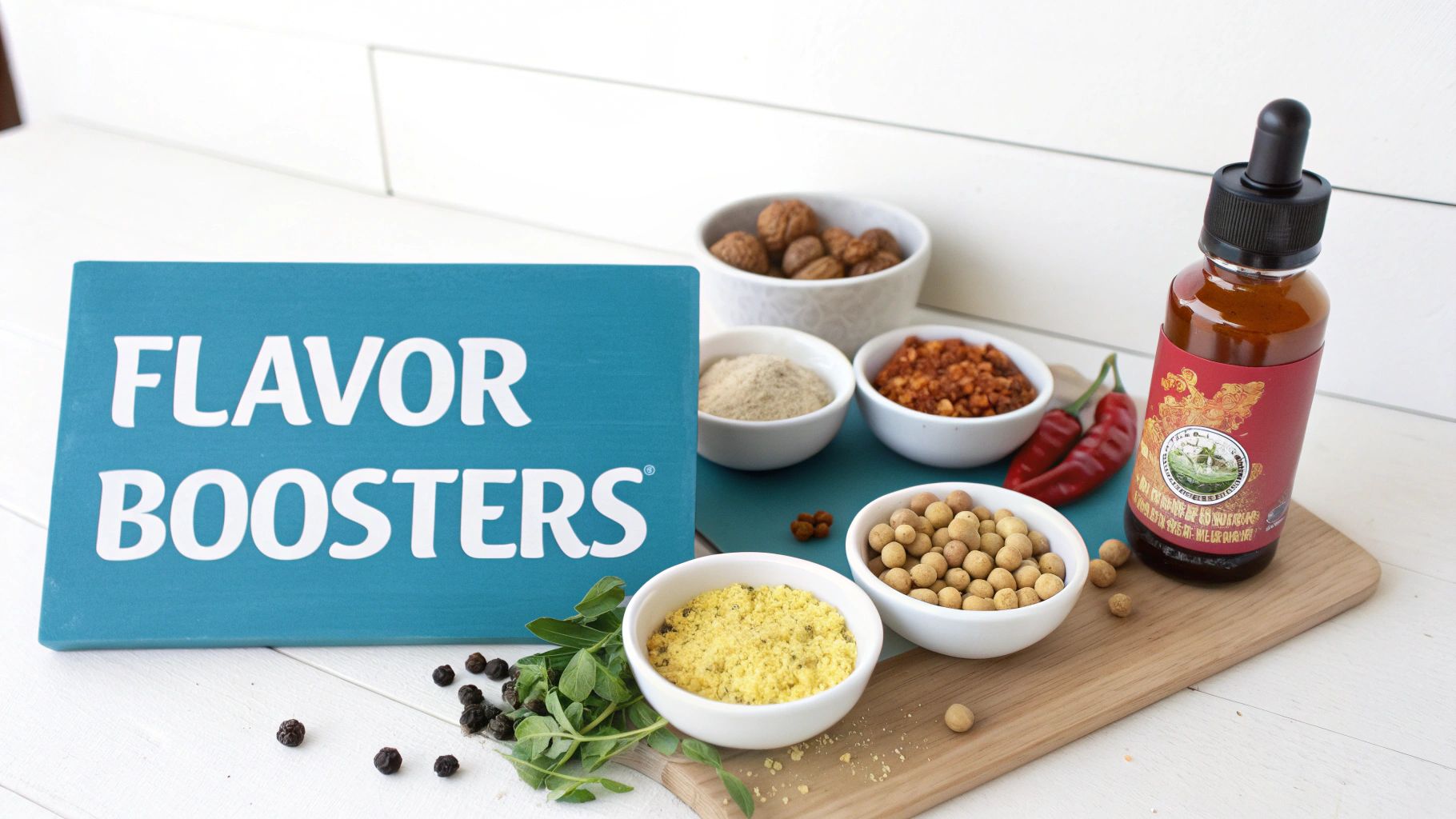
Let’s be honest: the secret to sticking with a vegan lifestyle isn't just about what you cut out, but what you add in. It’s all about making your food genuinely exciting. This is where the real fun begins—with flavor boosters and smart snacks.
These are the elements that transform simple ingredients into meals you actually crave and keep you fueled between them. Think of them as the creative, must-have tools in your vegan starter kit. You can forget any outdated ideas about bland vegan food. With just a few key items in your pantry, you’ll unlock incredible depth and richness in your cooking.
The Vegan Flavor Trinity
I've found that three ingredients, in particular, are absolute game-changers. I call them the "vegan flavor trinity," and they're my non-negotiables for adding those savory, cheesy, and smoky notes that make food so satisfying.
- Nutritional Yeast: Fondly known as "nooch," these flaky golden bits have a surprisingly cheesy, nutty taste. They're perfect for sprinkling on pasta, popcorn, or kale chips for that umami punch.
- Liquid Aminos or Tamari: Both are fantastic gluten-free stand-ins for soy sauce. Use them to add a deep, salty, and savory flavor to marinades, salad dressings, and pretty much any stir-fry you can dream up.
- Smoked Paprika: This isn't your regular paprika. A dash of this stuff adds a rich, smoky flavor that can mimic the essence of bacon, all from a simple spice jar.
Seriously, with just these three power players, you can elevate almost any dish from basic to brilliant.
Smart Snacking For Busy Days
Just as crucial as your main meals are the snacks you have on hand. A well-stocked kit is your best defense against getting hangry and reaching for something that goes against your values. The goal is to have simple, satisfying, and cruelty-free bites ready to go whenever hunger strikes.
Companies like Sun Basket have tapped into this need, building successful vegan meal lines around diverse, flavorful recipes. It's a smart move, considering the vegan food market was valued at USD 20.22 billion in 2024 and is expected to rocket to USD 55.88 billion by 2034. The demand for convenient, delicious plant-based food is undeniable.
My rule of thumb for snacks? They need to have a combination of protein, healthy fats, and fiber. This is what keeps you feeling full and focused. It’s about more than just grabbing a piece of fruit; you need something with a little more substance.
Here are a few of my go-to ideas to include in a starter kit:
- DIY Trail Mix: Just toss together your favorite raw nuts (almonds and walnuts are great), seeds (pumpkin or sunflower), and a little dried fruit. It's perfectly balanced and easy to take anywhere.
- Crispy Roasted Chickpeas: Drain a can of chickpeas, toss them with some olive oil and spices (smoked paprika is amazing here!), and roast until they're crunchy.
- No-Bake Energy Bites: These are lifesavers. Most recipes just call for oats, dates, and some nut butter. For more great ideas, check out our guide to healthy vegan snack ideas.
And for those moments when you're craving something sweet, don't forget about options like a delicious vegan sorbet. Having a refreshing wild berry sorbet in the freezer is a perfect way to satisfy a sweet tooth without compromising.

Choosing Pre-Made Kits And Subscription Boxes
Building a vegan starter kit from scratch is a fantastic way to get started, but let's be real—it's not for everyone. If you're slammed for time or just feeling a little overwhelmed by the newness of it all, pre-made kits and subscription boxes are an absolute game-changer. They handle the tough parts, curating ingredients and recipes so you get a structured, cruelty-free experience delivered right to your door.
This route is perfect for anyone wanting to jump into vegan eating without the initial legwork of meal planning and navigating grocery store aisles. Instead of squinting at labels for hours, a box arrives with everything you need. It’s a brilliant way to discover new foods and cooking methods with a bit of guidance.
What to Look for in a Quality Service
Not all subscription boxes are created equal, though. When you're weighing your options, it’s smart to look past the pretty meal photos and dig into the company’s ethics and practices. A great service is about more than just convenience; it’s about making sure their values line up with yours.
Here are a few things I always tell people to check before signing up:
- Ingredient Sourcing: Where does the food actually come from? Look for transparency. Do they favor organic, non-GMO produce? Do they talk about supporting sustainable farms?
- Recipe Variety: You want a service that keeps you excited to get in the kitchen. Take a peek at their past menus. Are they offering a good mix of cuisines, or is it just pasta and tacos on repeat?
- Packaging Practices: How much trash will you be left with? The best companies are moving toward recyclable, compostable, or minimal packaging to shrink their environmental footprint.
- Flexibility: Life happens. Can you easily skip a week, pause your subscription, or customize meals to sidestep an allergy? A plan that works with your life, not against it, is crucial.
Are Subscriptions Right for You?
So, should you build your own kit or sign up for a service? It really boils down to your personal priorities: budget, time, and how you like to learn. Subscription services do tend to cost more per week than a standard grocery run, but what you’re paying for is the convenience, the curation, and the built-in learning experience.
For many, the structure and time-saving benefits are well worth the investment. It removes the decision fatigue that can derail a new vegan, ensuring you always have a delicious, balanced meal ready to be cooked.
Think of it as a temporary set of training wheels. You could use a service for a few months to build your confidence and a solid collection of go-to recipes, then feel ready to tackle the shopping on your own.
Plus, many brands offer specialized bundles that let you try things out without a long-term commitment. For example, exploring curated subscription bundles can be a fantastic way to discover new favorite snacks and pantry staples. Ultimately, the best vegan starter kit is the one that makes your transition feel both sustainable and genuinely exciting.
Common Questions About Vegan Starter Kits
Jumping into the world of vegan starter kits, whether you're building one yourself or buying a pre-made box, naturally brings up a few questions. It’s smart to get these sorted out so you can move forward feeling totally confident. Let's tackle some of the most common things people ask.
Think of this as tying up the loose ends. We'll cover everything from budget to nutrition to make sure you're all set.
Are Pre-Made Vegan Starter Kits Worth The Money?
For a lot of people, the answer is a definite yes. At first glance, a subscription box might seem pricier than just doing it all yourself, but you're paying for more than just food. The real value is the convenience. It completely takes the guesswork and stress out of meal planning and big grocery hauls, which can honestly be the biggest roadblock when you're just starting out.
These kits are also fantastic for learning. You'll get introduced to new ingredients (often high-quality and non-GMO) and cooking methods in a really straightforward way. If your life is hectic or you just feel swamped by the idea of switching to a plant-based diet, that guided experience is often worth every penny. It's like a shortcut to feeling comfortable and capable in a vegan kitchen.
How Can I Make Sure My DIY Kit Is Nutritionally Balanced?
Making a nutritionally solid DIY kit really just comes down to balance. You don't need to be a nutritionist; you just need to be mindful about including the core food groups. Think of it as building your kit around a few key pillars:
- Whole Grains: Things like quinoa, brown rice, and oats are your go-to for lasting energy.
- A Variety of Proteins: Don't just stick to one! A mix of lentils, chickpeas, black beans, and tofu will give you a great range.
- Healthy Fats: Nuts, seeds, and avocados are non-negotiable for flavor and keeping you full and satisfied.
A good rule of thumb is to aim for a plate that's at least half full of colorful veggies for every meal. Most importantly, you absolutely need a reliable source of Vitamin B12. This is the one nutrient that isn't readily found in plant foods, so fortified items like nutritional yeast or a simple supplement are a must for your long-term health.
It's a common myth that vegan diets are automatically deficient. If you build your meals around whole foods and make sure you have a B12 source, a well-planned vegan starter kit will easily cover all your nutritional needs and have you feeling great.
What Are The Biggest Mistakes to Avoid When Starting Out?
The classic rookie mistake is stocking up on all the fancy, processed vegan products right away. Things like vegan cheeses, meats, and desserts are fun, but they can be pricey and aren't always the most versatile. Focus first on whole-food staples—beans, grains, nuts, and fresh produce. They create a much more affordable and flexible foundation for your meals.
Another common pitfall is forgetting about flavor! A pantry full of beans and rice but no herbs, spices, nutritional yeast, or tamari is a recipe for bland food and burnout. Don't skimp on the flavor-makers.
Finally, try to start with just a week's worth of fresh produce at a time. This helps you cut down on food waste while you're still figuring out your new eating rhythm and what you really love to cook.
Ready to stock your kit with some of the most flavorful, convenient, and cruelty-free snacks around? The Louisville Jerky Co. Jerky Club delivers bold, protein-packed vegan jerky right to your door every month. Build your bundle and start snacking smarter today!