


Finishing a tough workout is a fantastic feeling, but the job isn't quite done. To really cash in on all that hard work, what you eat next is just as important. The perfect post-workout meal is all about combining quality plant-based protein and complex carbohydrates to kickstart muscle repair and recharge your energy.
Why Your Post-Workout Meal Matters So Much
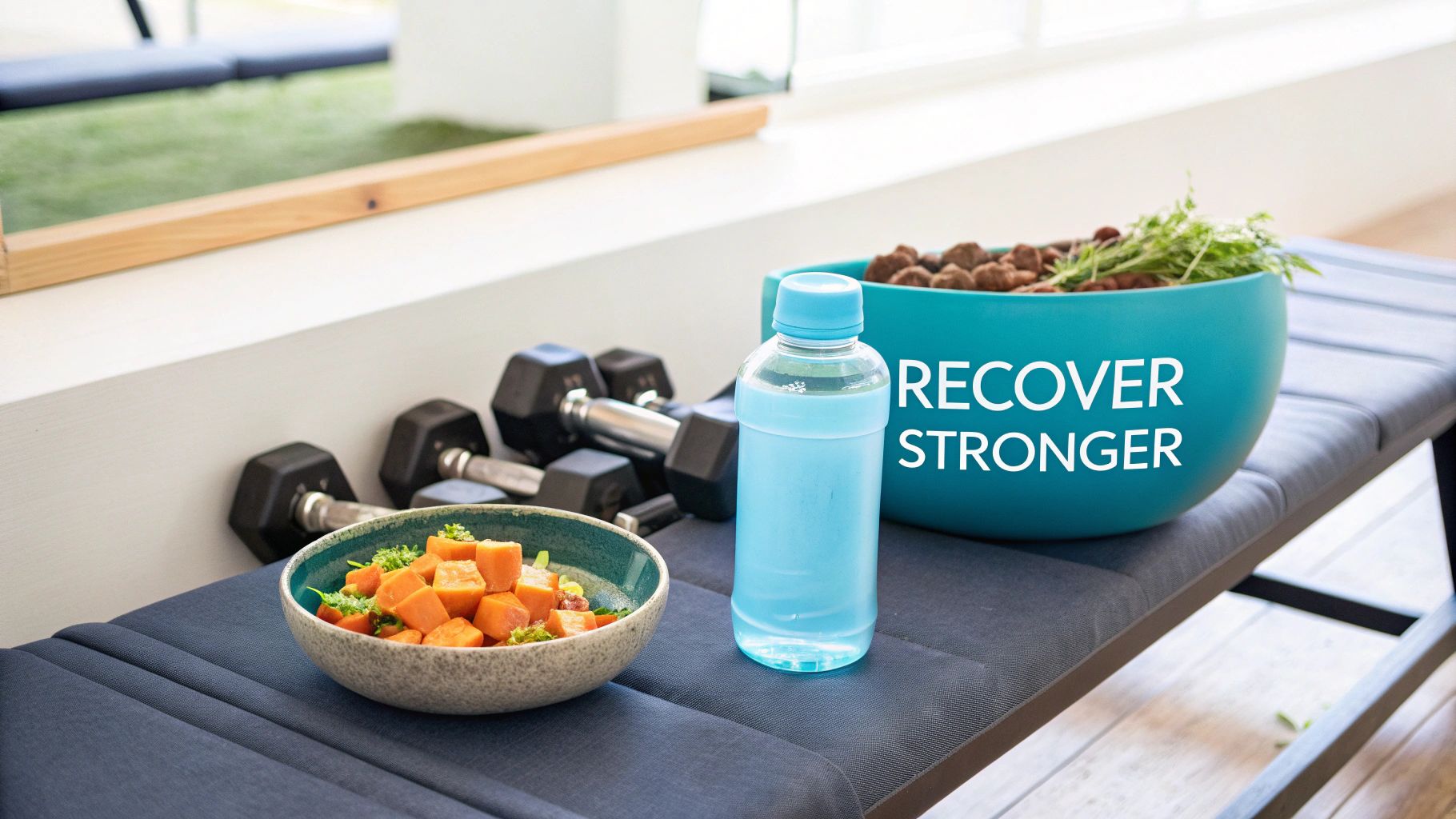
Picture your muscles after a hard gym session as a construction site. The workout itself is the demolition phase, creating tiny micro-tears in the muscle fibers. Your post-workout meal is the delivery truck, dropping off all the essential raw materials—the lumber, concrete, and steel—that your body's crew needs to rebuild everything bigger and stronger than before.
This rebuilding process kicks into high gear during the "post-workout window," a time when your body is primed and ready to soak up nutrients. What you eat right after you exercise directly dictates how well you recover, how soon you can get back to training, and the long-term results you'll see.
The Three Goals of Post-Workout Nutrition
To get the most out of your recovery, your post-workout meal needs to hit three key targets. Each one plays a critical role in helping you bounce back and prepare for whatever comes next.
Your post-workout meal isn't just about satisfying hunger; it's a strategic move to optimize recovery. Here's a quick breakdown of the three non-negotiable goals for your post-workout nutrition.
| Recovery Goal | Why It's Important | Key Plant-Based Nutrients |
|---|---|---|
| Repair Muscle Tissue | Intense exercise breaks down muscle. Protein provides the amino acids needed to repair that damage and build new, stronger muscle fibers through muscle protein synthesis (MPS). | Lentils, chickpeas, tofu, tempeh, edamame, quinoa, protein powder. |
| Restore Energy Stores | Your muscles run on stored glucose, known as glycogen. A solid workout depletes these energy tanks, and carbohydrates are essential for refilling them. | Sweet potatoes, oats, brown rice, bananas, whole-wheat bread. |
| Reduce Inflammation | Exercise naturally creates some inflammation. Choosing nutrient-dense foods can help manage this response, leading to less soreness and faster recovery. | Berries, leafy greens, nuts, seeds, and healthy fats like olive oil. |
Focusing on these three goals will ensure you're giving your body exactly what it needs to adapt and grow stronger from your training.
The idea of refueling is catching on everywhere. We've seen a 4% growth in post-workout claims on products worldwide between 2020 and 2025. It’s clear that people are prioritizing their recovery nutrition more than ever.
Nailing these goals is completely achievable on a vegan diet. Understanding the benefits of plant-based protein is a great first step, and simple additions like exploring the anti-inflammatory benefits of olive oil can make a huge difference in your recovery game.
The Building Blocks of Plant-Based Recovery
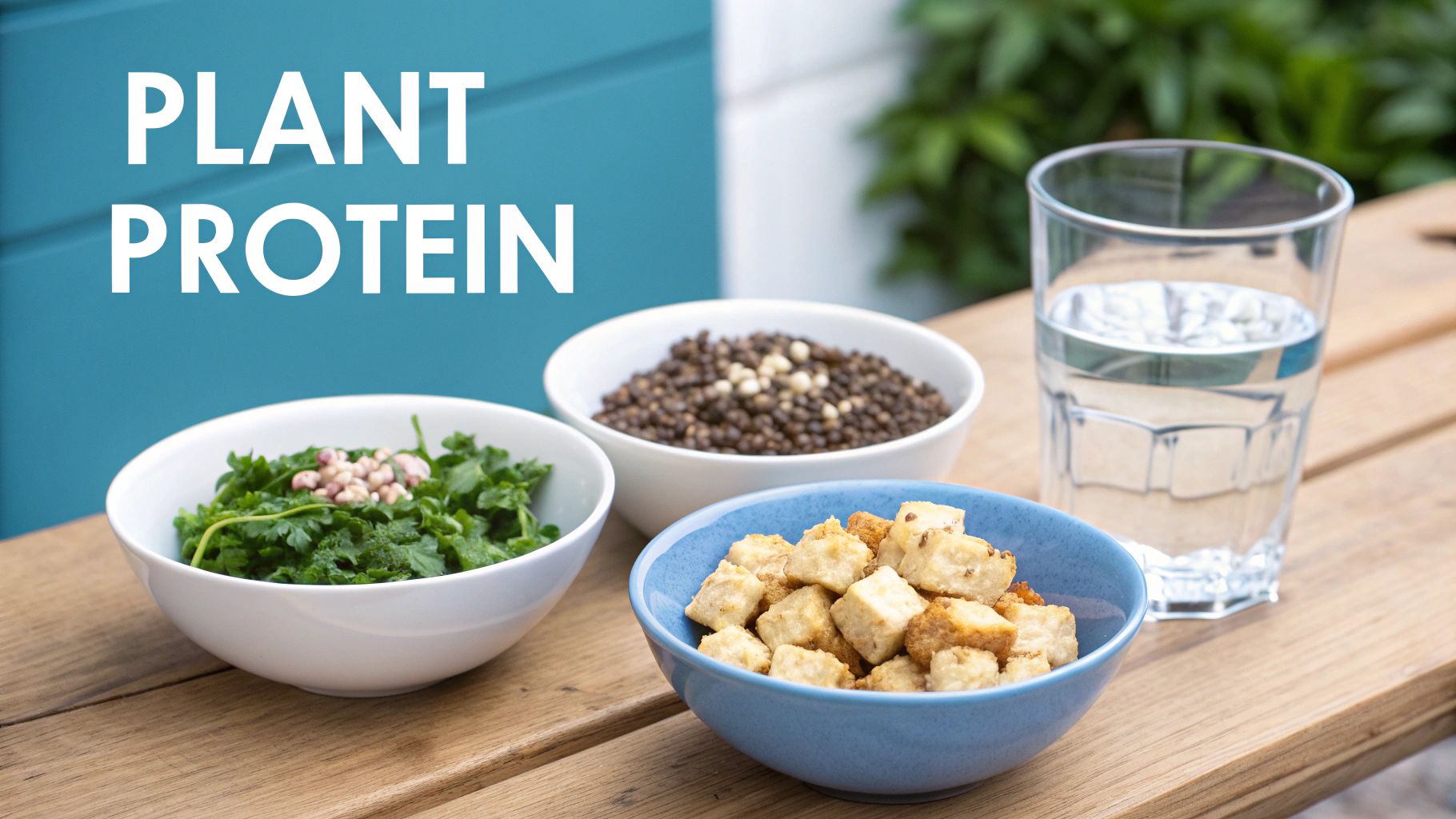
Once you’ve put in the work at the gym, your body is primed and ready to repair itself. A plant-based diet gives you the perfect toolkit for the job. To build a truly effective post-workout meal, we need to focus on three core pillars: protein, carbohydrates, and hydration. These are the fundamentals your body is crying out for to rebuild muscle, restore energy, and come back even stronger next time.
Think of these pillars as a team working in perfect sync. Each has its own critical role, but they really shine when they show up together. Getting the right balance is the secret to unlocking your best recovery.
The Power of Plant-Based Protein
Protein is the undisputed star of muscle repair. When you exercise, you’re actually creating tiny micro-tears in your muscle fibers. High-quality protein delivers the amino acids—the literal building blocks—your body needs to patch up that damage and kickstart muscle protein synthesis (MPS). This is the biological process that builds new, stronger muscle.
For the best results, aim for 20-40 grams of protein in your post-workout meal. That’s the sweet spot for maximizing the MPS response and giving your muscles what they need to grow. The demand for effective recovery fuel is huge, with the post-workout supplements market hitting USD 18 billion in 2024. Plant-based options are a massive part of that growth, proving that a cruelty-free lifestyle supports building serious strength.
Curious about where to get it? You can explore a comprehensive high-protein vegan foods list to find some fantastic options for your next meal.
Refueling with Quality Carbohydrates
While protein handles the repairs, carbohydrates are all about refueling. Your muscles run on a fuel source called glycogen. A tough workout can seriously deplete these glycogen stores, which is why you feel so drained afterward. Think of your glycogen stores as your muscles' battery pack; once it's empty, it needs a full recharge.
This is where carbs come in. Eating carbohydrates after your workout helps to replenish your muscle glycogen, making sure you have plenty of energy for your next session. Stick with complex carbs from whole-food sources to get that sustained energy without the dreaded sugar crash.
Your goal is to not only repair but also to refuel. Pairing protein with carbohydrates creates a powerful synergistic effect. The insulin released from eating carbs actually helps shuttle amino acids into your muscle cells more efficiently, speeding up the entire repair process.
Here are a few excellent plant-based pairings that nail both recovery goals:
- Lentil soup with a side of whole-grain bread: Lentils bring a hearty dose of protein and fiber, while the bread gets to work restocking your glycogen.
- A quinoa bowl with black beans and roasted sweet potatoes: Quinoa and black beans team up for a complete protein, and sweet potatoes offer top-tier complex carbs.
- Tofu scramble with a side of fruit: The tofu packs a protein punch, while the natural sugars in the fruit give you a quick refueling boost.
Hydration and Micronutrients
Finally, let's not forget about hydration and the smaller—but just as vital—micronutrients. When you sweat, you lose water and essential electrolytes like sodium and potassium. Rehydrating is non-negotiable for muscle function, nutrient transport, and regulating your body temperature. Water is always your best bet, but after a particularly grueling workout, something like unsweetened coconut water can help replace those lost electrolytes.
On top of that, plant-based foods are absolutely loaded with vitamins, minerals, and antioxidants that help your body manage post-exercise inflammation. Foods like berries, leafy greens, and nuts are full of these compounds, which can help reduce muscle soreness and support a faster overall recovery. These are the finishing touches that complete the recovery picture, ensuring every system in your body gets the support it needs.
Perfecting Your Post-Workout Timing and Portions
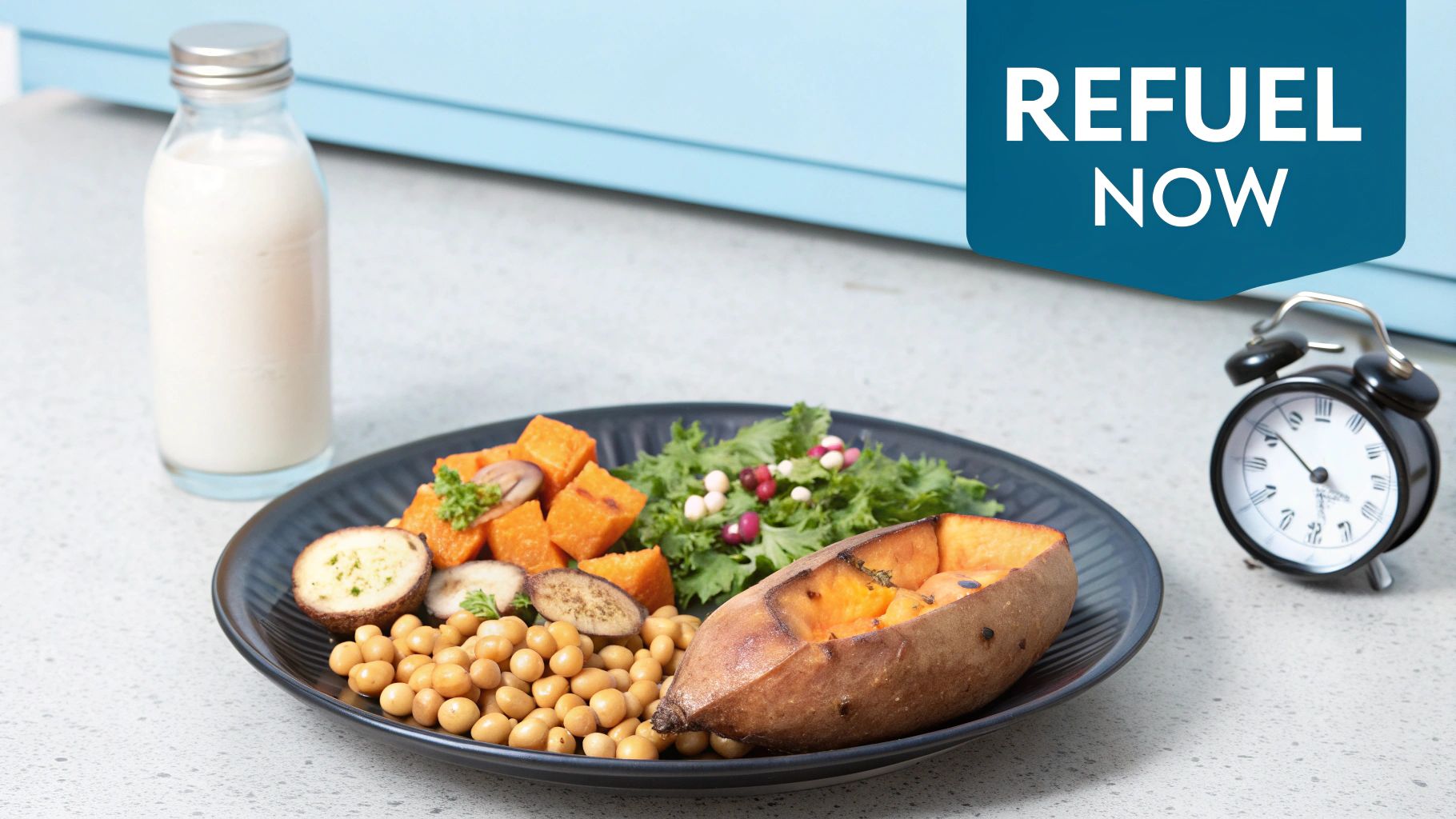
Knowing what to eat after a gym workout is a huge piece of the puzzle, but understanding when and how much is what really unlocks your recovery potential. For years, the fitness world was obsessed with a rigid 30-minute “anabolic window.” The theory was you had to slam a protein shake immediately or all your hard work would go to waste.
Thankfully, we now know it’s not that dramatic.
While your muscles are definitely primed to soak up nutrients right after a workout, that heightened sensitivity doesn't just switch off. You actually have a much more forgiving window of a few hours to refuel. As a general rule, aiming to eat within one to two hours after your workout is a fantastic strategy to kickstart the recovery process without feeling rushed.
Tailoring Portions to Your Fitness Goals
Your post-workout plate shouldn't be a one-size-fits-all deal. The intensity and type of training you just finished are what determine your body’s immediate needs, especially when it comes to the protein and carbohydrate balance.
Think of it this way: a powerlifter and a marathon runner both need to refuel, but their priorities are different. The lifter is focused on rebuilding torn muscle fibers, while the runner is trying to restock a completely drained fuel tank. Customizing your portions gives your body exactly what it's asking for.
The best post-workout meal is one that matches the demands of your specific activity. Tweaking your carb-to-protein ratio based on your goals is a simple but incredibly powerful way to optimize how you recover and the results you see.
It's all about a balanced approach, but small adjustments to your portion sizes can make a massive difference in how you feel and perform next time.
Building Your Ideal Recovery Plate
So, how does this translate to what’s actually on your plate? For most general workouts, a great starting point is a 3:1 ratio of carbohydrates to protein. This combination is a powerhouse—the carbs get to work refilling your energy stores (glycogen), while the protein starts the muscle repair process.
Here are a few visual guides to help you build a plant-based recovery meal:
-
For Strength Training: The main goal is muscle repair. Your plate might consist of 40% protein-rich foods (like a hefty serving of tofu or tempeh), 40% complex carbs (think quinoa or brown rice), and 20% vegetables for those essential micronutrients.
-
For Endurance Training: After a long run or bike ride, replenishing glycogen is king. Your plate should be carb-heavy: around 60% complex carbs (a generous portion of sweet potatoes or whole-wheat pasta), 25% protein (like lentils or chickpeas), and 15% healthy fats and veggies.
These aren't strict rules set in stone, but rather simple guidelines to help you visualize what your plate should look like. The most important thing is to listen to your body and give it the right fuel. Nailing your timing and portions is the final step in mastering what to eat after a gym workout.
Quick and Delicious Vegan Post-Workout Meals
Alright, you've got the science down. Now for the fun part—actually eating! Knowing what to eat after hitting the gym is a lot easier when you have a few go-to ideas that are both simple and delicious.
Life is busy, and nobody wants to spend an hour in the kitchen after a tough workout. These plant-powered meals are designed to fit right into your schedule, helping you recover fast so you can get on with your day. Whether you need a quick bite on your way out of the gym or a more serious meal to refuel, I've got you covered.
Grab and Go Snacks
For those days when you’re sprinting from the gym to your next meeting, a portable snack is a lifesaver. These options are perfect for kicking off the recovery process the moment your workout ends.
- Gym Snack: a high-protein crisp made from pea protein, delivering on all nine essential amino acids.
- A Banana with Nut Butter: It's a classic for a reason. You get fast-acting carbs from the banana and a hit of protein and healthy fats from a single-serving packet of almond or peanut butter. Simple, effective, and no mess.
- DIY Trail Mix: Forget the store-bought stuff. Make your own mix with dried edamame, almonds, pumpkin seeds, and a few raisins. This gives you a great balance of protein, fats, and a little sugar to start replenishing your energy.
- Plant-Based Protein Bar: The ultimate convenience. Look for bars with at least 15-20 grams of protein and whole-food ingredients you can actually pronounce.
These quick bites ensure you never miss that crucial recovery window, no matter how chaotic your schedule gets.
5 Minute Fixes
Got a few minutes to spare when you get home? These five-minute meals are your new best friends. They're lightning-fast to assemble but still pack a serious nutritional punch.
A well-balanced recovery smoothie is one of the most efficient ways to deliver nutrients to your muscles. Blending the ingredients makes them easier to digest, allowing your body to absorb the protein and carbs more quickly.
Here are some ideas you can whip up in no time:
- The Ultimate Recovery Smoothie: In a blender, combine one scoop of vegan protein powder, a frozen banana, a cup of soy milk, a tablespoon of chia seeds, and a big handful of spinach. You get a perfect mix of protein, carbs, and micronutrients in a single glass.
- Quick Chickpea Salad Toast: Just mash a can of chickpeas with a bit of vegan mayo and your favorite seasonings. Pile it on a slice of whole-grain toast, and you’ve got a satisfying mini-meal in minutes.
- Yogurt and Berry Parfait: Layer some unsweetened soy or coconut yogurt with fresh berries and a sprinkle of low-sugar granola. It’s a perfect balance of protein from the yogurt and carbs from the fruit and granola.
For more inspiration on quick, high-protein options, check out our guide to the best post-workout snacks.
Simple Recovery Meals
After a really demanding workout, your body is screaming for something more substantial. These simple meals are designed to be both incredibly satisfying and perfect for muscle repair and refueling your energy stores. They take a little more effort than a snack, but they’re still totally doable on a busy weeknight.
- Savory Tofu Scramble: Crumble a block of firm tofu into a hot pan with turmeric, black salt (for that eggy flavor), and whatever veggies you have on hand—bell peppers and onions work great. Serve it alongside a slice of whole-wheat toast for a high-protein, restorative meal.
- Loaded Sweet Potato: Bake a sweet potato (you can even do this in the microwave to save time) and load it up with black beans, corn salsa, and a scoop of avocado. This meal is a powerhouse of complex carbs, fiber, and quality plant-based protein.
- Speedy Quinoa Bowl: Start with some pre-cooked quinoa to make this even faster. Top it with edamame, shredded carrots, and a drizzle of tamari. For an extra protein kick and a delicious savory crunch, chop up some Louisville Vegan Jerky and toss it in.
Your Plant-Based Post-Workout Meal Builder
Feeling creative? The best post-workout meal is the one you'll actually enjoy eating. Think of your plate as a simple formula: one part protein, one-to-two parts carbs.
Use this simple chart to mix and match your favorite plant-based proteins and carbs. It's an easy way to build a custom recovery meal that hits all your nutritional targets without getting boring.
| Plant Protein Source (20-30g) | Complex Carb Source (40-90g) | Easy Meal Combination |
|---|---|---|
| 1 block firm tofu | 1 large sweet potato | Baked sweet potato topped with a savory tofu scramble. |
| 1.5 cups lentils | 1 cup (cooked) quinoa | A hearty lentil and quinoa bowl with roasted veggies. |
| 2 scoops vegan protein powder | 1 large banana + 1/2 cup oats | A classic post-workout smoothie, blended until smooth. |
| 1.5 cups edamame (shelled) | 1.5 cups brown rice | A simple rice bowl with steamed edamame and tamari. |
| 1 can (15 oz) chickpeas | 2 slices whole-wheat bread | Mashed chickpea "tuna" salad sandwich. |
This isn't an exhaustive list, but it's a fantastic starting point for creating delicious, effective recovery meals that work for you. Don't be afraid to experiment with different seasonings, sauces, and veggies to keep things interesting
How to Fuel Different Types of Workouts
It just makes sense that not all workouts are created equal, so why would your post-workout meal be one-size-fits-all? The way you refuel after a heavy lifting session should look completely different from how you recover after a long, steady run. Matching your nutrition to your training style is one of the biggest keys to unlocking better results.
Think about it this way: a strength workout is all about structural repair, like a construction crew fixing a building. An endurance workout, on the other hand, is more like restocking a massive, empty fuel depot. Each job requires a slightly different mix of materials and a different game plan.
By simply adjusting your carb-to-protein ratio, you can give your body the precise tools it needs to recover from the specific demands you just placed on it.
Refueling for Strength Training
After you've been lifting weights, your body's number one job is muscle protein synthesis. It's time to repair all those tiny micro-tears in your muscle fibers so they can grow back bigger and stronger. While you definitely need carbs to restore the energy you burned, protein is the undisputed star of the show.
For this, you'll want a balanced meal that puts a little extra emphasis on protein. A 1:1 or 2:1 ratio of carbs to protein is a fantastic target.
- Example Meal: Try a big bowl of black bean and lentil chili, topped with a generous scoop of avocado. The beans and lentils pack the protein punch for repair, while the carbs help restock your energy.
Fueling After High-Intensity Interval Training (HIIT)
HIIT workouts are absolute monsters. They burn through your muscle glycogen stores at a shocking pace. Since these sessions are both intense and often involve resistance, you need a solid one-two punch of both carbohydrates and protein.
A 3:1 carb-to-protein ratio is a great goal to shoot for. This gives you plenty of carbs to quickly refill those empty energy tanks while still delivering enough protein to handle muscle repair.
- Example Meal: A tofu scramble loaded with bell peppers and onions, served with a side of roasted sweet potato hash. The tofu provides high-quality protein, and the sweet potatoes deliver those powerful complex carbs your body is crying out for.
This simple chart can help you decide what to do based on how much time you've got.
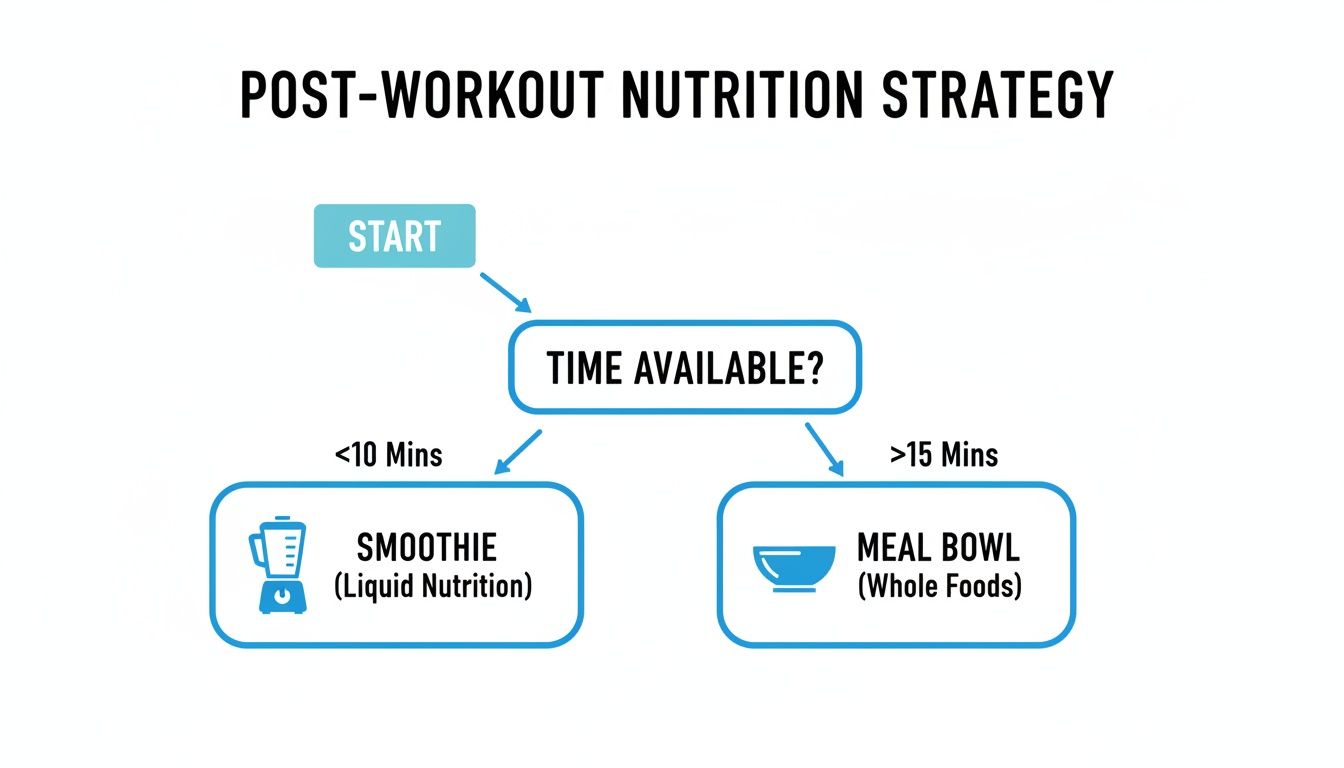
Even when you're short on time, a quick smoothie can get the recovery process started. If you have a bit more breathing room, a full meal bowl is the ideal way to refuel.
Recovering from Endurance Workouts
After a long run, a grueling bike ride, or a tough swim, your top priority is completely different: you need to replenish your glycogen stores. These long-haul activities can leave your energy reserves practically on empty. This means carbohydrates are your most critical nutrient, hands down.
For endurance recovery, a 4:1 carb-to-protein ratio is the gold standard. This carb-heavy approach is all about restocking your muscles’ primary fuel source, getting you ready to tackle that next long session.
A perfect post-run meal could be a huge bowl of whole-wheat pasta tossed with a hearty, lentil-based marinara sauce. The pasta delivers a massive dose of carbs, while the lentils offer just enough protein to help with muscle recovery without slowing down glycogen resynthesis.
Of course, your recovery meal is just one piece of the puzzle. Understanding what to eat during your workouts is just as important. You can dig deeper into effective fueling strategies during endurance events like marathons to build a complete and powerful nutrition plan.
Common Questions About Plant-Based Recovery
Got questions about fueling your recovery on a plant-based diet? You’re not alone. When you’re focused on fitness, it’s natural to want to get your post-workout nutrition just right.
Let's tackle some of the most common questions we hear from athletes and gym-goers who are building muscle the vegan way.
Do I Really Need To Eat Within 30 Minutes of My Workout?
You can relax a little on this one. The whole idea of a rigid 30-minute “anabolic window” has been mostly debunked. It’s not a magic window that slams shut.
A much more realistic and effective goal is to eat a solid meal within one to two hours after you finish your training. This gives your body the protein and carbs it needs to start repairing muscle and refilling its energy tanks without causing you to frantically race the clock. The key is simply not waiting too long—a few hours can definitely slow your recovery down.
Can I Build Muscle On a Fully Plant-Based Diet?
Absolutely, one hundred percent. You can build serious muscle on a well-planned vegan diet. It all comes down to getting enough total protein and calories, and plant-based foods are more than up to the task.
The trick is to eat a wide variety of high-protein sources to ensure you get all the essential amino acids your muscles crave. Think lentils, chickpeas, tofu, tempeh, quinoa, and even convenient, high-protein snacks like vegan jerky.
Is a Protein Shake My Only Post-Workout Option?
Not even close. Shakes are popular because they’re fast and easy, but they aren't your only option—and often not even the best one.
Real, whole-food meals are fantastic for recovery. They’re often more satisfying and deliver a much broader spectrum of nutrients like vitamins, minerals, and fiber that you just don't get from a simple shake.
The best post-workout choice is whatever works for you. A hearty meal like a black bean and sweet potato bowl or a quick tofu scramble can provide the same recovery-boosting protein and carbs as any shake.
What Should I Drink Besides Water After a Workout?
For most workouts, good old-fashioned water is king. Rehydrating should always be your top priority.
However, if you’ve just finished a really long or intense session where you were sweating buckets, you might need to replenish electrolytes too. Unsweetened coconut water is a great natural option. You could also try plant-based milks like soy or pea milk, which pull double-duty by providing fluids, protein, and carbs all at once.
Ready to power up your recovery with a convenient, high-protein, and delicious snack? Louisville Jerky Co. offers a variety of bold, satisfying flavors that are perfect for your gym bag. Explore our collection and find your new favorite post-workout fuel today!